



Arrestin
Arrestin is a key protein that regulates G protein-coupled receptor (GPCR) signaling. Upon ligand activation, GPCRs undergo C-terminal phosphorylation by specific kinases (such as GRK, G protein-coupled receptor kinase), which recruits Arrestin, thereby preventing further coupling between GPCRs and G proteins while triggering receptor internalization and downstream signal transduction. Arrestin plays a crucial role in signal transduction, receptor desensitization and endocytosis, as well as multiprotein signaling complex assembly.
Arrestin is mainly classified into four types: Visual Arrestin (Arrestin-1), Cone Arrestin (Arrestin-4), β-Arrestin 1 (Arrestin-2), and β-Arrestin 2 (Arrestin-3). Among them, Arrestin-1 and Arrestin-4 are primarily involved in retinal phototransduction, whereas β-Arrestin 1 and β-Arrestin 2 are widely expressed in multiple tissues, regulating most GPCR-related signaling pathways. Structurally, Arrestin consists of N-terminal and C-terminal β-strand domains, stabilized by a polar core, and undergoes conformational changes upon receptor binding, thereby initiating signal transmission.
In the nervous system, Arrestin regulates dopamine receptor (e.g., D2 receptor) signaling, affecting Parkinson’s disease and Schizophrenia. In cancer, Arrestin integrates ERK, JNK, and Akt signaling pathways to regulate tumor cell growth and migration, for example, β-Arrestin 2-mediated GPCR signaling promotes cancer cell survival and drug resistance. Additionally, Arrestin is involved in inflammatory responses and immune regulation, playing important roles in diabetes, asthma, and inflammatory diseases[1][2].
Arrestin Isoform Specific Products
All Product Categories
-
Arrestin Related Products (80)
Related Products (80)

-
Antibodies (2)
-
Arrestin Isoform Comparison
-
SBI-810 hydrochloride
 0 ImagesSBI-810 hydrochloride is a blood-brain barrier-permeable NTSR1 modulator. SBI-810 hydrochloride promotes the recruitment of β-arrestin-2 to NTSR1 and antagonizes NTSR1-mediated Gq activation. SBI-810 hydrochloride inhibits excitatory synaptic transmission, NMDA receptor and extracellular signal-regulated kinase (ERK) signaling in spinal nociceptive neurons, reduces surface expression of Nav1.7 and action potential firing in primary sensory neurons, and attenuates C-fiber responses. SBI-810 hydrochloride effectively alleviates acute and chronic pain in various rodent models through peripheral and central modulation. SBI-810 hydrochloride is applicable to research related to multiple pain disorders.
-
Elabela(19-32)
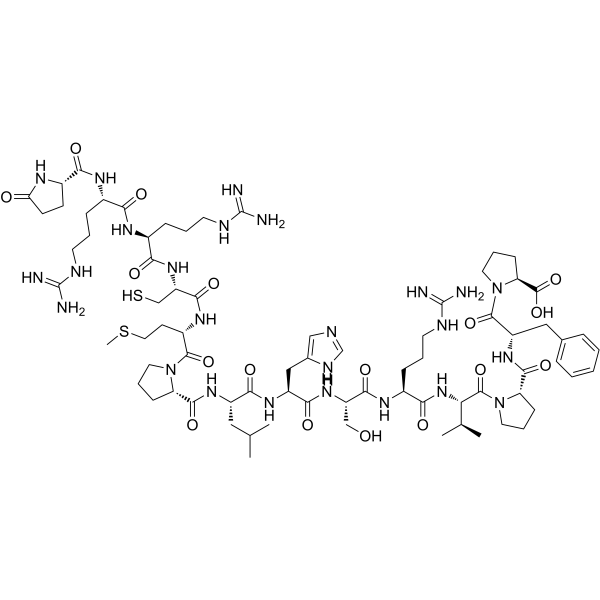 0 ImagesElabela(19-32) is an active fragment of ELABELA (ELA) that binds to apelin receptor (APJ). Elabela(19-32) activates the Gαi1 and β-arrestin-2 signaling pathways with EC50s of 8.6 nM and 166 nM. Elabela(19-32) induces receptor internalization and reduces arterial pressure, exerts positive inotropic effects on the heart.
-
IDOR-1117-2520
 0 ImagesIDOR-1117-2520 is an orally active, potent, selective and reversible CCR6 antagonist. IDOR-1117-2520 antagonizes the CCL20-mediated calcium flow (IC50 = 63 nM) and inhibits β-arrestin recruitment to human CCR6 (IC50 = 30 nM) in cells expressing recombinant human CCR6. IDOR-1117-2520 is found to be a substrate of P-gp/MDR1. IDOR-1117-2520 can be used in the research of autoimmune diseases and skin inflammation.
-
SBI-477
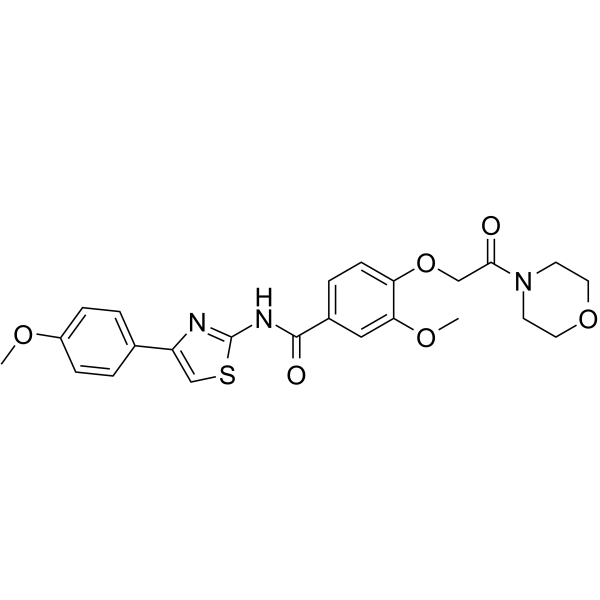 0 ImagesSBI-477 is a chemical probe that stimulates insulin signaling by deactivating the transcription factor MondoA. SBI-477 can lead to reduced expression of the insulin pathway suppressors thioredoxin-interacting protein (TXNIP) and arrestin domain-containing 4 (ARRDC4). SBI-477 coordinately inhibits triacylglyceride (TAG) synthesis and enhances basal glucose uptake in human skeletal myocytes.
-
IHCH-7113
 0 ImagesIHCH-7113 is a 5-HT2AR agonist with EC50 values of 58.9 nM (Gq bioluminescence resonance energy transfer assay) and 44.7 nM (β-arrestin 2 bioluminescence resonance energy transfer assay). IHCH-7113 activates both Gαq-mediated signaling pathways and β-arrestin 2 recruitment pathways. IHCH-7113 is applicable for research related to depression.
-
TRV-120027 TFA
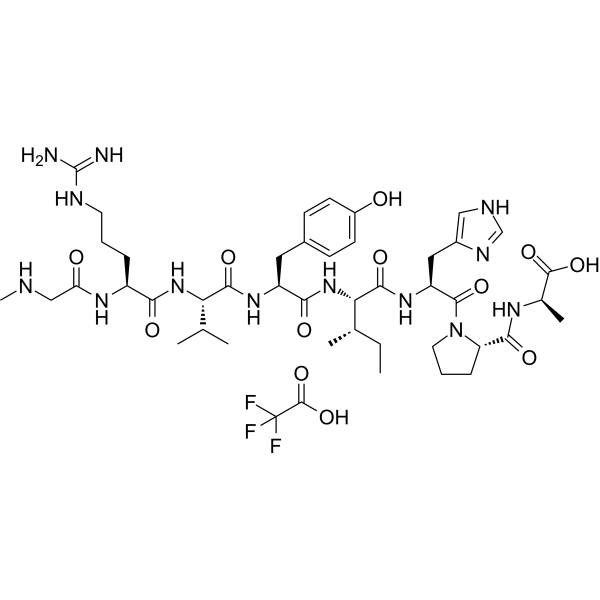 0 ImagesCat. No.: HY-P2141APurity: 99.62%TRV120027 TFA, a β-arrestin-1-biased agonist of the angiotensin II receptor type 1 (AT1R), engages ?-arrestins while blocking G-protein signaling. TRV120027?TFA induces?acute?catecholamine?secretion?through cation channel subfamily C3 (TRPC3) coupling, promotes the formation of a macromolecular complex composed of AT1R–β-arrestin-1–TRPC3–PLCγ at the plasma membrane. TRV120027 TFA inhibits angiotensin II–mediated vasoconstriction and increases cardiomyocyte contractility. TRV120027 TFA has the potential for the?acute decompensated heart failure (ADHF) treatment.
-
SCH-900875
 0 ImagesSCH-900875 is an orally active, brain-penetrant and selective CXCR3 receptor inhibitor, which also shows high selectivity over CXCR1 and CXCR2 receptors. SCH-900875 binds to CXCR3, blocking the binding of ligands CXCL9, CXCL10, and CXCL11, inhibiting downstream G protein and β-arrestin signaling pathways to suppress inflammatory cell migration. SCH-900875 is promising for research of autoimmune diseases (rheumatoid arthritis, multiple sclerosis) and inflammatory disorders (psoriasis, inflammatory bowel disease).
-
UNC9994
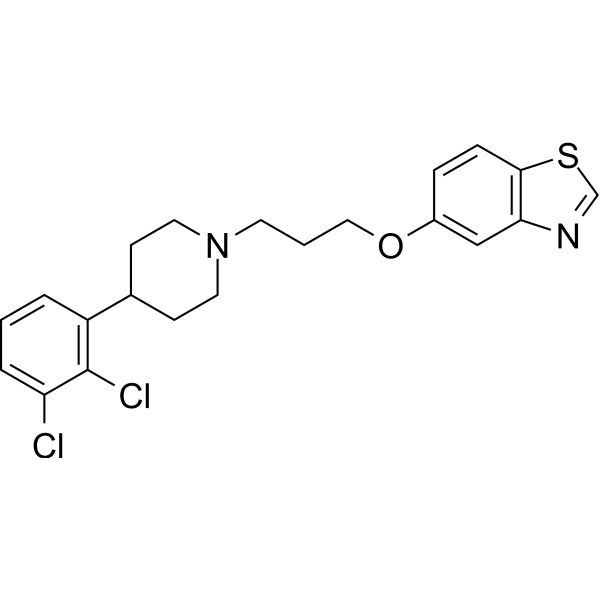 0 ImagesUNC9994, an analog of Aripiprazole, is a functionally selective β-arrestin-biased dopamine D2 receptor (D2R) agonist with EC50 <10 nM for β-arrestin-2 recruitment to D2 receptors. UNC9994 is simultaneously partial agonists of β-arrestin-2 translocation and antagonists of Gi-regulated cAMP production. Antipsychotic Activity.
-
Elabela(19-32) TFA
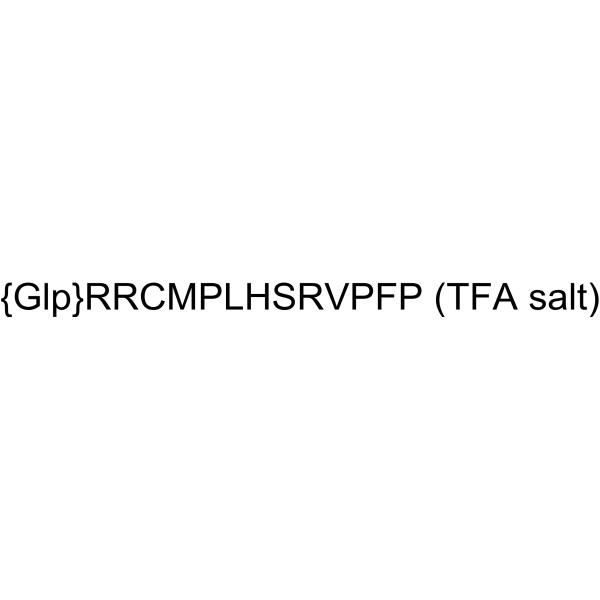 0 ImagesCat. No.: HY-P2106APurity: 99.93%Elabela(19-32) TFA is an active fragment of ELABELA (ELA) that binds to apelin receptor (APJ). Elabela(19-32) TFA activates the Gαi1 and β-arrestin-2 signaling pathways with EC50s of 8.6 nM and 166 nM. Elabela(19-32) TFA induces receptor internalization and reduces arterial pressure, exerts positive inotropic effects on the heart.
-
Balixafortide
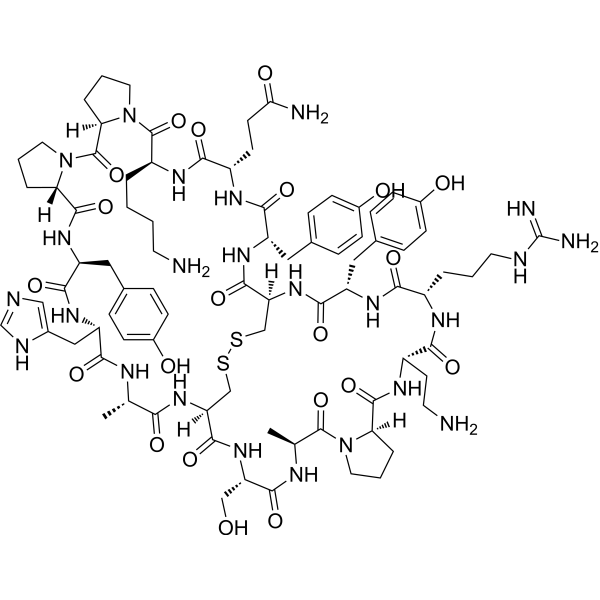 0 ImagesSynonyms: POL6326Balixafortide (POL6326) is a potent, selective, well-tolerated peptidic CXCR4 antagonist with an IC50 < 10 nM. Balixafortide shows 1000-fold selective for CXCR4 than a large panel of receptors including CXCR7. Balixafortide blocks β-arrestin recruitment and calcium flux with IC50s < 10 nM. Balixafortide is also a potent hematopoietic stem and progenitor cell (HSPC) mobilizing agent. Anti-cancer effects.
-
(Rac)-Tavapadon
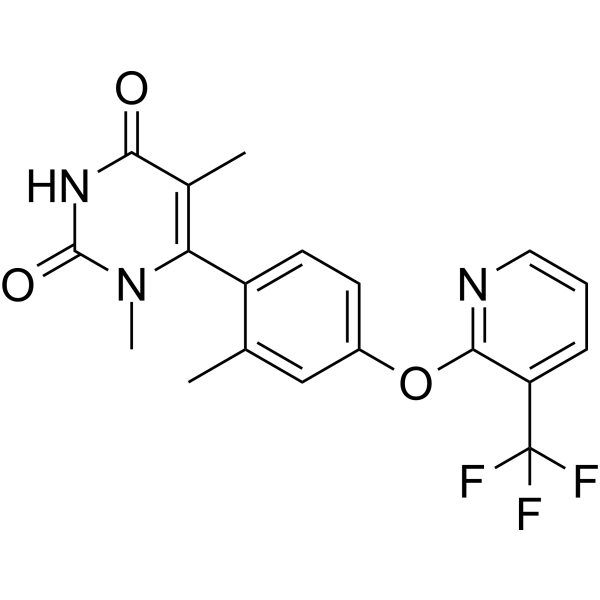 0 ImagesSynonyms: (Rac)-PF-06649751; (Rac)-CVL-751(Rac)-Tavapadon ((Rac)-PF-06649751) is a potent and selective noncatechol dopamine D1 receptor agonist. (Rac)-Tavapadon displays potent full agonism in the GS activation assay as well as partial agonism in the β-arrestin2 recruitment assay (GS-cAMP, EC50=0.8 nM; β-arrestin2, EC50=68 nM). (Rac)-Tavapadon has antiparkinsonian activity.
-
CCX-777
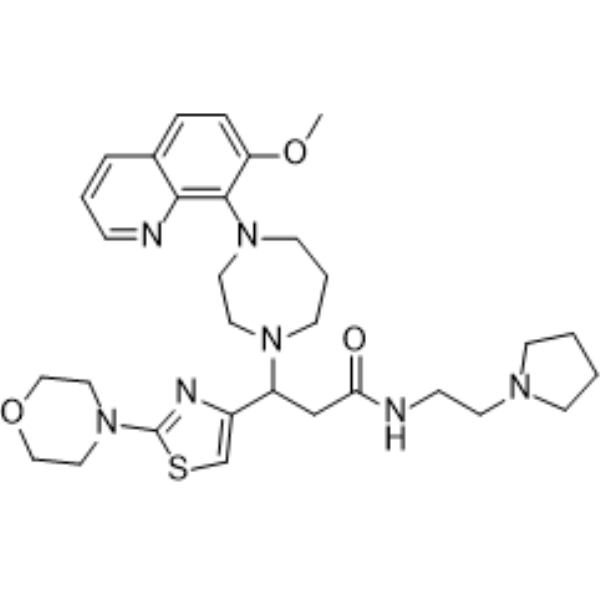 0 ImagesCCX-777 is an orthosteric binder and partial agonist of CXCR7/ACKR3. CCX-777 induces the recruitment of β-arrestin 2 and affects the rebinding of chemokines to ACKR3. CCX-777 functions to stabilize the ACKR3 receptor and promotes the formation of a monodisperse, stable complex of the receptor in DDM/CHS micelles. CCX-777 is widely used in cancer-related research.
-
Noribogaine hydrochloride
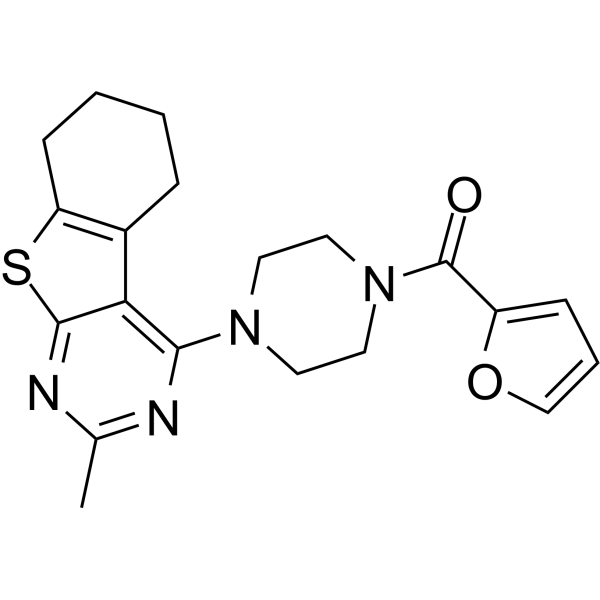
 0 ImagesNoribogaine hydrochloride is an orally active, blood-brain barrier permeable SERT inhibitor (IC50=50-300 nM) and hERG channel blocker. Noribogaine hydrochloride enhances serotonergic transmission, activates the κ-opioid receptor (OPRK) G protein signaling pathway and inhibits β-arrestin recruitment. Meanwhile, Noribogaine hydrochloride blocks the μ-opioid receptor (OPRM) signaling pathway as well as ion channels associated with cardiac repolarization. Noribogaine hydrochloride induces neuritogenesis, upregulates GDNF mRNA expression, and modulates opioid tolerance. Noribogaine hydrochloride reduces alcohol-seeking behavior in experimental animals, and is widely used in studies related to depression, addiction, alcoholism, and cardiotoxicity.

-
MRS2365 trisodium
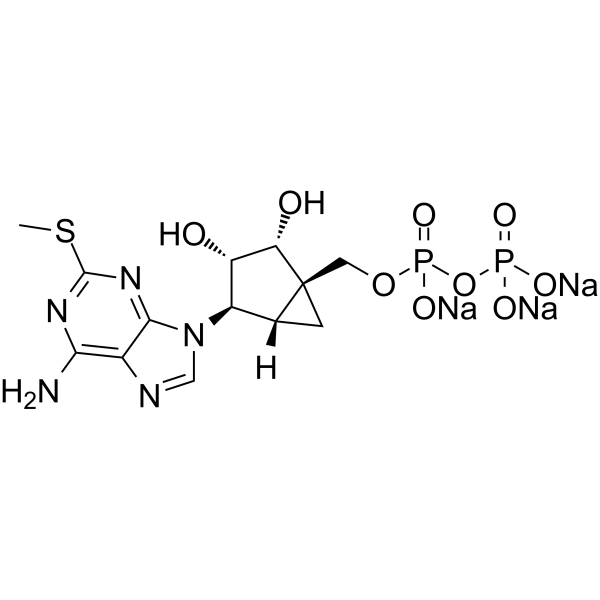 0 ImagesCat. No.: HY-108656APurity: 99.8%MRS2365 trisodium is a potent and selective P2Y1 receptor (EC50=0.4 nM)/[35S]GTPγS binding/β-arrestin 2 recruitment agonist. MRS2365 trisodium relieves mechanical allodynia and increases mechanical sensitivity.
-
SBI-810
 0 ImagesSBI-810 is a blood-brain barrier-permeable NTSR1 modulator. SBI-810 promotes the recruitment of β-arrestin-2 to NTSR1 and antagonizes NTSR1-mediated Gq activation. SBI-810 inhibits excitatory synaptic transmission, NMDA receptor and extracellular signal-regulated kinase (ERK) signaling in spinal nociceptive neurons, reduces surface expression of Nav1.7 and action potential firing in primary sensory neurons, and attenuates C-fiber responses. SBI-810 effectively alleviates acute and chronic pain in various rodent models through peripheral and central modulation. SBI-810 is applicable to research related to multiple pain disorders.
-
ELA-11(human)
 0 ImagesELA-11(human), a peptide, is a full agonist of human apelin receptor, with a pKi of 7.85. ELA-11(human) completely inhibits Forskolin-induced cAMP production and stimulates β-arrestin recruitment.
-
(S)-TXNIP-IN-1
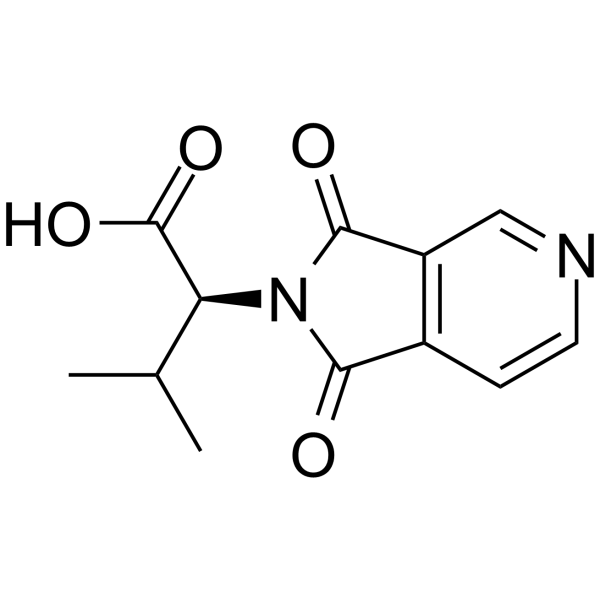 0 Images(S)-TXNIP-IN-1 is the less active S-enantiomer of TXNIP-IN-1 (HY-115688). TXNIP-IN-1 is a TXNIP-TRX complex inhibitor which can be used in the research of TXNIP-TRX complex associated metabolic disorder (diabetes), cardiovascular disease, or inflammatory disease
-
ELA-21 (human)
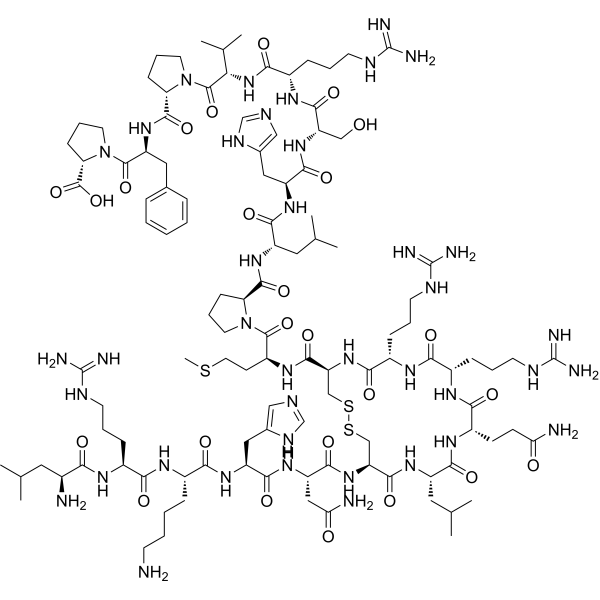 0 ImagesELA-21 (human) is an apelin receptor agonist with a pKi of 8.52. ELA-21 (human) completely inhibits Forskolin-induced cAMP production and stimulates β-arrestin recruitment with subnanomolar potencies. ELA-21 (human) is an agonist in G-protein-dependent and -independent pathways.




