



Caspase Inducer
-
BW-AQ-113
 0 ImagesCat. No.: HY-177208CAS No.: 1537900-10-9
BW-AQ-113 is an Anthraquinone (HY-N0354) derivative. BW-AQ-113 can specifically degrade MDM2 and activate the p53 pathway. BW-AQ-113 can induce apoptosis by downregulating anti-apoptotic gene Bcl-2 and regulating pro-apoptotic gene Bax and CASP3. BW-AQ-113 can be used for research of p53 wild-type hematological malignancies.
-
Lysosomal P-gp targeted agent 1
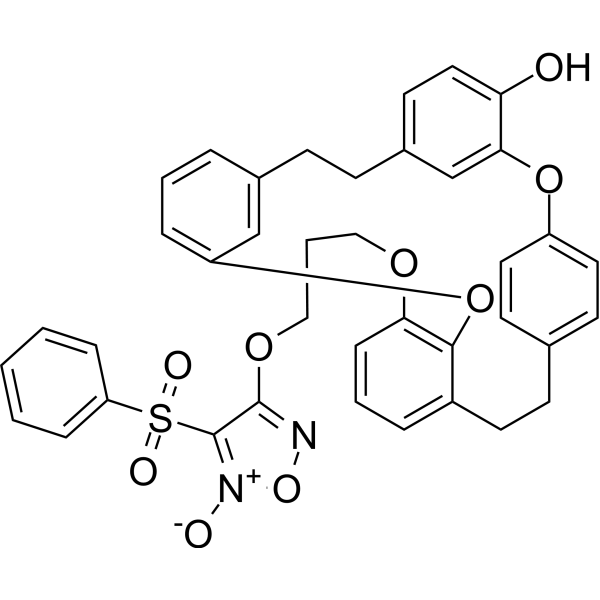 0 ImagesCat. No.: HY-168953CAS No.: 3043797-88-9
Lysosomal P-gp targeted agent 1 (Compound 14) is an anti-tumor agent targeting lysosomal P-glycoprotein (Pgp). Lysosomal P-gp targeted agent 1 is selectively transported into lysosomes by overexpressed Pgp, release nitric oxide (NO) to generate reactive oxygen species (ROS), resulting in lysosomal membrane permeabilization (LMP) and inducing apoptosis. Lysosomal P-gp targeted agent 1 can overcome P-glycoprotein-mediated drug resistance and lead to cell cycle arrest, but relatively low toxicity to normal cells. Lysosomal P-gp targeted agent 1 has antitumor activity, significantly inhibits tumor volume.
-
α-Amyrin (Standard)
 0 Images
α-Amyrin (Standard) is a pentacyclic triterpenoid compound with oral activity. α-Amyrin (Standard) activates the ERK and GSK-3β signaling pathways. α-Amyrin (Standard) can inhibit cancer cells proliferation and induce apoptosis. α-Amyrin (Standard) shows anti-bacterial and anti-inflammation activity. α-Amyrin (Standard) can reduce blood glucose level. α-Amyrin (Standard) can be used for the researches of cancer, infection, inflammation, metabolic disease and neurological disease, such as breast cancer, Streptococcus oralis infection, skin inflammation and diabetes.
-
PI3K/mTOR-IN-17
 0 ImagesCat. No.: HY-174855
PI3K/mTOR-IN-17 is a dual PI3K and mTOR inhibitor with IC50 values of 1.21 μM (PI3K), and 0.21 μM (mTOR). PI3K/mTOR-IN-17 induces cells caspase-mediated apoptosis by arresting their growth in the G1-phase. PI3K/mTOR-IN-17 upregulates the levels of caspases-3, 7, 8, and 9, p53 expression and Bax/Bcl-2 ratio. PI3K/mTOR-IN-17 suppresses the PI3K/mTOR signaling pathway. PI3K/mTOR-IN-17 can be used for research of cancer, such as non-small cell lung cancer (NSCLC).
-
Topoisomerase II-IN-24
 0 ImagesCat. No.: HY-175853CAS No.: 613254-63-0
Topoisomerase II-IN-24 is a Topoisomerase IIα inhibitor with an IC50 of 41.67 μM. Topoisomerase II-IN-24 can inhibit cancer cells proliferation, induce G2/M phase arrest and induce apoptosis. Topoisomerase II-IN-24 can be used for the research of cancer, such as colon cancer.
-
Tubulin/LSD1-IN-1
 0 ImagesCat. No.: HY-176283
Tubulin/LSD1-IN-1 is an effective dual inhibitor of Tubulin polymerization and LSD1 (IC50 = 1.72 μM). Tubulin/LSD1-IN-1 has broad-spectrum antiproliferative activity against cancer cell lines. Tubulin/LSD1-IN-1 inhibits tubulin polymerization by targeting colchicine binding sites, thereby disrupting the microtubule network in gastric cancer cells. Tubulin/LSD1-IN-1 increases the methylation levels of H3K4me1/2 and H3K9me2/3, thereby achieving epigenetic regulation. Tubulin/LSD1-IN-1 induces G2/M arrest, promotes apoptosis, and effectively inhibits colony formation of gastric cancer cells.
-
Daphnetin (Standard)
 0 Images
Daphnetin (Standard) is the analytical standard of Daphnetin. This product is intended for research and analytical applications. Daphnetin (7,8-dihydroxycoumarin), one coumarin derivative can be found in plants of the Genus Daphne, is a potent, oral active protein kinase inhibitor, with IC50s of 7.67 μM, 9.33 μM and 25.01 μM for EGFR, PKA and PKC in vitro, respectively. Daphnetin triggers ROS-induced cell apoptosis and induces cytoprotective autophagy by modulating the AMPK/Akt/mTOR pathway. Daphnetin has anti-inflammation activitity and inhibits TNF-α, IL-1 , ROS, and MDA production. Daphnetin has schizontocidal activity against malaria parasites. Daphnetin can be used for rheumatoid arthritis , cancer and anti-malarian research.
-
Clerodin
 0 Images
Clerodin (3-Deoxycaryoptinol) is a natural diterpenoid compound that can be isolated from traditional Chinese medicinal plants such as Clerodendrum infortunatum. Clerodin exhibits caspase-3 regulation, apoptosis induction, cell cycle arrest, ROS induction and glutathione depletion effects, along with anti-cancer and antifeedant activities. It shows selective cytotoxicity against leukemia cells and breast cancer cells, but has no obvious toxicity to normal human blood cells and lymphocytes. Clerodin also reduces the feeding behavior of Helicoverpa armigera larvae on cabbage leaf discs, but has no significant contact toxicity to these larvae. Clerodin can be used in research related to acute monocytic leukemia and human breast cancer.
-
Meglumine cyclic adenylate
 0 ImagesCat. No.: HY-188122CAS No.: 113960-50-2
Meglumine cyclic adenylate is a cAMP analog. Meglumine cyclic adenylate promotes STAT3 phosphorylation at Ser727 and mitochondrial translocation. Meglumine cyclic adenylate inhibits cell apoptosis by reducing cytochrome c release and caspase-3 activation. Meglumine cyclic adenylate suppresses the expression of NF-κBp65, activates adenylate cyclase 3, and inhibits phosphodiesterase 4D. Meglumine cyclic adenylate enhances myocardial contractility, increases myocardial Ca2+ influx, dilates peripheral blood vessels, improves hypotension and bradycardia, promotes spinal cord function recovery, and regulates fear extinction and anxiety-like behaviors. Meglumine cyclic adenylate can be used in research related to cerebral ischemia/reperfusion injury, systemic inflammatory response syndrome, acute T4 thoracic spinal cord injury, and post-traumatic stress disorder (PTSD).



