



GSK-3 Activator
-
Bisphenol F (Standard)
 0 ImagesSynonyms: BPF (Standard); 4,4'-Dihydroxydiphenylmethane (Standard)
Bisphenol F (Standard) is the analytical standard of Bisphenol F (HY-W014901). This product is intended for research and analytical applications. Bisphenol F is an orally active endocrine disruptor. Bisphenol F promotes ROS generation, upregulates p-AKT/p-GSK3β, and induces Apoptosis. Bisphenol F interferes with glucose metabolism, affects neurodevelopment and reproductive function. Bisphenol F reduces social novelty preference in mouse offspring. Bisphenol F can be used in bone, blood, and fat-related studies. Bisphenol F is used as a substitute for Bisphenol A (HY-18260).
-
Erlotinib-d8
 0 ImagesCat. No.: HY-50896S3CAS No.: 1266656-97-6Synonyms: CP-358774-d8; NSC 718781-d8; OSI-774-d8
Erlotinib-d8 (CP-358774-d8) is the deuterated-labeled Erlotinib (HY-50896). Erlotinib (CP-358774) is a selective, orally active EGFR tyrosine kinase inhibitor. Erlotinib also acts as a substrate and inhibitor of OATP2B1, with an IC50 of approximately 0.079 μM for inhibiting OATP2B1-mediated uptake of estrone 3-sulfate. Erlotinib blocks EGFR phosphorylation, downstream signal transduction, as well as the growth and proliferation of cancer cells. Erlotinib inhibits MMP-10-mediated renal injury, fibrotic lesions, the ERK1/2, GSK-3β and β-catenin signaling pathways, as well as the deposition of fibronectin, α-SMA, collagen and renal injury markers. Erlotinib is metabolized via CYP3A to produce the active metabolite OSI-420. Erlotinib can be used in research related to non-small cell lung cancer, gastric cancer, papillary renal cell carcinoma, EGFR inhibitor resistance and renal fibrosis.
-
Erlotinib mesylate
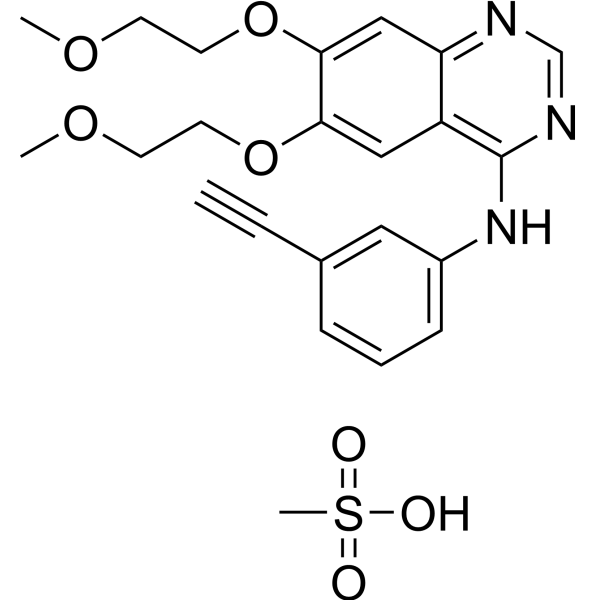 0 ImagesCat. No.: HY-12008ACAS No.: 248594-19-6Synonyms: CP-358774 mesylate; NSC 718781 mesylate; OSI-774 mesylate
Erlotinib (CP-358774) mesylate is a selective, orally active EGFR tyrosine kinase inhibitor. Erlotinib mesylate also acts as a substrate and inhibitor of OATP2B1, with an IC50 of approximately 0.079 μM for inhibiting OATP2B1-mediated uptake of estrone 3-sulfate. Erlotinib mesylate blocks EGFR phosphorylation, downstream signal transduction, as well as the growth and proliferation of cancer cells. Erlotinib mesylate inhibits MMP-10-mediated renal injury, fibrotic lesions, the ERK1/2, GSK-3β and β-catenin signaling pathways, as well as the deposition of fibronectin, α-SMA, collagen and renal injury markers. Erlotinib mesylate is metabolized via CYP3A to produce the active metabolite OSI-420. Erlotinib mesylate can be used in research related to non-small cell lung cancer, gastric cancer, papillary renal cell carcinoma, EGFR inhibitor resistance and renal fibrosis.
-
Schisantherin B (Standard)
 0 ImagesCat. No.: HY-N0695RCAS No.: 58546-55-7Synonyms: Gomisin-B (Standard); Wuweizi ester-B (Standard); Schisantherin-B (Standard)
Schisantherin B (Gomisin-B) (Standard) is the analytical standard of Schisantherin B. This product is intended for research and analytical applications. Schisantherin B is a lignan compound and one of the active components of Schisandra chinensis. Schisantherin B activates the PI3K/AKT signaling pathway, restores the activity of GSK3β, and reduces the hyperphosphorylation of tau protein in hippocampal and cerebral cortical tissues. Schisantherin B upregulates the level of GLT-1, decreases the expression of pro-inflammatory cytokines TNF-α/IL-1β/IL-6, upregulates the expression of IL-10, and inhibits cell apoptosis. Schisantherin B is applicable to the research of spinal cord injury, Alzheimer's disease and depression.
-
Acenocoumarol-d5
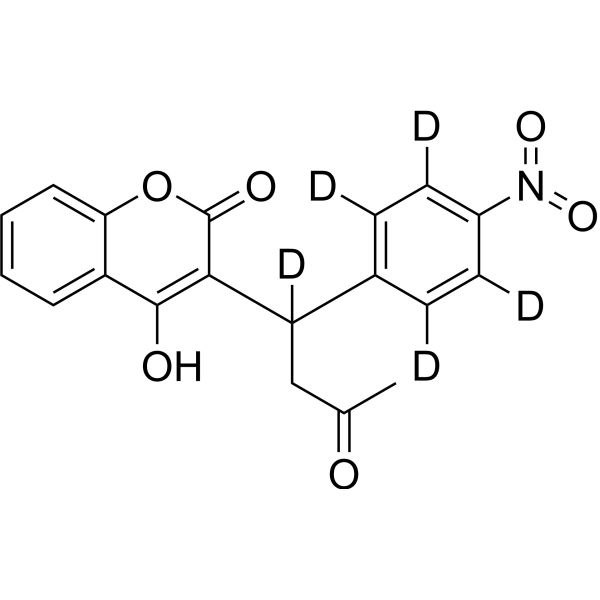 0 ImagesCat. No.: HY-B1014SCAS No.: 1185071-64-0
Acenocoumarol-d5 is the deuterium labeled Acenocoumarol (HY-B1014). Acenocoumarol is an anticoagulant that functions as a Vitamin K antagonist. Acenocoumarol inhibits MAPK/ERK/JNK signaling pathway, reduces the nuclear translocation of NF-κB p65, activates Akt/GSK3β signaling pathway. Acenocoumarol induces apoptosis in cell A549, arrests cell cycle at S phase.
-
Erlotinib-d4
 0 ImagesCat. No.: HY-50896S2CAS No.: 1130852-41-3Synonyms: CP-358774-d4; NSC 718781-d4; OSI-774-d4
Erlotinib-d4 (CP-358774-d4) is the deuterated-labeled Erlotinib (HY-50896). Erlotinib (CP-358774) is a selective, orally active EGFR tyrosine kinase inhibitor. Erlotinib also acts as a substrate and inhibitor of OATP2B1, with an IC50 of approximately 0.079 μM for inhibiting OATP2B1-mediated uptake of estrone 3-sulfate. Erlotinib blocks EGFR phosphorylation, downstream signal transduction, as well as the growth and proliferation of cancer cells. Erlotinib inhibits MMP-10-mediated renal injury, fibrotic lesions, the ERK1/2, GSK-3β and β-catenin signaling pathways, fibronectin, α-SMA, collagen deposition, and renal injury markers. Erlotinib is metabolized via CYP3A to produce the active metabolite OSI-420. Erlotinib can be used in research related to non-small cell lung cancer, gastric cancer, papillary renal cell carcinoma, pancreatic cancer, renal fibrosis, and other conditions.



