



JNK
c-Jun N-terminal kinase
JNK (c-Jun N-terminal kinase), a kinase subfamily belonging to the MAPK, is activated in response to various stress stimuli and possesses a wide variety of regulatory functions. The JNK family of serine/threonine protein kinases comprises three isoforms (JNK1, JNK2 and JNK3). JNKs are involved in the emergence and progression of diverse pathologies such as neurodegenerative, cardiovascular and metabolic disorders as well as inflammation and cancer.
Similar to the other MAP kinases, JNKs are activated by a phosphorylation cascade generally involving two types of upstream kinases, the so-called MAP kinase kinase kinases (MAP3K, MKKK) and the MAP kinase kinases (MAP2K; MKK). At the MAP2K level, JNKs are activated by MKK4 and MKK7, the former is a common activator of the JNK and the p38 MAP kinase signaling pathway. The JNK cascade shares various intersection points with other pathways making it a part of a complex signaling network.
JNK Isoform Specific Products
All Product Categories
-
JNK Related Products (534)
Related Products (534)

-
Antibodies (16)
-
JNK Isoform Comparison
-
ETI41
 0 ImagesCat. No.: HY-178166CAS No.: 2773474-99-8ETI41 is an orally active, selective TLR inhibitor that targets the nucleoside-binding Site I on TLR7 (IC50 = 0.63 μM) and TLR9 (IC50 = 0.16 μM), sparing surface TLRs (including TLR1/TLR2, TLR2/TLR6, TLR4 and TLR5). ETI41 potently inhibits endosomal TLR-mediated pro-inflammatory signaling with nanomolar activity in cellular, biophysical and in vivo assays. ETI41 suppresses the expression of inflammation-associated genes and effectively ameliorates symptoms in mouse models of psoriasis, and systemic lupus erythematosus (SLE). ETI41 can be used for autoimmune and inflammatory diseases research.
-
Actein (Standard)
 0 ImagesCat. No.: HY-N6872RCAS No.: 18642-44-9Actein (Standard) is the analytical standard of Actein. This product is intended for research and analytical applications. Actein, a triterpene glycoside, shows an inhibitory effect on cancer cells, which is isolated from the rhizomes of Cimicifuga foetida. Actein suppresses cell proliferation, induces autophagy and apoptosis through promoting ROS/JNK activation, and blunting AKT pathway in bladder cancer. Actein has little toxicity in vivo.
-
Mapk9 Rat Pre-designed siRNA Set A
 0 ImagesCat. No.: HY-RS08129
Mapk9 Rat Pre-designed siRNA Set A contains three designed siRNAs for Mapk9 gene (Rat), as well as a negative control, a positive control, and a FAM-labeled negative control.
-
Artemisic acid (Standard)
 0 ImagesCat. No.: HY-N1984RCAS No.: 80286-58-4Synonyms: Qing Hao acid (Standard); Artemisinic acid (Standard); Arteannuic acid (Standard)Artemisic acid (Standard) (Qing Hao acid (Standard)) is the analytical standard of Artemisic acid (HY-N1984). This product is intended for research and analytical applications. Artemisinic acid (Qing Hao acid) is a sesquiterpene that can be isolated from Artemisia annua L. Artemisinic acid is also an important precursor for the synthesis of Artemisinin (HY-B0094). Artemisinic acid has various pharmacological activities, such as antimalarial activity, antitumor activity, antipyretic effect, antibacterial activity, allelopathic effect, and anti-adipogenic effect.
-
αMβ2 integrin agonist-1
 0 ImagesCat. No.: HY-175288αMβ2 integrin agonist-1 (Compound 8) is a highly selective αMβ2 integrin agonist with anti-inflammatory activity (EC50=1.4 nM). αMβ2 integrin agonist-1 activates integrin-mediated cell adhesion and JNK/ERK signaling. αMβ2 integrin agonist-1 induces tumor-associated macrophage repolarization and enhances antitumor T-cell immune responses. αMβ2 integrin agonist-1 is promising for research of cancers and chronic inflammatory diseases (e.g., pancreatic cancer, rheumatoid arthritis).
-
MAPK-IN-3
 0 ImagesCat. No.: HY-169412CAS No.: 2848599-79-9MAPK-IN-3 (Compound 4a) is an anti-proliferative agent that shows particularly strong inhibitory effects on KYSE 30, HCT 116, and HGC 27, with IC50 values of 0.57 μM, 3.27 μM, and 2.28 μM, respectively. MAPK-IN-3 blocks the cell cycle via a p53-dependent mechanism and induces cell apoptosis through a p53-independent mechanism. MAPK-IN-3 downregulates the expression of cell cycle-related proteins like Cyclin D1 and cyclin B1, upregulates pro-apoptotic proteins such as cleaved PARP, cleaved caspase-7, and cleaved caspase-9, and reduces the expression of anti-apoptotic proteins like Bcl-2. Additionally, MAPK-IN-3 increases the intracellular level of ROS in KYSE 30 cells and upregulates the expression of members of the MAPK signaling pathway associated with ROS, such as p-ERK, p-p38 and p-JNK.

-
ICA-1S
 0 ImagesCat. No.: HY-183252CAS No.: 90597-15-2
-
EGFR-IN-154
 0 ImagesCat. No.: HY-173188EGFR-IN-154 (compound 4c) is an EGFR inhibitor with EC50 values of 0.16 μM, 21.73 μM and 41.56 μM against EGFR Del19, EGFR WT and EGFR L858R, respectively. EGFR-IN-154 shows anticancer activity on various cance cell lines. EGFR-IN-154 induces mitochondrial apoptosis, and decreases pERK1/2 and pAkt levels, but increases pJNK and pp38 levels.
-
MAPK10 Human Pre-designed siRNA Set A
 0 ImagesCat. No.: HY-RS08095
MAPK10 Human Pre-designed siRNA Set A contains three designed siRNAs for MAPK10 gene (Human), as well as a negative control, a positive control, and a FAM-labeled negative control.
-
Aloisine A
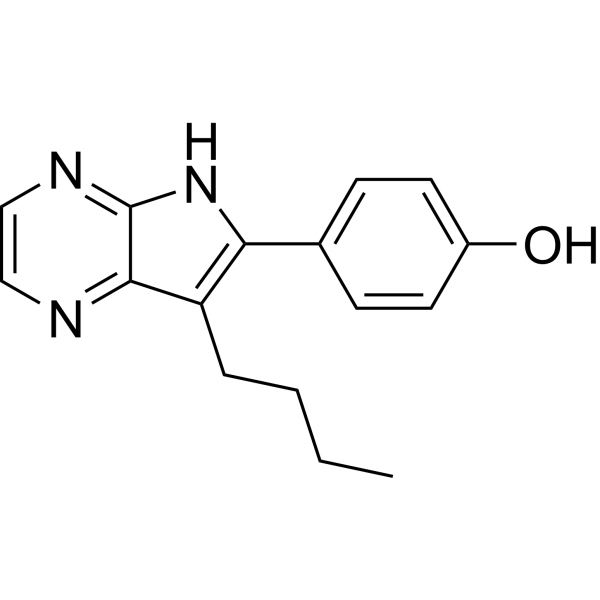 0 ImagesCat. No.: HY-112363CAS No.: 496864-16-5Synonyms: RP107Aloisine A (RP107) is a a potent cyclin-dependent kinase (CDK) inhibitor with IC50s of 0.15 μM, 0.12 μM, 0.4 μM, 0.16 μM for CDK1/cyclin B, CDK2/cyclin A, CDK2/cyclin E, CDK5/p35, respectively. Aloisine A ininhibits GSK-3α (IC50=0.5 μM) and GSK-3β (IC50=1.5 μM). Aloisine A stimulates wild-type CFTR and mutated CFTR, with submicromolar affinity by a cAMP-independent mechanism. Aloisine A has the potential for CFTR-related diseases, including cystic fibrosis research.
-
CC-401 dihydrochloride
 0 ImagesCat. No.: HY-13022BCAS No.: 2319601-04-0CC-401 dihydrochloride is a potent inhibitor of all three forms of JNK with Ki of 25 to 50 nM.
-
JAK3-IN-13
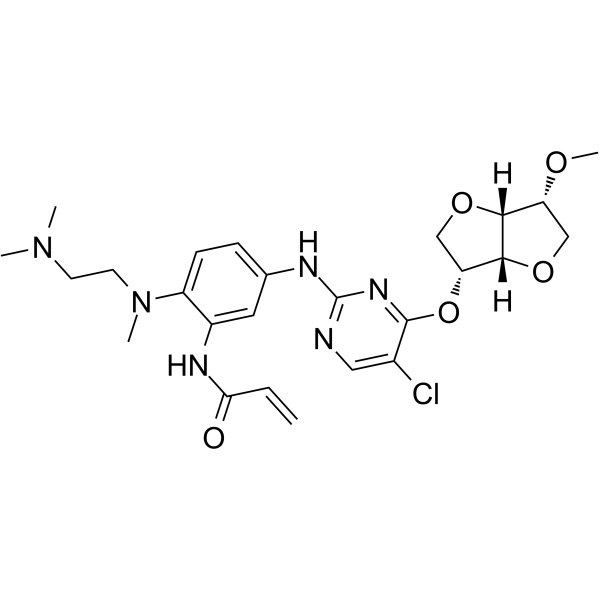 0 ImagesCat. No.: HY-150688CAS No.: 2803329-86-2
-
Pestanoid A
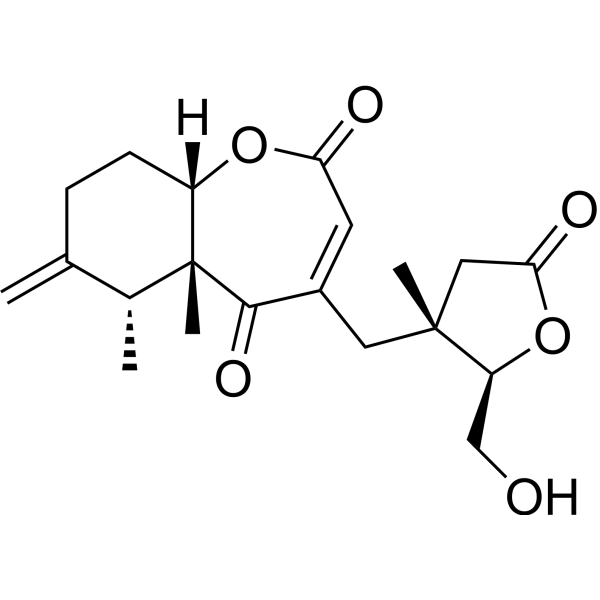 0 ImagesCat. No.: HY-N12561Pestanoid A is a rearranged pimarane diterpenoid osteoclastogenesis inhibitor with an IC50 of 4.2 μM. Pestanoid A can be isolated from the marine mesophotic zone chalinidae sponge-associated fungus, Pestalotiopsis sp. NBUF145. Pestanoid A inhibits the receptor activator of NF-kB ligand-induced MAPK and NF-κB signaling by suppressing the phosphorylation of ERK1/2-JNK1/2-p38 MAPKs and NF-κB nuclear translocation. Pestanoid A can be used for the study of osteoporosis.
-
Arnicolide B
 0 ImagesCat. No.: HY-N19215CAS No.: 34532-66-6Arnicolide B is a sesquiterpene lactone. Arnicolide B is isolated from Centipeda minima. Arnicolide B inhibits the phosphorylation of ERK, JNK and p38 proteins in the MAPK signaling pathway. Arnicolide B reduces the production of inflammatory mediators NO, PGE2 and IL-6. Arnicolide B downregulates the overexpression of inflammatory proteins iNOS and COX-2. Arnicolide B has no effect on IκB-α degradation or NF-κB pathway activation. Arnicolide B is applicable to inflammation-related research.
-
MAPK9 Human Pre-designed siRNA Set A
 0 ImagesCat. No.: HY-RS08127
MAPK9 Human Pre-designed siRNA Set A contains three designed siRNAs for MAPK9 gene (Human), as well as a negative control, a positive control, and a FAM-labeled negative control.
-
Nur77 antagonist 2
 0 ImagesCat. No.: HY-179033Nur77 antagonist 2 (Compound 12b) is an orally active Nur77 antagonist with a KD value of 0.42 μM. Nur77 antagonist 2 exhibits proliferative activity on liver cancer cells. Nur77 antagonist 2 stabilizes Nur77 by inhibiting its ubiquitin-proteasomal degradation, leading to Nur77-dependent apoptosis via the ASK1-JNK/p38 pathway. Nur77 antagonist 2 inhibits tumor growth in the HCCLM3 xenograft model. Nur77 antagonist 2 can be used for the study of hepatocellular carcinoma (HCC).
-
JNK-IN-21
 0 ImagesCat. No.: HY-169736CAS No.: 756849-36-2JNK-IN-21 (Compound 62) is a JNK-1 inhibitor.
-
MT-21
 0 ImagesCat. No.: HY-136602CAS No.: 186379-49-7




