



MDM-2/p53
The p53 tumor suppressor is a principal mediator of growth arrest, senescence, and apoptosis in response to a broad array of cellular damage. p53 is a short-lived protein that is maintained at low, often undetectable, levels in normal cells. Under stress conditions, the p53 protein accumulates in the cell, binds in its tetrameric form to p53-response elements and induces the transcription of various genes.
MDM-2 is transcriptionally activated by p53 and MDM-2, in turn, inhibits p53 activity in several ways. MDM-2 binds to the p53 transactivation domain and thereby inhibits p53-mediated transactivation. MDM-2 also contains a signal sequence that is similar to the nuclear export signal of various viral proteins and, after binding to p53, it induces its nuclear export. As p53 is a transcription factor, it needs to be in the nucleus to be able to access the DNA; its transport to the cytoplasm by MDM-2 prevents this. Finally, MDM-2 is a ubiquitin ligase, so is able to target p53 for degradation by the proteasome.
In many tumors p53 is inactivated by the overexpression of the negative regulators MDM2 and MDM4 or by the loss of activity of the MDM2 inhibitor ARF. The pathway can be reactivated in these tumors by small molecules that inhibit the interaction of MDM2 and/or MDM4 with p53. Such molecules are now in clinical trials.
All Product Categories
-
MDM-2/p53 Inhibitors
(108)
View all products
-
MDM-2/p53 Agonists
(8)
View all products
-
MDM-2/p53 Antagonists
(4)
View all products
-
MDM-2/p53 Activators
(133)
View all products
-
MDM-2/p53 Modulators
(24)
View all products
-
MDM-2/p53 MDM2 Inhibitors
(67)
View all products
-
MDM-2/p53 p53 Activators
(108)
View all products
-
MDM-2/p53 p53 Inhibitors
(16)
View all products
-
MDM-2/p53 Inducers
(17)
View all products
-
MDM-2/p53 Degraders
(6)
View all products
-
MDM-2/p53 Controls
(6)
View all products
-
MDM-2/p53 Ligands
(7)
View all products
-
MDM-2/p53 Related Products (580)
Related Products (580)

-
Antibodies (17)
-
MDM-2/p53 Signaling Pathway
-
Anticancer agent 65
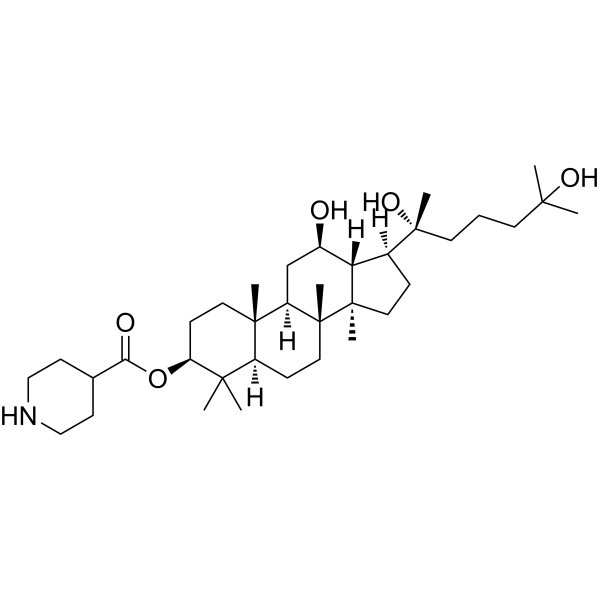 0 ImagesCat. No.: HY-146105CAS No.: 2407861-48-5Anticancer agent 65 (compound 4c) shows excellent activity in cancer cell lines, especially A549 cells, with an IC50 of 1.07 μM. Anticancer agent 65 induces S-phase arrest in A549 cells and increases the expression level of p53 and p21. Anticancer agent 65 causes apoptosis, ROS generation and collapse of MMP in A549 cells.
-
MDM2-IN-27
 0 ImagesCat. No.: HY-180508MDM2-IN-27 (Compound 20k) is an MDM2 inhibitor. MDM2-IN-27 can effectively block the inhibitory effect of MDM2 on p53, thereby activating the p53 pathway. MDM2-IN-27 has a certain topoisomerase I inhibitory activity and has a very weak inhibitory effect on topoisomerase IIα. MDM2-IN-27 exhibits significant anti-proliferative activity against breast cancer, colon cancer, and cutaneous squamous cell carcinoma.
-
XM-U-14
 0 ImagesCat. No.: HY-159175CAS No.: 3098519-83-3XM-U-14 is a selective PROTAC USP7 Degrader (DC50: 0.74 nM in inducing USP7 degradation in RS4;11 cell line). XM-U-14 upregulates the levels of p53 and p21. XM-U-14 also significantly inhibits acute lymphoblastic leukemia (ALL) cell growth (IC50: 0.5 nM and 8.3 nM for RS4;11 cells and Reh cells respectively). XM-U-14 induces apoptosis and cycle arrest. XM-U-14 inhibits tumor growth. (Blue: VHL ligand (HY-159465), Black: linker (HY-W539783); Pink: USP7 inhibitor (HY-159464)).
-
Mutant p53 modulator-2
 0 ImagesCat. No.: HY-176916CAS No.: 2636847-01-1Mutant p53 modulator-2 (Compound 1988) is a mutant p53 modulator. Mutant p53 modulator-2 can be used in the research of cancer.
-
Phage-derived 12/1 peptide
 0 ImagesCat. No.: HY-P10286CAS No.: 186180-20-1Phage-derived 12/1 peptide exhibits antitumor activity by targeting MDM2 and MDMX, an thus disrupt the MDM2-p53 and MDMX-p53 interaction, with IC50 of 0.15 and 1.25 μM.
-
Glycocholic acid sodium (Standard)
 0 ImagesCat. No.: HY-N1423ARCAS No.: 863-57-0Glycocholic acid (sodium) (Standard) is the analytical standard of Glycocholic acid sodium (HY-N1423A). This product is intended for research and analytical applications. Glycocholic acid sodium is a bile acid derivative. Glycocholic acid downregulates MDR1, Bcl-2, MRP1, MRP2 and FXR, upregulates Bax, p53, caspase-9, caspase-3, TGR5 and S1PR2. Glycocholic acid sodium inhibits multidrug resistance and efflux pumps, induces mitochondrial apoptosis, and enhances chemosensitivity. Glycocholic acid sodium modulates related bile acid receptor signaling. Glycocholic acid sodium suppresses growth and conjugation of Enterobacteriaceae and increases their antibiotic susceptibility. Glycocholic acid sodium can be used for the research of colon adenocarcinoma and cholangiocarcinoma (CCA).
-
p53 Activator 8
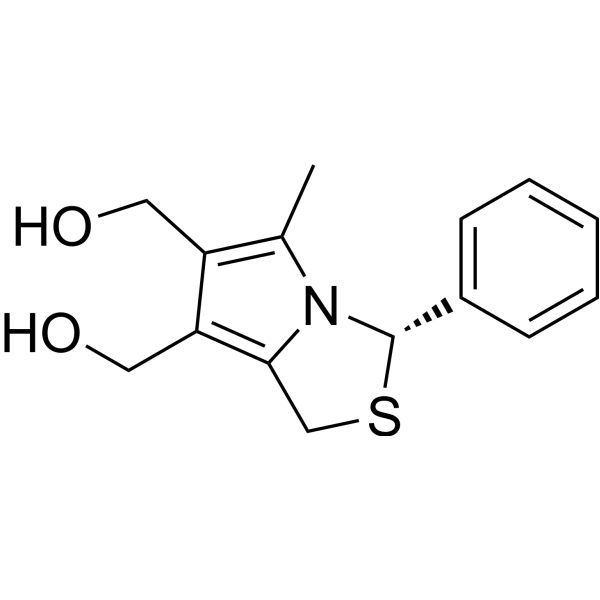 0 ImagesCat. No.: HY-156919CAS No.: 1426937-93-0p53 Activator 8 (compound 5) is a p53 activator. p53 Activator 8 has potent anti-proliferative activity against MCF7 breast cancer cell lines with an IC50 value of 0.5 μM.
-
EGFR-IN-191
 0 ImagesCat. No.: HY-181093EGFR-IN-191 is an anti-tumor agent targeting both EGFR and AKT. EGFR-IN-191 exerts its anti-tumor activity by inducing DNA damage, apoptosis, cell cycle arrest, and inhibition of the PI3K/AKT-EGFR signaling pathway in tumor cells. EGFR-IN-191 can be used in the study of tumors such as triple-negative breast cancer.

-
AM-8735
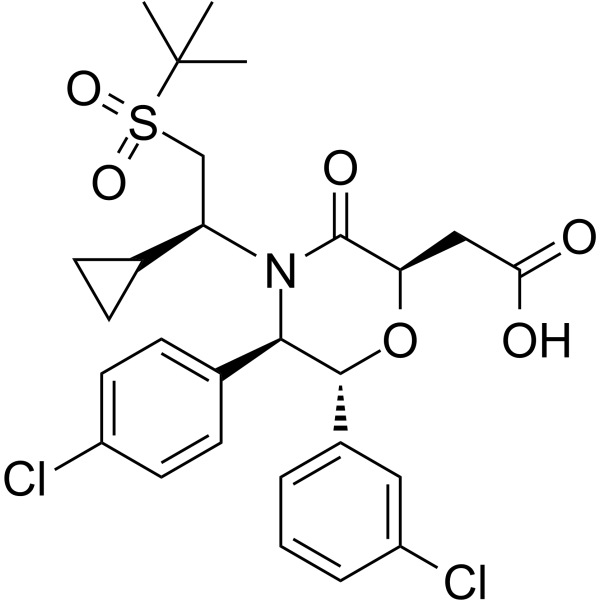 0 ImagesCat. No.: HY-12734CAS No.: 1429386-01-5AM-8735 is a potent and selective MDM2 inhibitor with an IC50 of 25 nM.
-
Briciclib sodium
 0 ImagesCat. No.: HY-16366ACAS No.: 865784-01-6Synonyms: ON 014185 sodiumBriciclib (ON 014185) sodium is a eukaryotic translation initiation factor 4E (eIF4E) inhibitor. Briciclib sodium exhibits broad-spectrum anti-cancer activity, including in mantle cell leukemia, breast cancer, gastric cancer, and esophageal cancer cells. Briciclib sodium reduces the expression of cyclin D1 and c-Myc, and enhances the expression of P53 and Cleaved Caspase 3 pro-apoptotic proteins. Briciclib sodium can be used for the study of hematological system tumors and solid tumors.

-
P53/BET TCIP-1
 0 ImagesCat. No.: HY-184518P53/BET TCIP-1 (Compound 47) is a dual-functional hybrid molecule that possesses both reactivation of p53 Y220C (EC50 ≤ 100 nM) and inhibition of BRD4/BET (EC50 ≤ 500 nM) dual activities. P53/BET TCIP-1 exhibits significant inhibitory proliferation activity in p53 Y220C mutant tumor cells. P53/BET TCIP-1 can be used to study p53 Y220C mutation-related cancers (such as ovarian cancer, pancreatic cancer, gastric cancer, etc.).
-
Apoptosis inducer 56
 0 ImagesCat. No.: HY-181060CAS No.: 952306-31-9Apoptosis inducer 56 is an apoptosis inducer. Apoptosis inducer 56 induces DNA damage (upregulation of γH2AX and p-ATM expression) by minor groove binding. Apoptosis inducer 56 induces intrinsic apoptosis (upregulation of p53 and Bax/Bcl-2 ratio, cleaved caspase-7) via S-phase cell cycle arrest. Apoptosis inducer 56 shows selectivity for cancer cells over normal breast epithelial cells. Apoptosis inducer 56 can be used for the research of breast cancer.
-
4-Hydroxyestrone-13C6
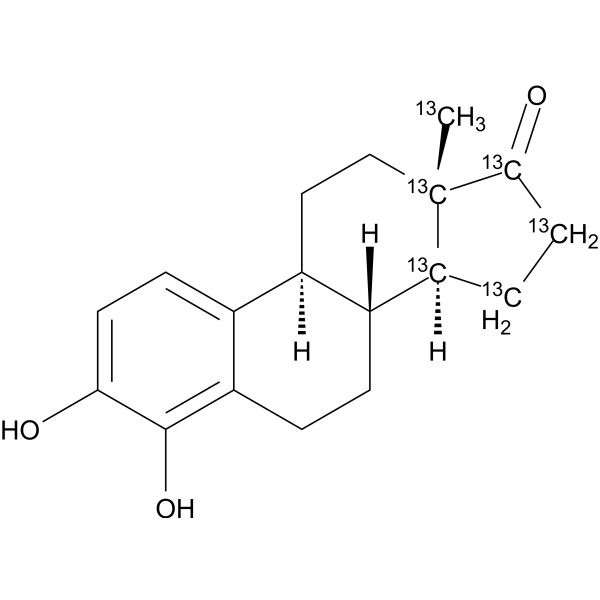 0 ImagesCat. No.: HY-W009300S1Synonyms: 4-OHE1-13C64-Hydroxyestrone (4-OHE1)-13C6 is a 13C-labeled 4-Hydroxyestrone (HY-W009300). 4-Hydroxyestrone is a brain-penetrant estrogen metabolite. 4-Hydroxyestrone shows neuroprotective effects involving increased cytoplasmic localization of p53 resulting from SIRT1-mediated p53 deacetylation. 4-Hydroxyestrone relies on PDI to mediate its protective effect against chemically induced ferroptosis in estrogen receptor-negative cancer cells. 4-Hydroxyestrone inhibits lipid peroxidation and lipid-ROS accumulation. 4-Hydroxyestrone blocks preovulatory luteinizing hormone surges in Rattus norvegicus. 4-Hydroxyestrone can be used for the researches of neurodegeneration, breast cancer and endocrine disease.
-
LLQ-45
 0 ImagesCat. No.: HY-182744LLQ-45 is a covalent p53Y220C mutant protein agonist with an EC50 of 24.97 μM. LLQ-45 activates the anti-tumor function of p53Y220C through covalent modification, restores its DNA-binding ability and enhances its thermal stability. LLQ-45 selectively inhibits the proliferation of p53Y220C mutant tumor cells, suppresses cell growth and upregulates the expression of CDKN1A. LLQ-45 can be used in studies related to p53Y220C mutant cancers.
-
GEM-5
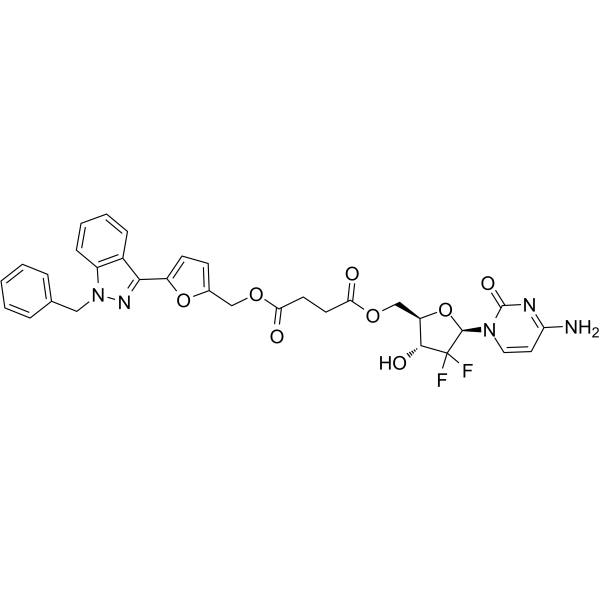 0 ImagesCat. No.: HY-146540CAS No.: 2233543-49-0
-
Minocycline-d6
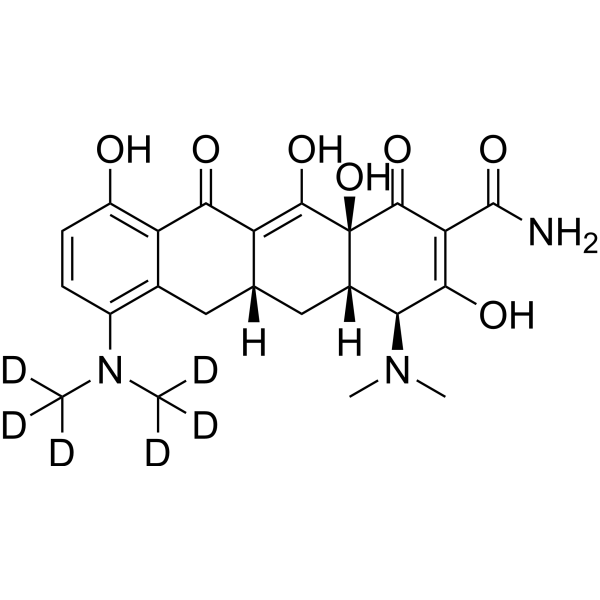 0 ImagesCat. No.: HY-17412ASCAS No.: 1036070-10-6Minocycline-d6 is deuterium labeled Minocycline (HY-17412A). Minocycline is an orally active, potent and BBB-penetrated semi-synthetic tetracycline antibiotic. Minocycline is a hypoxia-inducible factor (HIF)-1α inhibitor. Minocycline shows anti-cancer, anti-inflammatory, and glutamate antagonist effects. Minocycline reduces glutamate neurotransmission and shows neuroprotective properties and antidepressant effects. Minocycline inhibits bacterial protein synthesis through binding with the 30S subunit of the bacterial ribosome, resulting in a bacteriostatic effect.
-
NSC666715
 0 ImagesCat. No.: HY-120105CAS No.: 170747-33-8NSC666715 is a DNA polymerase β (Pol-β) inhibitor. NSC666715 directly and specifically interacts with Pol-β, interferes with its binding to damaged DNA, blocks its dRP lyase activity, and inhibits Pol-β-mediated SN- and LP-BER. NSC666715 induces AP site accumulation and S-phase cell cycle arrest, and triggers senescence and apoptosis (apoptosis) via the p53/p21 pathway in colorectal cancer cells. NSC666715 enhances TMZ (HY-17364)-induced DNA damage, senescence and apoptosis, and potentiates the cytotoxicity of TMZ. NSC666715 inhibits tumor growth in colon cancer xenograft models. NSC666715 can be used in research related to colorectal cancer.
-
MI-219
 0 ImagesCat. No.: HY-18331CAS No.: 908027-55-4MI-219 is an antagonist for MDM2 with a Ki of 13.3 μM. MI-219 inhibits the MDM2-p53 interaction, inhibits thus the proliferation of FSCCL cells, with an IC50 of 2.5 μM.




