



Smad3 Inhibitor
-
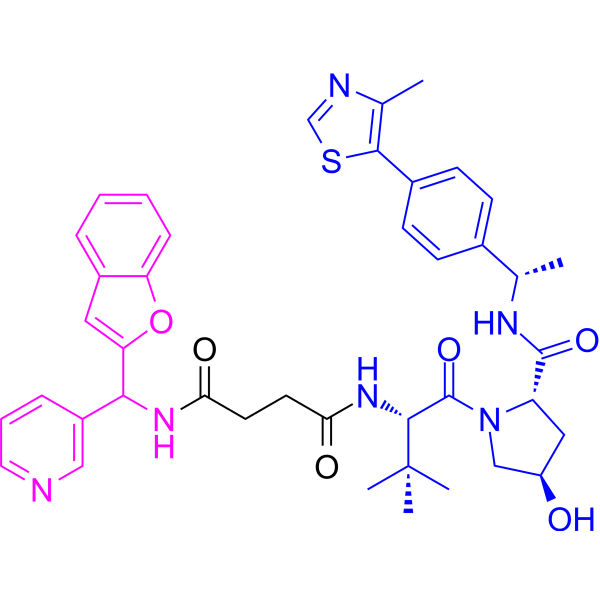
(S,R,S)-AHPC-C2-amide-benzofuranylmethyl-pyridine
 0 Images
(S,R,S)-AHPC-C2-amide-benzofuranylmethyl-pyridine is a dual-targeting PROTAC molecule. (S,R,S)-AHPC-C2-amide-benzofuranylmethyl-pyridine not only targets the ubiquitination and degradation of Smad3, but also elevates the protein level of HIF-α, thereby exerting multi-pathway anti-fibrotic and renoprotective effects. (S,R,S)-AHPC-C2-amide-benzofuranylmethyl-pyridine can be used in a wide range of tumor studies including cancers with KRAS inhibitor resistance, covering pancreatic ductal adenocarcinoma, acute myeloid leukemia, and various soft tissue sarcomas (such as fibrosarcoma, liposarcoma, chondrosarcoma, etc.). (S,R,S)-AHPC-C2-amide-benzofuranylmethyl-pyridine can also be applied to research related to various solid tumors and hematological malignancies, involving multiple cancer types such as colon cancer, breast cancer, ovarian cancer, non-small cell lung cancer, glioblastoma, and melanoma.
-
Peptide CYP9
 0 ImagesCat. No.: HY-P11914CAS No.: 3124554-07-7
Peptide CYP9 is a head-to-tail cyclic peptide derived from Antimicrobial peptide YD (HY-P11913). Peptide CYP9 inhibits the activation of the TGF-β/Smad signaling pathway, including the phosphorylation of Smad2/3. Peptide CYP9 inhibits the activation of the MAPK signaling pathway, including the phosphorylation of ERK and p38. Peptide CYP9 inhibits epithelial-mesenchymal transition. Peptide CYP9 inhibits extracellular matrix synthesis. Peptide CYP9 can be used for the research of pulmonary fibrosis.
-
CX-Se13
 0 ImagesCat. No.: HY-187219
CX-Se13 is an orally active pulmonary fibrosis inhibitor with anti-inflammatory and antioxidant activities. CX-Se13 regulates the Keap1/Nrf2/HO-1/NQO1, YAP/TAZ-TEAD, NF-κB p65 and TGF-β/Smads signaling pathways. CX-Se13 activates the cellular antioxidant defense system, restores redox balance, alleviates inflammatory responses, reduces collagen deposition, decreases pro-inflammatory cytokine levels and inhibits pathological progression. CX-Se13 can be used in studies related to pulmonary fibrosis.
-
HIPK2-IN-2
 0 ImagesCat. No.: HY-189141
HIPK2-IN-2 is an orally active and selective HIPK2 inhibitor with an IC50 of 0.36 μM against HIPK2. HIPK2-IN-2 reduces HIPK2 protein expression levels. HIPK2-IN-2 inhibits the proliferation and migration of renal interstitial fibroblasts, alleviates renal tubular injury and collagen deposition, and suppresses TGF-β/Smad3-mediated profibrotic signaling pathways as well as TNF-α/NF-κB-mediated inflammatory signaling pathways in renal cells. HIPK2-IN-2 is used for the study of chronic kidney disease-associated renal fibrosis.
-
HIPK2-IN-1
 0 ImagesCat. No.: HY-189140
HIPK2-IN-1 is an orally active and selective HIPK2 inhibitor with an IC50 of 0.56 μM. HIPK2-IN-1 exerts antifibrotic and anti-inflammatory activities. HIPK2-IN-1 binds to HIPK2, inhibits the downstream TGF‑β/Smad3, p53, and TNF‑α/NF‑κB signaling pathways, reduces the expression of fibrotic markers, suppresses cell proliferation and migration, and alleviates renal tubular injury and collagen deposition. HIPK2-IN-1 is used for the study of renal fibrosis associated with chronic kidney disease.



