



VEGFR
Vascular endothelial growth factor receptor
VEGFRs consist of three subtypes, the fms-like tyrosine kinase Flt-1 (VEGFR1/Flt-1), the kinase domain region, also referred to as fetal liver kinase (VEGFR2/KDR/Flk-1), and Flt-4 (VEGFR3). Each receptor has seven immunoglobulinlike domains in the extracellular domain, a single transmembrane region, and a consensus tyrosine kinase sequence interrupted by a kinase insert domain. VEGFR1 and 2 are expressed on vascular endothelial cells, whereas VEGFR3 is expressed on lymphatic endothelial. The VEGF family members VEGF-A, -B, -C, -D, -E, and PlGF, and the human immunodeficiency (HIV) Tat protein bind in specific patterns to three related receptor protein tyrosine kinases, VEGFR1, 2, and 3, and induce the formation of homo- and heteromeric receptor complexes. Binding of VEGF to VEGFR causes dimerization and autophosphorylation of the receptor. Intracellular proteins such as VEGFR-associated protein (VRAP), PLC, and Sck that associate with specific tyrosine residues of VEGFR are phosphorylated upon receptor activation. Several signal transduction pathways are activated by the binding of VEGF to its receptor, leading to increased proliferation, survival, permeability, and migration of cells.
VEGFR Isoform Specific Products
All Product Categories
-
VEGFR Inhibitors
(720)
View all products
-
VEGFR Agonists
(7)
View all products
-
VEGFR Antagonists
(6)
View all products
-
VEGFR Activators
(15)
View all products
-
VEGFR Modulators
(6)
View all products
-
VEGFR Chemical
(1)
View all products
-
VEGFR Inducer
(1)
View all products
-
VEGFR Degraders
(4)
View all products
-
VEGFR Ligands
(6)
View all products
-
VEGFR Proteins
(36)
View all products
-
VEGFR-1 Proteins
(10)
View all products
-
VEGFR-3 Proteins
(7)
View all products
-
VEGFR Related Products (812)
Related Products (812)

-
Recombinant Proteins (36)
-
Antibodies (9)
-
VEGFR Isoform Comparison
-
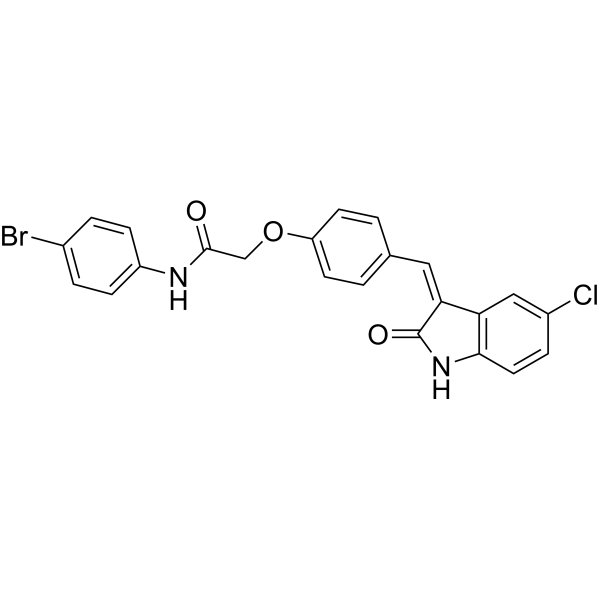
VEGFR-2-IN-74
 0 ImagesCat. No.: HY-178453VEGFR-2-IN-74 (compound 55) is a potent VEGFR-2 inhibitor (IC50 = 0.035 µM). VEGFR-2-IN-74 exhibits good anti proliferative activity and can induce apoptosis in various cancer cells, such as A549 (IC50 = 2.67 µM) and HCT116 (IC50 = 10.87 µM) cells. VEGFR-2-IN-74 has low toxicity to normal cells. VEGFR-2-IN-74 shows significant anti angiogenic effects in chicken embryo models. VEGFR-2-IN-74 can be used in the research of cancer.
-
TGP-377
 0 ImagesCat. No.: HY-176805CAS No.: 2665700-67-2TGP-377 is a potent miR-377 inhibitor that specifically and effectively enhances VEGFA expression by targeting the non-coding microRNA that regulates VEGFA expression.
-
Nastorazepide hemicalcium
 0 ImagesCat. No.: HY-14575CAS No.: 343326-69-2Synonyms: Z-360 hemicalciumNastorazepide (Z-360) hemicalcium is an orally active 1,5-benzodiazepine derivative and gastrin/CCK-2 receptor antagonist. Nastorazepide hemicalcium inhibits the specific binding of [3H]CCK-8 to the human CCK-2 receptor with a Ki value of 0.47 nM. Nastorazepide hemicalcium inhibits IL-1β, ephrin B1, VEGF, and HIF-1alpha, reduces Akt and NR2B phosphorylation. Nastorazepide hemicalcium has antitumor activity against pancreatic cancer. Nastorazepide hemicalcium inhibits colorectal cancer liver metastasis and relieves pain.
-
AG-13958 (mono(hydrochloride))
 0 ImagesCat. No.: HY-15492ACAS No.: 319463-49-5Synonyms: AG-013958 monohydrochlorideAG-13958 monohydrochloride, a potent VEGFR tyrosine kinase inhibitor, is used for treatment of choroidal neovascularization associated with age-related macular degeneration (AMD).
-
VEGFR-2-IN-13
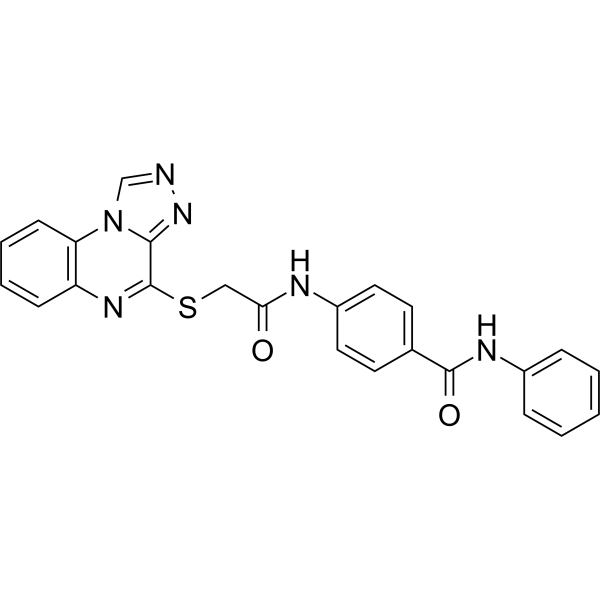 0 ImagesCat. No.: HY-144754CAS No.: 2839104-01-5VEGFR-2-IN-13 (Compound 19a) is a potent VEGFR-2 inhibitor with an IC50 of 3.4 nM. VEGFR-2-IN-13 disrupts the HepG2 cell cycle by arresting the G2/M phase and induces apoptosis.
-
VEGFR-2/DHFR-IN-1
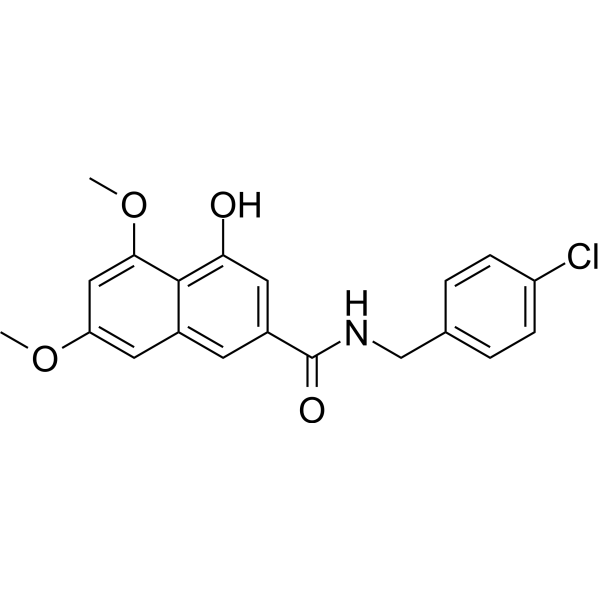 0 ImagesCat. No.: HY-151458CAS No.: 2831498-15-6VEGFR-2/DHFR-IN-1 (compound 8b) is an inhibitor of VEGFR-2 and DHFR with IC50s of 0.384 and 7.881 μM, respectively. VEGFR-2/DHFR-IN-1 shows good antibacterial activities against Escherichia coli, Streptococcus faecalis, Salmonella enterica, MSSA and MRSA with MIC values of 16, 16, 16, 8, and 16 μg/mL, respectively. VEGFR-2/DHFR-IN-1 exhibits good cytotoxic activities against C26, HepG2, and MCF7 cancer cell lines with IC50 values of 2.97-7.12 μM. VEGFR-2/DHFR-IN-1 can be used for the research of cancer.
-
Regorafenib monohydrate (Standard)
 0 ImagesSynonyms: BAY 73-4506 monohydrate (Standard)Regorafenib (monohydrate) (Standard) is the analytical standard of Regorafenib (monohydrate). This product is intended for research and analytical applications. Regorafenib (BAY 73-4506) monohydrate is an orally active and potent multi-targeted receptor tyrosine kinase inhibitor, with IC50 values of 13/4.2/46, 22, 7, 1.5 and 2.5 nM for VEGFR1/2/3, PDGFRβ, Kit, RET and Raf-1, respectively. Regorafenib monohydrate shows very robust antitumor and antiangiogenic activity.
-
AXL/Angiokinase-IN-1
 0 ImagesCat. No.: HY-170776AXL/Angiokinase-IN-1 (compound 11b) is an AXL/triple angiokinase inhibitor, IC50=3.75 nM (AXL expression). AXL/Angiokinase-IN-1 inhibits epithelial-mesenchymal transition (EMT) in Bxpc-3, blocking lung cancer cell metastasis. AXL/Angiokinase-IN-1 also inhibits vascular and fibroblast functions, promoting apoptosis (apoptosis) in cancer cells and fibroblasts. AXL/Angiokinase-IN-1 features low toxicity and good metabolic stability.
-
BAT5906
 0 ImagesCat. No.: HY-P991416BAT5906 is a human monoclonal antibody (mAb) targeting VEGFA. BAT5906 can be used in Wet age-related macular degeneration and Diabetic macular oedema research.
-
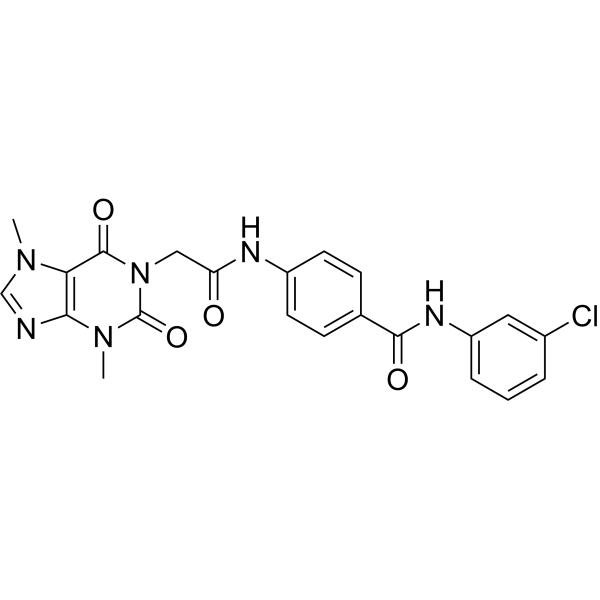
Antiangiogenic agent 9
 0 ImagesCat. No.: HY-183778CAS No.: 3091622-60-2Antiangiogenic agent 9 is an antiangiogenic agent and also a VEGFR-2 inhibitor. Antiangiogenic agent 9 induces apoptosis of breast cancer cells by activating caspase-3 (apoptosis). Antiangiogenic agent 9 exhibits antiproliferative activity against breast cancer cells. Antiangiogenic agent 9 can be used for the research of breast cancer.
-
VEGFR-2-IN-67
 0 ImagesCat. No.: HY-173365VEGFR-2-IN-67 (Compound 6b) is an inhibitor of vascular endothelial growth factor receptor 2 (VEGFR-2). Its IC50 values for MDA-231 and MCF-7 cell lines are 5.91 µM and 7.16 µM respectively, and its inhibitory effect on VEGFR-2 is comparable to that of Sorafenib (HY-10201) (IC50 is 53.63 nM). VEGFR-2-IN-67 exerts significant anti-cancer activity through mechanisms such as inducing Apoptosis (the early apoptosis rate reaches 57.20%), arresting the cell cycle at the G1 phase, upregulating pro-apoptotic markers and downregulating Bcl-2. VEGFR-2-IN-67 can be used for research in the field of cancer.
-
DSPE-PEG2000-Mal-Cys-ATWLPPR
 0 ImagesCat. No.: HY-172272ADSPE-PEG2000-A7R is a PEG compound which composed of DSPE and a tumor vascular targeting peptide (A7R). A7R exhibits high affinity and specificity for VEGFR-2, which is overexpressed in various tumors.
-
VEGFR-2-IN-28
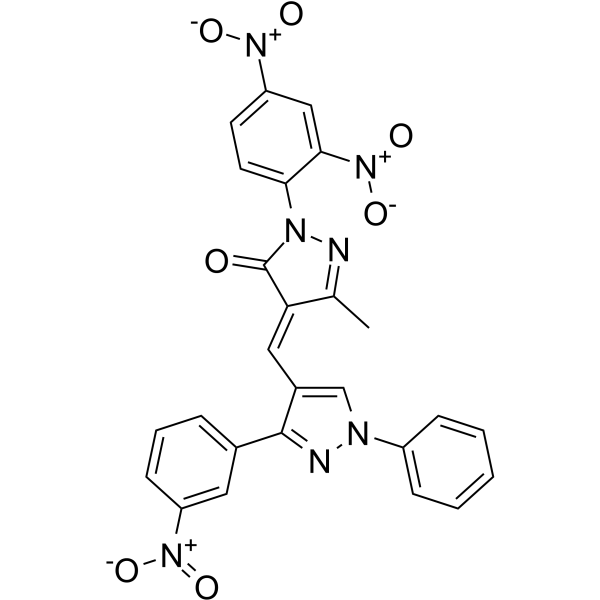 0 ImagesCat. No.: HY-147926CAS No.: 2447597-39-7VEGFR-2-IN-28 (compound 12c) is a potent VEGFR-2 inhibitor with IC50 value of 0.83 µM. VEGFR-2-IN-28 induces apoptosis and has anticancer activity.
-
ML786 dihydrochloride
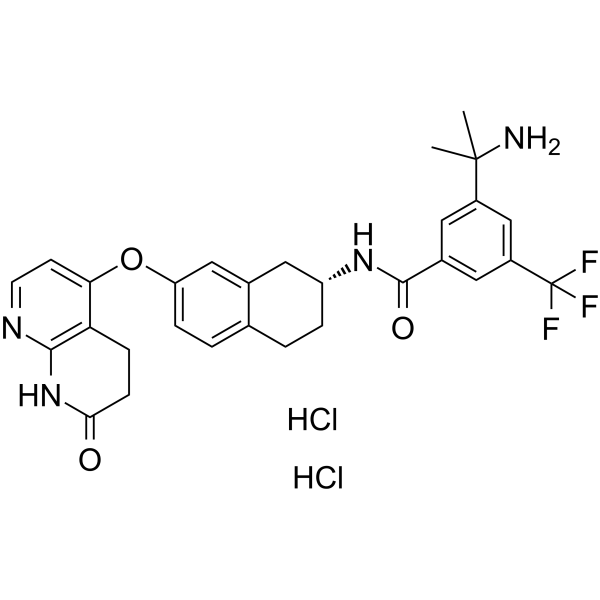 0 ImagesCat. No.: HY-14979ACAS No.: 1237536-18-3ML786 dihydrochloride is a potent and orally bioavailable Raf inhibitor, with IC50s of 2.1, 4.2, and 2.5 nM for V600EΔB-Raf, wt B-Raf, and C-Raf, respectively. ML786 dihydrochloride also inhibits Abl-1, DDR2, EPHA2, KDR, and RET (IC50=<0.5, 7.0, 11, 6.2, 0.8 nM). ML786 dihydrochloride can be used for the research of cancers.
-
VEGFR-2/DHFR-IN-2
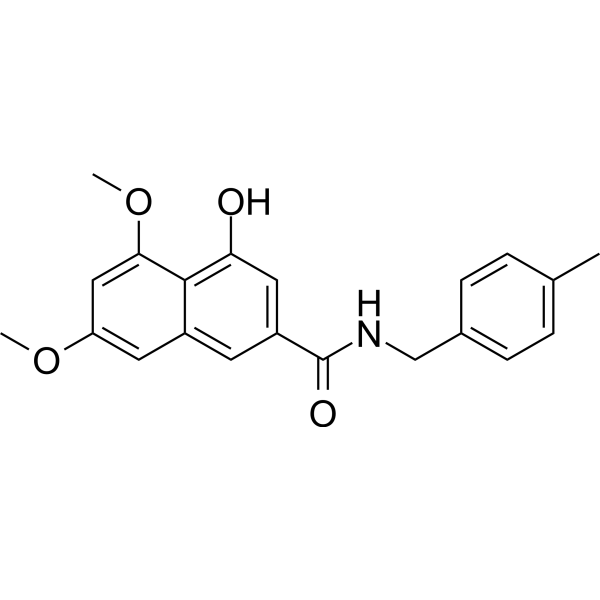 0 ImagesCat. No.: HY-151459CAS No.: 2831498-09-8VEGFR-2/DHFR-IN-2 (compound 5b) is an inhibitor of VEGFR-2 and DHFR with IC50s of 0.623 and 9.085 μM, respectively. VEGFR-2/DHFR-IN-2 exhibits good cytotoxic activities against C26, HepG2, and MCF7 cancer cell lines with IC50 values of 3.59-8.38 μM. VEGFR-2/DHFR-IN-2 can be used for the research of cancer.
-
Vandetanib-13C6
 0 ImagesCat. No.: HY-10260S2CAS No.: 1261397-03-8Synonyms: ZD6474-13C6Vandetanib-13C6 is a 13C labeled Vandetanib (HY-10260). Vandetanib (D6474) is a potent, orally active inhibitor of VEGFR2/KDR tyrosine kinase activity (IC50=40 nM). Vandetanib also has activity versus the tyrosine kinase activity of VEGFR3/FLT4 (IC50=110 nM) and EGFR/HER1 (IC50=500 nM).
-
VEGFR-2-IN-64
 0 ImagesCat. No.: HY-172112CAS No.: 3116709-87-3
-
VEGFR2-IN-3
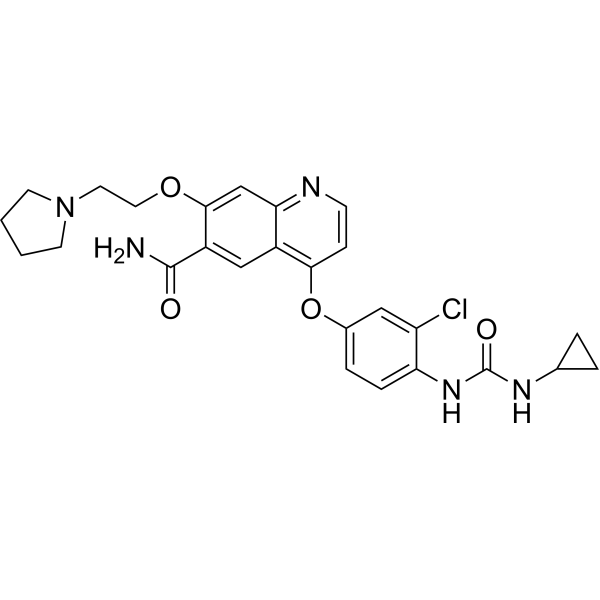 0 ImagesCat. No.: HY-153158CAS No.: 417717-09-0VEGFR2-IN-3 (compound 385) is a potent VEGFR2 inhibitor.




