



Insecticide
Insecticide
Insecticides refer to any toxic substances used to kill insects, which exert toxic effects on pests through different mechanisms, thereby achieving the purpose of controlling pest populations and protecting crops and human health. Insecticides have both chemical and biological origins and can be classified into organochlorine insecticides, organophosphorus insecticides, carbamate insecticides, and mineral insecticides based on their chemical properties. Insecticides interact with different target and non-target sites, including receptors, enzymes, and many other known and unknown molecules. Most insecticides are neurotoxicants that target the nervous system, but they can also affect other organs and body systems. Insecticides are metabolized through different metabolic pathways and often serve as biomarkers of exposure in the form of their parent compounds or metabolites. The toxicity of insecticides can be acute, subacute, or chronic, depending on the duration of exposure and the dose involved. Therefore, selecting sensitive, accurate, and validated biomarkers of exposure, effects, and susceptibility appears to be a challenging task.
Insecticides are widely used in agriculture, horticulture, forestry, gardening, homes, offices, and other fields[1][2].
All Product Categories
-
Insecticide Produits associés (530)
Produits associés (530)

-
β-Damascone (Standard)
 0 ImagesCat. No.: HY-N10013RCAS No.: 23726-91-2β-Damascone (Standard) is the analytical standard of β-Damascone. This product is intended for research and analytical applications. β-Damascone is an aroma active rice volatile and is widely used in perfume compositions. β-Damascone has also received certain attention as a potential cancer chemopreventive and a mosquito and muscoid insecticide.
-
Cymiazole
 0 ImagesCat. No.: HY-121165CAS No.: 61676-87-7Synonyms: CGA 50439Cymiazole is a miticide.

-
Demeton-S
 0 ImagesCat. No.: HY-W332450CAS No.: 126-75-0Demeton-S is an organophosphate insecticide. Demeton-S inhibits butyrylcholinesterase and acetylcholinesterase activity.
-
Prallethrin
 0 ImagesCat. No.: HY-121571CAS No.: 23031-36-9Prallethrin, a spatial mosquito repellent, is a non-fluorinated pyrethroid targeting lung surfactant proteins (SPs). prallethrin has vapor toxicity and can bind with the lung SPs by hydrogen and hydrophobic interactions, impairing functions of SPs. Prallethrin can be used for respiratory illness, pathogenic infections and malignancy research.
-
DIMBOA-Glc
 0 ImagesCat. No.: HY-W751266CAS No.: 113565-32-5DIMBOA-Glc is a benzoxazinoid glucoside insecticide that exists in two epimeric forms. DIMBOA-Glc helps enhance the resistance of maize to lepidopteran larvae. When plant cells rupture, plant-derived (2R)-DIMBOA-Glc interacts with glucosidases and undergoes hydrolysis to produce toxic DIMBOA for defense against infestation. The accumulation process of DIMBOA-Glc is negatively regulated by ZmMPK6 and the ethylene signaling pathway. DIMBOA-Glc does not react with plant glucosidases and can act as a detoxification metabolite to help insects counter plant defenses.
-
SfUAP-IN-1
 0 ImagesCat. No.: HY-183675CAS No.: 3118855-92-5SfUAP-IN-1 is an inhibitor of SfUAP (UDP-N-acetylglucosamine pyrophosphorylase from Spodoptera frugiperda) with an IC50 value of 108 nM. As a growth and development inhibitor, SfUAP-IN-1 impairs larval growth and development of Plutella xylostella (diamondback moth), Spodoptera frugiperda (fall armyworm) and Spodoptera litura (tobacco cutworm). SfUAP-IN-1 can be used in research on green pesticides targeting insect UAP.
-
Xiaochongliulin
 0 ImagesXiaochongliulin is a organophosphate insecticide. Xiaochongliulin shows insecticidal activity against citrus red mite, citrus scales, cotton bollworm, diamondback moth, and rice planthopper. Xiaochongliulin has low acute oral toxicity in rats.
-
Chlorbicyclen
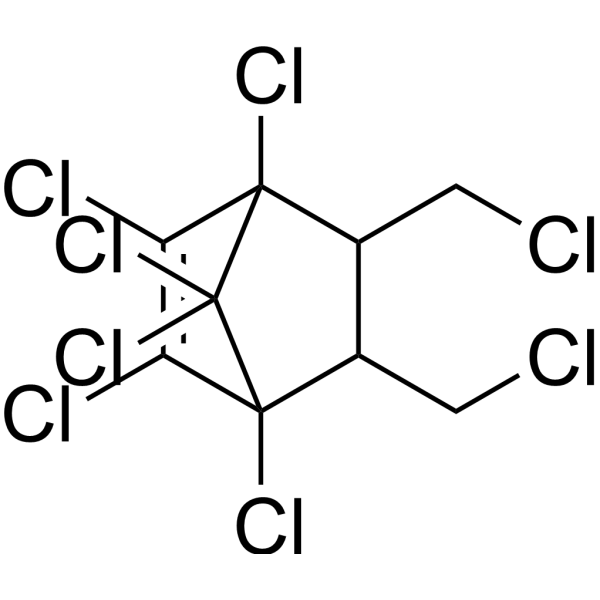 0 ImagesChlorbicyclen (Alodan) is organic chloride insecticide.
-
(Z,Z)-3,13-Octadecadien-1-ol
 0 ImagesCat. No.: HY-W780784CAS No.: 66410-24-0(Z,Z)-3,13-Octadecadien-1-ol is an insect sex pheromone used for trapping redwood resin borers (Synanthedon sequoiae (Edwards)).


-
Sarisan
 0 ImagesCat. No.: HY-116631CAS No.: 18607-93-7Synonyms: AsaricinSarisan (Asaricin) is a phenolic derivative with antifungal and insecticidal activity. Sarisan can be found in the stem bark of Ocotea opifera Mart..

-
Aspon
 0 ImagesAspon is an organophosphorus insecticide. Aspon can be utilized as phosphorus sources by bacteria.
-
Insecticidal agent 28
 0 ImagesCat. No.: HY-180778Insecticidal agent 28 (Compound 10) is an insecticide targeting the Culex pipiens. Insecticidal agent 28 exhibits LC₅₀ values for killing larvae and adults of 40.15 ppm and 55.02 ppm respectively. Insecticidal agent 28 inhibits the acetylcholinesterase (AchE) of the Anopheles gambiae. Insecticidal agent 28 shows lower cytotoxicity.
-
Satranidazole
 0 ImagesCat. No.: HY-119475CAS No.: 56302-13-7Satranidazole is an orally active insecticide and antimicrobial agent with high electron affinity. Satranidazole forms reduced nitro intermediates, which interact with DNA, causing helix instability, strand breakage and release of thymidine derivatives. Satranidazole exhibits antitrichomonal activity against Trichomonas vaginalis and Trichomonas foetus, and antiamoebic activity in rodent models of hepatic amoebiasis and caecal amoebiasis. Satranidazole inhibits the replication of bacteriophage φX174 DNA. Satranidazole can be used in research related to caecal amoebiasis, trichomoniasis and anaerobic bacterial infections.
-
Thiosultap monosodium
 0 ImagesSynonyms: MonosultapThiosultap monosodium (Monosultap) is a broad-spectrum insecticide and a competitive inhibitor of acetylcholine. Thiosultap monosodium exerts contact and stomach poisoning effects through systemic conduction in field pests. Thiosultap monosodium has teratogenic effects, induces notochord malformations in zebrafish embryos, and causes apoptosis and abnormally elevated cell proliferation in partial notochord tissues of zebrafish. Thiosultap monosodium is applicable to the research of controlling rice stem borers.
-
Fluvalinate
 0 ImagesCat. No.: HY-123320CAS No.: 69409-94-5Fluvalinate is an orally active acaricide classified as a sodium channel inhibitor. Fluvalinate delays sodium channel closure, prolongs cell membrane depolarization, inhibits the excitability of honeybee brain neurons, and exerts a central nervous system inhibitory effect. Fluvalinate negatively affects the learning ability, memory ability, sucrose responsiveness, and survival of honeybees. Fluvalinate potentiates pentobarbital-induced hypnosis, reduces spontaneous activity in mice, and decreases the total white blood cell count and absolute lymphocyte count in mice. Fluvalinate induces acute toxic symptoms in rats, acts as a cholinergic stimulant, and induces the production of hepatic enzymes in rats. Fluvalinate causes the death of Varroa jacobsoni sensitive to τ-Fluvalinate (HY-B2021). Fluvalinate can be used in studies related to mite pest control.
-
Benoxafos
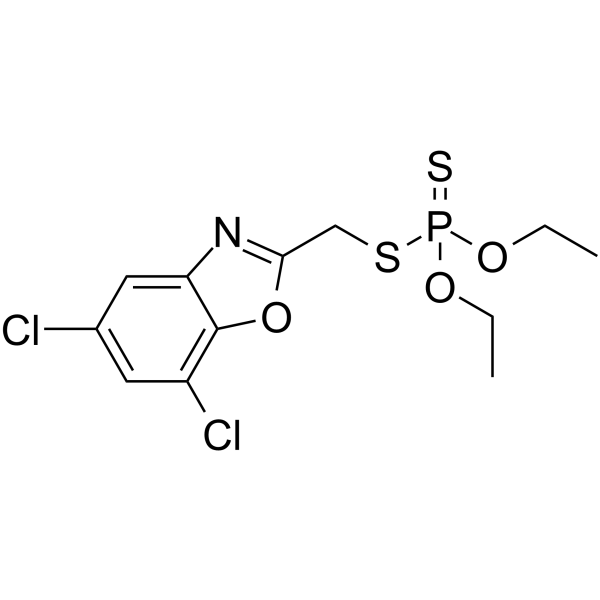 0 ImagesCat. No.: HY-17524CAS No.: 16759-59-4Synonyms: HOE 2910Benoxafos (HOE 2910) is an insecticide.



