



Phospho-eNOS (Ser1177) Antibody
(Synonyms: eNOS (phospho S1177); eNOS(phospho S1177); p-eNOS (phospho S1177); eNOS (Phospho-Ser1177); cNOS; Constitutive NOS; EC NOS; ecNOS; Endothelial nitric oxidase synthase; Endothelial nitric oxide synthase; Endothelial nitric oxide synthase 3; Endothelial NOS; Nitric oxide synthase 3 (endothelial cell); Nitric oxide synthase 3; Nitric oxide synthase 3 endothelial cell; Nitric oxide synthase endothelial; nitric oxide synthase, endothelial; NOS 3; NOS III; NOS type III; NOS3; NOSIII; NOS3_HUMAN.)Based on 1 publication(s) in Google Scholar
Phospho-eNOS (Ser1177) Antibody is a Rabbit-derived and non-conjugated IgG polyclonal antibody, targeting to Phospho-eNOS (Ser1177).
-
Host:
Rabbit
-
Isotype:
IgG
-
Application:
WB, ELISA, IHC-P, IHC-F, FC, ICC/IF
-
Reactivity :
Human, Mouse
-
Formulation:
Supplied in 0.01M TBS(pH7.4) with 1% BSA, 0.03% Proclin300 and 50% Glycerol or 0.01M TBS (pH7.4) with 1% BSA, 0.02% Proclin300 and 50% Glycerol.
-
Conjugation:
Non-conjugated


To place orders, for customer services and technical support, please contact: MedChemExpress USA
Tel: 609-228-6898 E-mail: [email protected] [email protected]



Publications Citing Use of MedChemExpress (MCE) Phospho-eNOS (Ser1177) Antibody
More

Applications
| Application |
WB

WB: Western Blot
|
ELISA
ELISA: Enzyme Linked Immunosorbent Assay
|
IHC-P
IHC-P: Immunohistochemistry-Paraffin
|
IHC-F
IHC-F: Immunohistochemistry-Frozen
|
FC
FC: Flow Cytometry
|
ICC/IF
ICC/IF: Immunocytochemistry/
Immunofluorescence |
|---|---|---|---|---|---|---|
| Dilution Ratio | 1:500-2000 | 1:5000-10000 | 1:100-500 | 1:100-500 | 2μg :Test | 1:100-500 |


Product Details
Phospho-eNOS (Ser1177) Antibody is a Rabbit-derived and non-conjugated IgG polyclonal antibody, targeting to Phospho-eNOS (Ser1177).
-
Host Rabbit

-
Clonality Polyclonal

-
Species ReactivityHuman, Mouse Predicted Reactivity: Rat,Dog,Pig,Cow,Rabbit,Sheep,GuineaPig
Note: The predicted reactivity is for reference only and should not be considered a guarantee of product performance.
-
Observed Molecular WeightObserved band size: 135 kDa
Note: Due to possible protein modifications or aggregation, the molecular weight should be confirmed by actual measurement, and the predicted value is for reference only.

-
Calculated Molecular Weight Predicted band size: 133 kDa

KLH conjugated Synthesised phosphopeptide derived from mouse eNOS around the phosphorylation site of Ser1177: TQ(p-S)FS
Endogenous
affinity purified
Non-conjugated
Phosphorylated
IgG


Product Properties
-
Appearance
Solution
-
Formulation
Supplied in 0.01M TBS(pH7.4) with 1% BSA, 0.03% Proclin300 and 50% Glycerol or 0.01M TBS (pH7.4) with 1% BSA, 0.02% Proclin300 and 50% Glycerol.
-
Concentration
Batch-dependent, Please check the COA for the concentration of each lot. Check Lot Concentration
-
Storage & Stability
Stored at -20°C for 1 year. Avoid repeated freeze / thaw cycles.
-
Shipping
Shipping with blue ice.


Publications (1)
-
Journal Impact Factor
-
Most Recent


Verification Images
-
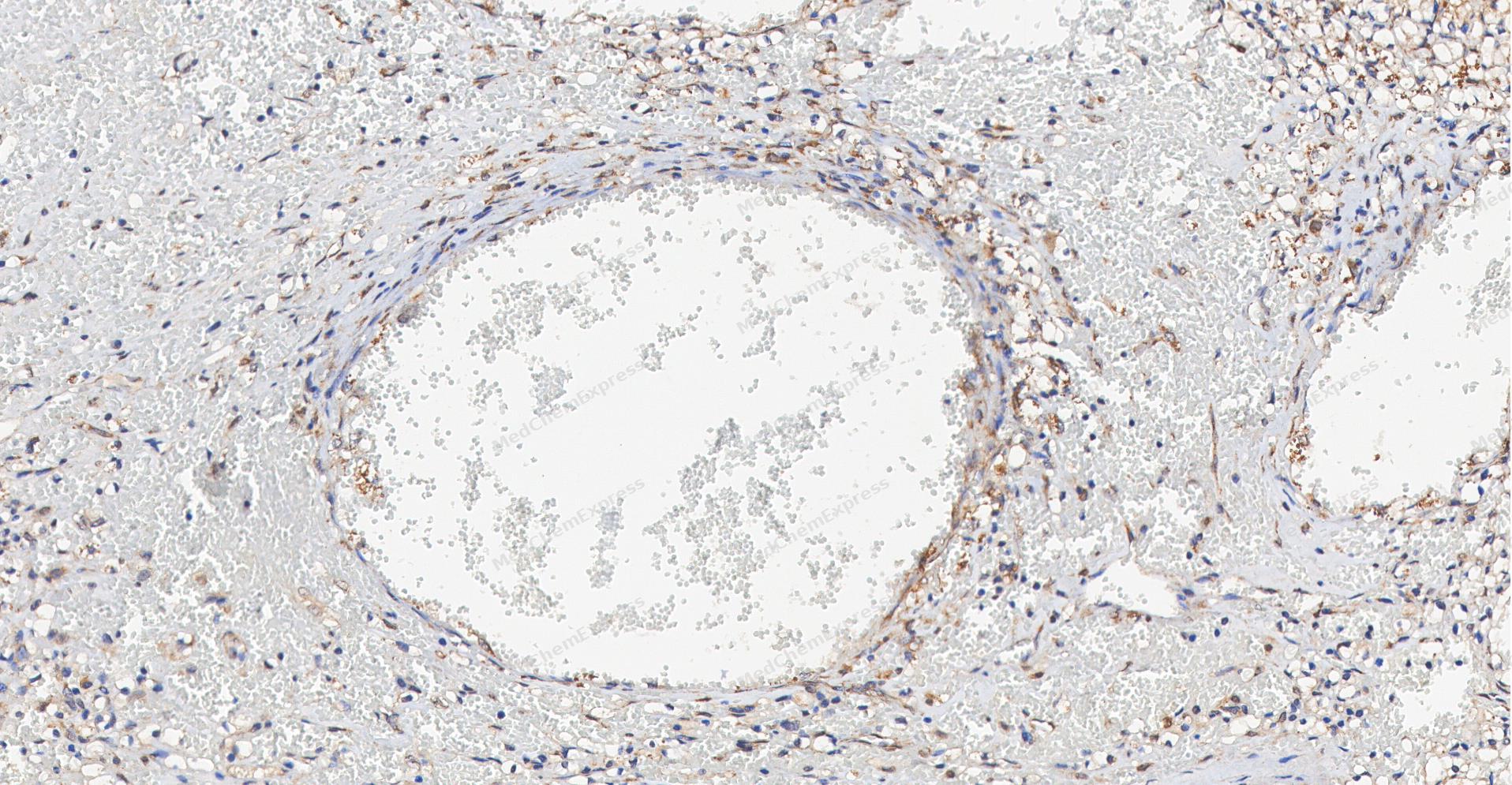 Immunohistochemical analysis of paraffin-embedded human Kidney cancer tissue using Phospho-eNOS (Ser1177) antibody was performed. The section was pretreated using high-temperature and high-pressure mediated EDTA antigen retrieval buffer (pH 9.0), for 5 minutes. The tissues were incubated with primary antibody (HY-P81191, 1:100 dilution) at room temperature for 30 minutes. Detection was performed using an HRP conjugated compact polymer system. DAB was used as the chromogen. The tissues were counterstained with hematoxylin and mounted with neutral balsam mounting medium.
 -
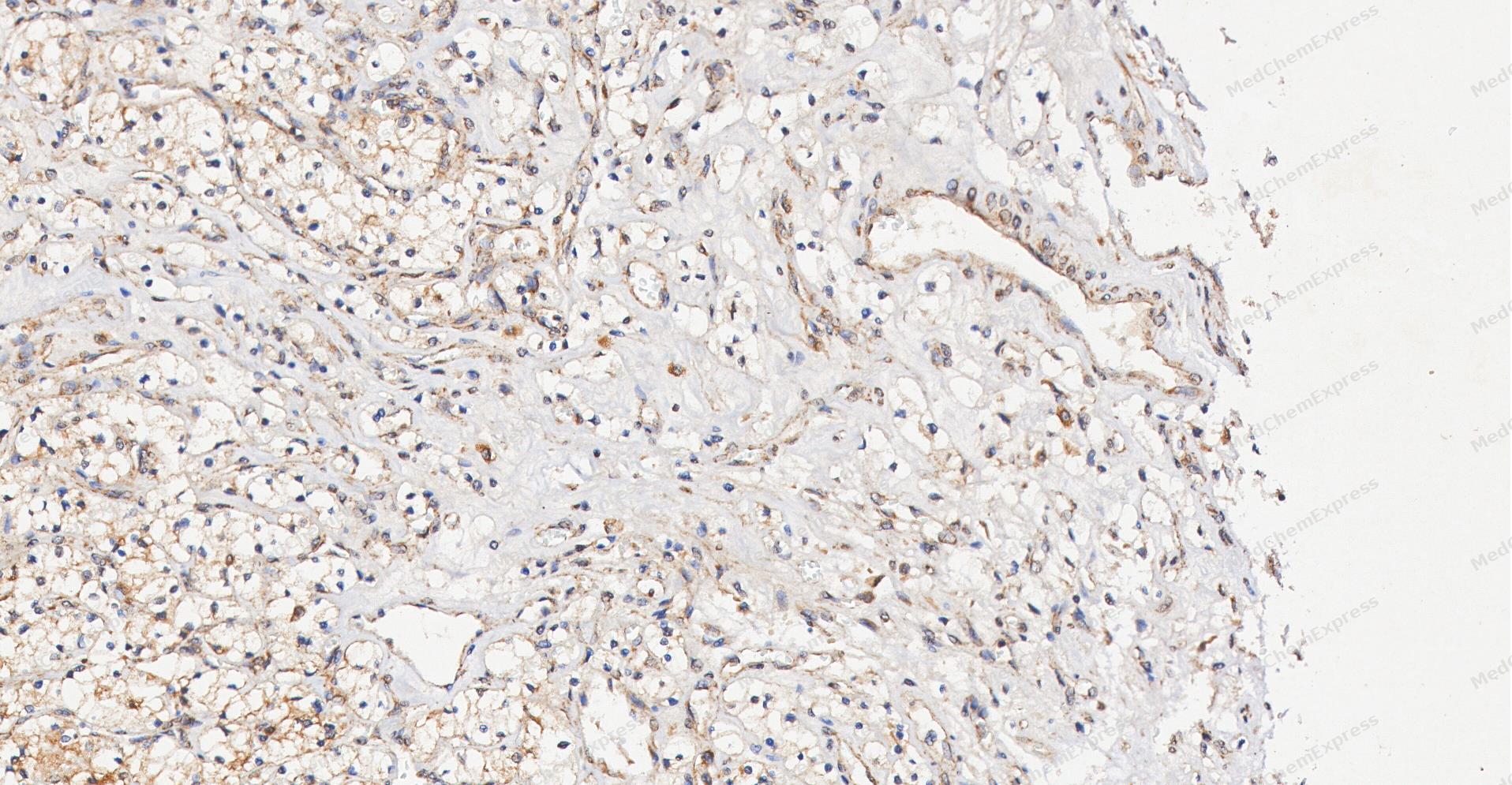 Immunohistochemical analysis of paraffin-embedded human Kidney cancer tissue using Phospho-eNOS (Ser1177) antibody was performed. The section was pretreated using high-temperature and high-pressure mediated EDTA antigen retrieval buffer (pH 9.0), for 5 minutes. The tissues were incubated with primary antibody (HY-P81191, 1:100 dilution) at room temperature for 30 minutes. Detection was performed using an HRP conjugated compact polymer system. DAB was used as the chromogen. The tissues were counterstained with hematoxylin and mounted with neutral balsam mounting medium.
 -
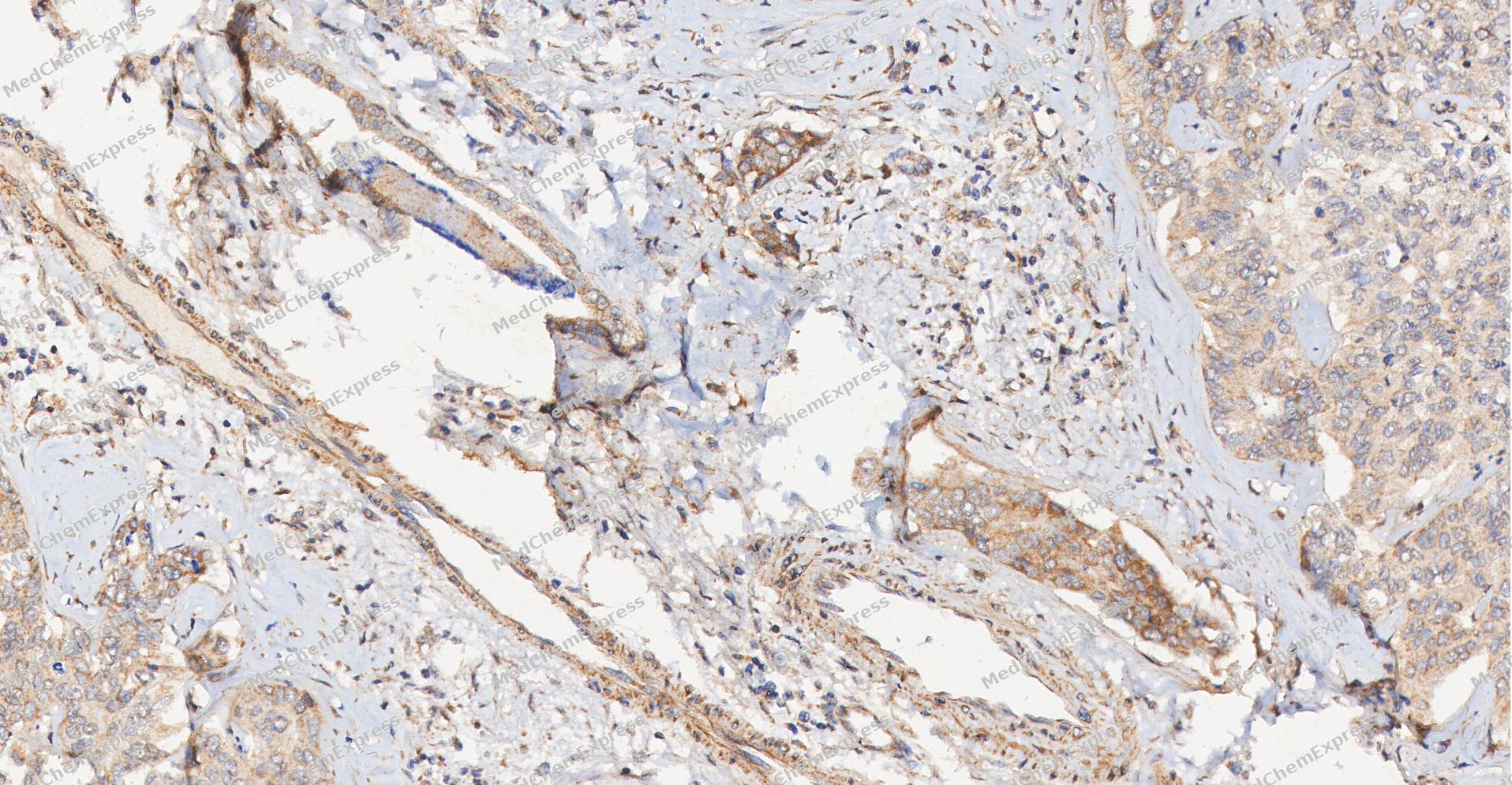 Immunohistochemical analysis of paraffin-embedded human cholangiocarcinoma tissue using Phospho-eNOS (Ser1177) antibody was performed. The section was pretreated using high-temperature and high-pressure mediated EDTA antigen retrieval buffer (pH 9.0), for 5 minutes. The tissues were incubated with primary antibody (HY-P81191, 1:100 dilution) at room temperature for 30 minutes. Detection was performed using an HRP conjugated compact polymer system. DAB was used as the chromogen. The tissues were counterstained with hematoxylin and mounted with neutral balsam mounting medium.
 -
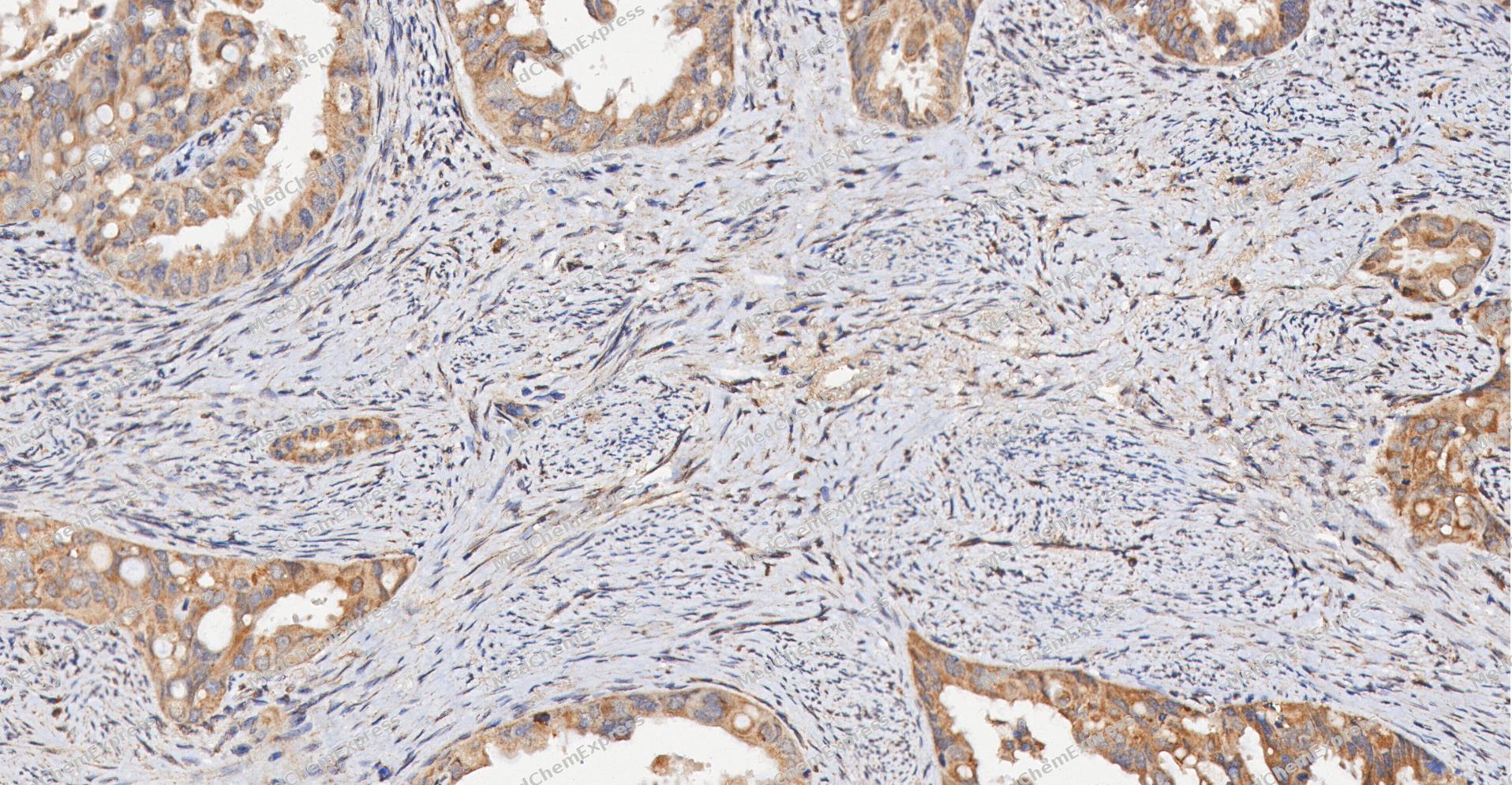 Immunohistochemical analysis of paraffin-embedded human Endometrial Carcinoma tissue using Phospho-eNOS (Ser1177) antibody was performed. The section was pretreated using high-temperature and high-pressure mediated EDTA antigen retrieval buffer (pH 9.0), for 5 minutes. The tissues were incubated with primary antibody (HY-P81191, 1:100 dilution) at room temperature for 30 minutes. Detection was performed using an HRP conjugated compact polymer system. DAB was used as the chromogen. The tissues were counterstained with hematoxylin and mounted with neutral balsam mounting medium.
 -
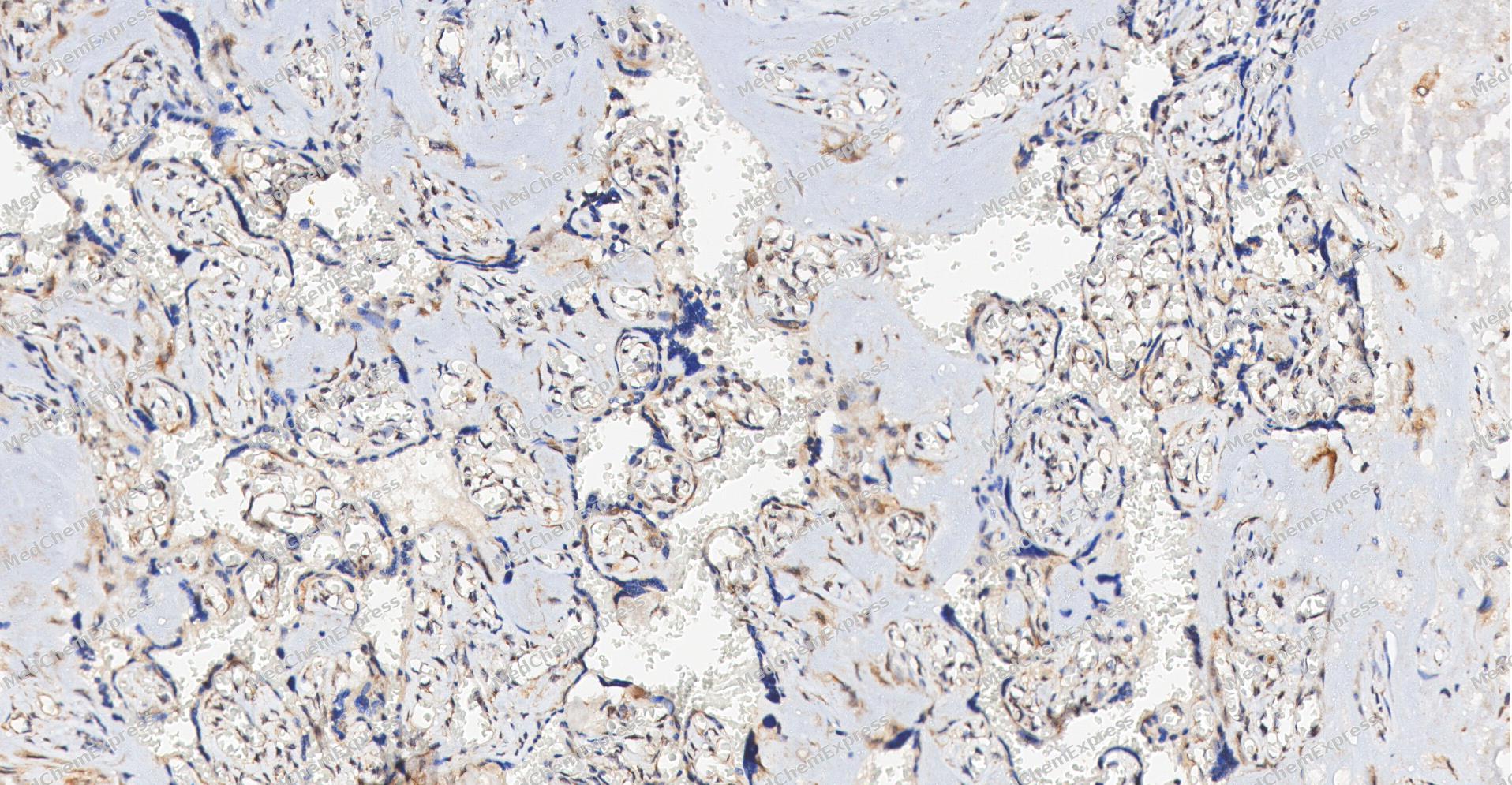 Immunohistochemical analysis of paraffin-embedded human Placenta tissue using Phospho-eNOS (Ser1177) antibody was performed. The section was pretreated using high-temperature and high-pressure mediated EDTA antigen retrieval buffer (pH 9.0), for 5 minutes. The tissues were incubated with primary antibody (HY-P81191, 1:100 dilution) at room temperature for 30 minutes. Detection was performed using an HRP conjugated compact polymer system. DAB was used as the chromogen. The tissues were counterstained with hematoxylin and mounted with neutral balsam mounting medium.
 -
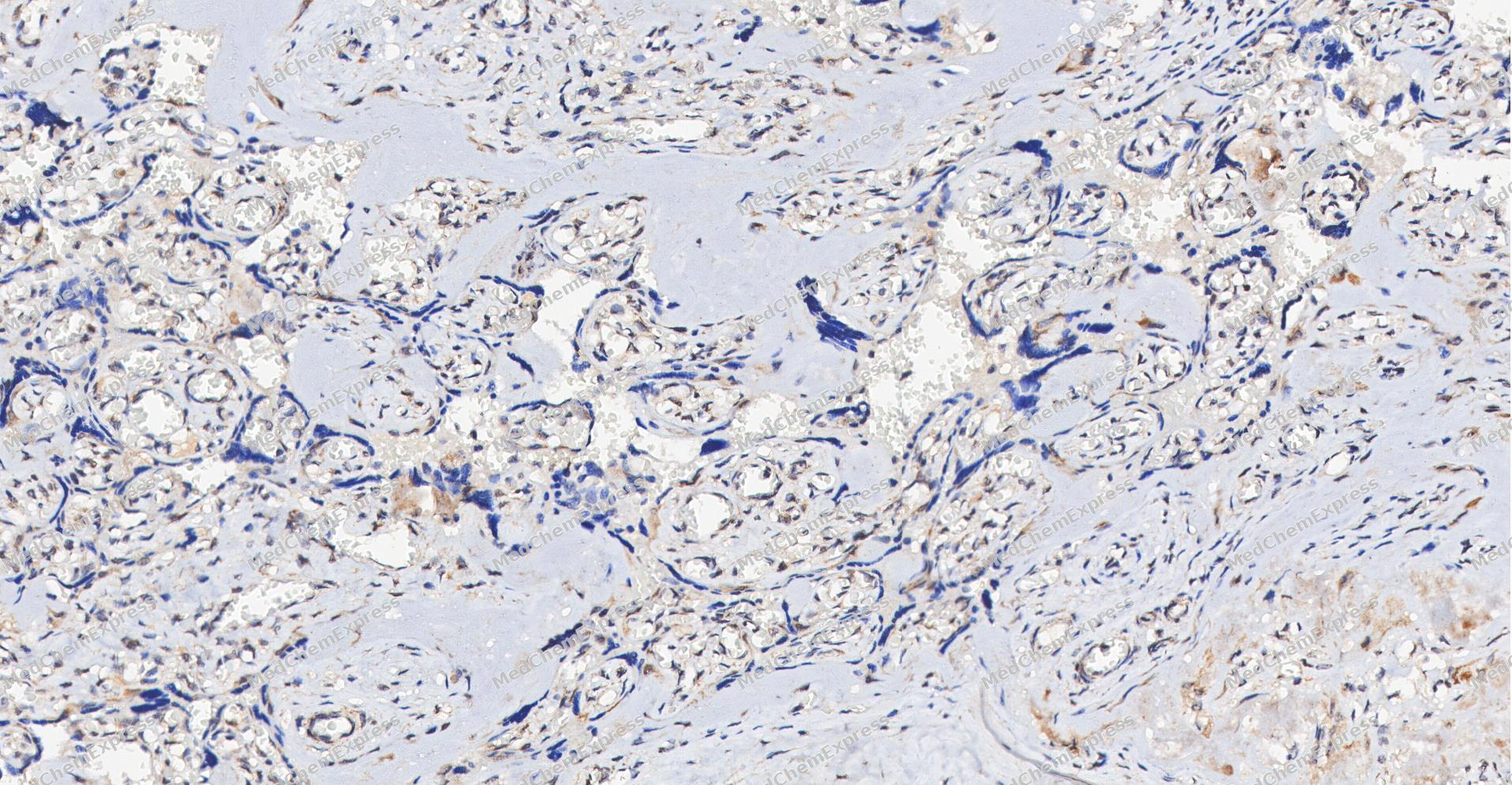 Immunohistochemical analysis of paraffin-embedded human Placenta tissue using Phospho-eNOS (Ser1177) antibody was performed. The section was pretreated using high-temperature and high-pressure mediated EDTA antigen retrieval buffer (pH 9.0), for 5 minutes. The tissues were incubated with primary antibody (HY-P81191, 1:100 dilution) at room temperature for 30 minutes. Detection was performed using an HRP conjugated compact polymer system. DAB was used as the chromogen. The tissues were counterstained with hematoxylin and mounted with neutral balsam mounting medium.
 -
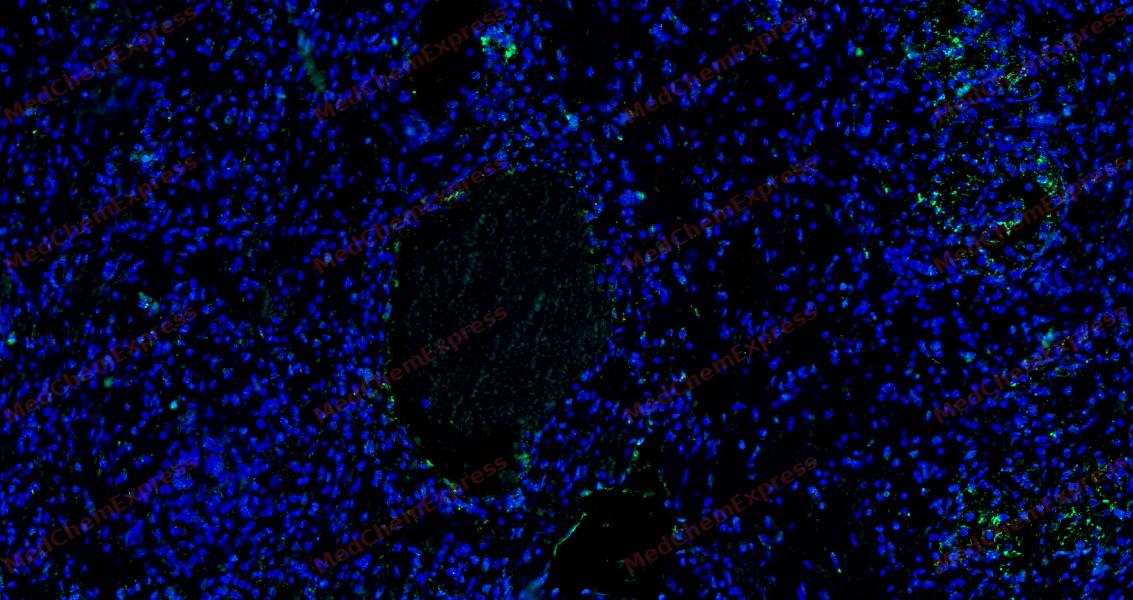 Tyramide signaling amplification based immunofluorescence was performed on paraffin-embedded human Kidney cancer tissue using Phospho-eNOS (Ser1177) antibody. Antigen retrieval was performed in EDTA buffer pH 9.0 (95 °C, 20 min) followed by cooling to RT. Then incubated with primary antibody (HY-P81191, 1:200 dilution) at room temperature for 60 minutes and HRP conjugated secondary antibody for 10 minutes. Fluorescence was then developed with Vari Fluor 532 TSA (200×)(HY-D1832). The tissues were counterstained with DAPI and mounted with Anti-fade mounting medium.
 -
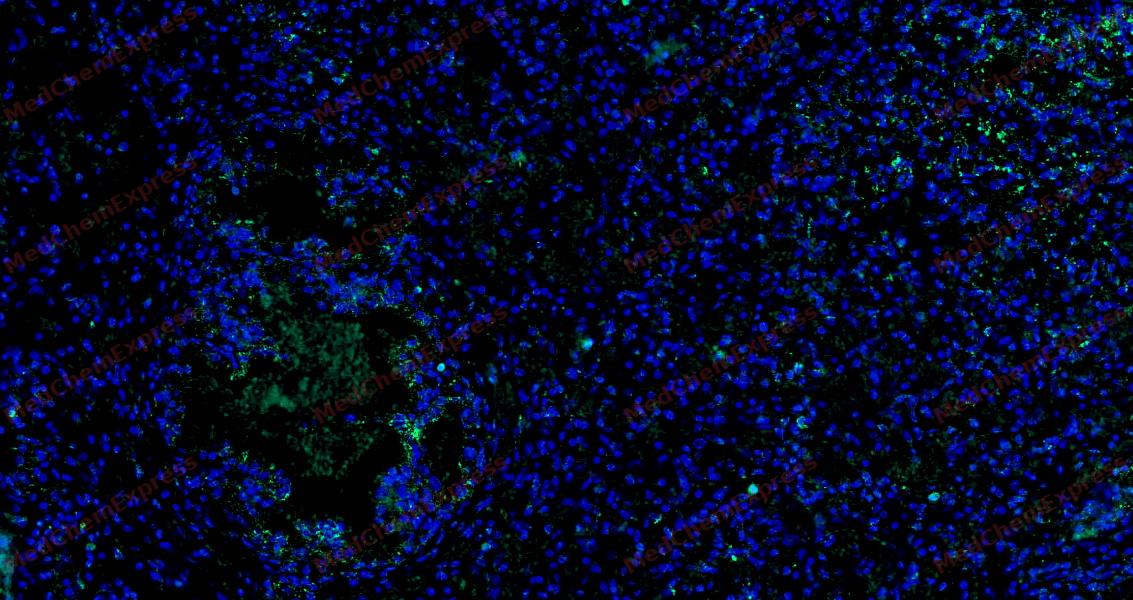 Tyramide signaling amplification based immunofluorescence was performed on paraffin-embedded human Kidney cancer tissue using Phospho-eNOS (Ser1177) antibody. Antigen retrieval was performed in EDTA buffer pH 9.0 (95 °C, 20 min) followed by cooling to RT. Then incubated with primary antibody (HY-P81191, 1:200 dilution) at room temperature for 60 minutes and HRP conjugated secondary antibody for 10 minutes. Fluorescence was then developed with Vari Fluor 532 TSA (200×)(HY-D1832). The tissues were counterstained with DAPI and mounted with Anti-fade mounting medium.
 -
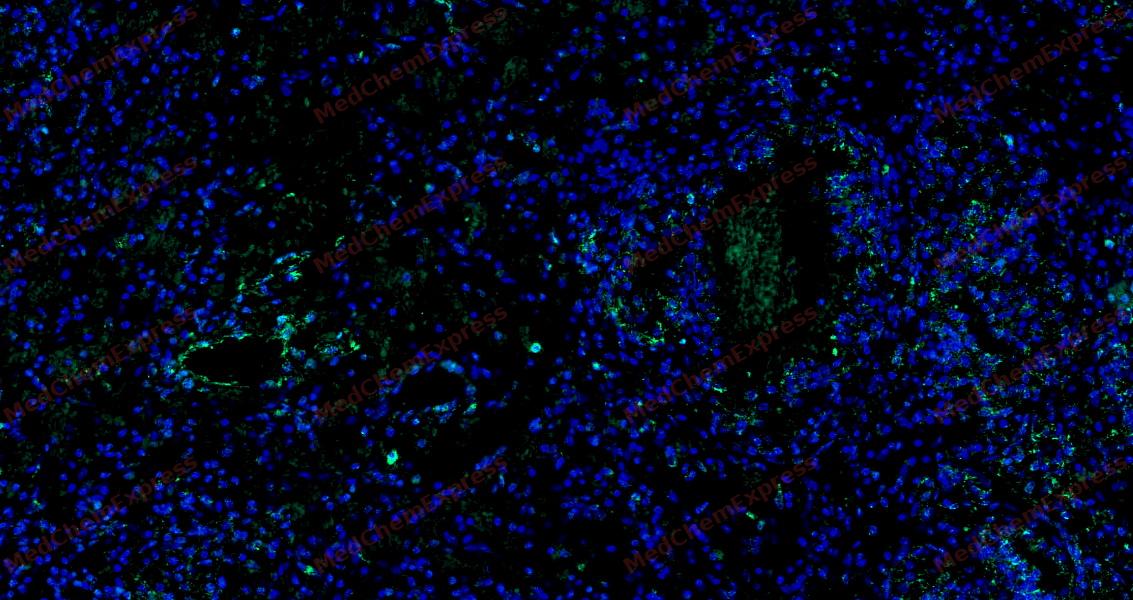 Tyramide signaling amplification based immunofluorescence was performed on paraffin-embedded human Kidney cancer tissue using Phospho-eNOS (Ser1177) antibody. Antigen retrieval was performed in EDTA buffer pH 9.0 (95 °C, 20 min) followed by cooling to RT. Then incubated with primary antibody (HY-P81191, 1:200 dilution) at room temperature for 60 minutes and HRP conjugated secondary antibody for 10 minutes. Fluorescence was then developed with Vari Fluor 532 TSA (200×)(HY-D1832). The tissues were counterstained with DAPI and mounted with Anti-fade mounting medium.
 -
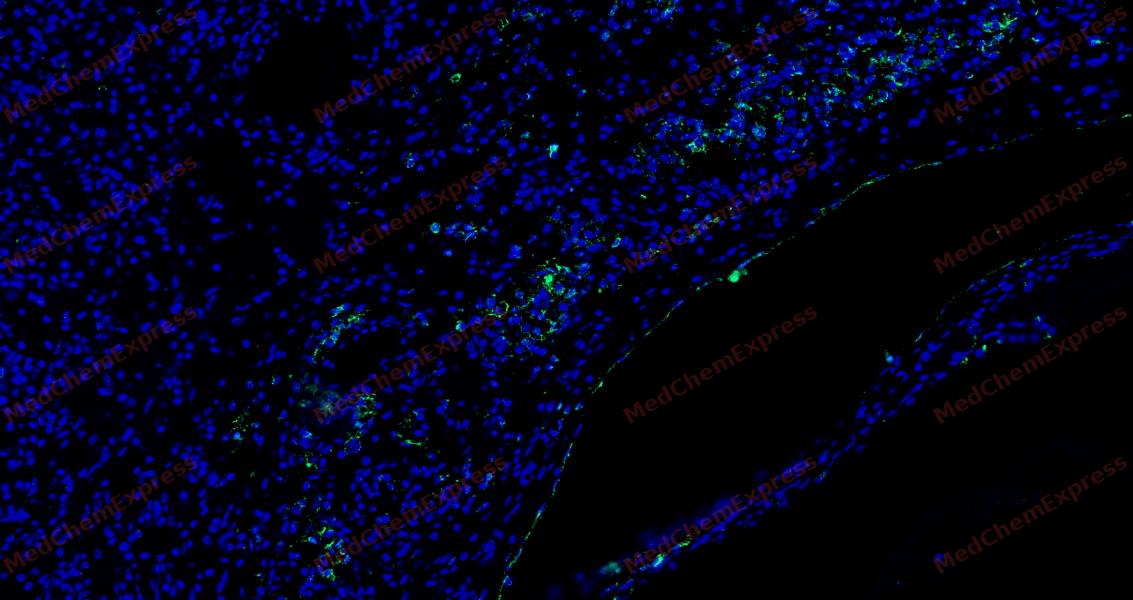 Tyramide signaling amplification based immunofluorescence was performed on paraffin-embedded human Kidney cancer tissue using Phospho-eNOS (Ser1177) antibody. Antigen retrieval was performed in EDTA buffer pH 9.0 (95 °C, 20 min) followed by cooling to RT. Then incubated with primary antibody (HY-P81191, 1:200 dilution) at room temperature for 60 minutes and HRP conjugated secondary antibody for 10 minutes. Fluorescence was then developed with Vari Fluor 532 TSA (200×)(HY-D1832). The tissues were counterstained with DAPI and mounted with Anti-fade mounting medium.
 -
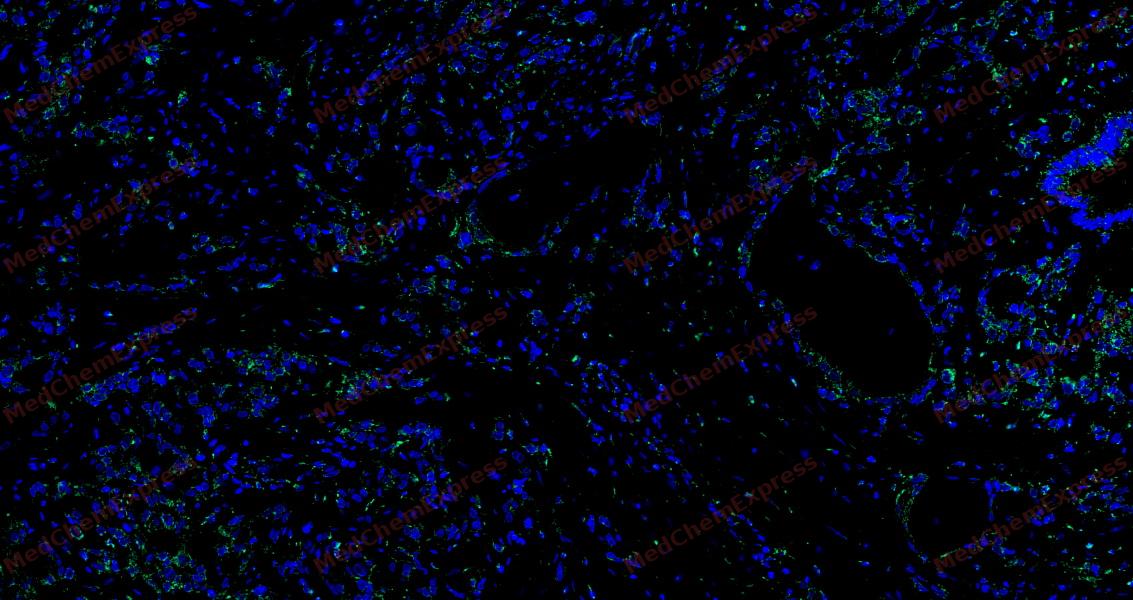 Tyramide signaling amplification based immunofluorescence was performed on paraffin-embedded human cholangiocarcinoma tissue using Phospho-eNOS (Ser1177) antibody. Antigen retrieval was performed in EDTA buffer pH 9.0 (95 °C, 20 min) followed by cooling to RT. Then incubated with primary antibody (HY-P81191, 1:200 dilution) at room temperature for 60 minutes and HRP conjugated secondary antibody for 10 minutes. Fluorescence was then developed with Vari Fluor 532 TSA (200×)(HY-D1832). The tissues were counterstained with DAPI and mounted with Anti-fade mounting medium.
 -
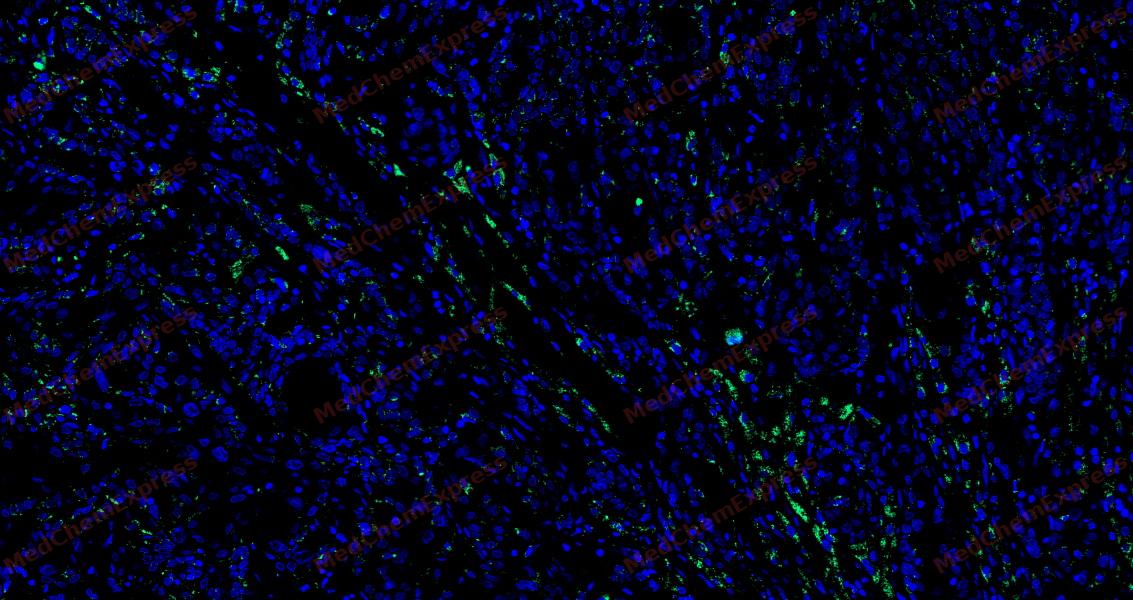 Tyramide signaling amplification based immunofluorescence was performed on paraffin-embedded human cholangiocarcinoma tissue using Phospho-eNOS (Ser1177) antibody. Antigen retrieval was performed in EDTA buffer pH 9.0 (95 °C, 20 min) followed by cooling to RT. Then incubated with primary antibody (HY-P81191, 1:200 dilution) at room temperature for 60 minutes and HRP conjugated secondary antibody for 10 minutes. Fluorescence was then developed with Vari Fluor 532 TSA (200×)(HY-D1832). The tissues were counterstained with DAPI and mounted with Anti-fade mounting medium.
 -
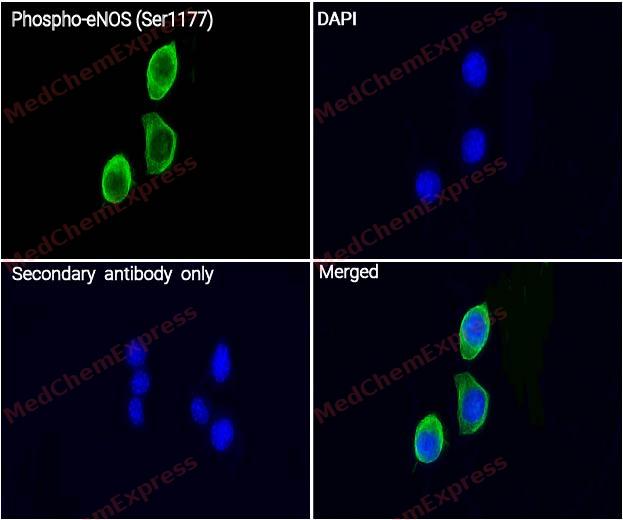 Immunocytochemistry analysis of Hela cells labeling Phospho-eNOS (Ser1177) with Phospho-eNOS (Ser1177) Antibody (HY-P81191) at 1/200 dilution . Cells were fixed in 4% paraformaldehyde for 15 minutes at room temperature, permeabilized with 0.1% Triton X-100 in PBS for 15 minutes at room temperature, then blocked with quick block buffer for 10 minutes at room temperature. Cells were then incubated with Phospho-eNOS (Ser1177) Antibody (HY-P81191) at 1/200 dilution in quick block buffer overnight at 4 ℃. AF488-conjugated Goat Anti-Rabbit IgG H&L(HY-P8002, Green) was used as the secondary antibody at 1/1,000 dilution. PBS instead of the primary antibody was used as the secondary antibody only control. The Nuclear counterstain was DAPI (Blue).
 -
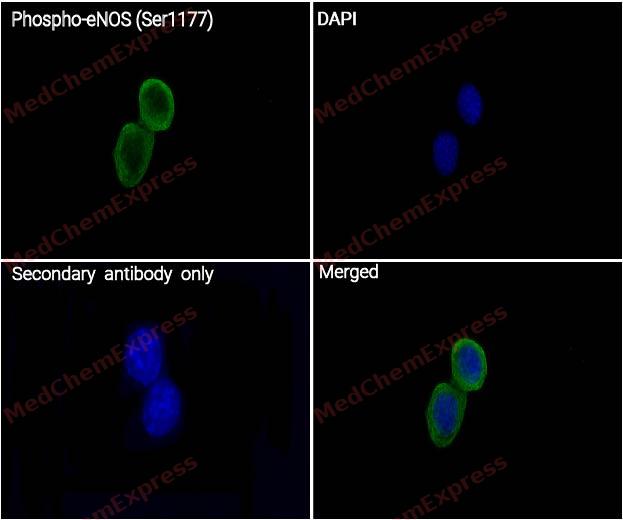 Immunocytochemistry analysis of Hela cells labeling Phospho-eNOS (Ser1177) with Phospho-eNOS (Ser1177) Antibody (HY-P81191) at 1/400 dilution . Cells were fixed in 4% paraformaldehyde for 15 minutes at room temperature, permeabilized with 0.1% Triton X-100 in PBS for 15 minutes at room temperature, then blocked with quick block buffer for 10 minutes at room temperature. Cells were then incubated with Phospho-eNOS (Ser1177) Antibody (HY-P81191) at 1/400 dilution in quick block buffer overnight at 4 ℃. AF488-conjugated Goat Anti-Rabbit IgG H&L(HY-P8002, Green) was used as the secondary antibody at 1/1,000 dilution. PBS instead of the primary antibody was used as the secondary antibody only control. The Nuclear counterstain was DAPI (Blue).


Background
-
Function
eNOS (NOS3) generates endothelial nitric oxide (NO), a vasoprotective signal that regulates vascular tone, blood pressure, platelet aggregation, leukocyte adhesion, and vascular homeostasis[1][2]. Mechanistically, Akt/PKB activates eNOS through Ser1177 phosphorylation, while agonist-stimulated endothelial cells integrate Ser1177 activation with Thr495 regulation to control NO output[3]. In disease models, eNOS loss or inhibition reduces endothelial NO signaling and increases blood pressure, as shown in eNOS-deficient mice and L-arginine/NOS inhibitor studies[4][5][6]. Compared with related isoforms, eNOS is mostly expressed in endothelial cells, nNOS mediates neuronal signaling, and iNOS produces high-output NO during inflammatory activation[1]. For experimental applications, L-NMMA, L-NIO, and L-NAME inhibit NOS activity and provide pharmacological tools to test endothelial NO-dependent vascular responses[6].
-
Subcellular Localization
Membrane, caveola; Cytoplasm, cytoskeleton; Golgi apparatus; Cell membrane
-
Subunit
Homodimer. Interacts with NOSIP and NOSTRIN (By similarity). Interacts with HSP90AB1 (By similarity).
-
SwissProt ID
-
Synonyms
eNOS (phospho S1177); eNOS(phospho S1177); p-eNOS (phospho S1177); eNOS (Phospho-Ser1177); cNOS; Constitutive NOS; EC NOS; ecNOS; Endothelial nitric oxidase synthase; Endothelial nitric oxide synthase; Endothelial nitric oxide synthase 3; Endothelial NOS; Nitric oxide synthase 3 (endothelial cell); Nitric oxide synthase 3; Nitric oxide synthase 3 endothelial cell; Nitric oxide synthase endothelial; nitric oxide synthase, endothelial; NOS 3; NOS III; NOS type III; NOS3; NOSIII; NOS3_HUMAN.
Documentation
-
Data Sheet (261 KB)
-
SDS (254 KB)
- English - EN (254 KB)
- Français - FR (254 KB)
- Deutsch - DE (254 KB)
- Norwegian - NO (254 KB)
- Español - ES (254 KB)
- Swedish - SV (254 KB)
- Italian - IT (254 KB)
- Korean - KR (254 KB)
- Portuguese - PT (254 KB)
-
User Guide for Antibodies (1077 KB)
References
[1]. Förstermann U, et al. Nitric oxide synthases: regulation and function. Eur Heart J. 2012 Apr;33(7):829-37, 837a-837d. [Content Brief]
[2]. Förstermann U, et al. Endothelial nitric oxide synthase in vascular disease: from marvel to menace. Circulation. 2006 Apr 4;113(13):1708-14. [Content Brief]
[3]. Fleming I, et al. Phosphorylation of Thr(495) regulates Ca(2+)/calmodulin-dependent endothelial nitric oxide synthase activity. Circ Res. 2001 Jun 8;88(11):E68-75. [Content Brief]
[4]. Huang PL, et al. Hypertension in mice lacking the gene for endothelial nitric oxide synthase. Nature. 1995 Sep 21;377(6546):239-42. [Content Brief]
[5]. Shesely EG, et al. Elevated blood pressures in mice lacking endothelial nitric oxide synthase. Proc Natl Acad Sci U S A. 1996 Nov 12;93(23):13176-81. [Content Brief]
[6]. Rees DD, et al. Characterization of three inhibitors of endothelial nitric oxide synthase in vitro and in vivo. Br J Pharmacol. 1990 Nov;101(3):746-52. [Content Brief]

 Powered by Bioz
