



Arvanil

Based on 1 Customer Validation
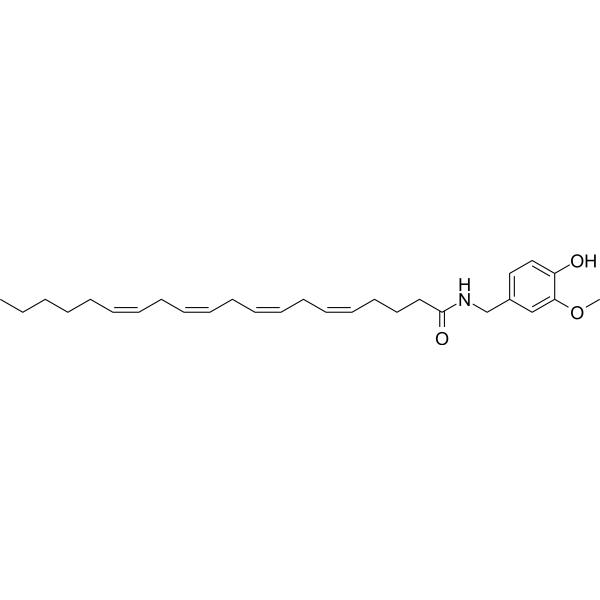
Arvanil (N-Vanillylarachidonamide) is a mixed agonist of CB1 and TRPV1 receptors. Arvanil downregulates CD25, HLA-DR, CD134/OX40, blocks G1/S phase transition, and induces phosphorylation of Akt. Arvanil does not induce apoptosis in cells. Arvanil inhibits lymphocyte activation and ameliorates autoimmune encephalomyelitis. Arvanil can be used in research related to Huntington's disease, vomiting, and multiple sclerosis.
For research use only. We do not sell to patients.
- Purity : 99.1%
- CAS No.: 128007-31-8
- Formula: C28H41NO3
- Molecular Weight:439.63
-
Storage:
Solution, -20°C, 2 years

To place orders, for customer services and technical support, please contact: MedChemExpress USA
Tel: 609-228-6898 E-mail: [email protected] [email protected]


-
 Biological Activity
-
Chemical Information
- Protocols
- Purity & Documentation
- References
-
 Help & FAQs


-
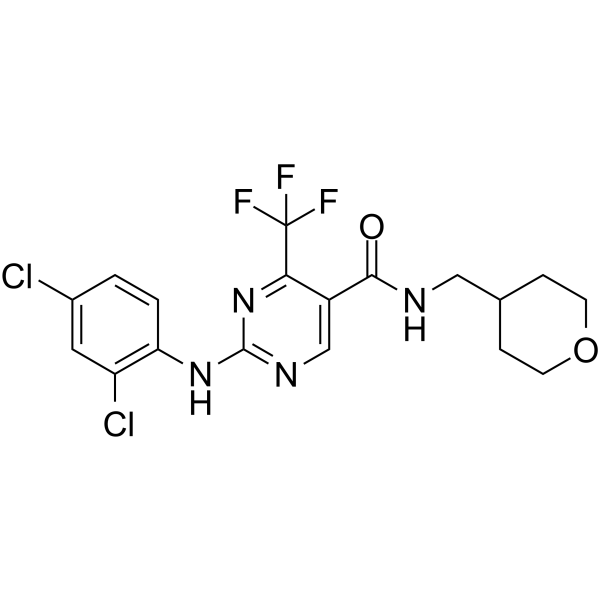
HY-14167
GW842166XCannabinoid Receptor Agonist -
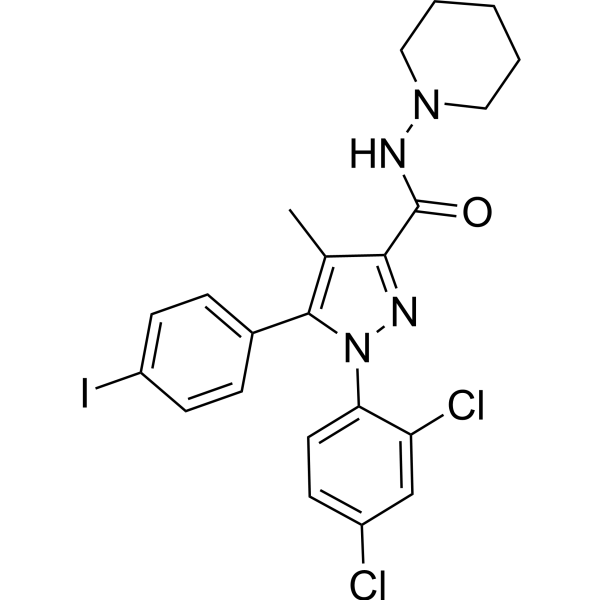
HY-15443
AM251CB1 Receptor Antagonist -
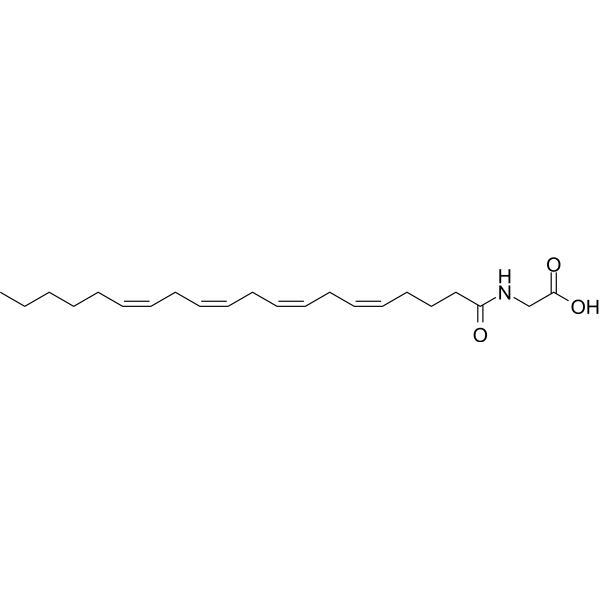
HY-103332
N-ArachidonylglycineGPR18 Agonist -
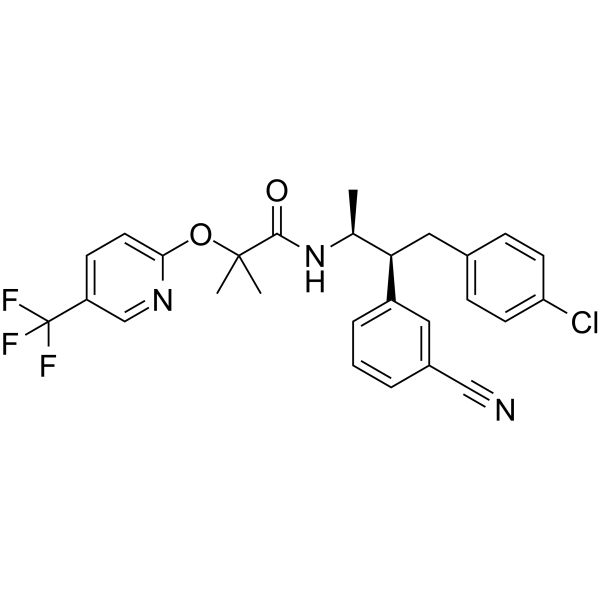
HY-10013
TaranabantCB1 Receptor Invert Agonist -

HY-121476
Arachidonoyl SerinolMAGL Inhibitor -
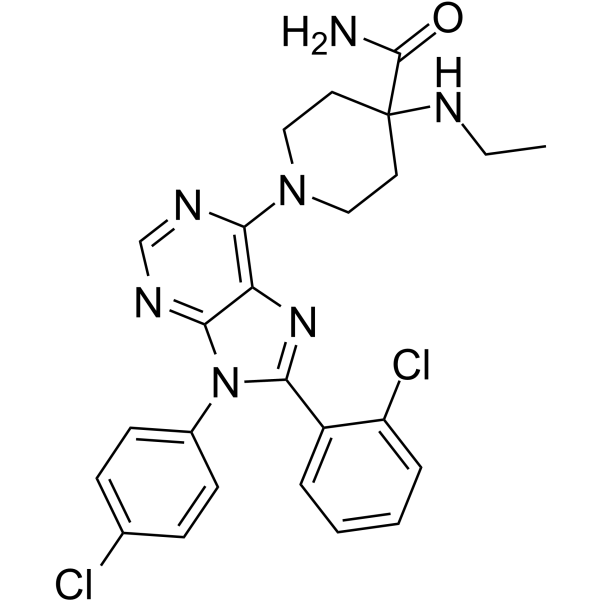
HY-10871
OtenabantCannabinoid Receptor Antagonist -
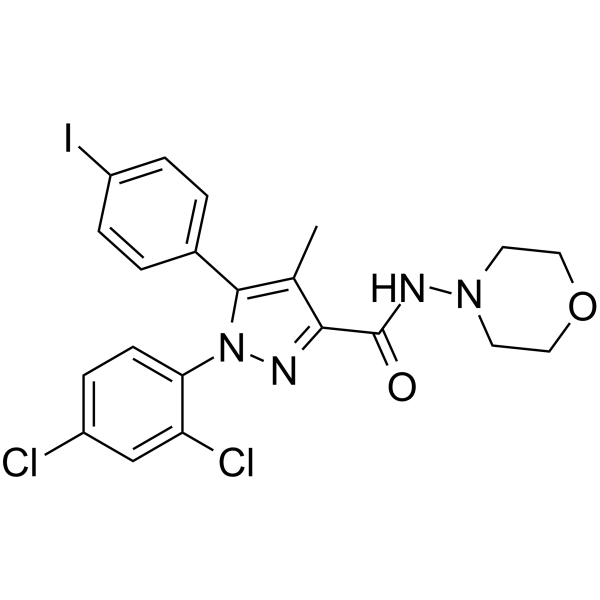
HY-13505
AM281CB1 Antagonist -
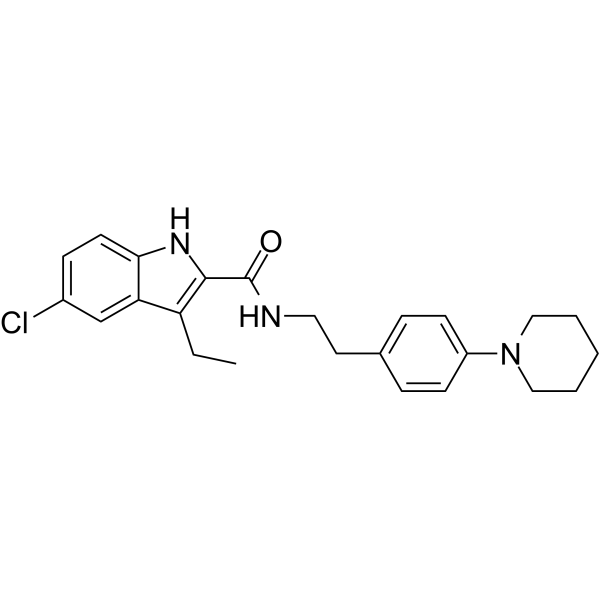
HY-13288
Org 27569Cannabinoid Receptor Modulator -
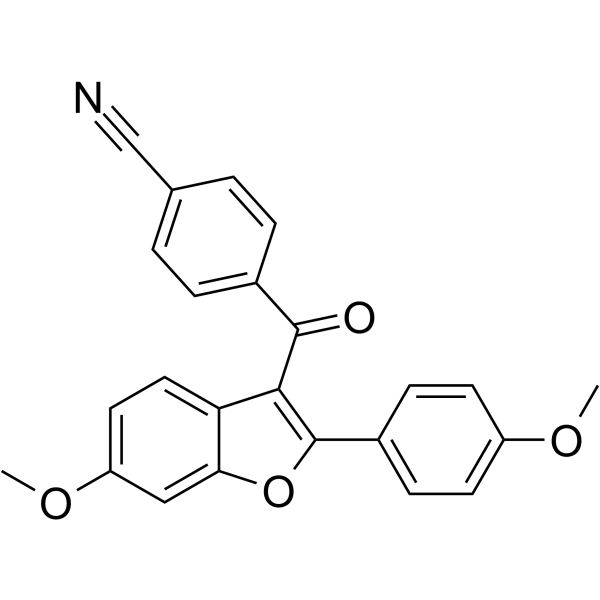
HY-W011040
LY320135CB1 Antagonist -

HY-103335
O1918 -
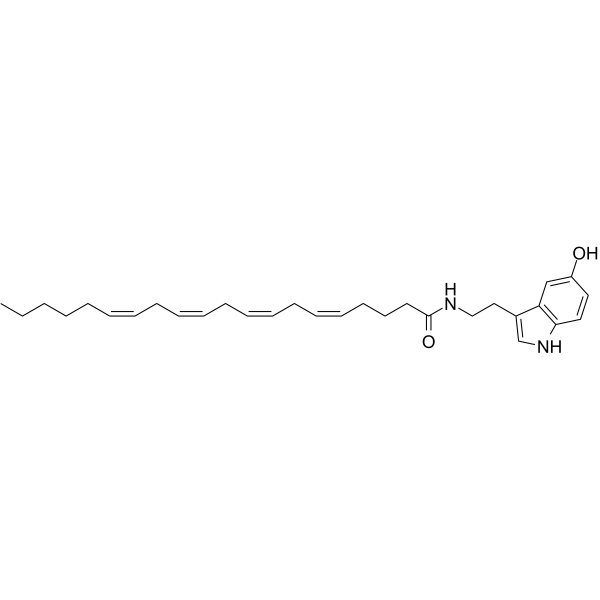
HY-103337
N-ArachidonoylserotoninFAAH Inhibitor/TRPV1 Antagonist -
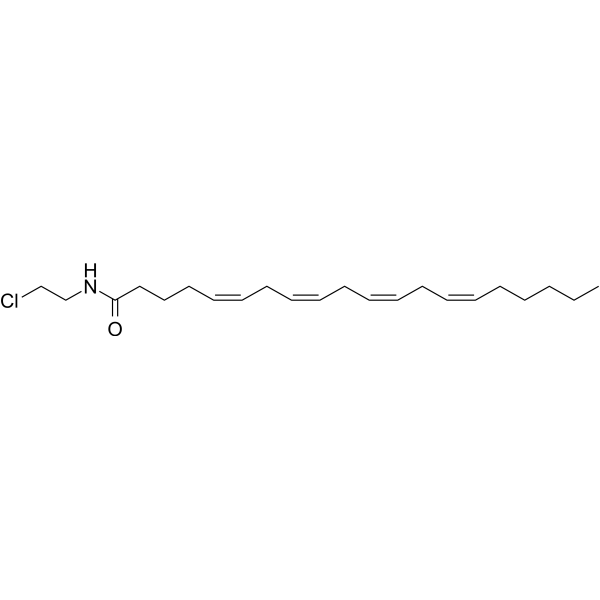
HY-110004
ACEABiochemical Assay Reagent
All Orexin Receptor (OX Receptor) Isoforms
More

Biological Activity
Description
IC50 & Target
[1]|
TRPV1 |
CB1 |
Cellular Effect
|
Cell Line

|
Type | Value | Description | References |
|---|---|---|---|---|
| DMS-114 | IC50 |
15 μM
Compound: 10
|
Antiproliferative activity in human DMS-114 cells assessed as cell growth inhibition by MTT assay
Antiproliferative activity in human DMS-114 cells assessed as cell growth inhibition by MTT assay
|
[PMID: 33508189] |
| EFM-19 | IC50 |
0.55 μM
Compound: 10
|
Antiproliferative activity in human EFM-19 cells assessed as cell growth inhibition by MTT assay
Antiproliferative activity in human EFM-19 cells assessed as cell growth inhibition by MTT assay
|
[PMID: 33508189] |
| MCF7 | IC50 |
0.4 μM
Compound: 10
|
Antiproliferative activity in human MCF7 cells assessed as cell growth inhibition by MTT assay
Antiproliferative activity in human MCF7 cells assessed as cell growth inhibition by MTT assay
|
[PMID: 33508189] |
| PPC-1 | IC50 |
1 μM
Compound: 10
|
Antiproliferative activity in human PPC-1 cells assessed as cell growth inhibition
Antiproliferative activity in human PPC-1 cells assessed as cell growth inhibition
|
[PMID: 33508189] |
| T47D | IC50 |
0.35 μM
Compound: 10
|
Antiproliferative activity in human T47D cells assessed as cell growth inhibition by MTT assay
Antiproliferative activity in human T47D cells assessed as cell growth inhibition by MTT assay
|
[PMID: 33508189] |
| TSU | IC50 |
100 nM
Compound: 10
|
Antiproliferative activity in human TSU cells assessed as cell growth inhibition
Antiproliferative activity in human TSU cells assessed as cell growth inhibition
|
[PMID: 33508189] |
In Vitro
Arvanil (10 μM; 48 h) potently inhibits the proliferation of OKT3-stimulated peripheral blood mononuclear cells (PBMCs), with an inhibition rate of 75.3% at 10 μM, and this effect is superior to that of anandamide and capsaicin at the same concentration[3].
Arvanil (0.3-30 μM; 48 h) inhibits the proliferation of CD3CD28-stimulated human peripheral blood mononuclear cells (hPBMCs) in a dose-dependent manner, with an inhibition rate of 64.0% at 10 μM. It also reduces IFN-γ production, but does not affect IL-5 levels at this concentration[3].
Arvanil (3-10 μM; 48 h) inhibits the proliferation of mouse CTLL-2 cells stimulated by IL-2, and significant inhibitory effect is observed at the concentration of 10 μM[3].
Arvanil (10 μM) inhibits the upregulation of CD25, HLA-DR and CD134/OX40 activation markers on CD4+ T cells in OKT3-stimulated human peripheral blood mononuclear cells (hPBMCs)[3].
Arvanil (10 μM; 48 h) does not induce apoptosis in CD4+ T cells derived from OKT3-stimulated human peripheral blood mononuclear cells (hPBMCs)[3].
Arvanil (10 μM; 48 h) blocks G1/S phase transition in OKT3-stimulated human peripheral blood mononuclear cells (hPBMCs)[3].
MedChemExpress (MCE) has not independently confirmed the accuracy of these methods. They are for reference only.
-
Cell Line:murine CTLL-2 cells stimulated with interleukin-2 (IL-2)
-
Concentration:3-10 μM
-
Incubation Time:48 h
-
Result:Inhibited IL-2-stimulated CTLL-2 proliferation, with statistically significant inhibition observed at 10 μM (p<0.05); the inhibitory effect at 3 μM was less pronounced.
-
Cell Line:OKT3-stimulated hPBMCs
-
Concentration:10 μM
-
Incubation Time:48 h
-
Result:Increased G1-phase cells to 86% and reduced S-phase cells to 13%.
In Vivo
Arvanil (2 mg/kg; i.p.; single acute dose) reduces locomotor and exploratory activity in normal rats, an effect associated with increased GABA content in the globus pallidus[1].
Arvanil (1-2 mg/kg; i.p.; single dose 15 min pre-M6G) dose-dependently inhibits morphine 6 glucuronide-induced emesis and vomiting in ferrets via activation of both CB1 and TRPV1 receptors, with the 2 mg/kg dose producing a significant reduction in emetic and vomiting episodes that is reversed by selective antagonists of these receptors[2].
Arvanil (0.5 mg/kg; given on 2 separate days: day -3 and day +3 relative to EAE induction) treatment significantly ameliorates experimental autoimmune encephalomyelitis in female SJL/J mice, reducing the cumulative disease index by 48.2%, peak clinical score by 56.7%, maximal body weight loss by 66.8%, and central nervous system inflammatory foci by 51.3%[3].
MedChemExpress (MCE) has not independently confirmed the accuracy of these methods. They are for reference only.
-
Animal Model:Sprague-Dawley (male, 3-4 months old, 300-400 g, bilateral intrastriatal injection of 375 nmol 3-nitropropionic acid per striatum, used 14 days post-lesion)[1]
-
Dosage:2 mg/kg
-
Administration:i.p.; single acute dose
-
Result:Significantly reduced increased ambulatory activity (F(1,21)=18.74, P < 0.0005).
Increased time spent in inactivity (F(1,21)=40.10, P < 0.0001).
Enhanced lesion-induced reductions in stereotypic activity (F(1,22)=21.91, P < 0.0001) and hole entries (F(1,22)=43.18, P < 0.0001).
Increased glutamate contents in the globus pallidus (F(1,21)=5.89, P < 0.05).
Did not reverse GABA, glutamate, or dopamine deficits in the caudate-putamen.
-
Animal Model:Sprague-Dawley (male, 3-4 months old, 300-400 g, bilateral intrastriatal injection of saline vehicle, allowed 14 days to recover)[1]
-
Dosage:2 mg/kg
-
Administration:i.p.; single acute dose
-
Result:Significantly reduced ambulatory activity, stereotypic activity, and number of hole entries.
Increased time spent in inactivity.
Increased GABA contents in the globus pallidus (F(1,19)=3.89, P < 0.05).
Tended to increase globus pallidus GAD activity.
Showed no effects on dopamine, DOPAC, TH activity, GABA, GAD activity, or glutamate contents in the caudate-putamen.
-
Animal Model:Mustela putorius furo (adult male, 900-1500 g)[2]
-
Dosage:1 mg/kg; 2 mg/kg
-
Administration:i.p.; single dose 15 min pre-M6G
-
Result:Reduced M6G-induced emetic episodes compared to M6G alone.
Dose-dependently reduced M6G-induced emetic episodes to a greater extent than the 1 mg/kg dose; this anti-emetic effect was reversed by pre-treatment with 5 mg/kg AM251 or 0.1 mg/kg IRTX, with emetic episode counts returning to levels not significantly different from M6G alone.
Reduced M6G-induced vomiting episodes from 1.8 to 0.8 (P < 0.05); this effect was reversed by 5 mg/kg AM251 (to 1.4 episodes, P < 0.05 vs arvanil alone) and completely abolished by 0.1 mg/kg IRTX (to 1.8 episodes, P < 0.05 vs arvanil alone).
Reduced M6G-induced tongue licking movements from 6.6 licks/h to 2.3 licks/h (P < 0.01 vs M6G); this effect was reversed by CB1 and TRPV1 antagonists.
Dose-dependently reduced voluntary activity minutes in a 1-hour observation period; this sedative effect was not reversed by AM251 or IRTX.
Pre-treatment with 5 mg/kg AM630 did not reduce the anti-emetic effects of arvanil (3.5 emetic episodes vs 1.8 emetic episodes with arvanil alone, P > 0.05).
- Kinase activity and phosphorylation assays
- EdU Incorporation Assay (Click Chemistry-Based DNA Synthesis Measurement)
- Western Blot
- Detection of Apoptosis
- TUNEL staining for apoptotic DNA fragmentation
- Flow cytometric DNA-content cell-cycle staining
- Annexin V plus membrane-impermeant dye apoptosis staining
- BrdU Incorporation Assay
- Apoptosis Solutions
- Protocol for Cell Cycle
- Protocol for Kinase activity and phosphorylation assays


Chemical Information
-
CAS No. 128007-31-8
-
Appearance Liquid
-
Molecular Weight 439.63
-
Formula C28H41NO3
-
Color Colorless to light yellow
-
SMILES
CCCCC/C=C\C/C=C\C/C=C\C/C=C\CCCC(NCC1=CC=C(O)C(OC)=C1)=O
-
Synonyms
N-Vanillylarachidonamide
-
Shipping
Room temperature in continental US; may vary elsewhere.
-
Storage
Solution, -20°C, 2 years


Purity & Documentation
-
Data Sheet (275 KB)
-
SDS (545 KB)
- English - EN (545 KB)
- Français - FR (545 KB)
- Deutsch - DE (545 KB)
- Norwegian - NO (545 KB)
- Español - ES (545 KB)
- Swedish - SV (545 KB)
- Italian - IT (545 KB)
- Korean - KR (545 KB)
- Portuguese - PT (545 KB)
-
Handling Instructions (2659 KB)
References
[1]. de Lago E, et al. Arvanil, a hybrid endocannabinoid and vanilloid compound, behaves as an antihyperkinetic agent in a rat model of Huntington's disease. Brain Res. 2005;1050(1-2):210-216. [Content Brief]
[2]. Sharkey KA, et al. Arvanil, anandamide and N-arachidonoyl-dopamine (NADA) inhibit emesis through cannabinoid CB1 and vanilloid TRPV1 receptors in the ferret. Eur J Neurosci. 2007;25(9):2773-2782. [Content Brief]
[3]. Malfitano AM, et al. Arvanil inhibits T lymphocyte activation and ameliorates autoimmune encephalomyelitis. J Neuroimmunol. 2006;171(1-2):110-119. [Content Brief]

Calculators
Concentration (start) × Volume (start) = Concentration (final) × Volume (final)


Arvanil Related Classifications
HY-103333 Related Classifications
 Powered by Bioz
Keywords