



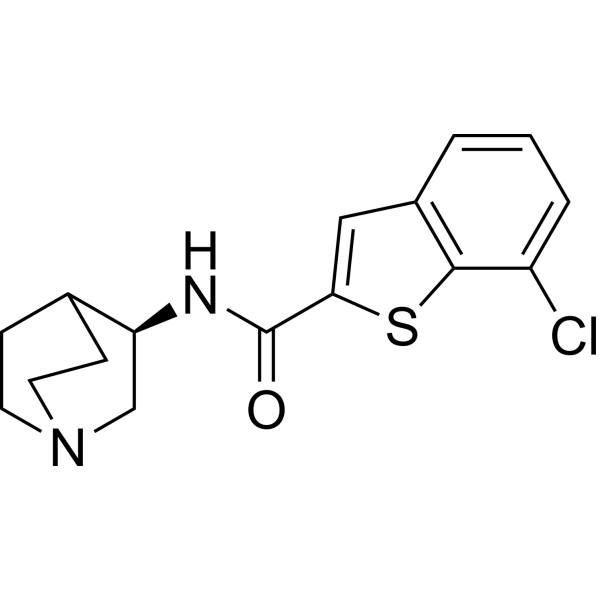
Encenicline
Based on 5 publication(s) in Google Scholar
Encenicline (EVP-6124) is a novel partial agonist of α7 neuronal nicotinic acetylcholine receptors (nAChRs).
Nur für Forschungszwecke. Wir verkaufen nicht an Patienten.
- CAS. Nr.: 550999-75-2
- Formel: C16H17ClN2OS
- Molecular Weight:320.84
-
Speicherung:
Please store the product under the recommended conditions in the Certificate of Analysis.

To place orders, for customer services and technical support, please contact: MedChemExpress USA
Tel: 609-228-6898 E-mail: [email protected] [email protected]


-
 Biologische Aktivität
-
Chemical Information
- Protokoll
- Reinheit & Dokumentation
- Verweise
-
 Help & FAQs


-
HY-10019
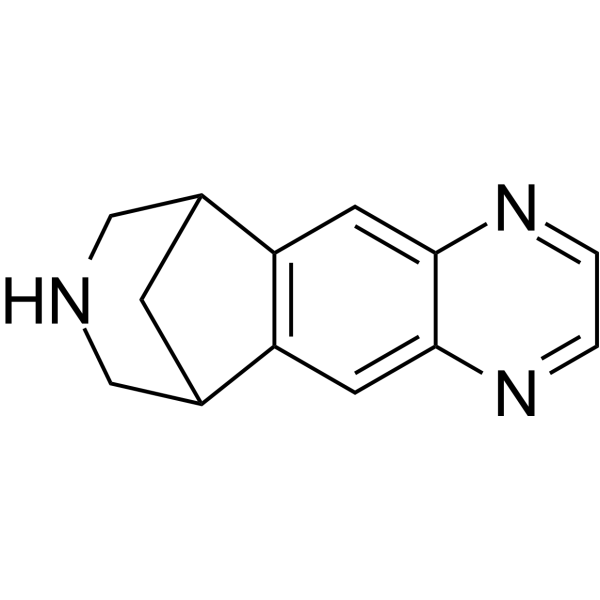
Varenicline -
HY-12560A
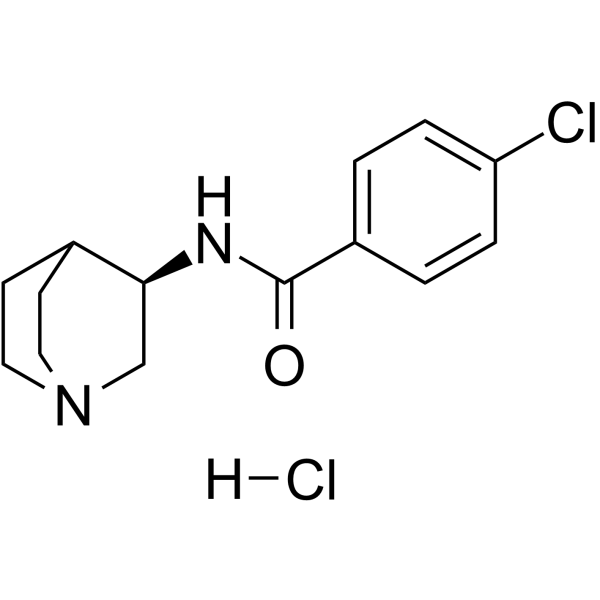
PNU-282987 -
HY-12151
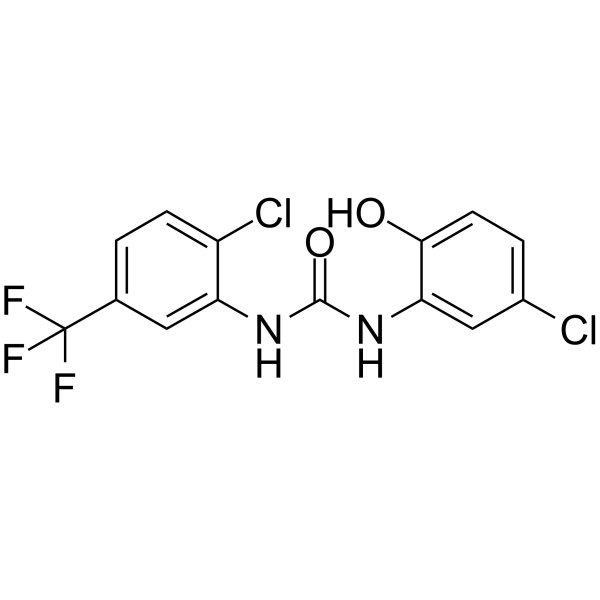
NS 1738 -
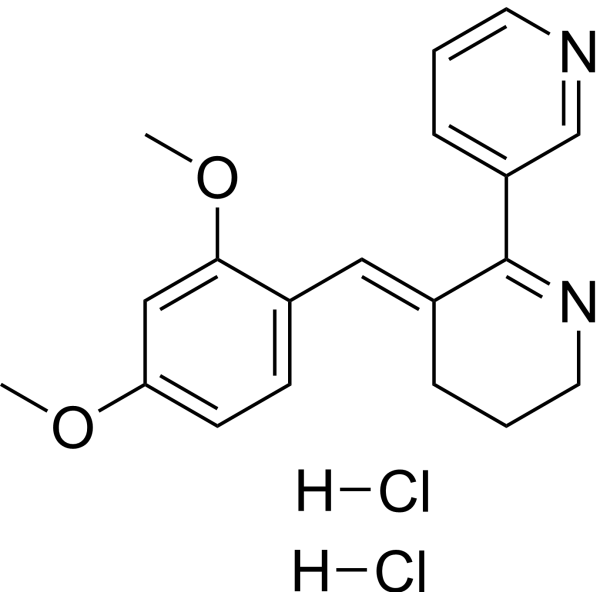
HY-14564A
GTS-21 dihydrochloride -
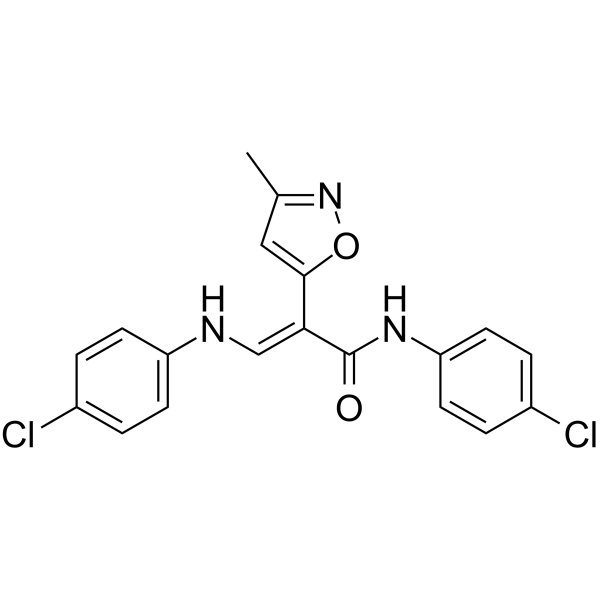
HY-12150
CCMI -
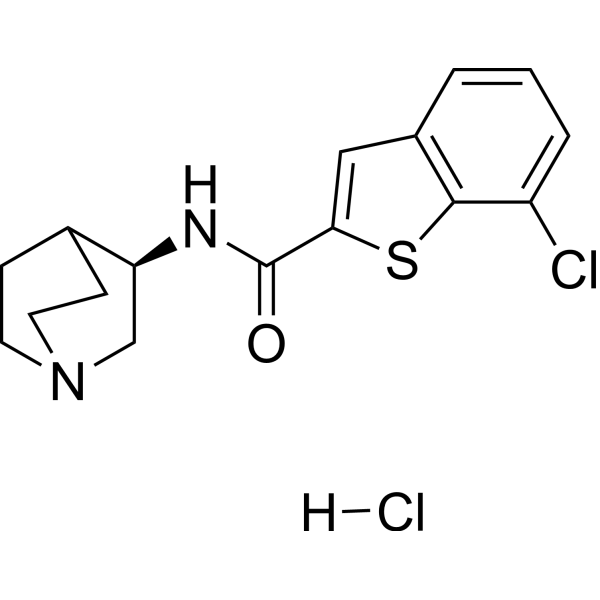
HY-15430A
Encenicline hydrochloride -
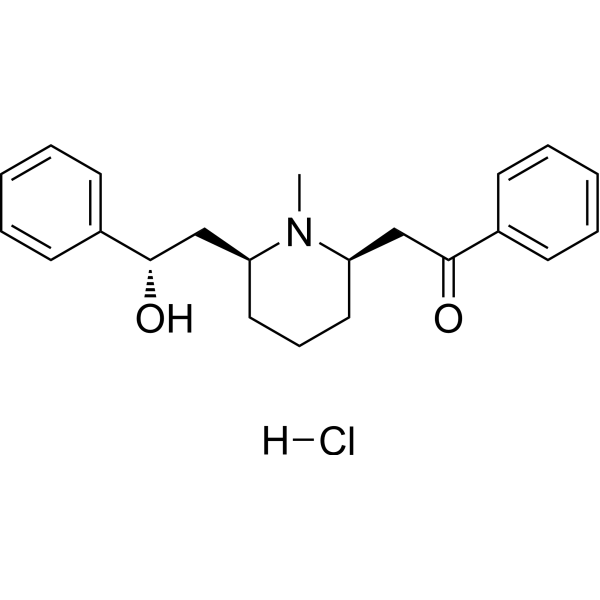
HY-B0979
Lobeline hydrochloride -
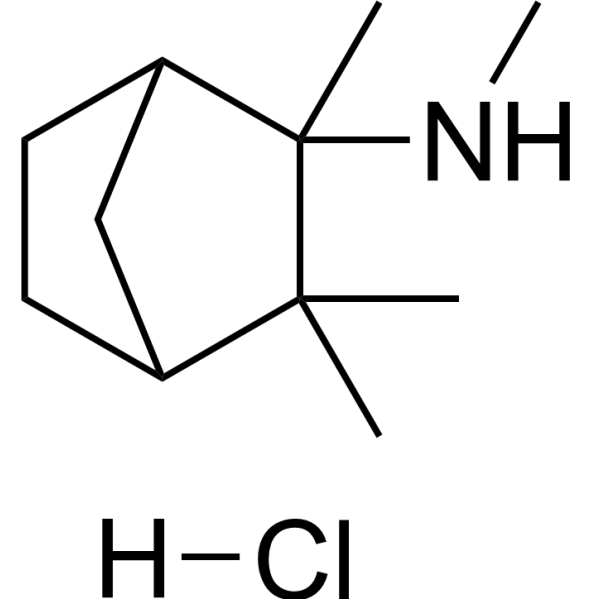
HY-B1395
Mecamylamine hydrochloride -
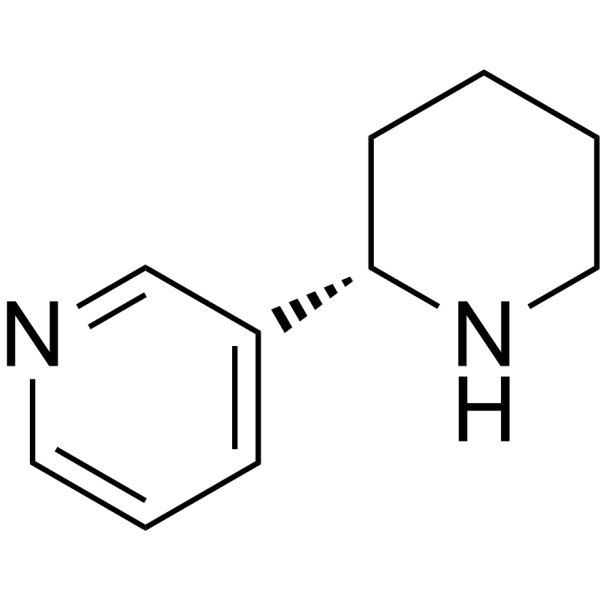
HY-B1532
Anabasine -
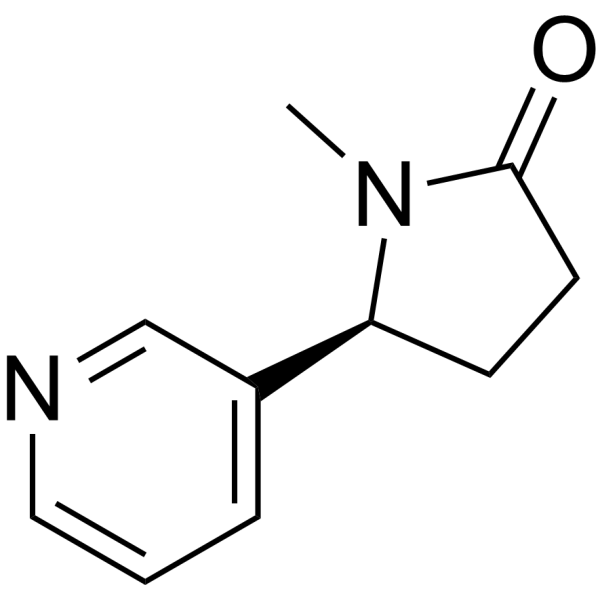
HY-B1178
Cotinine -
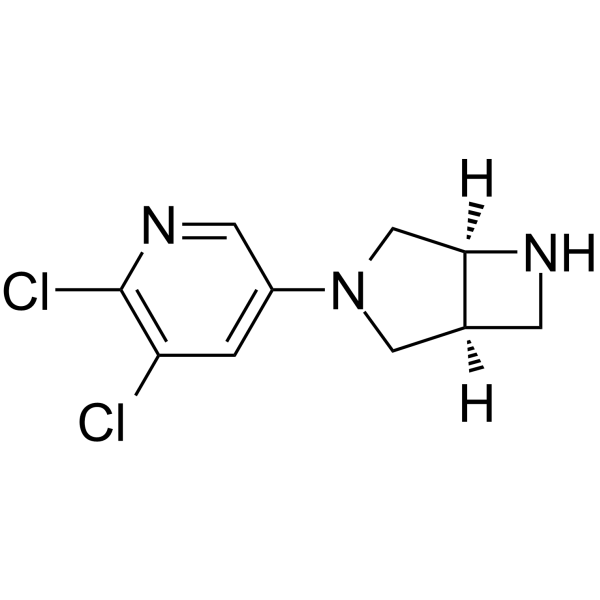
HY-14824
Sofiniclin -
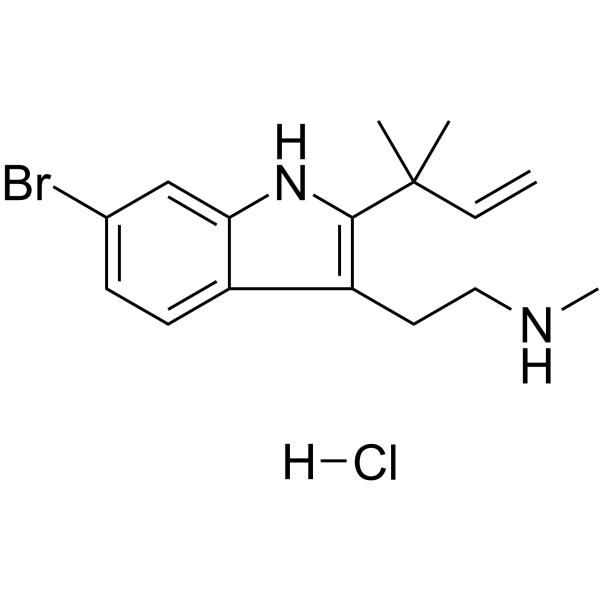
HY-107675
Desformylflustrabromine hydrochloride
Publications Citing Use of MedChemExpress (MCE) Encenicline
More Customer Validation & Images

-
Cell Proliferation/Viability Assay


Biologische Aktivität
Beschreibung
IC50 & Target
α7 nAChR[1]
In Vitro
Encenicline (EVP-6124) displaces [3H]-MLA (Methyllycaconitine) (Ki=9.98 nM, pIC50=7.65±0.06, n=3) and [125I]-α-bungarotoxin (Ki=4.33 nM, pIC50=8.07±0.04, n=3). Encenicline (EVP-6124) is approximately 300 fold more potent than the natural agonist ACh (Ki=3 μM), measured in binding assays using [3H]-MLA. Encenicline inhibits the 5-HT3 receptor by 51% at 10 nM, the lowest concentration tested. Evaluation of the human 5-HT2B receptor expressed in CHO cells demonstrates displacement of [3H]-mesulergine (Ki=14 nM) and only antagonist activity in the rat gastric fundus assay at an IC50 of 16 μM. In binding and functional experiments, Encenicline shows selectivity for α7 nAChRs and does not activate or inhibit heteromeric α4β2 nAChRs[1].
MedChemExpress (MCE) has not independently confirmed the accuracy of these methods. They are for reference only.
In Vivo
MedChemExpress (MCE) has not independently confirmed the accuracy of these methods. They are for reference only.
Clinical Trial
| NCT Number | Sponsor | Condition | Start Date |
Phase

|
|---|---|---|---|---|
| NCT01329991 | Plexxikon| | 2011-05 | PHASE1 |


Chemical Information
-
CAS. Nr. 550999-75-2
-
Molecular Weight 320.84
-
Formel C16H17ClN2OS
-
SMILES
O=C(C1=CC2=C(C(Cl)=CC=C2)S1)N[C@H]3CN4CCC3CC4
-
Synonyms
EVP-6124
-
Versand
Room temperature in continental US; may vary elsewhere.
-
Speicherung
Please store the product under the recommended conditions in the Certificate of Analysis.


Publications (5)
-
Journal Impact Factor
-
Most Recent
-
Neuron
Septal Cholinergic Neuromodulation Tunes the Astrocyte-Dependent Gating of Hippocampal NMDA Receptors to Wakefulness. [Abstract]2017 May 17;94(4):840-854.e7. PMID: 28479102 -
Eur J Pharmacol
Pharmacological characterization of a novel potent, selective, and orally active phosphodiesterase 2A inhibitor, PDM-631. [Abstract]2017 Sep 15:811:110-116. PMID: 28587776
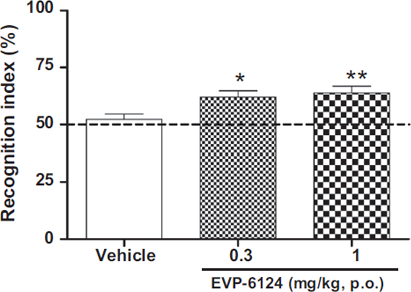
Encenicline purchased from MedChemExpress. Usage Cited in: Eur J Pharmacol. 2017 Sep 15:811:110-116. [Abstract]
Effects of EVP-6124 on the novel object recognition test in rats. EVP-6124 (0.3-1 mg/kg) is orally administered 1 h before the acquisition trial.
-
Psychopharmacology
Selective adrenergic alpha2C receptor antagonist ameliorates acute phencyclidine-induced schizophrenia-like social interaction deficits in rats. [Abstract]2019 Apr;236(4):1245-1253. PMID: 30535904 -
-

Protokoll
Kinase Assay[1]
Binding or activity of EVP-6124 is measured at 10 μM in a selectivity panel according to standard validated protocols under conditions defined by the contractor. For the 5-HT2A receptor binding assay, membranes are prepared from HEK293 cellsexpressing the human recombinant 5-HT2A receptor. For 5-HT2B and 5-HT2C receptor binding assays, membranes are prepared from CHO cells expressing the human recombinant 5-HT2B or 5-HT2C receptor. Affinity is determined by incubating different concentrations of EVP-6124 in binding buffer for 1 h. For 5-HT2A binding, the incubation is at 22°C in the presence of 0.5 nM [3H]-ketanserin; for 5-HT2B, at 22°C in the presence of 2 nM [3H]-mesulergine; and for 5-HT2C, at 37°C in the presence of 1 nM [3H]-mesulergine. Nonspecific binding is determined in the presence of 1 μM ketanserin, 10 μM mesulergine, or 10 μM RS-102221 for 5-HT2A, 5-HT2B, or 5-HT2C, respectively. All measurements are performed in triplicate. EVP-6124 is also tested in the 5-HT2B rat gastric fundus tissue response assay. Briefly, inhibition of α-methyl serotonin-induced contraction is isometrically measured. All measurements are performed in duplicate[1].
MedChemExpress (MCE) has not independently confirmed the accuracy of these methods. They are for reference only.
Rats[1]
Twenty-four 2.5-month-old male Wistar rats (average body weight: 329 g) are used. Before testing Encenicline, the effects of scopolamine alone at 0.03, 0.1, or 0.3 mg/kg, i.p. in the ORT are determined (n=8 per treatment). Scopolamine (0.1 mg/kg, i.p.) injected 30 min before T1 resulted in a robust deficit at T2 when a 1 h interval is used. The d2 index is not significantly different from the chance level of performance; and there are no changes in exploratory behavior for 0.1 mg/kg, i.p. of scopolamine compared with saline. Subsequently, the ability of Encenicline to reverse the memory impairment induced by 0.1 mg/kg of scopolamine is tested. First, scopolamine and then Encenicline (0.03, 0.1, 0.3, and 1.0 mg/kg, p.o.) are administered 30 min before T1. For the control treatments, animals received either deionized water (p.o.) plus saline (i.p.) or deionized water (p.o.) plus 0.1 mg/kg scopolamine (i.p.).
Mice[2]
Adult male mice (3-6 months old) are used throughout this study. Encenicline is injected i.p. (0.4 mg/kg) at Zeitgeber time (ZT0) in awake mice (9 mice total for this experiment), in the animal facility. Mice are then immediately returned to their home cage with their siblings and left undisturbed for 4 hr (ZT4). During this time, they are closely monitored to check for possible behavioral effects of Encenicline injection. All of the 9 injected mice nested and are immobile in the hour following the injection.
MedChemExpress (MCE) has not independently confirmed the accuracy of these methods. They are for reference only.


Reinheit & Dokumentation
Verweise

Calculators
Konzentration (Stammlösung) × Volumen (Stammlösung) = Konzentration (Ziellösung) × Volumen (Ziellösung)


Encenicline Related Classifications
HY-15430 Related Classifications
 Powered by Bioz