



NS5818
NS5818 is a potent chloride channel inhibitor. NS5818 inhibits acidification and bone resorption. NS5818 has the potential for the research of osteoporosis.
Nur für Forschungszwecke. Wir verkaufen nicht an Patienten.
- CAS. Nr.: 674299-39-9
- Formel: C23H19Cl2N7O2
- Molecular Weight:496.35
-
Speicherung:
Please store the product under the recommended conditions in the Certificate of Analysis.


To place orders, for customer services and technical support, please contact: MedChemExpress USA
Tel: 609-228-6898 E-mail: [email protected] [email protected]


-
 Biologische Aktivität
-
Chemical Information
- Protokoll
- Reinheit & Dokumentation
- Verweise
-
 Help & FAQs


-
HY-12693
R(+)-MethylindazoneChloride Channel Inhibitor -
HY-100611
CaCCinh-A01TMEM16A Inhibitor -
HY-101329
Anthracene-9-carboxylic acidChloride Current Blocker -
HY-103368
EactTMEM16A Activator -
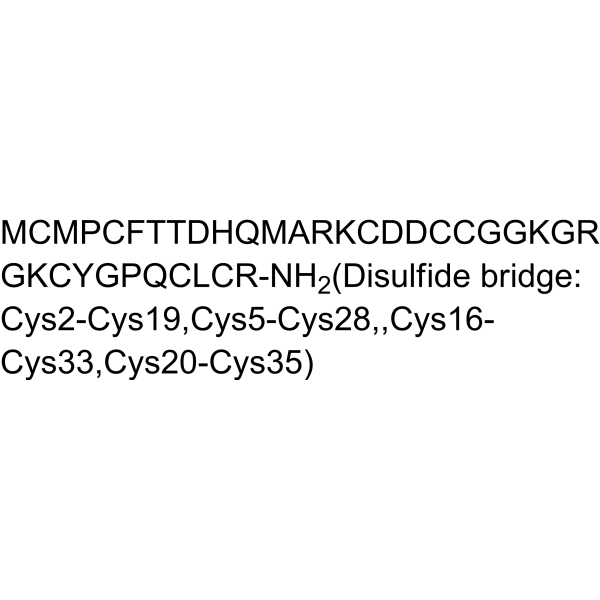
HY-P0173A
ChlorotoxinAntitumor Agent -
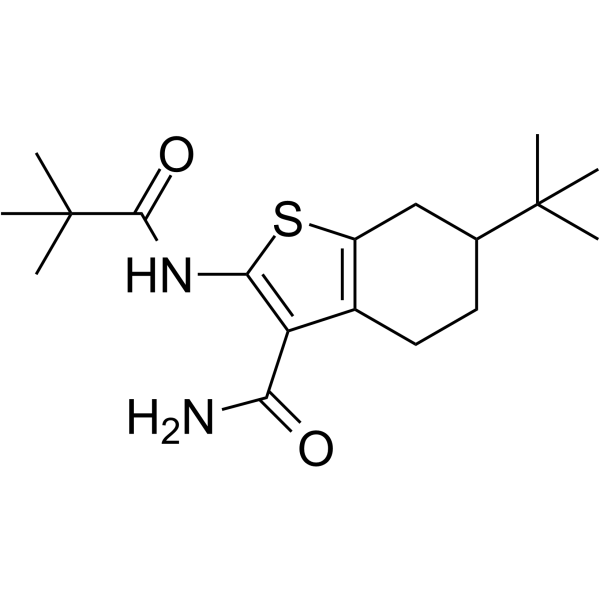
HY-146320
ANO1-IN-1ANO1 Inhibitor -
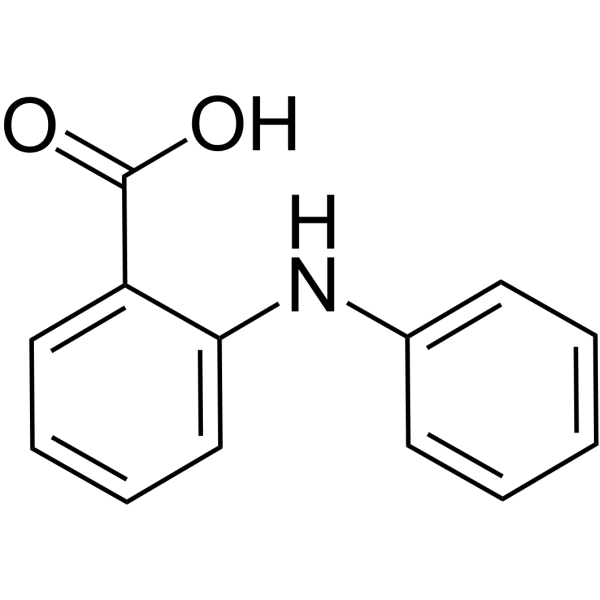
HY-W040265
Fenamic acidChloride Channel Blocker -
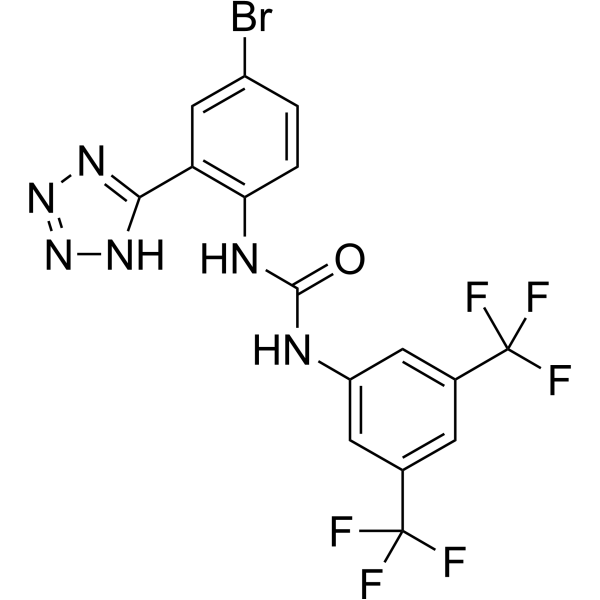
HY-105917
EmidurdarAnion Channel Inhibitor -
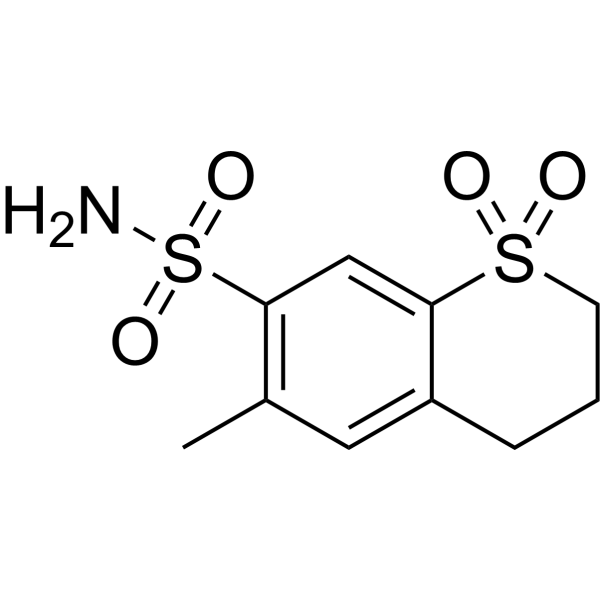
HY-B0908
MeticraneChloride Channel Inhibitor -
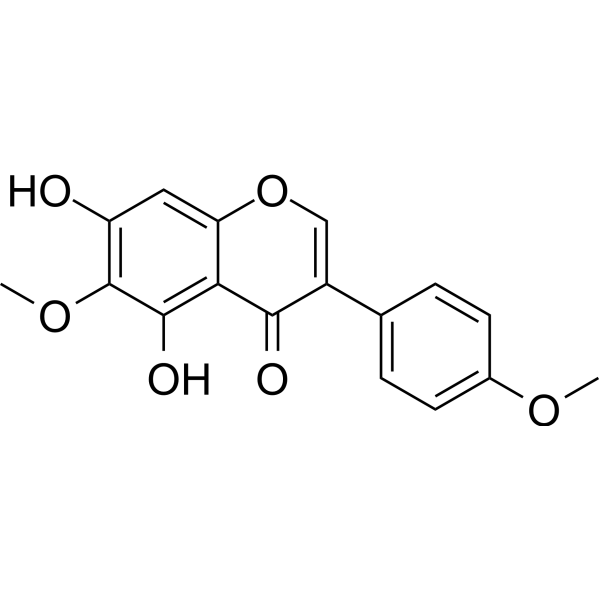
HY-N2412
IrisolidoneVRAC Blocker -
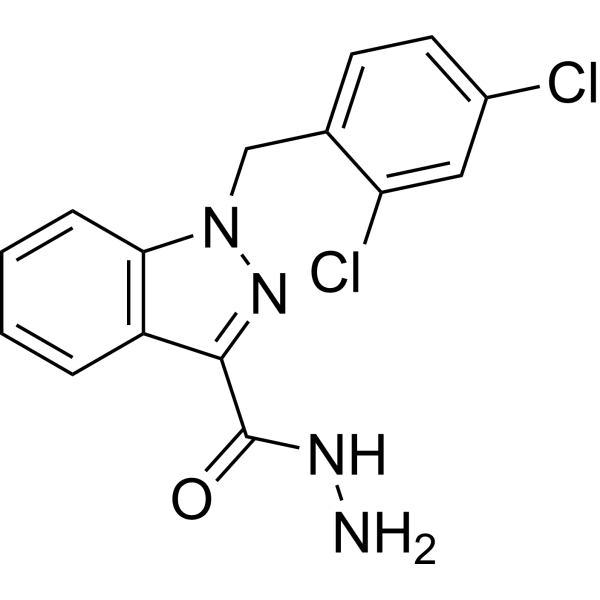
HY-18996
AdjudinChloride Channel Inhibitor -
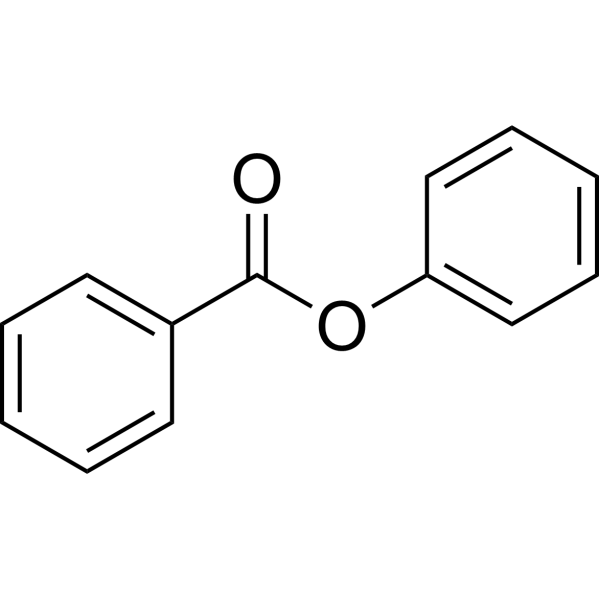
HY-W009823
Phenyl benzoateChloride Blocker


Biologische Aktivität
Beschreibung
In Vitro
NS5818 (50 µM; 6 days) inhibits acidification of the osteoclastic resorption compartment and bone resorption with an IC50 value of 5µM for bone resorption in human osteoclasts[1].
NS5818 (10 µM; 20 days) inhibits resorption in mature osteoclasts cultured on bovine bone slices[1].
MedChemExpress (MCE) has not independently confirmed the accuracy of these methods. They are for reference only. Further protocols information, click here.


Chemical Information
-
CAS. Nr. 674299-39-9
-
Molecular Weight 496.35
-
Formel C23H19Cl2N7O2
-
SMILES
O=C(C1=CC=C(C=C1)C2=CC=C(C=C2C3=NNN=N3)NC(NC4=CC(Cl)=CC(Cl)=C4)=O)N(C)C
-
Versand
Room temperature in continental US; may vary elsewhere.
-
Speicherung
Please store the product under the recommended conditions in the Certificate of Analysis.

Protokoll
-
Osteoclast differentiation from monocyte/macrophage precursors
Osteoclast differentiation is an in vitro induction assay in which monocyte/macrophage-lineage precursors are exposed to macrophage colony-stimulating factor (M-CSF) and receptor activator of NF-κB ligand (RANKL), generating multinucleated osteoclasts that are commonly identified by tartrate-resistant acid phosphatase (TRAP) staining and functionally confirmed by resorption pits on dentin, bone, or mineralized substrates. M-CSF supports survival and expansion of osteoclast precursors, while RANKL binding to RANK drives osteoclast commitment, fusion, maturation, and resorptive function; osteoprotegerin inhibits this pathway by binding RANKL and preventing RANK activation. The main readouts are the number of TRAP-positive multinucleated cells, formation of F-actin rings, and resorbed surface area; TRAP-positive multinucleated cells indicate osteoclast differentiation, whereas pit formation on dentin, bone, or mineralized coating indicates functional bone-resorbing activity.


Reinheit & Dokumentation
Verweise

Calculators
Konzentration (Stammlösung) × Volumen (Stammlösung) = Konzentration (Ziellösung) × Volumen (Ziellösung)


NS5818 Related Classifications
HY-122077 Related Classifications
 Powered by Bioz