



ABT-702
Based on 5 publication(s) in Google Scholar
ABT-702 (Adenosine Kinase Inhibitor) is a potent, orally active, and selective adenosine kinase (AK) inhibitor with an IC50 of 1.7 nM. ABT-702 shows >1300-fold selectivity for AK over other biological targets, including cyclooxygenases-1 and -2. ABT-702 attenuates inflammation in diabetic retinopathy by increasing free adenosine levels. ABT-702 shows analgesic and anti-inflammatory effects in vivo. ABT-702 can be used for diabetic retinopathy research.
Nos produits utilisent uniquement pour la recherche. Nous ne vendons pas aux patients.
- Pureté : 99.61%
- CAS No.: 214697-26-4
- Formule: C22H19BrN6O
- Masse moléculaire:463.33
-
Stockage:Powder -20°C, 3 years ; In solvent -80°C, 6 months , -20°C, 1 month


To place orders, for customer services and technical support, please contact: MedChemExpress USA
Tel: 609-228-6898 E-mail: [email protected] [email protected]


-
 Activité biologique
-
Chemical Information
-
Solvant et solubilité
- Protocole
- Pureté et documentation
- Références
-
 Help & FAQs


Publications Citing Use of MedChemExpress (MCE) ABT-702
More Customer Validation & Images

-
Bio/Physico-chemical Assay
-
Bio/Physico-chemical Assay
-
Bio/Physico-chemical Assay
-
Cell Proliferation/Viability Assay
Voir tous les produits spécifiques à Isoform Adenosine Receptor
More

Activité biologique
Description
IC50 & Target
IC50: 1.7 nM (Adenosine kinase, AK)[1]
Cellular Effect
|
Cell Line

|
Type | Value | Description | References |
|---|---|---|---|---|
| IMR-32 | IC50 |
50 nM
Compound: 21 (ABT-702)
|
Inhibition of adenosine phosphorylation in confluent IMR-32 (human neuroblastoma) cells.
Inhibition of adenosine phosphorylation in confluent IMR-32 (human neuroblastoma) cells.
|
[PMID: 11405650] |
In Vitro
ABT-702 (5-50 μM, 30 min) inhibits amadori-glycated-albumin (AGA)-induced TNF-α release in a dose-dependent manner in AGA-treated microglial cells via the adenosine A2AA receptor (A2AAR)[2].
MedChemExpress (MCE) has not independently confirmed the accuracy of these methods. They are for reference only.
In Vivo
ABT-702 (1.5 mg/kg, i.p., twice a week for 8 weeks) meliorates diabetic retinopathy in mice by attenuating retinal inflammation, oxidative stress, and cell death[2].
ABT-702 (3 mg/kg, i.p., 10 minutes pre-FDG) induces significant regional hypometabolism in the cerebellum, mesencephalic region, and medulla in rats[3].
MedChemExpress (MCE) has not independently confirmed the accuracy of these methods. They are for reference only.
-
Animal Model:Male rats[1]
-
Dosage:0.6-100 µmol/kg
-
Administration:i.p., single dose
-
Result:Showed potent, dose-dependent antinociceptive effects across multiple pain models, including inflammatory thermal hyperalgesia, formalin test, and nerve injury-induced tactile allodynia.
Demonstrated significant anti-inflammatory effects by reducing carrageenan-induced paw edema.
Exhibited a non-opioid mechanism of action, as its effects were not reversed by the opioid antagonist naloxone.
Showed less potential for developing antinociceptive tolerance compared to morphine.
-
Animal Model:Male rats[1]
-
Dosage:5-100 µmol/kg
-
Administration:p.o., single dose
-
Result:Showed potent, dose-dependent antinociceptive effects across multiple pain models, including inflammatory thermal hyperalgesia, formalin test, and nerve injury-induced tactile allodynia.
Demonstrated significant anti-inflammatory effects by reducing carrageenan-induced paw edema.
The antinociceptive and anti-inflammatory effects were blocked by selective adenosine receptor antagonists, confirming an adenosine-dependent mechanism.
Exhibited a non-opioid mechanism of action.
Showed less potential for developing antinociceptive tolerance compared to morphine.
Had no significant effects on exploratory locomotor activity at lower analgesic doses.
Reduced locomotor activity but did not impair motor coordination at higher doses.
Had no significant effects on heart rate or mean arterial pressure at doses providing maximal anti-hyperalgesia.
-
Animal Model:Male C57BL/6J (8 weeks) intraperitoneally injected with Streptozotocin (45 mg/kg, 5 consecutive days) to induce diabetes[2]
-
Dosage:1.5 mg/kg
-
Administration:i.p., twice a week for 8 weeks
-
Result:Showed no effects on final body weight and blood glucose levels in diabetic mice.
Showed lower signs of inflammation (ICAM-1, TNF-α, and microglial activation marker Iba1) compared to control animals receiving the vehicle.
Suppressed the upregulation of A₂A receptor and reduced ENT1 expression.
Reduced oxidative and nitrosative stress in the retina.
Blocked the diabetic effect on AK in diabetic mice as compared with vehicle-treated diabetic mice.
Blocked cell death (decreased cleaved caspase-3 and TUNEL-positive cells) in diabetic mice but did not affect treated normal controls.
-
Animal Model:Rats[3]
-
Dosage:3 mg/kg
-
Administration:i.p., 10 minutes pre-FDG
-
Result:Showed significant regional hypometabolism in the cerebellum, mesencephalic region, and medulla compared to the vehicle-treated rats.


Chemical Information
-
CAS No. 214697-26-4
-
Appearance Solid
-
Masse moléculaire 463.33
-
Formule C22H19BrN6O
-
Color Light yellow to yellow
-
SMILES
BrC1=CC=CC(C2=C3C(N)=NC=NC3=NC(C4=CC=C(N5CCOCC5)N=C4)=C2)=C1
-
Livraison
Room temperature in continental US; may vary elsewhere.
-
Stockage
Powder -20°C 3 years In solvent -80°C 6 months -20°C 1 month


Publications (5)
-
Journal Impact Factor
-
Most Recent
-
Cell
Adenosine kinase and ADAL coordinate detoxification of modified adenosines to safeguard metabolism. [Abstract]2025 Oct 30;188(22):6151-6169.e24. PMID: 40840445 -
Cell Stem Cell
ENPP1 blockade with a humanized monoclonal antibody enhances renal repair after acute kidney injury. [Abstract]2026 Jun 16:S1934-5909(26)00203-1. PMID: 42302792 -
Cell Death Discov
5-Iodotubercidin sensitizes cells to RIPK1-dependent necroptosis by interfering with NFκB signaling. [Abstract]2023 Jul 26;9(1):262. PMID: 37495567
ABT-702 purchased from MedChemExpress. Usage Cited in: Cell Death Discov. 2023 Jul 26;9(1):262. [Abstract]
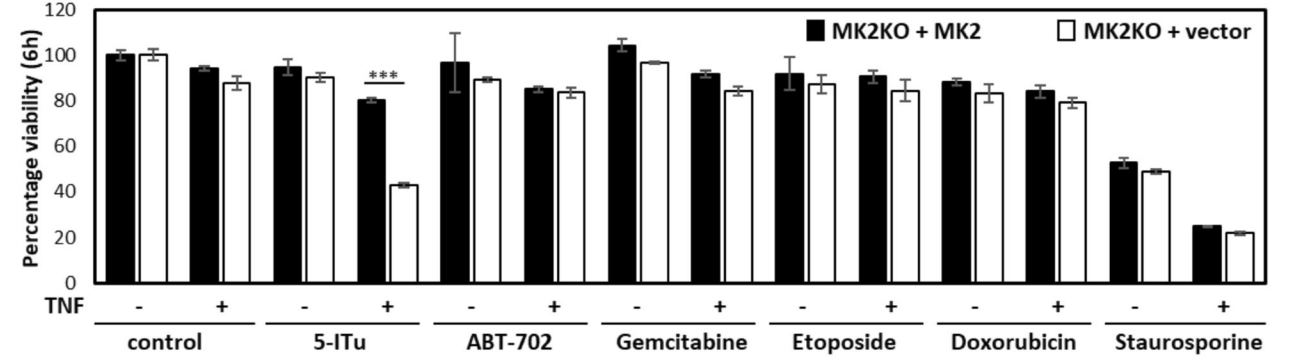
MK2-deficient MEFs transduced with MK2 expression or control vector were treated with indicated small molecules (5 µM ABT-702 dihydrochloride, 100 nM gemcitabine, 5 µM etoposid, 5 µM doxorubicin and 5 µM staurosporine) in the presence or absence of TNF for 6 h and cell viability was assessed.
-
Neurochem Res
2024 Nov 16;50(1):13. PMID: 39549173
ABT-702 purchased from MedChemExpress. Usage Cited in: Neurochem Res. 2024 Nov 16;50(1):13. [Abstract]
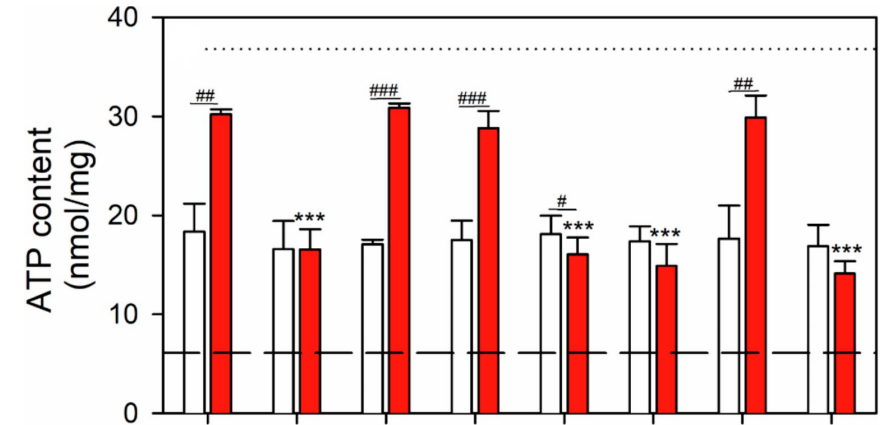
Effects of inhibitors of adenosine metabolism on the utilization of adenosine for ATP restoration in glucose-fed astrocytes. Astrocyte cultures had been preincubated for 60 min in glucose-free IB with 1 µM of BAM15 to lower the cellular ATP content before the cells were incubated in glucose (5 mM)-containing IB without or with 30 µM adenosine in the absence or the presence of the adenosine kinase inhibitor ABT-702 dihydrochloride (ABT; 10 µM), the adenosine deaminase inhibitor DCF (1 µM) and/or the purine nucleoside phosphorylase inhibitor forodesine (Foro; 10 µM). After 60 min, the cellular ATP content was determined.
ABT-702 purchased from MedChemExpress. Usage Cited in: Neurochem Res. 2024 Nov 16;50(1):13. [Abstract]
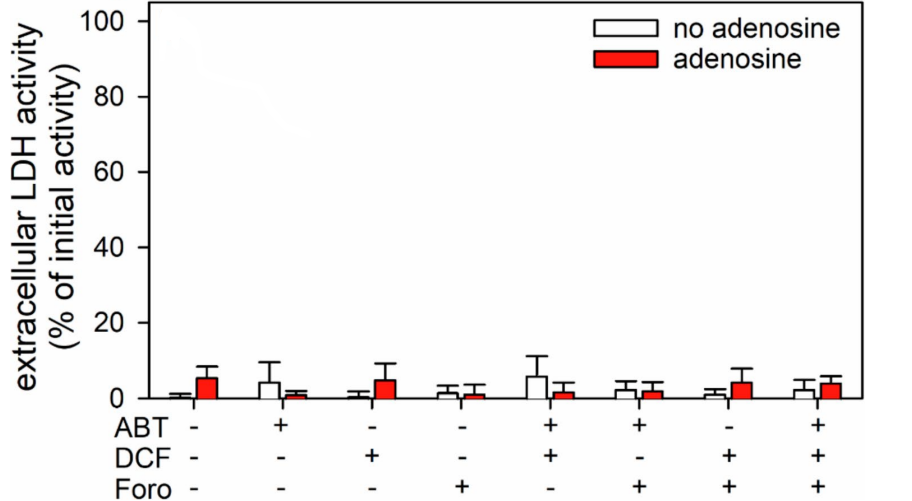
Effects of inhibitors of adenosine metabolism on the utilization of adenosine for ATP restoration in glucose-fed astrocytes. Astrocyte cultures had been preincubated for 60 min in glucose-free IB with 1 µM of BAM15 to lower the cellular ATP content before the cells were incubated in glucose (5 mM)-containing IB without or with 30 µM adenosine in the absence or the presence of the adenosine kinase inhibitor ABT-702 dihydrochloride (ABT; 10 µM), the adenosine deaminase inhibitor DCF (1 µM) and/or the purine nucleoside phosphorylase inhibitor forodesine (Foro; 10 µM). After 60 min, the extracellular LDH activity was determined.
ABT-702 purchased from MedChemExpress. Usage Cited in: Neurochem Res. 2024 Nov 16;50(1):13. [Abstract]
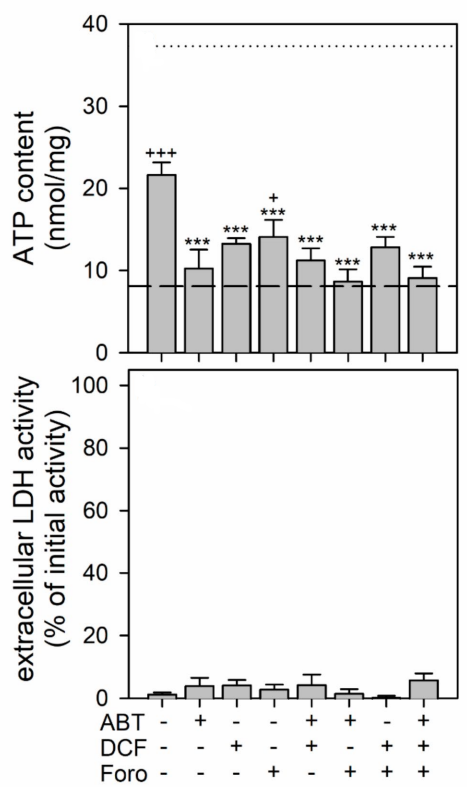
Prevention of the exclusive utilization of adenosine for ATP restoration by inhibitors of adenosine metabolism. Astrocyte cultures had been preincubated for 60 min in glucose-free IB with 1 µM of BAM15 to lower the cellular ATP content before the cells were incubated in glucose-free IB with 100 µM adenosine in the absence or the presence of the adenosine kinase inhibitor ABT-702 dihydrochloride (ABT; 10 µM), the adenosine deaminase inhibitor DCF (1 µM) and/or the purine nucleoside phosphorylase inhibitor forodesine (Foro; 10 µM). After 60 min, the cellular ATP content and the extracellular LDH activity were determined.
-
ESC Heart Fail
Inhibition of adenosine kinase alleviates hypertrophic cardiomyopathy by ameliorating coronary microvascular dysfunction. [Abstract]2026 May 5;13(3):xvag118. PMID: 42015547


Solvant et solubilité
In Vitro:
DMSO : 25 mg/mL (53.96 mM; Need ultrasonic; Hygroscopic DMSO has a significant impact on the solubility of product, please use newly opened DMSO)
Please refer to the solubility information to select the appropriate solvent. Once prepared, please aliquot and store the solution to prevent product inactivation from repeated freeze-thaw cycles.
Storage method and period of stock solution: -80°C, 6 months; -20°C, 1 month. When stored at -80°C, please use it within 6 months. When stored at -20°C, please use it within 1 month.
Please refer to the solubility information to select the appropriate solvent. Once prepared, please aliquot and store the solution to prevent product inactivation from repeated freeze-thaw cycles.
Storage method and period of stock solution: -80°C, 6 months; -20°C, 1 month. When stored at -80°C, please use it within 6 months. When stored at -20°C, please use it within 1 month.
Concentration (start) × Volume (start) = Concentration (final) × Volume (final)


Pureté et documentation
-
Fiche technique (283 KB)
-
SDS (392 KB)
- English - EN (392 KB)
- Français - FR (392 KB)
- Deutsch - DE (392 KB)
- Norwegian - NO (392 KB)
- Español - ES (392 KB)
- Swedish - SV (392 KB)
- Italian - IT (392 KB)
- Korean - KR (392 KB)
- Portuguese - PT (392 KB)
-
Instruction de manipulation (2659 KB)
Références
[1]. Jarvis MF, et al. ABT-702 (4-amino-5-(3-bromophenyl)-7-(6-morpholinopyridin-3-yl)pyrido[2, 3-d]pyrimidine), a novel orally effective adenosine kinase inhibitor with analgesic and anti-inflammatory properties: I. In vitro characterization and acute antinociceptive effects in the mouse. J Pharmacol Exp Ther. 2000 Dec;295(3):1156-64. [Content Brief]
[2]. Elsherbiny NM, et al. ABT-702, an adenosine kinase inhibitor, attenuates inflammation in diabetic retinopathy. Life Sci. 2013 Jul 30;93(2-3):78-88. [Content Brief]
[3]. Parkinson FE, et al. The Effect of Endogenous Adenosine on Neuronal Activity in Rats: An FDG PET Study. J Neuroimaging. 2016 Jul;26(4):403-5. [Content Brief]


Complete Stock Solution Preparation Table
Please refer to the solubility information to select the appropriate solvent. Once prepared, please aliquot and store the solution to prevent product inactivation from repeated freeze-thaw cycles.
Storage method and period of stock solution: -80°C, 6 months; -20°C, 1 month. When stored at -80°C, please use it within 6 months. When stored at -20°C, please use it within 1 month.
| Optional Solvent | Concentration Solvent Mass | 1 mg | 5 mg | 10 mg | 25 mg |
|---|---|---|---|---|---|
| DMSO | 1 mM | 2.1583 mL | 10.7914 mL | 21.5829 mL | 53.9572 mL |
| 5 mM | 0.4317 mL | 2.1583 mL | 4.3166 mL | 10.7914 mL | |
| 10 mM | 0.2158 mL | 1.0791 mL | 2.1583 mL | 5.3957 mL | |
| 15 mM | 0.1439 mL | 0.7194 mL | 1.4389 mL | 3.5971 mL | |
| 20 mM | 0.1079 mL | 0.5396 mL | 1.0791 mL | 2.6979 mL | |
| 25 mM | 0.0863 mL | 0.4317 mL | 0.8633 mL | 2.1583 mL | |
| 30 mM | 0.0719 mL | 0.3597 mL | 0.7194 mL | 1.7986 mL | |
| 40 mM | 0.0540 mL | 0.2698 mL | 0.5396 mL | 1.3489 mL | |
| 50 mM | 0.0432 mL | 0.2158 mL | 0.4317 mL | 1.0791 mL |


ABT-702 Related Classifications
HY-112482 Related Classifications
 Powered by Bioz