



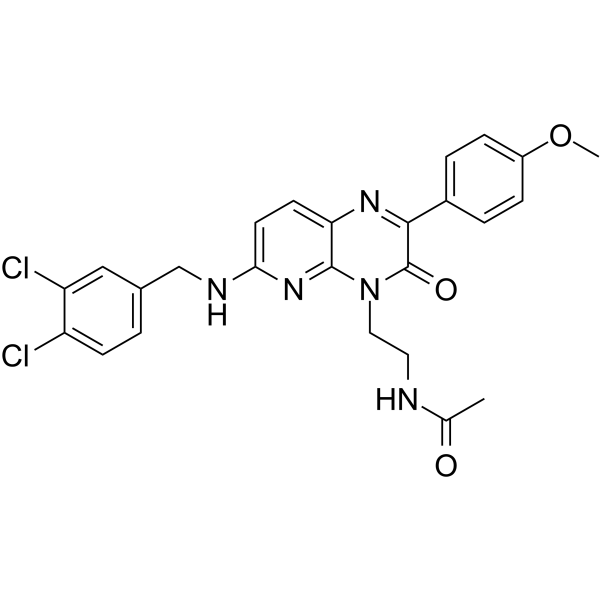
CVT-11127

Based on 1 Customer Validation
CVT-11127 is a potent SCD inhibitor. CVT-11127 induces apoposis and arrests the cell cycle at the G1/S phase. CVT-11127 has the potential for the research of lung cancer.
Nos produits utilisent uniquement pour la recherche. Nous ne vendons pas aux patients.
- Pureté : 99.94%
- CAS No.: 1018674-83-3
- Formule: C25H23Cl2N5O3
- Masse moléculaire:512.39
-
Stockage:Powder -20°C, 3 years , 4°C, 2 years ; In solvent -80°C, 6 months , -20°C, 1 month

To place orders, for customer services and technical support, please contact: MedChemExpress USA
Tel: 609-228-6898 E-mail: [email protected] [email protected]


-
 Activité biologique
-
Chemical Information
-
Solvant et solubilité
- Protocole
- Pureté et documentation
- Références
-
 Help & FAQs


-
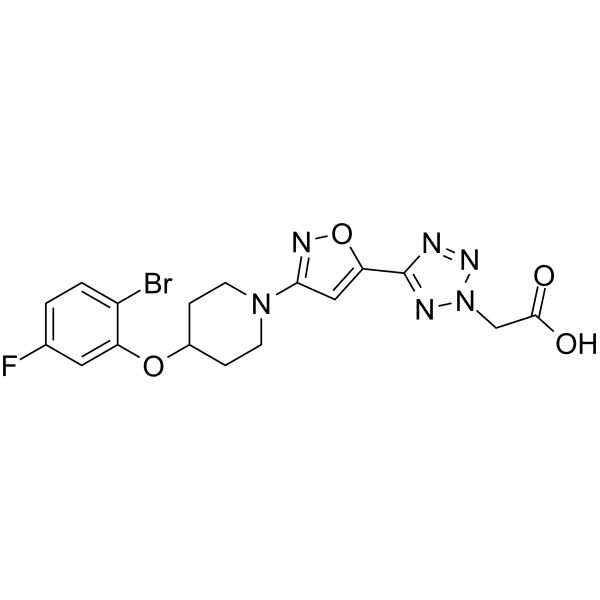
HY-13070
MK-8245 -
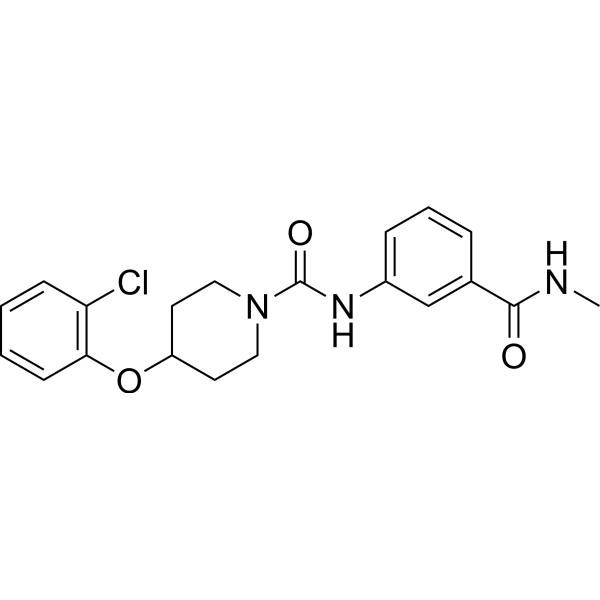
HY-50709
A939572SCD1 Inhibitor -
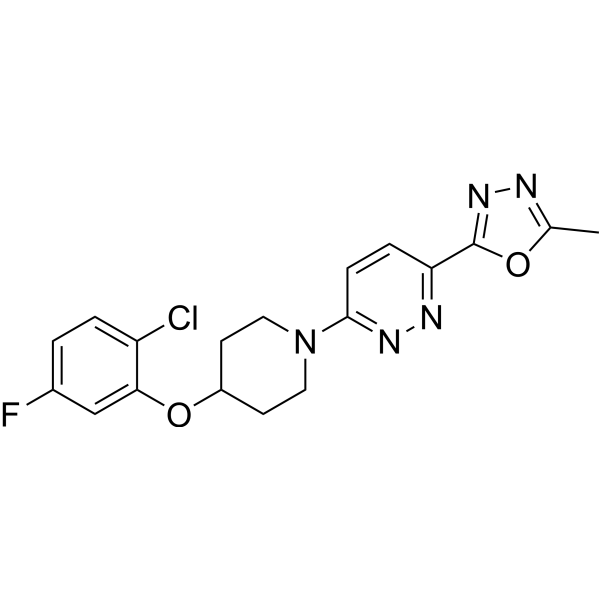
HY-15823
CAY10566SCD1 Inhibitor -
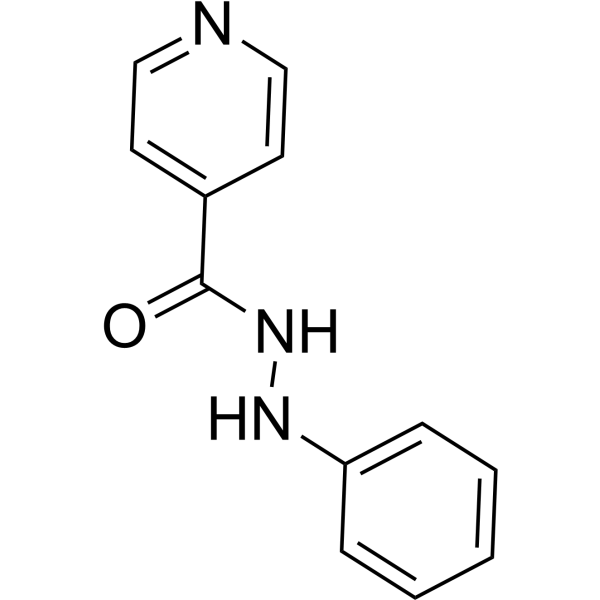
HY-15700
PluriSIn 1Apoptosis Inducer -
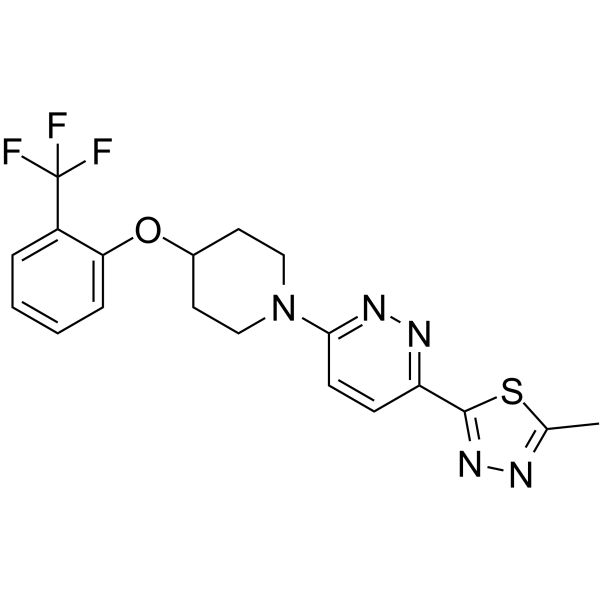
HY-15822
MF-438SCD1 Inhibitor -
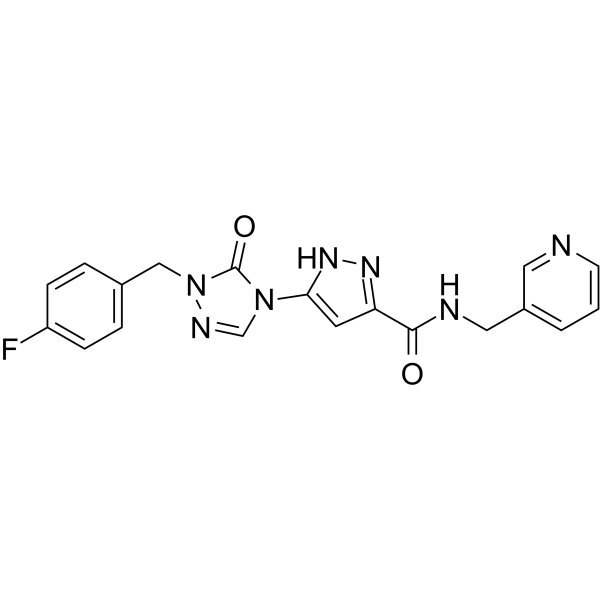
HY-139077
SCD1 inhibitor-3SCD1 Inhibitor -
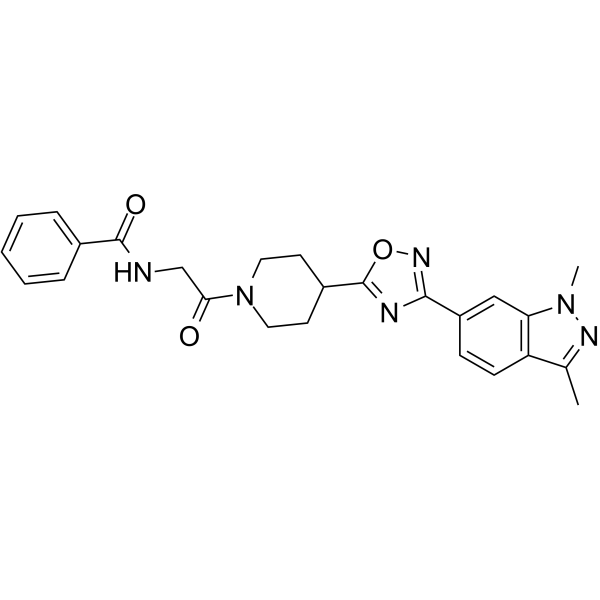
HY-124751
YTX-465Ole1/SCD Inhibitor -

HY-50709R
A939572 (Standard)SCD1 Inhibitor -
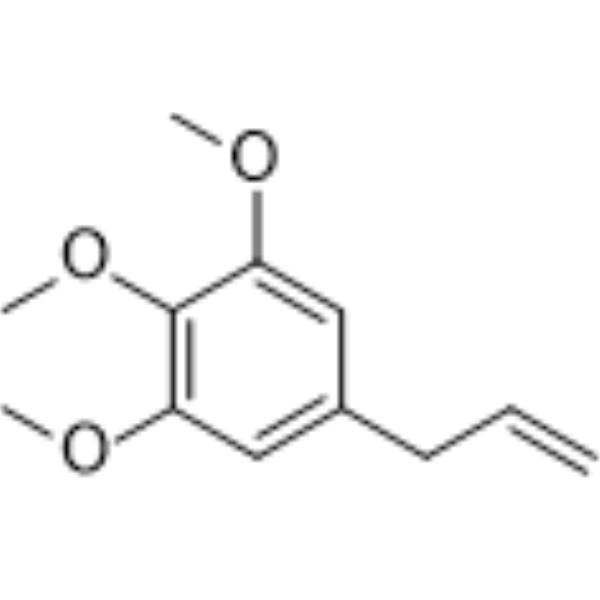
HY-N6807
ElemicinSCD Inhibitor -
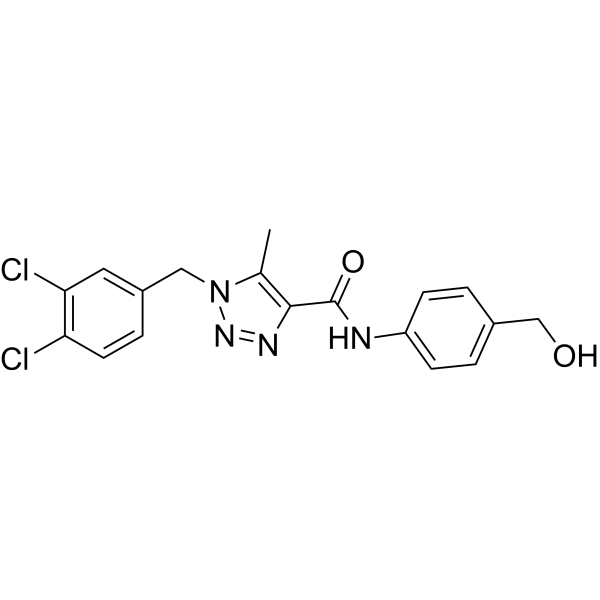
HY-19762
GSK1940029Stearoyl-coa Desaturase Inhibitor -
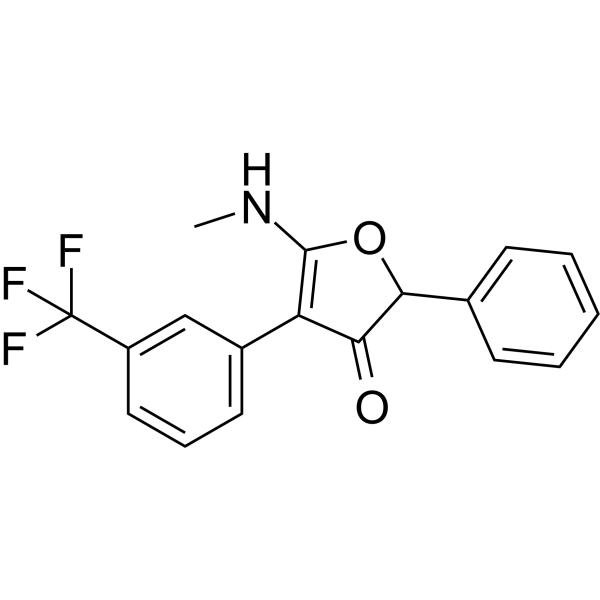
HY-116653
FlurtamoneHerbicide -
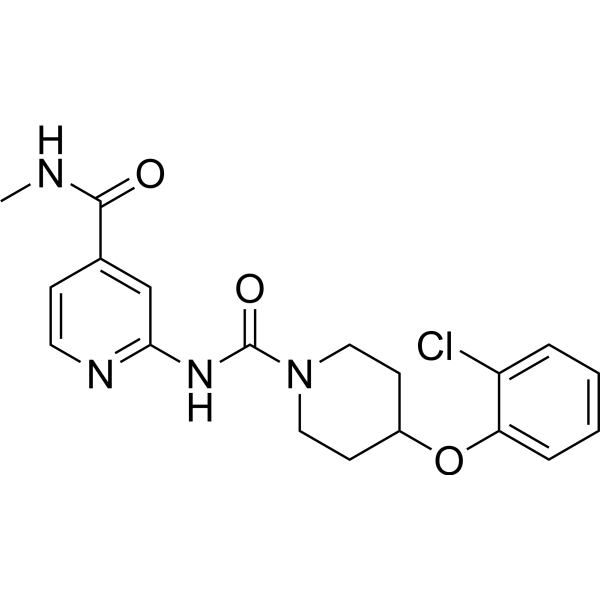
HY-155033
SSI-4SCD1 Inhibitor


Activité biologique
Description
IC50 & Target
SCD[1]
Cellular Effect
|
Cell Line

|
Type | Value | Description | References |
|---|---|---|---|---|
| HepG2 | IC50 |
81 nM
Compound: 6a
|
Inhibition of Delta-9-desaturase in human HepG2 cells
Inhibition of Delta-9-desaturase in human HepG2 cells
|
[PMID: 19249203] |
In Vitro
CVT-11127 (1 µM, 48 h) shows antiproliferation activity in H460 cells[1].
CVT-11127 (1 µM, 48 h) decreases the the population of cells in S-phase by 75%[1].
CVT-11127 (1 µM, 48 h) induces apoposis in H460 cells[1].
CVT-11127 (1, 2 µM) inhibitors the SCD (stearoylCoA desaturase) activity in H460 cells[1].
MedChemExpress (MCE) has not independently confirmed the accuracy of these methods. They are for reference only. Further protocols information, click here.
-
Cell Line:H460 cells
-
Concentration:1 µM
-
Incubation Time:48 h
-
Result:Showed antiproliferation activity.
-
Cell Line:H460 cells
-
Concentration:1 µM
-
Incubation Time:48 h
-
Result:Decreased the the population of cells in S-phase by 75%.
-
Cell Line:H460 cells
-
Concentration:1 µM
-
Incubation Time:24 h
-
Result:Induced apoposis H460 cells.


Chemical Information
-
CAS No. 1018674-83-3
-
Appearance Solid
-
Masse moléculaire 512.39
-
Formule C25H23Cl2N5O3
-
Color Light yellow to yellow
-
Synonyms
GS-456332
-
Livraison
Room temperature in continental US; may vary elsewhere.
-
Stockage
Powder -20°C 3 years 4°C 2 years In solvent -80°C 6 months -20°C 1 month


Solvant et solubilité
In Vitro:
DMSO : 25 mg/mL (48.79 mM; Need ultrasonic; Hygroscopic DMSO has a significant impact on the solubility of product, please use newly opened DMSO)
Please refer to the solubility information to select the appropriate solvent. Once prepared, please aliquot and store the solution to prevent product inactivation from repeated freeze-thaw cycles.
Storage method and period of stock solution: -80°C, 6 months; -20°C, 1 month. When stored at -80°C, please use it within 6 months. When stored at -20°C, please use it within 1 month.
Please refer to the solubility information to select the appropriate solvent. Once prepared, please aliquot and store the solution to prevent product inactivation from repeated freeze-thaw cycles.
Storage method and period of stock solution: -80°C, 6 months; -20°C, 1 month. When stored at -80°C, please use it within 6 months. When stored at -20°C, please use it within 1 month.
Concentration (start) × Volume (start) = Concentration (final) × Volume (final)

Protocole
-
EdU Incorporation Assay (Click Chemistry-Based DNA Synthesis Measurement)
The EdU incorporation assay measures DNA synthesis by adding the thymidine analog 5-ethynyl-2′-deoxyuridine to cells or tissues, where it is incorporated into newly synthesized DNA during S phase. Incorporated EdU is detected by copper-catalyzed azide-alkyne cycloaddition, in which a fluorescent azide covalently reacts with the ethynyl group on EdU, allowing S-phase cells to be detected by fluorescence microscopy, flow cytometry, or high-content imaging. EdU detection does not require DNA denaturation or anti-BrdU antibody access, which preserves sample structure and improves compatibility with immunostaining and multiparameter cytometry compared with BrdU-based detection. EdU can be cytotoxic in a cell-type- and exposure-dependent manner, so pulse duration, concentration, and continuous-labeling designs should be validated for each cell type.
-
Flow cytometric DNA-content cell-cycle staining
Flow cytometric DNA-content cell-cycle staining measures the fluorescence intensity of DNA-bound fluorochromes in single cells or nuclei to estimate DNA content distributions, allowing assignment of populations to G0/G1, S, and G2/M phases by DNA histogram deconvolution. Propidium iodide (PI) intercalates into DNA, and PI fluorescence is proportional to cellular DNA content when staining is performed under conditions that make DNA accessible and minimize non-DNA signal. Cells with G2/M DNA content are expected to show approximately twice the fluorescence intensity of G0/G1 cells, while S-phase cells occupy intermediate fluorescence values. PI-based DNA-content analysis can also detect cells with fractional DNA content, often reported as sub-G1, when DNA fragmentation and extraction during staining reduce retained DNA signal in apoptotic cells. DAPI is an alternative DNA fluorochrome for univariate DNA-content analysis, while bivariate approaches combining DNA content with proliferation
-
BrdU Incorporation Assay
Bromodeoxyuridine (BrdU) incorporation assay is based on the principle that BrdU, a thymidine analog, is incorporated into newly synthesized DNA during the S phase of the cell cycle, thereby serving as a marker of DNA replication and cellular proliferation. Incorporated BrdU can be detected using anti-BrdU antibodies following DNA denaturation, enabling visualization or quantification of proliferating cells through immunochemical detection methods such as immunofluorescence or immunohistochemistry.
-
Protocol for Cell Cycle
Cell-cycle analysis by flow cytometry measures DNA content in single cells to estimate the fraction of cells in G0/G1, S, and G2/M phases. Propidium iodide intercalates into DNA, and after RNA removal with RNase, fluorescence intensity reflects cellular DNA content: 2N cells are assigned to G0/G1, cells between 2N and 4N to S phase, and 4N cells to G2/M. DNA-content analysis alone cannot reliably separate G0 from G1 or G2 from M. Ki-67 can distinguish quiescent G0 cells from cycling cells, EdU or BrdU incorporation marks active DNA synthesis in S phase, and phospho-histone H3 staining identifies mitotic cells within the 4N population.


Pureté et documentation
-
Fiche technique (272 KB)
-
SDS (252 KB)
- English - EN (252 KB)
- Français - FR (252 KB)
- Deutsch - DE (252 KB)
- Norwegian - NO (252 KB)
- Español - ES (252 KB)
- Swedish - SV (252 KB)
- Italian - IT (252 KB)
- Korean - KR (252 KB)
- Portuguese - PT (252 KB)
-
Instruction de manipulation (2659 KB)
Références


Complete Stock Solution Preparation Table
Please refer to the solubility information to select the appropriate solvent. Once prepared, please aliquot and store the solution to prevent product inactivation from repeated freeze-thaw cycles.
Storage method and period of stock solution: -80°C, 6 months; -20°C, 1 month. When stored at -80°C, please use it within 6 months. When stored at -20°C, please use it within 1 month.
| Optional Solvent | Concentration Solvent Mass | 1 mg | 5 mg | 10 mg | 25 mg |
|---|---|---|---|---|---|
| DMSO | 1 mM | 1.9516 mL | 9.7582 mL | 19.5164 mL | 48.7910 mL |
| 5 mM | 0.3903 mL | 1.9516 mL | 3.9033 mL | 9.7582 mL | |
| 10 mM | 0.1952 mL | 0.9758 mL | 1.9516 mL | 4.8791 mL | |
| 15 mM | 0.1301 mL | 0.6505 mL | 1.3011 mL | 3.2527 mL | |
| 20 mM | 0.0976 mL | 0.4879 mL | 0.9758 mL | 2.4395 mL | |
| 25 mM | 0.0781 mL | 0.3903 mL | 0.7807 mL | 1.9516 mL | |
| 30 mM | 0.0651 mL | 0.3253 mL | 0.6505 mL | 1.6264 mL | |
| 40 mM | 0.0488 mL | 0.2440 mL | 0.4879 mL | 1.2198 mL |


CVT-11127 Related Classifications
HY-113638 Related Classifications
 Powered by Bioz