



PBP10
Based on 1 publication(s) in Google Scholar
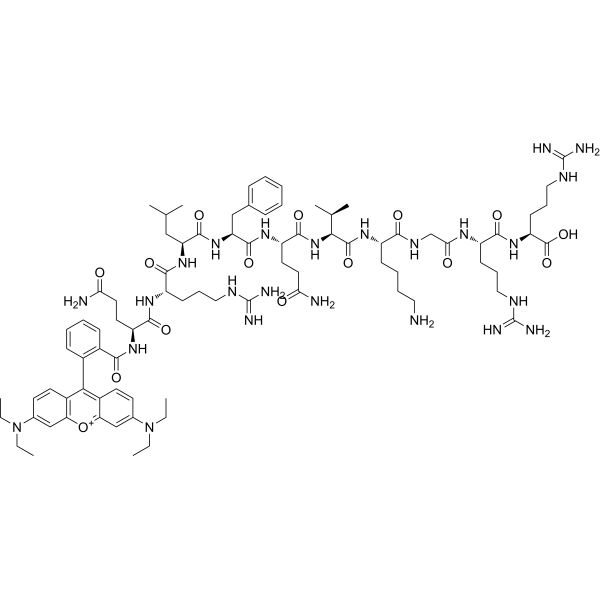
PBP10 is a decapeptide. PBP10 selectively binds to lipoteichoic acid (LTA), lipopolysaccharide (LPS) and phosphatidylinositol-4,5-bisphosphate (PIP2). PBP10 penetrates cell membranes and possesses bactericidal, anti-inflammatory, cell motility-inhibiting and actin assembly-regulating activities. PBP10 is applicable to relevant research on bacterial infections, microbe-induced inflammation, skin and soft tissue infections, as well as sepsis.
Nos produits utilisent uniquement pour la recherche. Nous ne vendons pas aux patients.
- Pureté : 96.75%
- CAS No.: 794466-43-6
- Formule: C84H127N24O15+
- Masse moléculaire:1713.06
-
Stockage:
Sealed storage, away from moisture.
Powder -80°C, 2 years , -20°C, 1 year* In solvent : -80°C, 6 months; -20°C, 1 month (sealed storage, away from moisture)

To place orders, for customer services and technical support, please contact: MedChemExpress USA
Tel: 609-228-6898 E-mail: [email protected] [email protected]


-
 Activité biologique
-
Chemical Information
- Protocole
- Pureté et documentation
- Références
-
 Help & FAQs


-
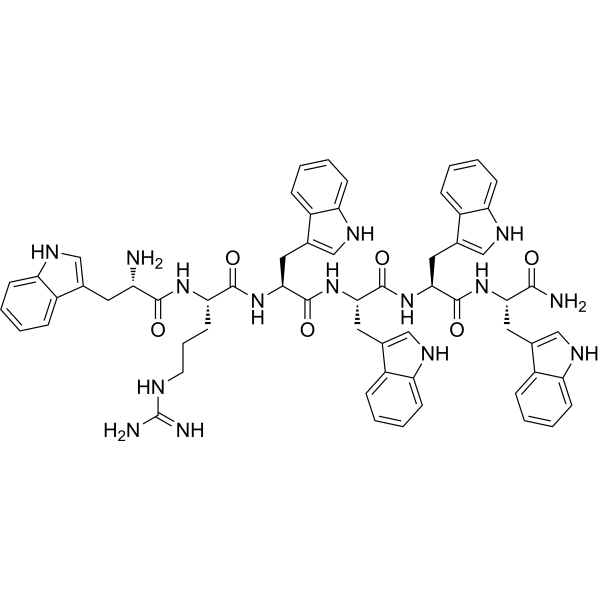
HY-P1119
WRW4FPRL1 Antagonist -
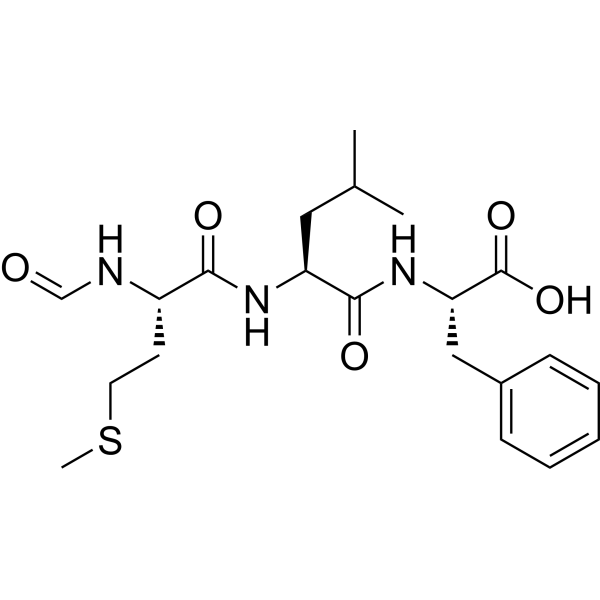
HY-P0224
N-Formyl-Met-Leu-PheTNF Receptor Inhibitor -

HY-P1117
MMK1FPRL-1 Agonist -
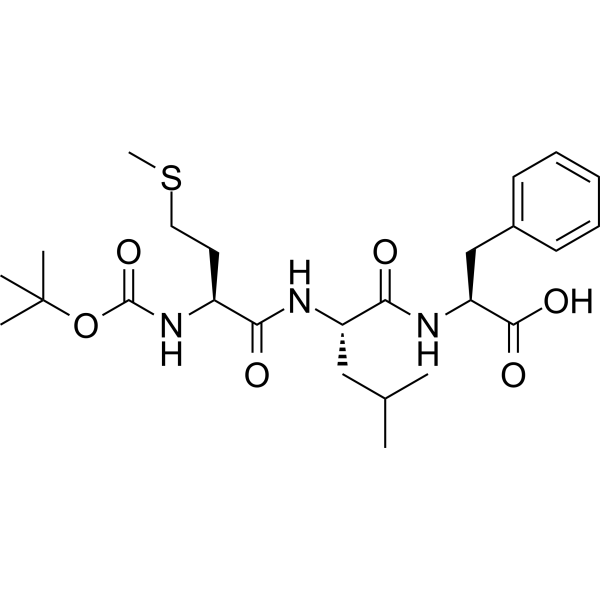
HY-103473
Boc-MLFFPR1 Antagonist -
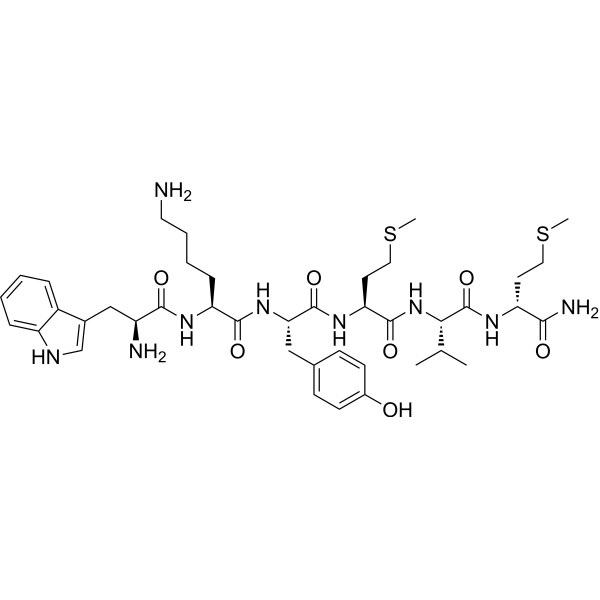
HY-P1120
WKYMVmN-Formyl Peptide Receptor Agonist -
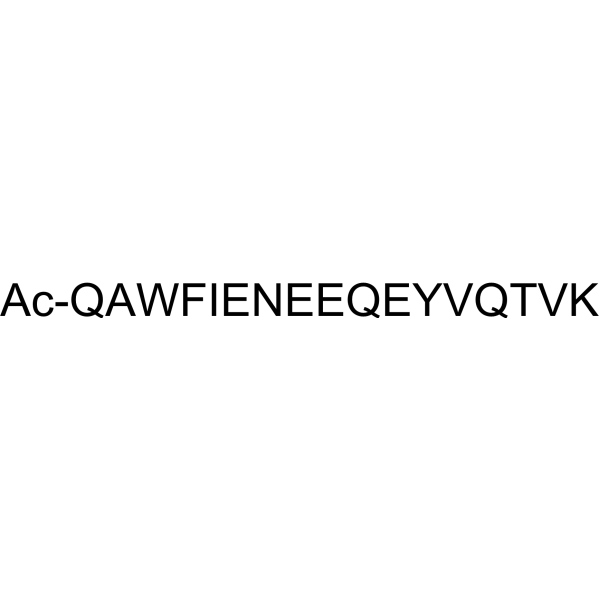
HY-P1118
Ac9-25FPR Agonist -

HY-P1121
WKYMVM-NH2FPRL1/FPRL2 Recaptor Agonist -
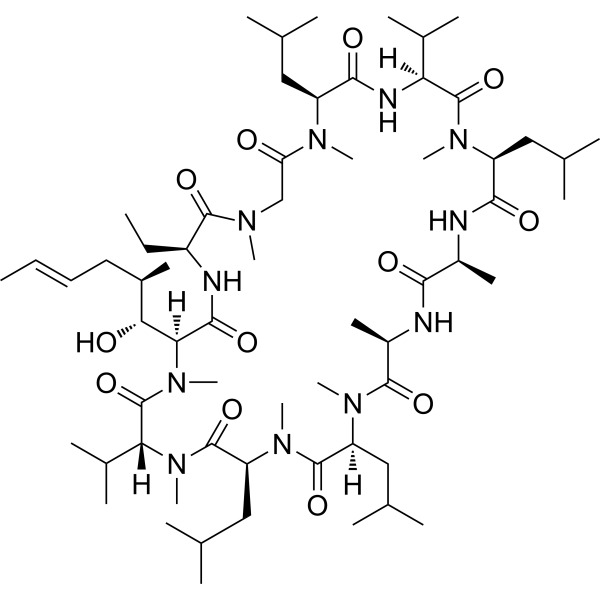
HY-P1122
Cyclosporin HFPR-1 Inhibitor -
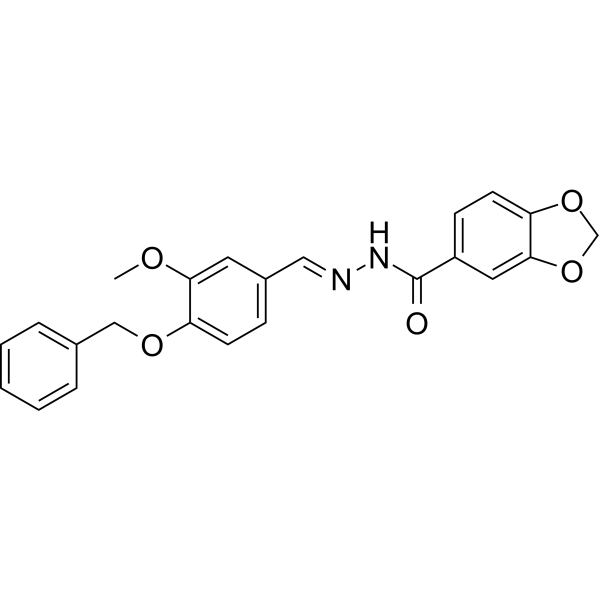
HY-103472
FPR-A14FPR Agonist -

HY-103472R
FPR-A14 (Standard)Reference Standard
Publications Citing Use of MedChemExpress (MCE) PBP10
More

Activité biologique
Description
IC50 & Target
IC50: formyl peptide receptor 2 (FPR2)[1]
In Vitro
PBP10 (2 μM; 15 min) selectively binds to LTA, LPS, and PIP2, but does not bind to PE[1].
PBP10 (1-18 h) exhibits bactericidal activity against E. coli SG13009 with an MIC of 12.5 μg/mL, and also shows bactericidal activity against B. subtilis ATCC 6051 with an MIC of 3.125 μg/mL. Its bactericidal activity is strongly inhibited by LPS and LTA[1].
PBP10 (0-50 μM) inhibits the directional migration of NIH3T3 fibroblasts, human A7 melanoma cells and human neutrophils in a concentration-dependent manner[2].
PBP10 (1-50 μM) potently inhibits thrombin-stimulated human platelet aggregation and platelet actin assembly in a concentration-dependent manner[2].
PBP10 (5-20 μM) concentration-dependently inhibits the migration speed and actin assembly of human neutrophils stimulated by fMLP[2].
PBP10 (0-100 µg/mL; 24 h) exhibits extremely low cytotoxicity against human keratinocyte HaCaT cells[3].
PBP10 (2-10 µg/mL; 1 h) exhibits potent dose-dependent bactericidal activity against E. coli RS218 and S. aureus A1[3].
PBP10 (2-10 µg/mL; 24 h) dose-dependently inhibits the production of NO and ROS in human keratinocyte HaCaT cells stimulated by LPS (HY-D1056), LTA, heat-inactivated E. coli or heat-inactivated S. aureus[3].
PBP10 (2-10 µg/mL; 24 h) reduces IL-8 release in LPS- and LTA-stimulated human keratinocyte HaCaT cells in a dose-dependent manner[3].
MedChemExpress (MCE) has not independently confirmed the accuracy of these methods. They are for reference only.
-
Cell Line:HaCaT human keratinocytes (stimulated with LPS or LTA)
-
Concentration:2, 5, 10 µg/mL
-
Incubation Time:24 h (co-incubated with LPS or LTA)
-
Result:Reduced IL-8 release in LPS/LTA in a dose-dependent manner.


Chemical Information
-
CAS No. 794466-43-6
-
Appearance Solid
-
Masse moléculaire 1713.06
-
Formule C84H127N24O15+
-
Color White to off-white
-
Sequence
RhB-Gln-Arg-Leu-Phe-Gln-Val-Lys-Gly-Arg-Arg-OH
-
Sequence Shortening
RhB-QRLFQVKGRR-OH
-
Livraison
Room temperature in continental US; may vary elsewhere.
-
Stockage
Sealed storage, away from moisture
Powder -80°C 2 years -20°C 1 year * In solvent : -80°C, 6 months; -20°C, 1 month (sealed storage, away from moisture)


Publications (1)
-
Journal Impact Factor
-
Most Recent
-
Cancer Res
DLGAP1-AS2-Mediated Phosphatidic Acid Synthesis Activates YAP Signaling and Confers Chemoresistance in Squamous Cell Carcinoma. [Abstract]2022 Aug 16;82(16):2887-2903. PMID: 35731019


Pureté et documentation
-
Fiche technique (264 KB)
-
SDS (252 KB)
- English - EN (252 KB)
- Français - FR (252 KB)
- Deutsch - DE (252 KB)
- Norwegian - NO (252 KB)
- Español - ES (252 KB)
- Swedish - SV (252 KB)
- Italian - IT (252 KB)
- Korean - KR (252 KB)
- Portuguese - PT (252 KB)
-
Instruction de manipulation (2659 KB)
Références
[1]. Bucki R, et al. Interaction of the gelsolin-derived antibacterial PBP 10 peptide with lipid bilayers and cell membranes. Antimicrob Agents Chemother. 2006;50(9):2932-2940. [Content Brief]
[2]. Cunningham CC, et al. Cell permeant polyphosphoinositide-binding peptides that block cell motility and actin assembly. J Biol Chem. 2001;276(46):43390-43399. [Content Brief]
[3]. Piktel E, et al. Inhibition of inflammatory response in human keratinocytes by magnetic nanoparticles functionalized with PBP10 peptide derived from the PIP2-binding site of human plasma gelsolin. J Nanobiotechnology. 2019;17(1):22. Published 2019 Feb 2. [Content Brief]

Calculators
Concentration (start) × Volume (start) = Concentration (final) × Volume (final)


PBP10 Related Classifications
HY-P1116 Related Classifications
 Powered by Bioz
Keywords
- PBP10
- 794466-43-6
- PBP 10
- PBP-10
- Bacterial
- Reactive Oxygen Species (ROS)
- Interleukin Related
- lipopolysaccharides
- lipoteichoic acid
- B. subtilis ATCC 6051
- human A7 melanoma cells
- phosphatidylinositol 3-kinase
- gelsolin
- NIH3T3 fibroblasts
- human neutrophils
- phosphatidylinositol-4
- 5-bisphosphate
- E. coli SG13009
- Inhibitor
- inhibitor
- inhibit