



T6167923
Based on 16 publication(s) in Google Scholar
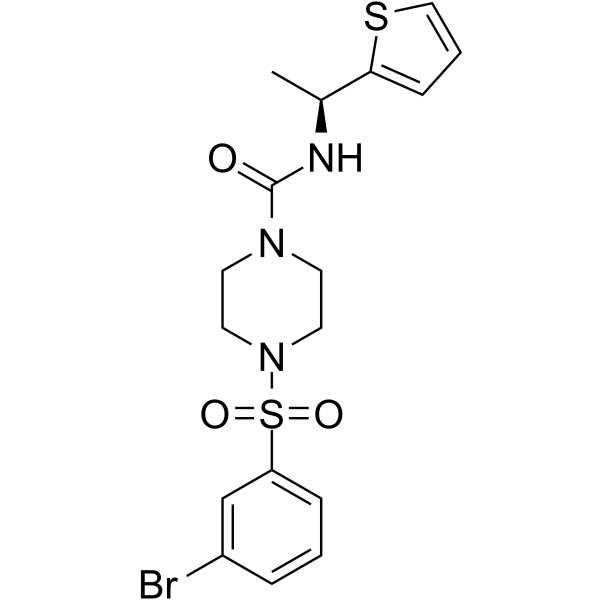
T6167923 is a selective inhibitor of MyD88-dependent signaling pathways. T6167923 directly binds to Toll/IL1 receptor (TIR) domain of MyD88 and disrupts MyD88 homodimeric formation. T6167923 inhibits NF-κB driven Staphylococcus enterotoxin AP (SEAP) activity, and improves anti-inflammatory activity with IC50s of 2.7 μM, 2.9 μM, 2.66 μM and 2.66 μM for IFN-γ, IL-1β, IL-6 and TNF-α, respectively.
Nos produits utilisent uniquement pour la recherche. Nous ne vendons pas aux patients.
- Pureté : 99.70%
- CAS No.: 2437475-16-4
- Formule: C17H20BrN3O3S2
- Masse moléculaire:458.39
-
Stockage:Powder -20°C, 3 years , 4°C, 2 years ; In solvent -80°C, 2 years , -20°C, 1 year

To place orders, for customer services and technical support, please contact: MedChemExpress USA
Tel: 609-228-6898 E-mail: [email protected] [email protected]


-
 Activité biologique
-
Chemical Information
-
Solvant et solubilité
- Protocole
- Pureté et documentation
- Références
-
 Help & FAQs


-
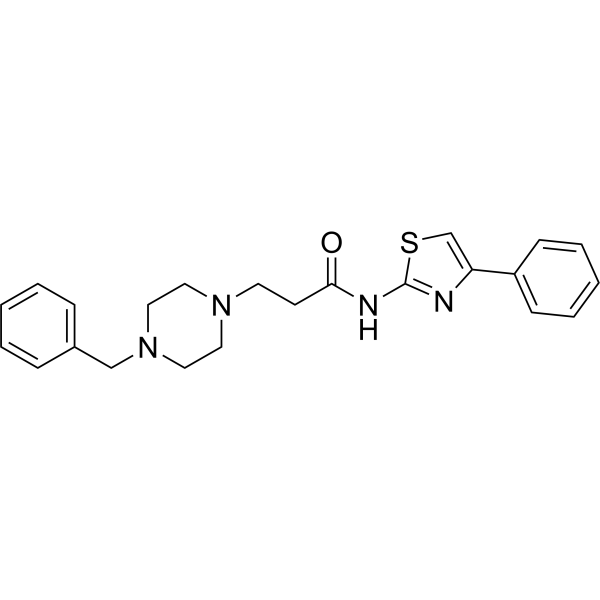
HY-139397
TJ-M2010-5MyD88 Inhibitor -
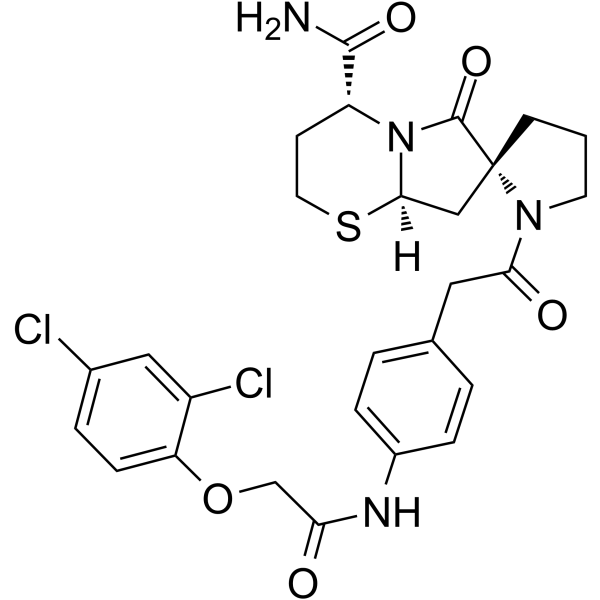
HY-50937
ST 2825MyD88 Dimerization Inhibitor -
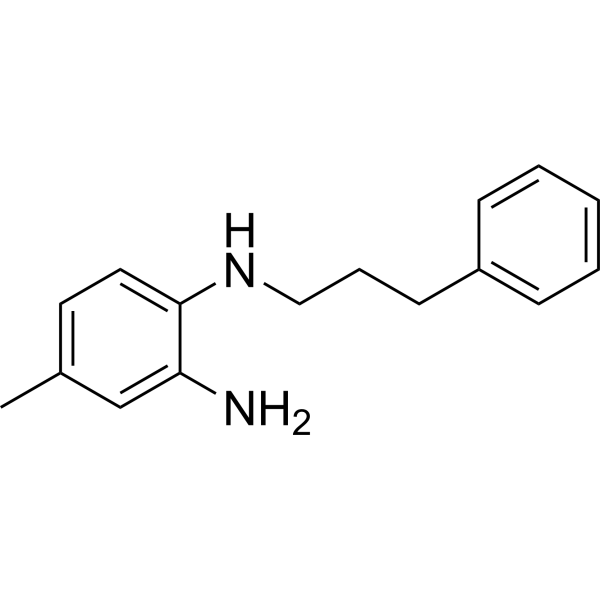
HY-13982
JSH-23NF-κB Inhibitor -
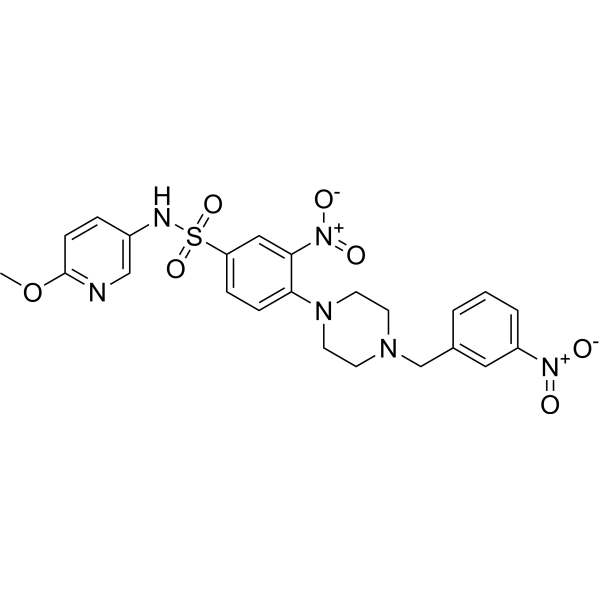
HY-149992
MyD88-IN-1Myd88 Inhibitor -
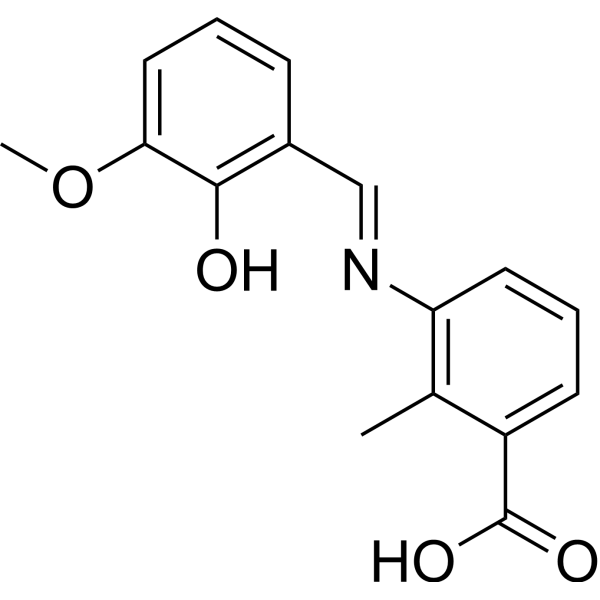
HY-100461
C29TLR2 Inhibitor -
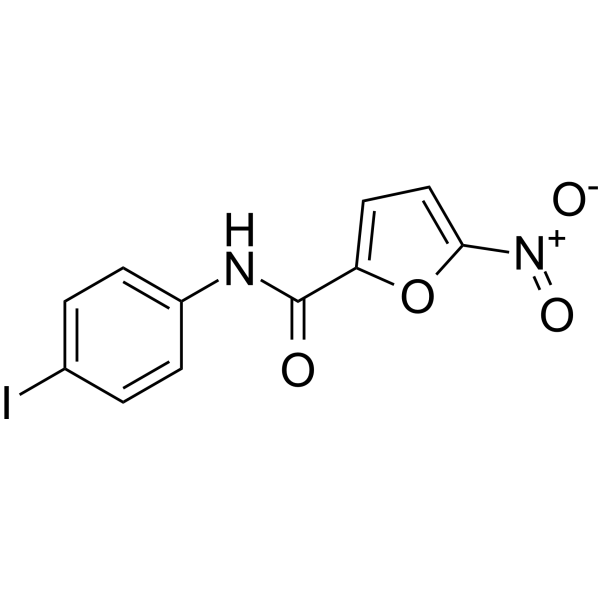
HY-112906
C-176STING Inhibitor -
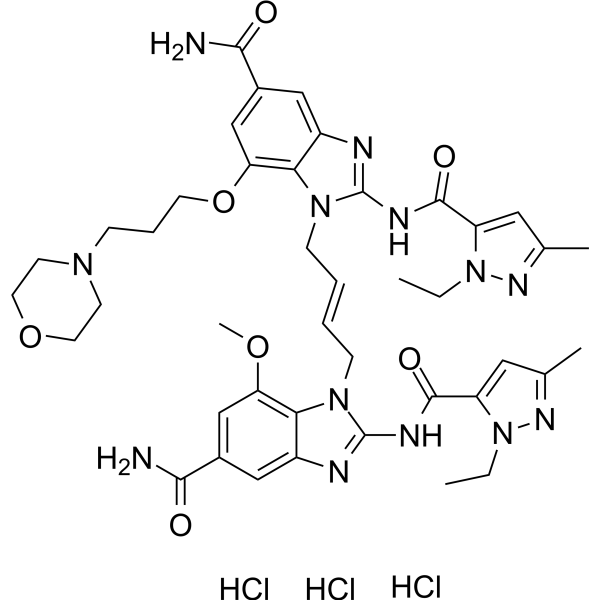
HY-112921B
diABZI STING agonist-1 trihydrochlorideSTING Receptor Agonist -
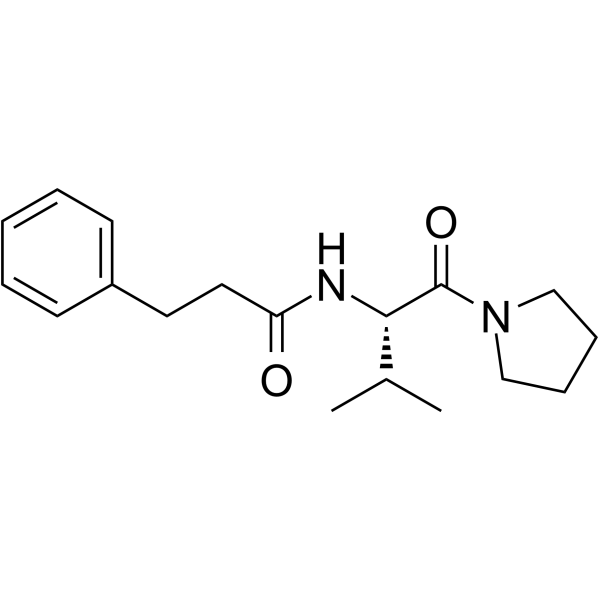
HY-W011400
TLR1 -
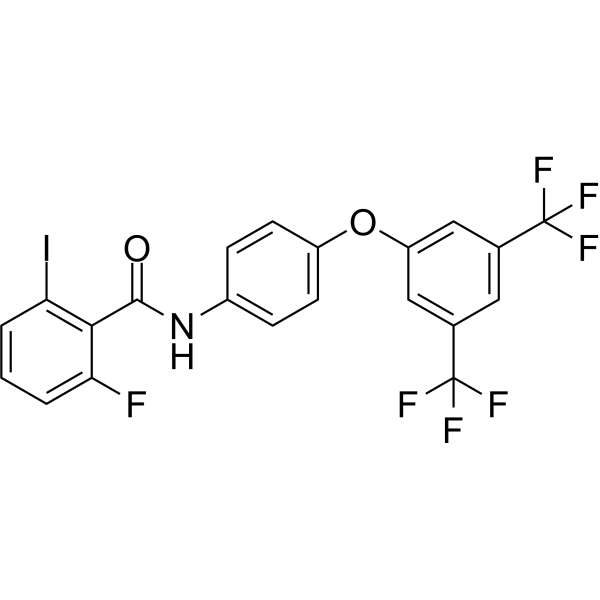
HY-131945
CU-115TLR8 Antagonist -
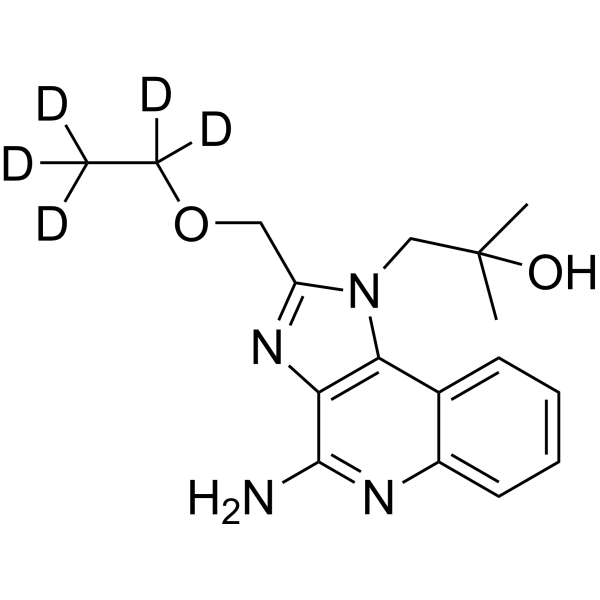
HY-13740S
Resiquimod-d5Stable Isotope
Publications Citing Use of MedChemExpress (MCE) T6167923
More- Signal Transduct Target Ther. 2021 Apr 24;6(1):167. [Abstract]
- Cell Commun Signal. 2024 Jan 5;22(1):16. [Abstract]
- Neural Regen Res. 2026 Mar 1;21(3):1222-1235. [Abstract]
- J Med Chem. 2021 Jun 10;64(11):7371-7389. [Abstract]
- Cells. 2023 Jul 29;12(15):1961. [Abstract]
- Sci Rep. 2025 Dec 3. [Abstract]
- Int J Cancer. 2024 May 15;154(10):1842-1856. [Abstract]
- Mol Oncol. 2023 Dec;17(12):2584-2602. [Abstract]
- J Virol. 2023 Mar 30;97(3):e0000323. [Abstract]
- Curr Pharm Des. 2021;27(44):4464-4476. [Abstract]
- Transbound Emerg Dis. 2026 May 27:2026:5533482. [Abstract]
- Burns. 2023 Dec;49(8):1997-2006. [Abstract]
- Arch Oral Biol. 2025 Oct:178:106364. [Abstract]
- bioRxiv. 2026 Jan 24.
- Research Square Preprint. 2023 Oct 9.
- Zoonoses. 2023 Feb 11.


Activité biologique
Description
IC50 & Target
IC50: 2.7 μM (IFN-γ), 2.9 μM (IL-1β), 2.66 μM (IL-6), 2.66 μM (TNF-α)[2]
In Vitro
T6167923 (0-500 μM; 20 h) inhibits the pro-inflammatory cytokine response of staphylococcal enterotoxin B (SEB) in peripheral blood mono nuclear cells[2]. T6167923 (10-500 μM; 2 h) inhibits secreted alkaline phosphatase response (SEAP) expression in HEK 293T cells[2]. T6167923 (100 μM; 16 h) binds to TIR protein and reduced the inhibitory effect on MyD88-signaling[2]. T6167923 (1-500 μM; 13 h) inhibits full-length MyD88 homodimeric formation[2].
MedChemExpress (MCE) has not independently confirmed the accuracy of these methods. They are for reference only.
-
Cell Line:Peripheral blood mono nuclear cells
-
Concentration:0-500 μM
-
Incubation Time:20 hours
-
Result:Dose-dependently attenuated the response of SEB to TNF-α, INF-γ, IL-6, and IL-1β with IC50s of 2.66, 2.7, 2.66 and 2.9 μM in peripheral blood mono nuclear cells.
-
Cell Line:HEK 293T cell line
-
Concentration:10-500 μM
-
Incubation Time:2 hours
-
Result:Dose-dependently inhibited lipo-polysaccharide (LPS) induced MyD88-mediated NF-kB driven SEAP expression in HEK 293T cells with IC50s in the range of 40–50 μM.
-
Cell Line:HEK 293T cell line
-
Concentration:100 μM
-
Incubation Time:16 hours
-
Result:Specifically targeted MyD88 and dose-denpendently with TIR protein to reduced the inhibitory effect of MyD88-signaling.
-
Cell Line:HEK 293-I3A cells with MyD88 knockout
-
Concentration:1-500 μM
-
Incubation Time:13 hours
-
Result:Dose-dependently inhibited TIR domain-mediated dimerization of full-length MyD88 and the recombinant TIR domain protein.
In Vivo
MedChemExpress (MCE) has not independently confirmed the accuracy of these methods. They are for reference only.
-
Animal Model:16-20 week-old BALB/c mice with LPS potentiation model[2]
-
Dosage:0.17 and 1 mg
-
Administration:Intraperitoneal injection; 0.17 and 1 mg once
-
Result:Dose-dependently showed a therapeutic efficacy against SEB intoxication.


Chemical Information
-
CAS No. 2437475-16-4
-
Appearance Solid
-
Masse moléculaire 458.39
-
Formule C17H20BrN3O3S2
-
Color White to off-white
-
SMILES
BrC1=CC(S(=O)(N2CCN(C(N[C@H](C3=CC=CS3)C)=O)CC2)=O)=CC=C1
-
Livraison
Room temperature in continental US; may vary elsewhere.
-
Stockage
Powder -20°C 3 years 4°C 2 years In solvent -80°C 2 years -20°C 1 year


Publications (16)
-
Journal Impact Factor
-
Most Recent
-
Signal Transduct Target Ther
RNA-induced liquid phase separation of SARS-CoV-2 nucleocapsid protein facilitates NF-κB hyper-activation and inflammation. [Abstract]2021 Apr 24;6(1):167. PMID: 33895773 -
Cell Commun Signal
Free heme induces neuroinflammation and cognitive impairment by microglial activation via the TLR4/MyD88/NF-κB signaling pathway. [Abstract]2024 Jan 5;22(1):16. PMID: 38183122 -
Neural Regen Res
Porcine decellularized nerve matrix hydrogel attenuates neuroinflammation after peripheral nerve injury by inhibiting the TLR4/MyD88/NF-κB axis. [Abstract]2026 Mar 1;21(3):1222-1235. PMID: 39589179 -
J Med Chem
Design, Synthesis, and Structure-Activity Relationship of N-Aryl- N'-(thiophen-2-yl)thiourea Derivatives as Novel and Specific Human TLR1/2 Agonists for Potential Cancer Immunotherapy. [Abstract]2021 Jun 10;64(11):7371-7389. PMID: 34029463 -
Cells
Statins Modulate Microenvironmental Cues Driving Macrophage Polarization in Simulated Periodontal Inflammation. [Abstract]2023 Jul 29;12(15):1961. PMID: 37566040 -
Sci Rep
Pseudomonas aeruginosa-derived DnaJ functions as a novel immunomodulator inducing IFNβ via CME-SGK1-IRF3 axis in macrophages. [Abstract]2025 Dec 3. PMID: 41339751 -
Int J Cancer
SAA1-dependent reprogramming of adipocytes by tumor cells is associated with triple negative breast cancer aggressiveness. [Abstract]2024 May 15;154(10):1842-1856. PMID: 38289016 -
Mol Oncol
2023 Dec;17(12):2584-2602. PMID: 37746742 -
J Virol
Pseudorabies Virus Infection Activates the TLR-NF-κB Axis and AIM2 Inflammasome To Enhance Inflammatory Responses in Mice. [Abstract]2023 Mar 30;97(3):e0000323. PMID: 36877049 -
Curr Pharm Des
Interaction of Ectodomain of Respiratory Syncytial Virus G Protein with TLR2/ TLR6 Heterodimer: An In vitro and In silico Approach to Decipher the Role of RSV G Protein in Pro-inflammatory Response against the Virus. [Abstract]2021;27(44):4464-4476. PMID: 34279194 -
Transbound Emerg Dis
Trichinella spiralis HSP70 Mediates Mice Immune Responses via TLR2/MyD88/ERK Signaling Pathway. [Abstract]2026 May 27:2026:5533482. PMID: 42222277 -
Burns
Lipopolysaccharide induces skin scarring through the TLR4/Myd88 inflammatory signaling pathway in dermal fibroblasts. [Abstract]2023 Dec;49(8):1997-2006. PMID: 37821278 -
Arch Oral Biol
Taiwanese green propolis suppresses NLRP3 inflammasome activation and induces Nrf2/HO-1 pathway to reduce periodontal pathogen-induced endothelial inflammation. [Abstract]2025 Oct:178:106364. PMID: 40753822 -
-
-


Solvant et solubilité
In Vitro:
DMSO : 250 mg/mL (545.39 mM; Need ultrasonic; Hygroscopic DMSO has a significant impact on the solubility of product, please use newly opened DMSO)
H2O : < 0.1 mg/mL (insoluble)
Please refer to the solubility information to select the appropriate solvent. Once prepared, please aliquot and store the solution to prevent product inactivation from repeated freeze-thaw cycles.
Storage method and period of stock solution: -80°C, 2 years; -20°C, 1 year. When stored at -80°C, please use it within 2 years. When stored at -20°C, please use it within 1 year.
Please refer to the solubility information to select the appropriate solvent. Once prepared, please aliquot and store the solution to prevent product inactivation from repeated freeze-thaw cycles.
Storage method and period of stock solution: -80°C, 2 years; -20°C, 1 year. When stored at -80°C, please use it within 2 years. When stored at -20°C, please use it within 1 year.
Concentration (start) × Volume (start) = Concentration (final) × Volume (final)
In Vivo:
Select the appropriate dissolution method based on your experimental animal and administration route.
- For the following dissolution methods, please ensure to first prepare a clear stock solution using an In Vitro approach and then sequentially add co-solvents:
- To ensure reliable experimental results, the clarified stock solution can be appropriately stored based on storage conditions. As for the working solution for In Vivo experiments, it is recommended to prepare freshly and use it on the same day.
- The percentages shown for the solvents indicate their volumetric ratio in the final prepared solution. If precipitation or phase separation occurs during preparation, heat and/or sonication can be used to aid dissolution.
Add each solvent one by one: 10% DMSO 40% PEG300 5% Tween-80 45% Saline
Solubility: ≥ 2.08 mg/mL (4.54 mM); Clear solution
This protocol yields a clear solution of ≥ 2.08 mg/mL (saturation unknown).
Taking 1 mL working solution as an example, add 100 μL DMSO stock solution (20.8 mg/mL) to 400 μL PEG300, and mix evenly; then add 50 μL Tween-80 and mix evenly; then add 450 μL Saline to adjust the volume to 1 mL.
Preparation of Saline: Dissolve 0.9 g sodium chloride in ddH₂O and dilute to 100 mL to obtain a clear Saline solution.
Add each solvent one by one: 10% DMSO 90% (20% SBE-β-CD in Saline)
Solubility: ≥ 2.08 mg/mL (4.54 mM); Clear solution
This protocol yields a clear solution of ≥ 2.08 mg/mL (saturation unknown).
Taking 1 mL working solution as an example, add 100 μL DMSO stock solution (20.8 mg/mL) to 900 μL 20% SBE-β-CD in Saline, and mix evenly.
Preparation of 20% SBE-β-CD in Saline (4°C, storage for one week): 2 g SBE-β-CD powder is dissolved in 10 mL Saline, completely dissolve until clear.
In Vivo Dissolution Calculator
Please enter the basic information of animal experiments:
-
-
-
-
Recommended: Prepare an additional quantity of animals to account for potential losses during experiments.
Please enter your animal formula composition:
-
%DMSO +
Recommended: Keep the proportion of DMSO in working solution below 2% if your animal is weak.
-
%+
-
+%Tween-80 + +
-
%Saline +
The co-solvents required include: DMSO, . All of co-solvents are available by MedChemExpress (MCE). , Tween 80. All of co-solvents are available by MedChemExpress (MCE).
Working solution concentration: 0.22 mg/mL
Method for preparing stock solution: mg drug dissolved in μL DMSO. Stock solution concentration: mg/mL.
1. Take μL DMSO stock solution;
2. Add μL .
μL , mix evenly;
3. Then add μL Tween 80, mix evenly;
4. Then add μL
Please ensure that the stock solution in the first step is dissolved to a clear state, and add co-solvents in sequence. You can use ultrasonic heating (ultrasonic cleaner, recommended frequency 20-40 kHz), vortexing, etc. to assist dissolution.


Pureté et documentation
-
Fiche technique (280 KB)
-
SDS (251 KB)
- English - EN (251 KB)
- Français - FR (251 KB)
- Deutsch - DE (251 KB)
- Norwegian - NO (251 KB)
- Español - ES (251 KB)
- Swedish - SV (251 KB)
- Italian - IT (251 KB)
- Korean - KR (251 KB)
- Portuguese - PT (251 KB)
-
Instruction de manipulation (2659 KB)
Références
[1]. Saqib U, et al. Identifying the inhibition of TIR proteins involved in TLR signalling as an anti-inflammatory strategy. SAR QSAR Environ Res. 2018 Apr;29(4):295-318. [Content Brief]
[2]. Olson MA, et al. Discovery of small molecule inhibitors of MyD88-dependent signaling pathways using a computational screen. Sci Rep. 2015 Sep 18;5:14246. [Content Brief]


Complete Stock Solution Preparation Table
Please refer to the solubility information to select the appropriate solvent. Once prepared, please aliquot and store the solution to prevent product inactivation from repeated freeze-thaw cycles.
Storage method and period of stock solution: -80°C, 2 years; -20°C, 1 year. When stored at -80°C, please use it within 2 years. When stored at -20°C, please use it within 1 year.
| Optional Solvent | Concentration Solvent Mass | 1 mg | 5 mg | 10 mg | 25 mg |
|---|---|---|---|---|---|
| DMSO | 1 mM | 2.1815 mL | 10.9077 mL | 21.8155 mL | 54.5387 mL |
| 5 mM | 0.4363 mL | 2.1815 mL | 4.3631 mL | 10.9077 mL | |
| 10 mM | 0.2182 mL | 1.0908 mL | 2.1815 mL | 5.4539 mL | |
| 15 mM | 0.1454 mL | 0.7272 mL | 1.4544 mL | 3.6359 mL | |
| 20 mM | 0.1091 mL | 0.5454 mL | 1.0908 mL | 2.7269 mL | |
| 25 mM | 0.0873 mL | 0.4363 mL | 0.8726 mL | 2.1815 mL | |
| 30 mM | 0.0727 mL | 0.3636 mL | 0.7272 mL | 1.8180 mL | |
| 40 mM | 0.0545 mL | 0.2727 mL | 0.5454 mL | 1.3635 mL | |
| 50 mM | 0.0436 mL | 0.2182 mL | 0.4363 mL | 1.0908 mL | |
| 60 mM | 0.0364 mL | 0.1818 mL | 0.3636 mL | 0.9090 mL | |
| 80 mM | 0.0273 mL | 0.1363 mL | 0.2727 mL | 0.6817 mL | |
| 100 mM | 0.0218 mL | 0.1091 mL | 0.2182 mL | 0.5454 mL |


T6167923 Related Classifications
HY-19744 Related Classifications
 Powered by Bioz