



2-Bromoisonicotinic acid
Based on 1 publication(s) in Google Scholar
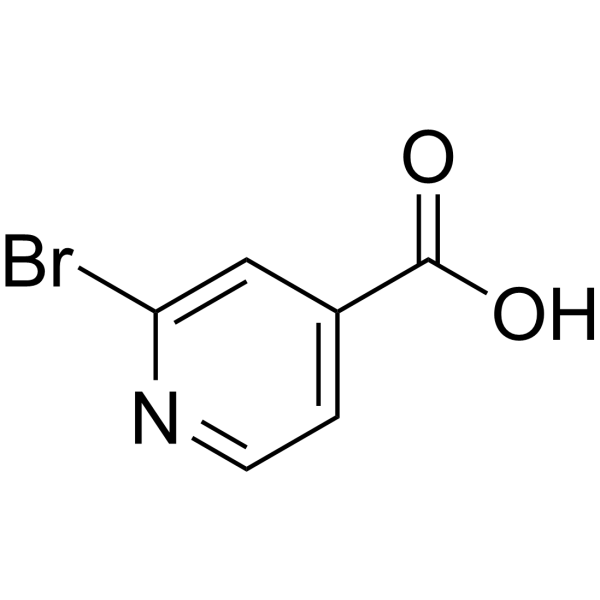
2-Bromoisonicotinic acid is a (hetero)aryl bromide building block and DNA-conjugated headpiece for photochemical C-H heteroarylation in DNA-encoded library synthesis. 2-Bromoisonicotinic acid generates a nucleophilic pyridyl radical intermediate. 2-Bromoisonicotinic acid, when conjugated to DNA, leaves electrophilic handles intact for subsequent library diversification.
Nur für Forschungszwecke. Wir verkaufen nicht an Patienten.
- Reinheit : 99.86%
- CAS. Nr.: 66572-56-3
- Formel: C6H4BrNO2
- Molecular Weight:202.01
-
Speicherung:Powder -20°C, 3 years , 4°C, 2 years ; In solvent -80°C, 6 months , -20°C, 1 month

To place orders, for customer services and technical support, please contact: MedChemExpress USA
Tel: 609-228-6898 E-mail: [email protected] [email protected]


-
 Biologische Aktivität
-
Chemical Information
- Reinheit & Dokumentation
- Verweise
-
 Help & FAQs


-
HY-59165
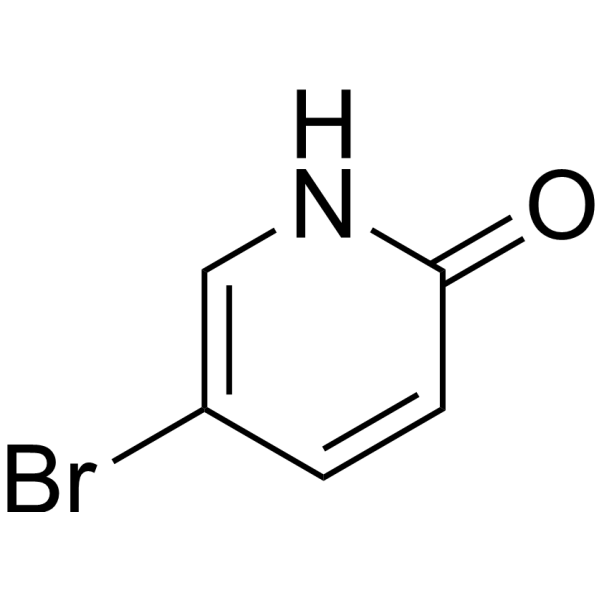
5-Bromopyridin-2-olBiochemical Reagent -
HY-66051
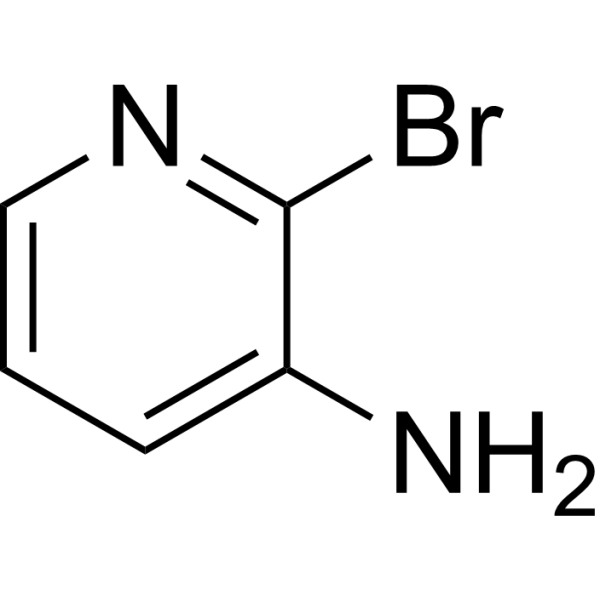
2-Bromo-3-pyridinamineBiochemical Reagent -
HY-W007536
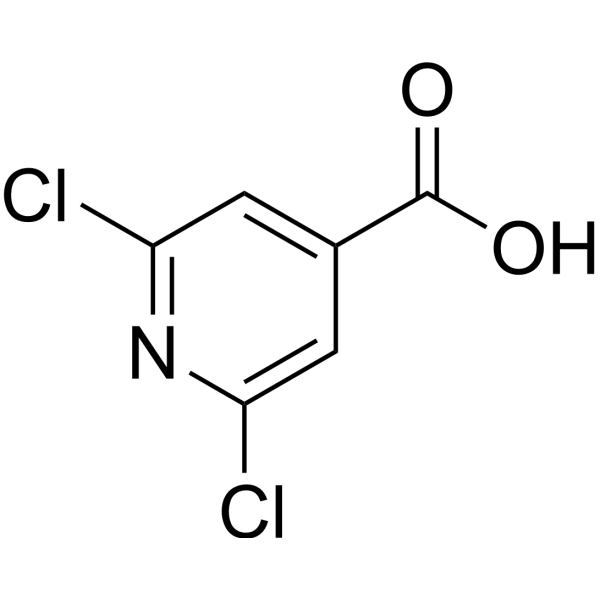
2,6-Dichloroisonicotinic acidBiochemical Reagent -
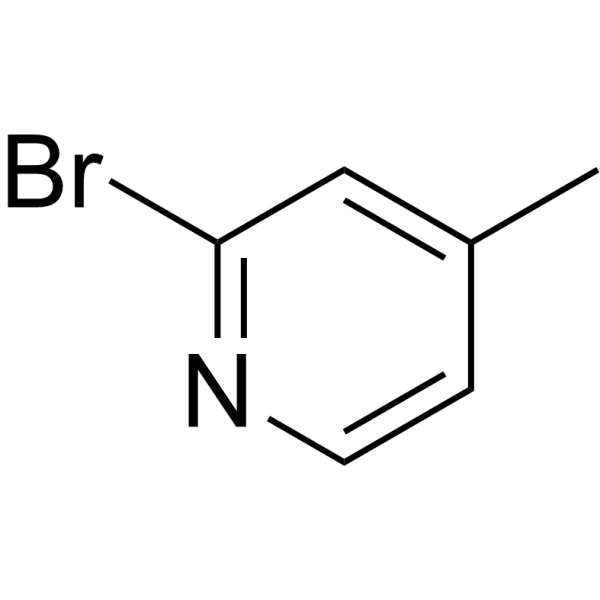
HY-W007579
2-Bromo-4-methylpyridineBiochemical Reagent -
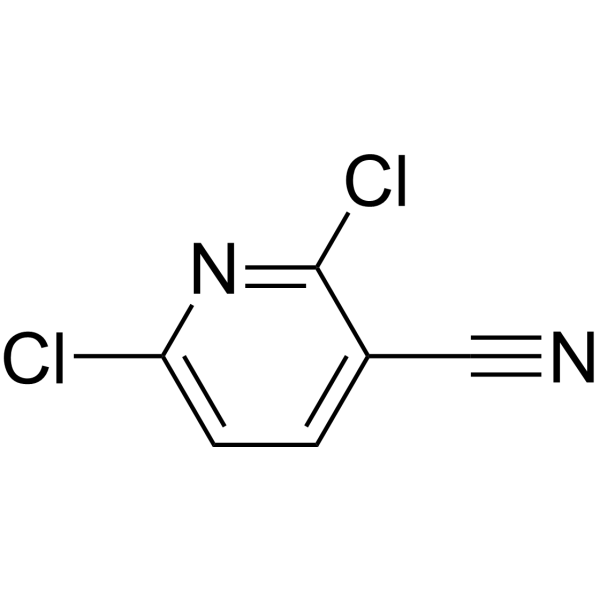
HY-W003041
2,6-Dichloro-3-cyanopyridineBiochemical Reagent -
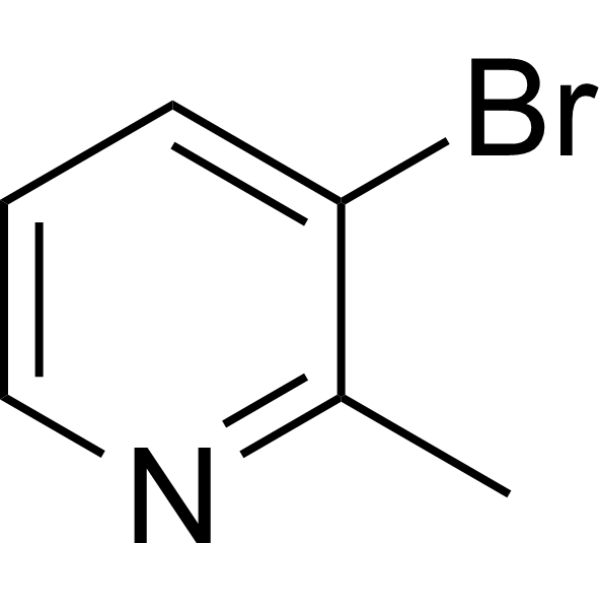
HY-W002494
3-Bromo-2-methylpyridineBiochemical Reagent -
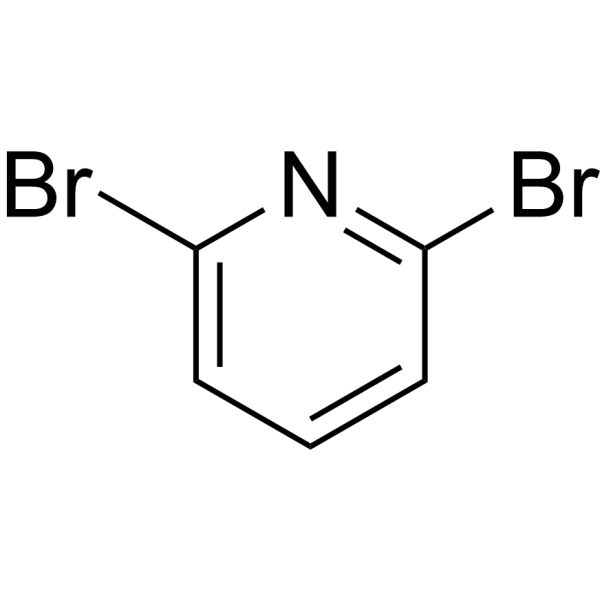
HY-59162
2,6-DibromopyridineDrug Intermediate -
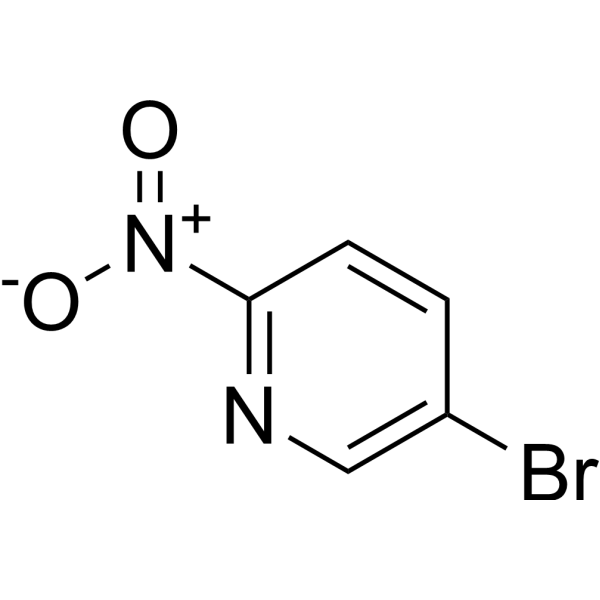
HY-59228
5-Bromo-2-nitropyridineDrug Intermediate -
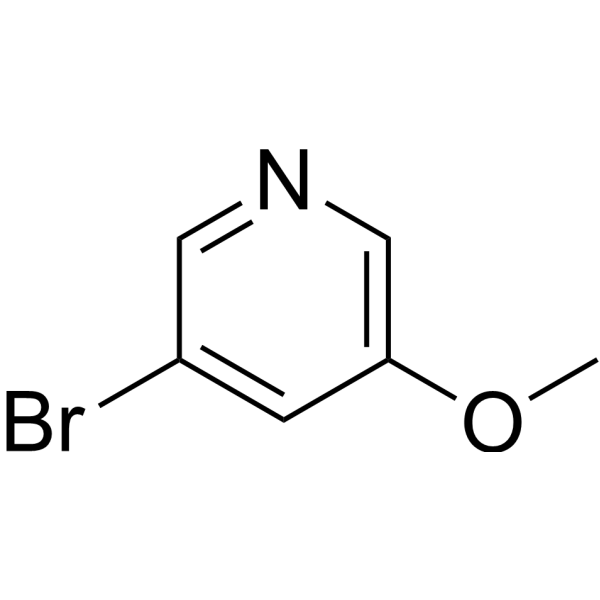
HY-W007427
3-Bromo-5-methoxypyridineBiochemical Reagent -

HY-Y1049
2-Amino-6-bromopyridinePqsR Ligand -
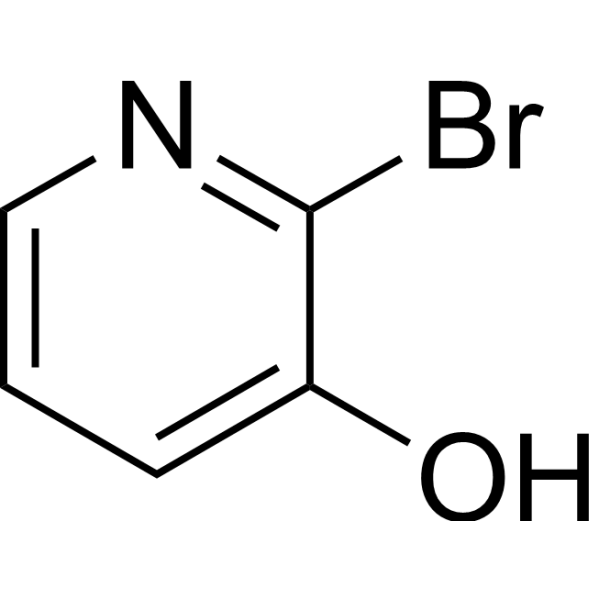
HY-20026
2-Bromo-3-pyridinolBiochemical Reagent -
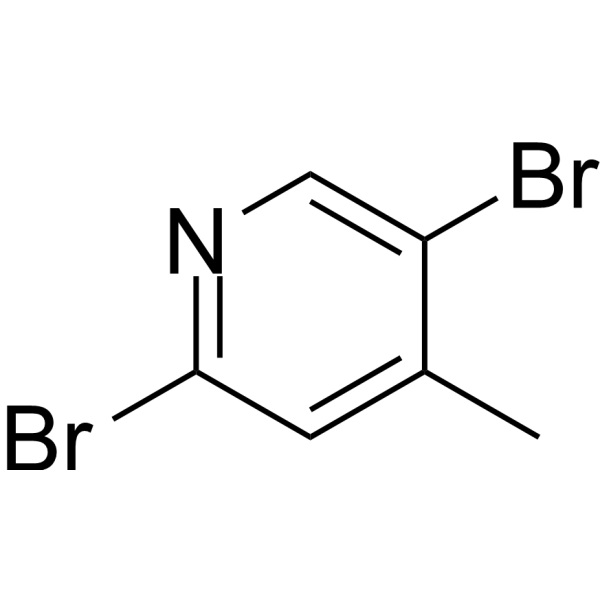
HY-W009498
2,5-Dibromo-4-methylpyridineIntermediate
Publications Citing Use of MedChemExpress (MCE) 2-Bromoisonicotinic acid
More

Biologische Aktivität
Beschreibung
In Vitro
After conjugation with DNA, 2-Bromoisonicotinic acid (Compound 1C) retains its electrophilic site for subsequent library diversification[1].
MedChemExpress (MCE) has not independently confirmed the accuracy of these methods. They are for reference only.


Chemical Information
-
CAS. Nr. 66572-56-3
-
Appearance Solid
-
Molecular Weight 202.01
-
Formel C6H4BrNO2
-
Color White to off-white
-
SMILES
O=C(O)C1=CC=NC(Br)=C1
-
Versand
Room temperature in continental US; may vary elsewhere.
-
Speicherung
Powder -20°C 3 years 4°C 2 years In solvent -80°C 6 months -20°C 1 month


Publications (1)
-
Journal Impact Factor
-
Most Recent
-
Anal Chem
Exposome-Scale Investigation of Cl-/Br-Containing Chemicals Using High-Resolution Mass Spectrometry, Multistage Machine Learning, and Cloud Computing. [Abstract]2025 Jun 3;97(21):11099-11109. PMID: 40401576


Reinheit & Dokumentation
-
Data Sheet (267 KB)
-
SDS (393 KB)
- English - EN (393 KB)
- Français - FR (393 KB)
- Deutsch - DE (393 KB)
- Norwegian - NO (393 KB)
- Español - ES (393 KB)
- Swedish - SV (393 KB)
- Italian - IT (393 KB)
- Korean - KR (393 KB)
- Portuguese - PT (393 KB)
-
Handling Instructions (2659 KB)
Verweise

Calculators
Konzentration (Stammlösung) × Volumen (Stammlösung) = Konzentration (Ziellösung) × Volumen (Ziellösung)


2-Bromoisonicotinic acid Related Classifications
HY-W002805 Related Classifications
 Powered by Bioz