



Benzalkonium chloride (51% in water)
Based on 2 publication(s) in Google Scholar
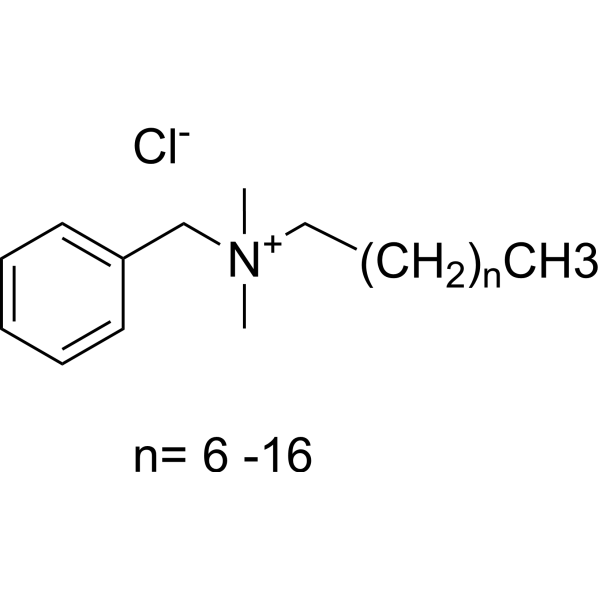
Benzalkonium (Alkyldimethylbenzylammonium) chloride (51% in water) is a quaternary ammonium preservative, cationic surfactant, and antimicrobial (Antimicrobial) agent. Benzalkonium chloride (51% in water) is toxic.
Nur für Forschungszwecke. Wir verkaufen nicht an Patienten.
- Reinheit : 98.0%
- CAS. Nr.: 8001-54-5
- Formel: C6H5CH2N(CH3)2RCl (R=C8H17 to C18H37)
- Molecular Weight:283.88-424.15
-
Speicherung:
Solution, -20°C, 2 years

To place orders, for customer services and technical support, please contact: MedChemExpress USA
Tel: 609-228-6898 E-mail: [email protected] [email protected]


-
 Biologische Aktivität
-
Chemical Information
- Protokoll
- Reinheit & Dokumentation
- Verweise
-
 Help & FAQs


-
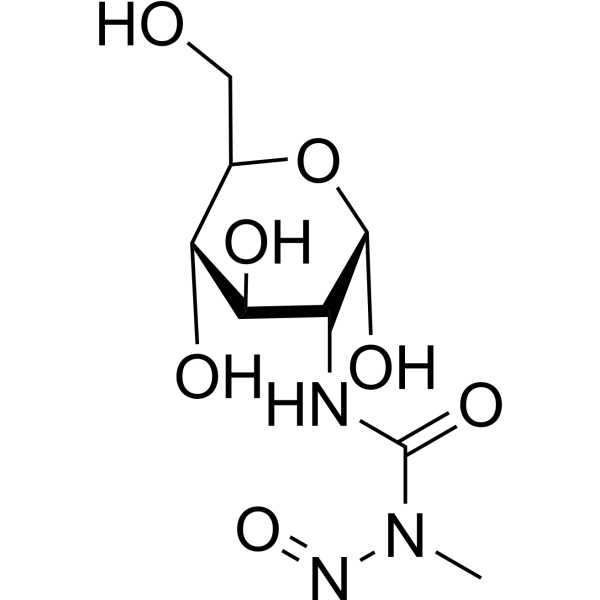
HY-13753
StreptozotocinDiabetes Modeling Agent -

HY-B2232A
Benzalkonium chloride (solid)Antiseptic -

HY-W011291
Hexadecyltrimethylammonium chlorideBiochemical Assay Reagent -
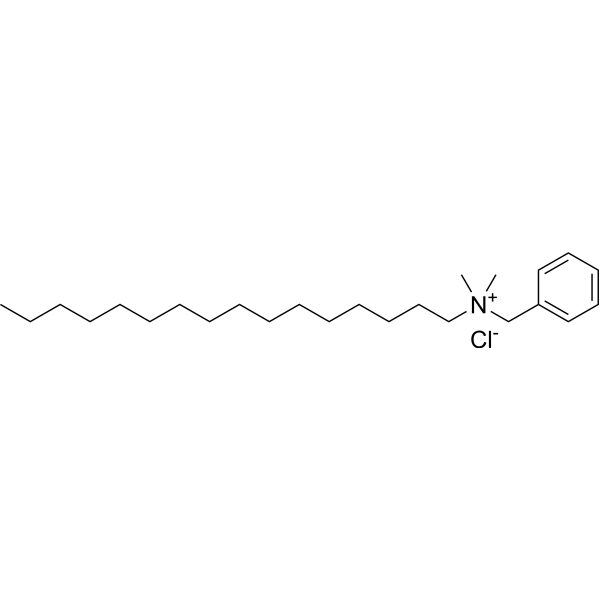
HY-B1597
Cetalkonium chlorideAntiseptic Agent -

HY-W016021
Trimethyloctadecylammonium chlorideBiochemical Assay Reagent -

HY-B1597R
Cetalkonium chloride (Standard)Antiseptic Agent
Publications Citing Use of MedChemExpress (MCE) Benzalkonium chloride (51% in water)
More

Biologische Aktivität
Beschreibung
In Vivo
Benzalkonium chloride (51% in water) (0.001%; intranasal administration; twice daily; 14 to 28 days) induces nasal epithelial degeneration in rabbits[1].
MedChemExpress (MCE) has not independently confirmed the accuracy of these methods. They are for reference only.
-
Animal Model:Rabbits[1]
-
Dosage:0.001%;
-
Administration:intranasal; twice daily; 14 or 28 days
-
Result:Induced degenerative changes, including squamous cell metaplasia, nuclei deformation, and increased heterochromatin, in the treated nasal epithelium.


Chemical Information
-
CAS. Nr. 8001-54-5
-
Appearance Liquid
-
Molecular Weight 283.88-424.15
-
Formel C6H5CH2N(CH3)2RCl (R=C8H17 to C18H37)
-
Color Colorless to light yellow
-
SMILES
C[N+](C[(CH2)nCH3])(C)CC1=CC=CC=C1.[Cl-].[n=].[6 -16]
-
Synonyms
Alkyldimethylbenzylammonium chloride
-
Versand
Room temperature in continental US; may vary elsewhere.
-
Speicherung
Solution, -20°C, 2 years


Publications (2)
-
Journal Impact Factor
-
Most Recent
-
ACS Biomater Sci Eng
Mechanoresponsive Drug Loading System with Tunable Host-Guest Interactions for Ocular Disease Treatment. [Abstract]2022 Nov 14;8(11):4850-4862. PMID: 36214483 -
Int J Ophthalmol
Obtusifolin ameliorates dry eye model in rats by reducing inflammation and blocking MAPK/NF-κB pathways. [Abstract]2025 Aug 18;18(8):1426-1432. PMID: 40827285

Protokoll
-
Research Protocol for Infectious Diseases
Infectious-disease experiments test how pathogens interact with host barriers, innate immune receptors, inflammatory signaling, pathogen replication, and tissue injury; pattern-recognition receptors such as TLRs, RIG-I-like receptors, NOD-like receptors, and inflammasomes detect microbial molecules and activate NF-κB, interferon, and cytokine responses. The central hypothesis is that infection severity reflects the balance between pathogen burden and host response: protective inflammation restricts pathogen growth, whereas excessive or mislocalized inflammation contributes to tissue damage and disease phenotype. Unresolved questions include which host pathways are protective versus pathogenic, why some infection models fail to translate to human disease, and which combined readouts best predict clinically relevant infection outcomes.


Reinheit & Dokumentation
-
Data Sheet (271 KB)
-
SDS (561 KB)
- English - EN (561 KB)
- Français - FR (561 KB)
- Deutsch - DE (561 KB)
- Norwegian - NO (561 KB)
- Español - ES (561 KB)
- Swedish - SV (561 KB)
- Italian - IT (561 KB)
- Korean - KR (561 KB)
- Portuguese - PT (561 KB)
-
Handling Instructions (2659 KB)
Verweise

Calculators
Konzentration (Stammlösung) × Volumen (Stammlösung) = Konzentration (Ziellösung) × Volumen (Ziellösung)


Benzalkonium chloride (51% in water) Related Classifications
HY-B2232 Related Classifications
 Powered by Bioz