



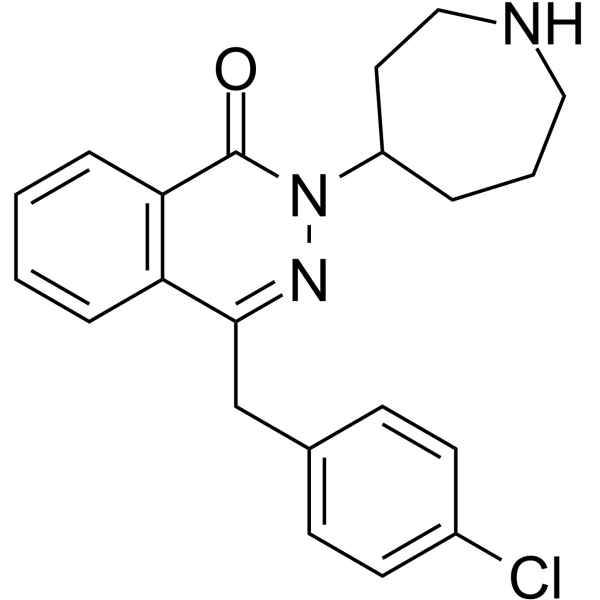
Desmethylazelastine
Desmethylazelastine is a main active metabolite of Azelastine that is oxidatively metabolized by the cytochrome P450 enzyme system with a protein binding rate of 97% and an elimination half-life of 54 hours. Azelastine is an orally active, selective and high-affinity histamine H1-receptor antagonist. Azelastine can be used in studies of allergic rhinitis, asthma, diabetic hyperlipidemic and SARS-CoV-2.
Nos produits utilisent uniquement pour la recherche. Nous ne vendons pas aux patients.
- CAS No.: 47491-38-3
- Formule: C21H22ClN3O
- Masse moléculaire:367.87
-
Stockage:
Please store the product under the recommended conditions in the Certificate of Analysis.

To place orders, for customer services and technical support, please contact: MedChemExpress USA
Tel: 609-228-6898 E-mail: [email protected] [email protected]


-
 Activité biologique
-
Chemical Information
- Protocole
- Pureté et documentation
- Références
-
 Help & FAQs


-
HY-N0455AS6
L-Arginine-13C6 hydrochlorideStable Isotope -
HY-100599
Urolithin AMitophagy Activator -
HY-N0455AS2
L-Arginine-d7 hydrochlorideStable Isotope -
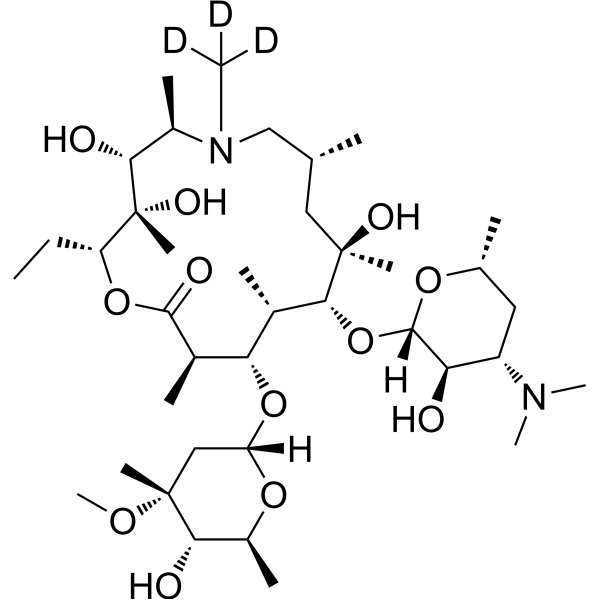
HY-17506S
Azithromycin-d3Stable Isotope -
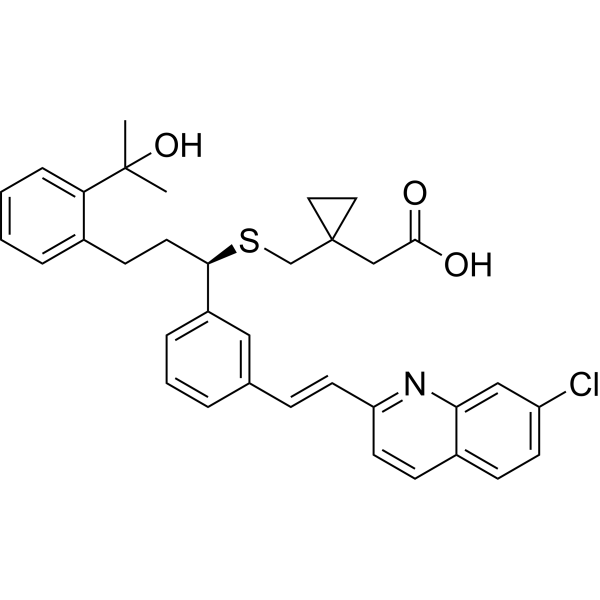
HY-13315A
MontelukastCysLT1 Antagonist -
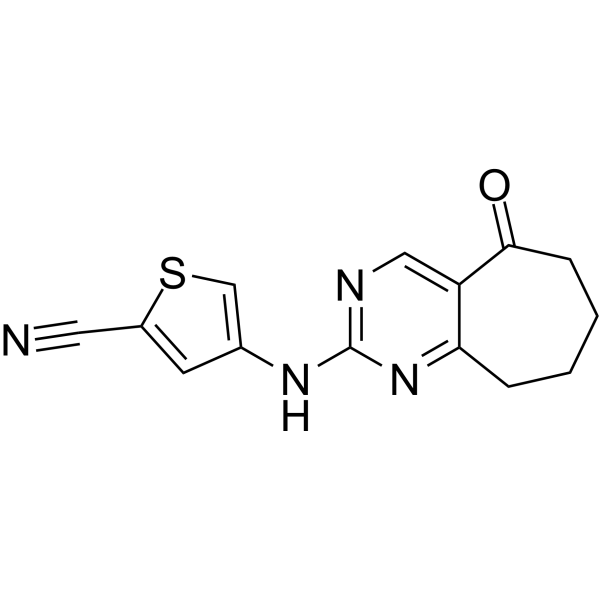
HY-W107464
G6PDi-1G6PD Inhibitor -

HY-13315AR
Montelukast (Standard)CysLT1 Antagonist -
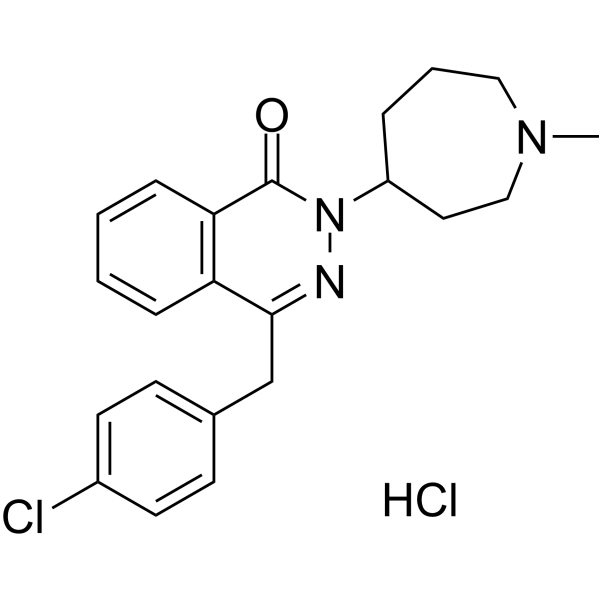
HY-B0462
Azelastine hydrochlorideHistamine 1 Antagonist -
HY-149267
STING agonist-30STING Agonist -
HY-10163S1
Dabigatran-d3Stable Isotope -

HY-B1397C
Cyclizine hydrochlorideH1 Receptor Antagonist -
HY-105713
SulochrinAntimicrobial Agent


Activité biologique
Description
Cellular Effect
|
Cell Line

|
Type | Value | Description | References |
|---|---|---|---|---|
| LLC-PK1 | IC50 |
11.8 μM
Compound: Desmethylazelastine
|
TP_TRANSPORTER: inhibition of Daunorubicin transepithelial transport (basal to apical) (Daunorubicin: 0.035 uM) in MDR1-expressing LLC-PK1 cells
TP_TRANSPORTER: inhibition of Daunorubicin transepithelial transport (basal to apical) (Daunorubicin: 0.035 uM) in MDR1-expressing LLC-PK1 cells
|
[PMID: 11231118] |
| LLC-PK1 | IC50 |
41.8 μM
Compound: Desmethylazelastine
|
TP_TRANSPORTER: inhibition of Digoxin transepithelial transport (basal to apical) (Digoxin: 0.025 uM) in MDR1-expressing LLC-PK1 cells
TP_TRANSPORTER: inhibition of Digoxin transepithelial transport (basal to apical) (Digoxin: 0.025 uM) in MDR1-expressing LLC-PK1 cells
|
[PMID: 11231118] |
In Vivo
| Blood | Lung | |
| Cmax (ng/mL)[a] | 17.6 | 2863 |
| Tmax (h) | 3.0-6.0 | 4.0-6.0 |
| Tlag (h) | 0.25 | 0.39 |
| AUC0-24 (ng•h/mL)[a] | 180 | 28502 |
| t1/2 (h) | 4.24 | 3.90 |
| CL (L/h) | 0.213 | |
| Lung-blood ratio[b] | 146 | 146 |
MedChemExpress (MCE) has not independently confirmed the accuracy of these methods. They are for reference only.


Chemical Information
-
CAS No. 47491-38-3
-
Masse moléculaire 367.87
-
Formule C21H22ClN3O
-
SMILES
O=C1C2=C(C(CC3=CC=C(C=C3)Cl)=NN1C4CCNCCC4)C=CC=C2
-
Livraison
Room temperature in continental US; may vary elsewhere.
-
Stockage
Please store the product under the recommended conditions in the Certificate of Analysis.

Protocole
-
Immunoprecipitation
Immunoprecipitation (IP) is an experimental method that uses the principle of antibody specific binding to purify and enrich target proteins.
-
Protocol for Pharmacokinetic Study
Pharmacokinetic studies quantify how an organism handles a drug over time through absorption, distribution, metabolism, and excretion, and the core experimental readout is the concentration-time profile of parent drug and, when relevant, metabolites in biological matrices such as plasma, whole blood, urine, bile, or tissue. Pharmacokinetic analysis links dose, route, exposure, clearance, half-life, distribution, bioavailability, and systemic exposure to drug efficacy and toxicity hypotheses rather than measuring a signaling pathway directly. The literature links pharmacokinetics to drug-development phenotypes by showing that drug metabolism and pharmacokinetics influence compound progression, exposure-response interpretation, safety margins, dosing strategy, and failure risk during discovery and development. DMPK science contributes to compound optimization by integrating physicochemical properties, in vitro metabolism, transporter behavior, in vivo exposure, and pharmacodynamic contex


Pureté et documentation
Références
[1]. Chand N, et al. Pharmacodynamic and pharmacokinetic studies with azelastine in the guinea pig: evidence for preferential distribution into the lung. Allergy. 1993 Jan;48(1):19-24. [Content Brief]
[2]. Lieberman P, et al. Management of allergic rhinitis with a combination antihistamine/anti-inflammatory agent. J Allergy Clin Immunol. 1999 Mar;103(3 Pt 2):S400-4. [Content Brief]
[3]. Craig La Force. Review of the pharmacology, clinical efficacy, and safety of azelastine hydrochloridel. Expert Rev Clin Immunol. 2005 Jul;1(2):191-201. [Content Brief]
[4]. Mohamed M Elseweidy, et al. Azelastine a potent antihistamine agent, as hypolipidemic and modulator for aortic calcification in diabetic hyperlipidemic rats model. Arch Physiol Biochem. 2020 Jul 2;1-8. [Content Brief]
[5]. Li Yang, et al. Identification of SARS-CoV-2 entry inhibitors among already approved drugs. Acta Pharmacol Sin. 2020 Oct 28 : 1-7. [Content Brief]

Calculators
Concentration (start) × Volume (start) = Concentration (final) × Volume (final)


Desmethylazelastine Related Classifications
HY-147336 Related Classifications
 Powered by Bioz