



NS3623 (Standard)
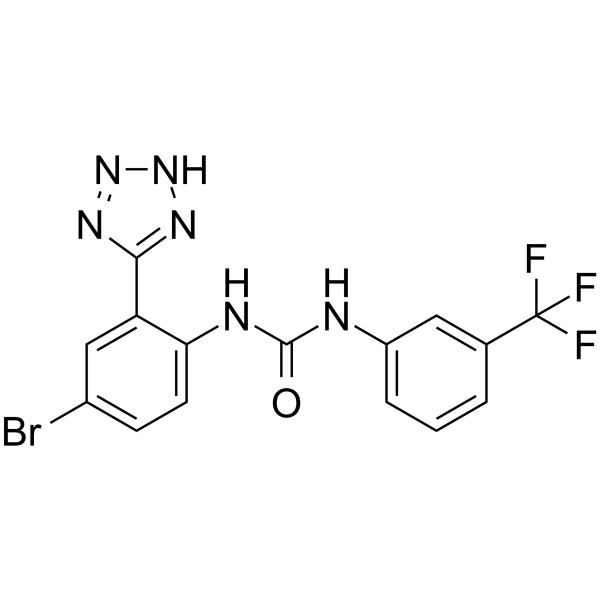
NS3623 (Standard) is the analytical standard of NS3623 (HY-108586). This product is intended for research and analytical applications. NS3623 is an activator of human ether-a-go-go-related gene (hERG1/KV11.1) potassium channels. NS3623 activates the IKr and Ito currents and has antiarrhythmic effect. NS3623 has a dual mode of action, being an inhibitor of hERG1 channels.
Nos produits utilisent uniquement pour la recherche. Nous ne vendons pas aux patients.
- CAS No.: 343630-41-1
- Formule: C15H10BrF3N6O
- Masse moléculaire:427.18
-
Stockage:
Please store the product under the recommended conditions in the Certificate of Analysis.


To place orders, for customer services and technical support, please contact: MedChemExpress USA
Tel: 609-228-6898 E-mail: [email protected] [email protected]


-
 Product Information
-
Chemical Information
- Pureté et documentation
-
 Help & FAQs


-
HY-108586
NS3623hERG1/IKr/Ito Activator -
HY-B0112
MinoxidilEndogenous Metabolite -
HY-12496
NS-1619BK Channel Opener -

HY-B0112R
Minoxidil (Standard)Endogenous Metabolite -
HY-B0401
TolbutamideKATP Inhibitor -

HY-B0401R
Tolbutamide (Standard)KATP Inhibitor -
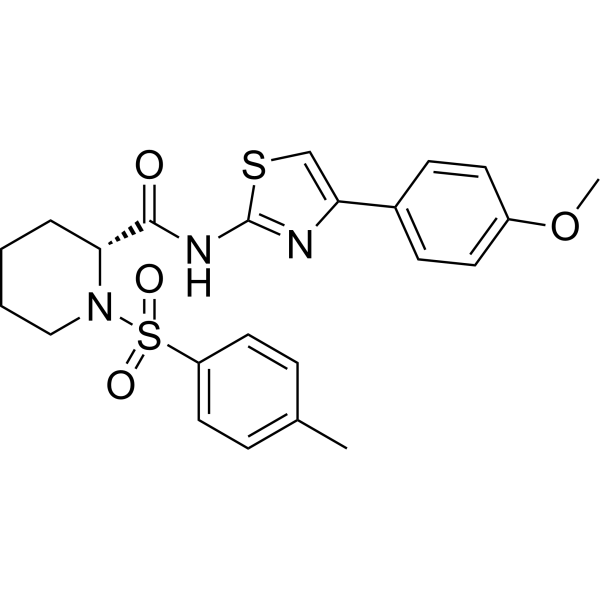
HY-12343
ML277Potassium Channel Activator -
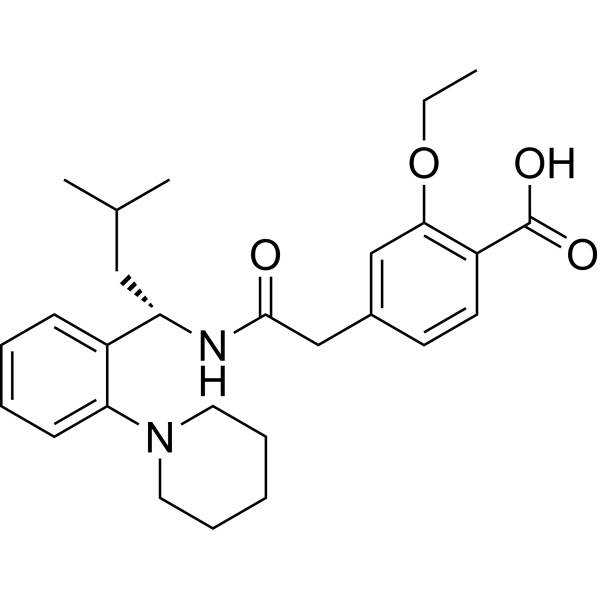
HY-15209
RepaglinideInsulin Secretagogue -
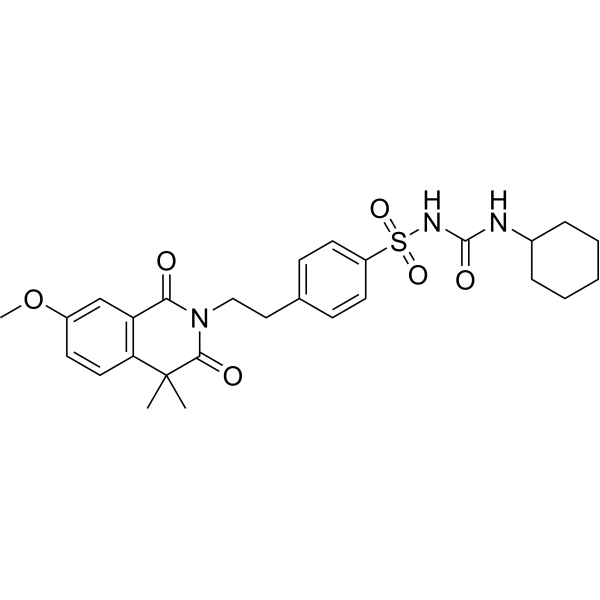
HY-B1114
GliquidoneAnti-Diabetic Drug -
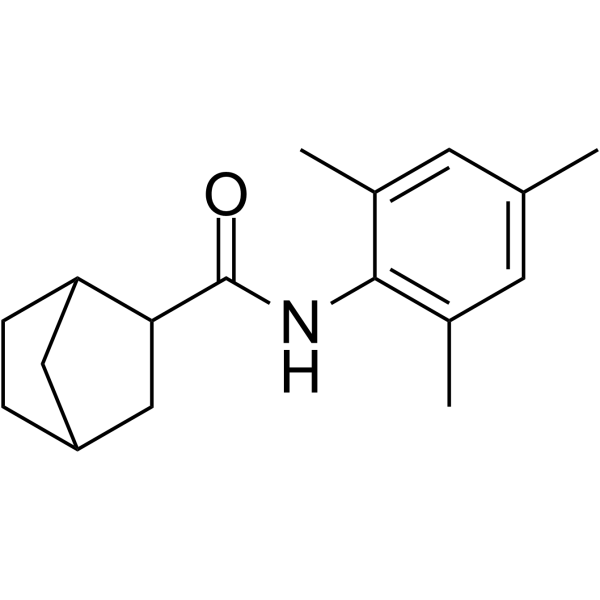
HY-101843
ML213Kv7.2/7.4 Channels Activator -
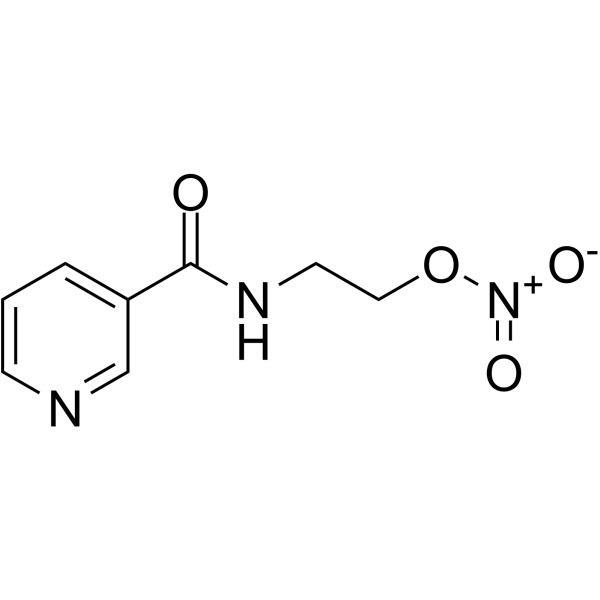
HY-B0341
NicorandilPotassium Channel Activator -
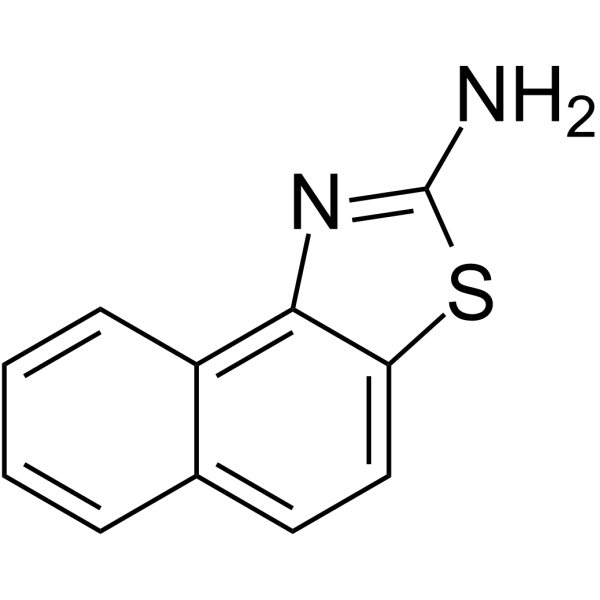
HY-111655
SKA-31KCa2/KCa3.1 Activator


Product Information
Information
Application
The compound is the grade of analytical standard, which is the reference standard supplied assay. It is commonly used in qualitative, quantitative and methodological research experiments in HPLC, GC and MS.


Chemical Information
-
CAS No. 343630-41-1
-
Masse moléculaire 427.18
-
Formule C15H10BrF3N6O
-
SMILES
O=C(NC1=CC=CC(C(F)(F)F)=C1)NC2=CC=C(Br)C=C2C3=NNN=N3
-
Livraison
Room temperature in continental US; may vary elsewhere.
-
Stockage
Please store the product under the recommended conditions in the Certificate of Analysis.


Pureté et documentation
Références
[1]. Hansen RS, et al. In vivo effects of the IKr agonist NS3623 on cardiac electrophysiology of the guinea pig. J Cardiovasc Pharmacol. 2008 Jul;52(1):35-41. [Content Brief]
[2]. Diness JG, et al. Antiarrhythmic effect of IKr activation in a cellular model of LQT3. Heart Rhythm. 2009 Jan;6(1):100-6. [Content Brief]
[3]. Calloe K, et al. A dual potassium channel activator improves repolarization reserve and normalizes ventricular action potentials. Biochem Pharmacol. 2016 May 15;108:36-46. [Content Brief]
[4]. Hansen RS, et al. Biophysical characterization of the new human ether-a-go-go-related gene channel opener NS3623 [N-(4-bromo-2-(1H-tetrazol-5-yl)-phenyl)-N'-(3'-trifluoromethylphenyl)urea]. Mol Pharmacol. 2006 Oct;70(4):1319-29. [Content Brief]

Calculators
Concentration (start) × Volume (start) = Concentration (final) × Volume (final)


NS3623 (Standard) Related Classifications
HY-108586R Related Classifications
 Powered by Bioz