



CHMFL-ABL-039
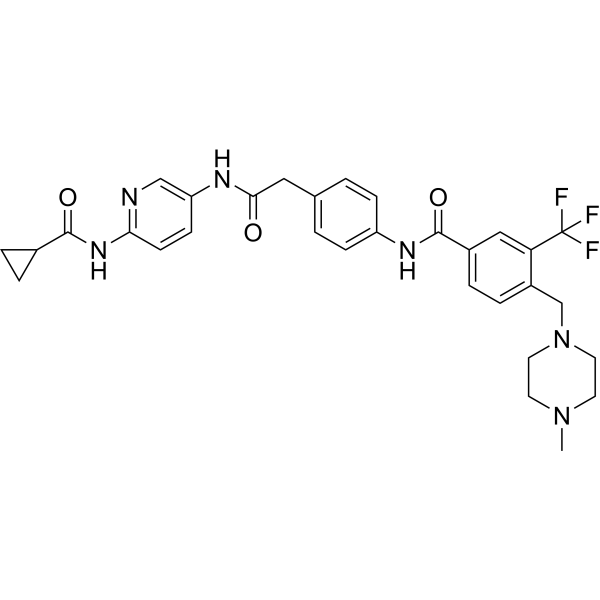
CHMFL-ABL-039 is a type II native ABL kinase and drug-resistant V299L mutant BCR-ABL inhibitor with the IC50s of 7.9 nM and 27.9 nM, respectively. CHMFL-ABL-039 is used in the research of chronic myeloid leukemia.
For research use only. We do not sell to patients.
- CAS No.: 2304344-56-5
- Formula: C31H33F3N6O3
- Molecular Weight:594.63
-
Storage:
Please store the product under the recommended conditions in the Certificate of Analysis.

To place orders, for customer services and technical support, please contact: MedChemExpress USA
Tel: 609-228-6898 E-mail: [email protected] [email protected]


-
 Biological Activity
-
Chemical Information
- Purity & Documentation
- References
-
 Help & FAQs





Biological Activity
Description
IC50 & Target
IC50: 27.9 nM (BCR-ABL), 7.9 nM (ABL kinase)[1]
Kd: 228 nM (ABL V299L mutant)[1]
In Vitro
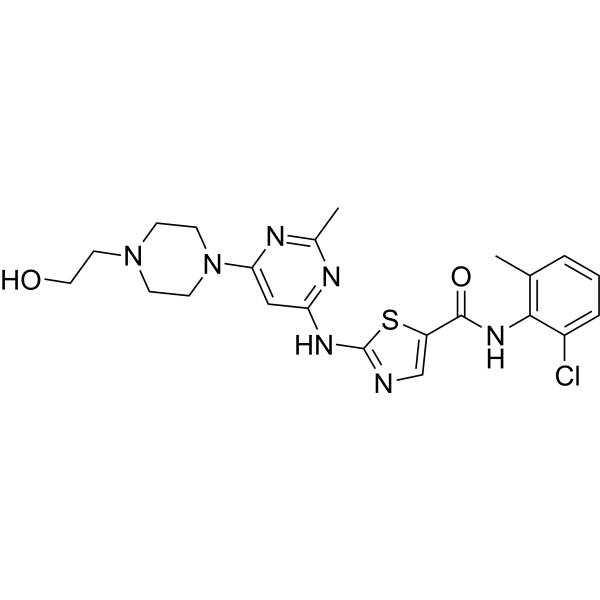
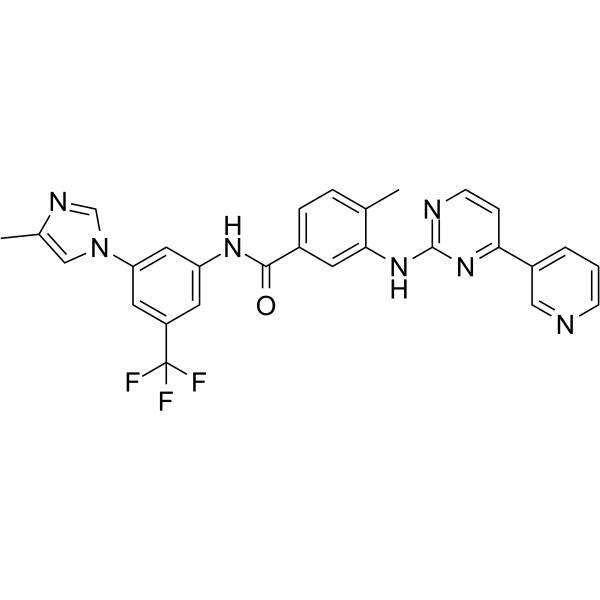
CHMFL-ABL-039 (0-10 μM; 72 hours) is 6-10 fold more sensitive than Imatinib to BCRABL driven cancer cell lines, and BCR-ABL independent cell lines display a great selectivity window comparing to BCRABL driven cancer cell lines. CHMFL-ABL-039 exhibits no general cytotoxicity[1].
CHMFL-ABL-039 (0.01-3 μM; 4 hours) can dose dependently inhibit the ABL Y245 phosphorylation and the subsequent downstream signaling mediators[1].
MedChemExpress (MCE) has not independently confirmed the accuracy of these methods. They are for reference only.
-
Cell Line:K562, KU812, MEG-01 (BCRABL driven cancer cell lines); HL-60, MOLM-14, MV4-11, U937 (BCR-ABL independent cell lines); CD34+ (Normal cell)
-
Concentration:0-10 μM
-
Incubation Time:72 hours
-
Result:6-10 fold more sensitive to BCRABL driven cancer cell lines including K562, KU812, and MEG01 compared Imatinib. HL-60, MOLM-14, MV4-11 and U937 displayed a great selectivity window comparing to the BCR-ABL driven cell lines. CHMFL-ABL-039 exhibited a similar range of anti-proliferative effect against CD34+ cells, which indicated there was no general cytotoxicity.
-
Cell Line:BaF3-BCR-ABL-V299L cells, KU812 cells, MEG-01 cells, K562 cells
-
Concentration:0.01 μM, 0.03 μM, 0.1 μM, 0.1 μM, 0.3 μM, 1 μM, 3 μM
-
Incubation Time:4 hours
-
Result:Dose dependently inhibited the ABL Y245 phosphorylation and the subsequent downstream signaling mediators such as pSTAT5 Y694, pERK T202/204 in K562, KU812, MEG-01, and BaF3-BCR-ABL-V299L.
In Vivo
MedChemExpress (MCE) has not independently confirmed the accuracy of these methods. They are for reference only.
-
Animal Model:BaF3-BCR-ABL-V299L (Imatinib insensitive) and K562 cells inoculated xenograft mouse model (Five weeks old female nu/nu mice)[1]
-
Dosage:25 mg/kg, 50 mg/kg, 100 mg/kg
-
Administration:Given i.p.injection; daily for 28 days (K562 mediated models), daily for 11 days (BaF3-BCR-ABL-V299L mediated models)
-
Result:Did not exhibit any apparent general toxicity and did not affect the mouse weight. Dose dependently suppressed the tumor progression for both models at the dosage of 25, 50 and 100 mg/kg.
25 mg/kg daily administration of CHMFL-ABL-039 could achieve 77% tumor growth inhibition (TGI) in K562 mediated models and 100 mg/kg dosage even almost completely eliminated the tumor (TGI: about 100%). In the Imatinib insensitive BaF3- BCR-ABL-V299L mutant cells mediated xenograft model, 25 mg/kg dosage of CHMFL-ABL-039 displayed similar efficacy as 100 mg/kg.


Chemical Information
-
CAS No. 2304344-56-5
-
Molecular Weight 594.63
-
Formula C31H33F3N6O3
-
SMILES
O=C(NC1=CN=C(NC(C2CC2)=O)C=C1)CC3=CC=C(NC(C4=CC=C(CN5CCN(C)CC5)C(C(F)(F)F)=C4)=O)C=C3
-
Shipping
Room temperature in continental US; may vary elsewhere.
-
Storage
Please store the product under the recommended conditions in the Certificate of Analysis.


Purity & Documentation
References

Calculators
Concentration (start) × Volume (start) = Concentration (final) × Volume (final)


CHMFL-ABL-039 Related Classifications
HY-126143 Related Classifications
 Powered by Bioz