



Peroxy Orange 1
Based on 3 publication(s) in Google Scholar
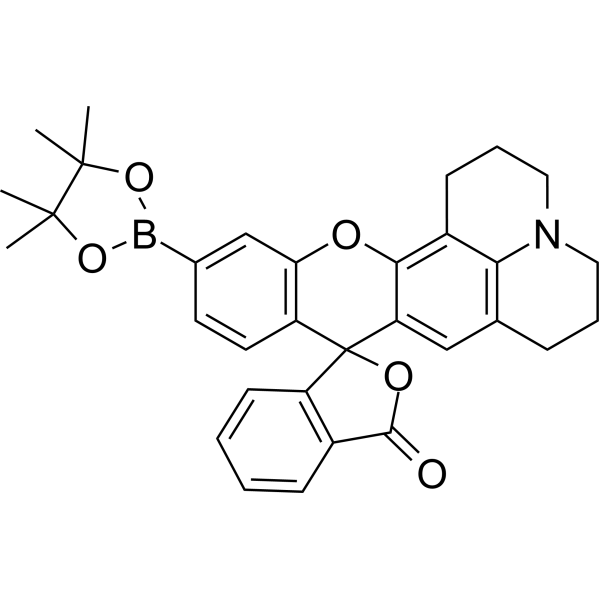
Peroxy Orange 1 (PO1) is a new H2O2 specific probe that can bind to green fluorescent highly reactive oxygen species (hROS) probe APF. Peroxy Orange 1 is also a living cell dye.
For research use only. We do not sell to patients.
- Purity : 99.20%
- CAS No.: 1199576-10-7
- Formula: C32H32BNO5
- Molecular Weight:521.41
-
Storage:
-20°C, sealed storage, away from moisture and light
* In solvent : -80°C, 6 months; -20°C, 1 month (sealed storage, away from moisture and light)

To place orders, for customer services and technical support, please contact: MedChemExpress USA
Tel: 609-228-6898 E-mail: [email protected] [email protected]


-
 Biological Activity
-
Chemical Information
-
Solvent & Solubility
- Protocols
- Purity & Documentation
- References
-
 Help & FAQs


-
HY-10218
EverolimusmTORC Inhibitor -
HY-111391
Resazurin sodiumBacterial Inhibitor -
HY-B0988
Deferoxamine mesylateIron Chelator -
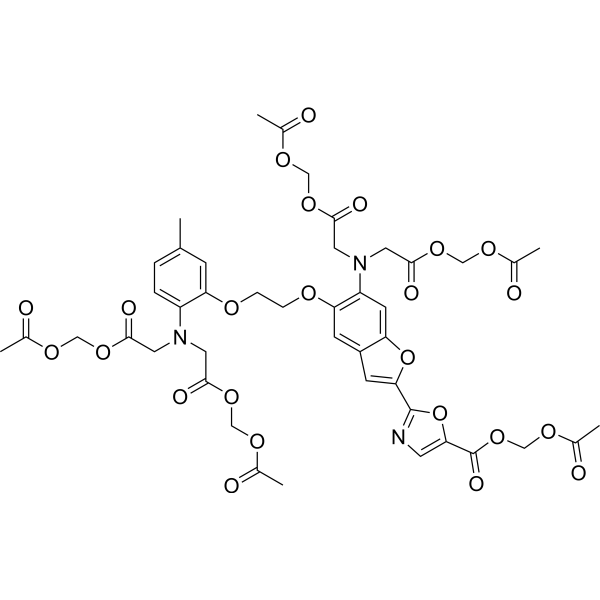
HY-101897
Fura-2 AMCa2+ Fluorescent Indicator -
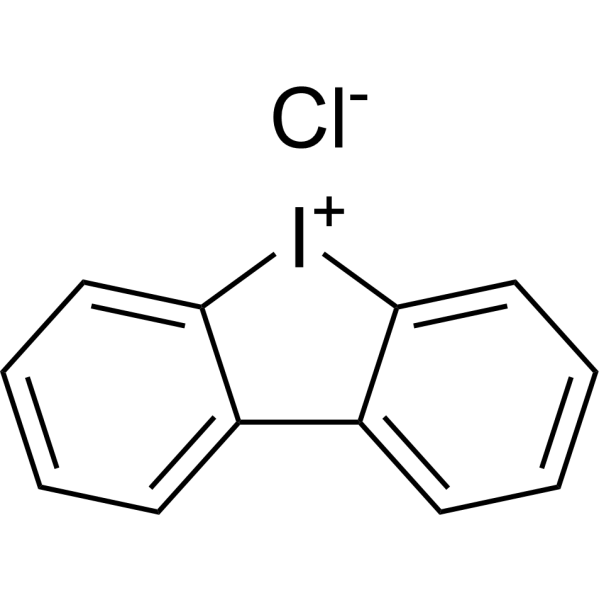
HY-100965
Diphenyleneiodonium chlorideNOX Inhibitor -
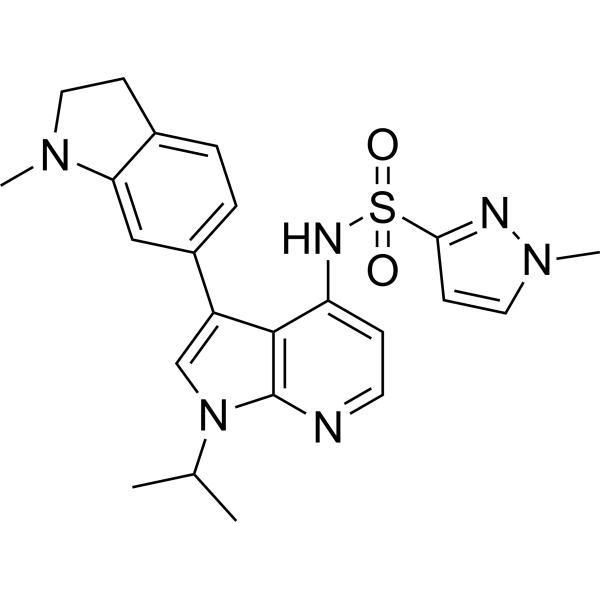
HY-18950
GSK2795039NOX2 Inhibitor -
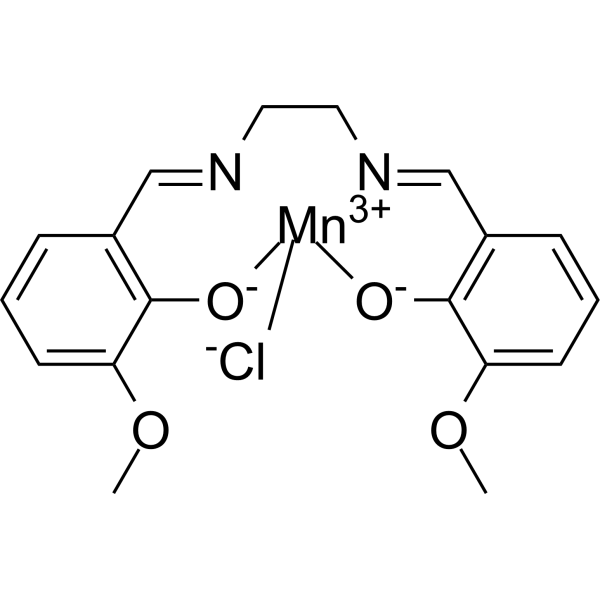
HY-100594
EUK-134SOD Mimetic -

HY-DY1101
Fura-2 AM (solution)Ca2+ Fluorescent Indicator -
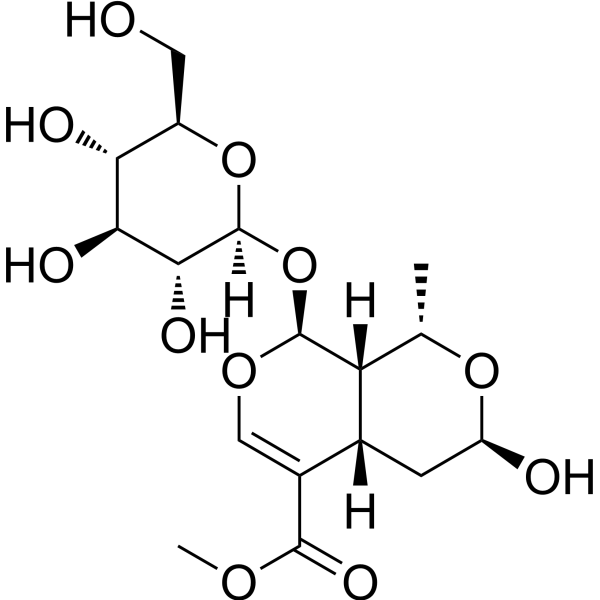
HY-N0532
MorronisidePyroptosis Inhibitor -
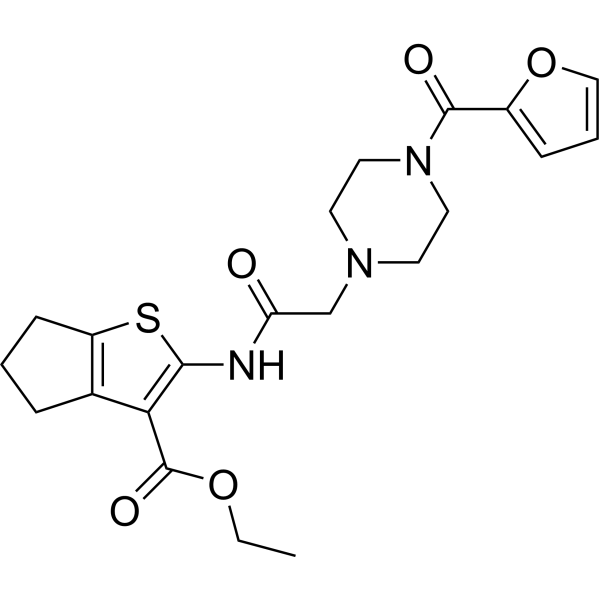
HY-100111
GLX351322NADPH Oxidase 4 Inhibitor -
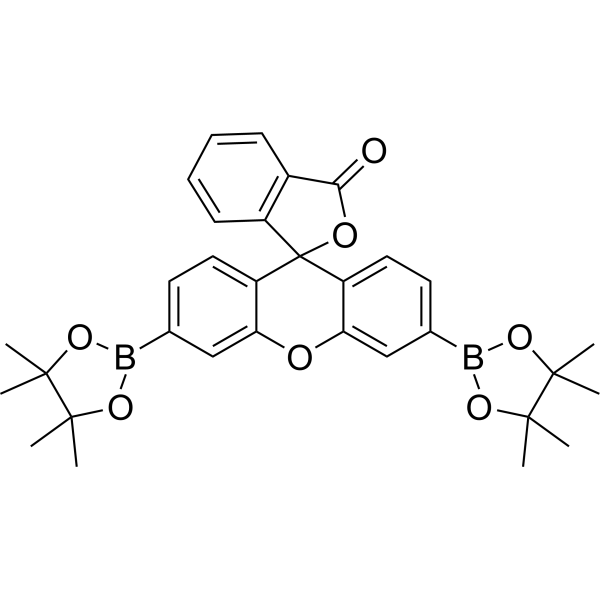
HY-D1458
Peroxyfluor 1H2O2 Probe -
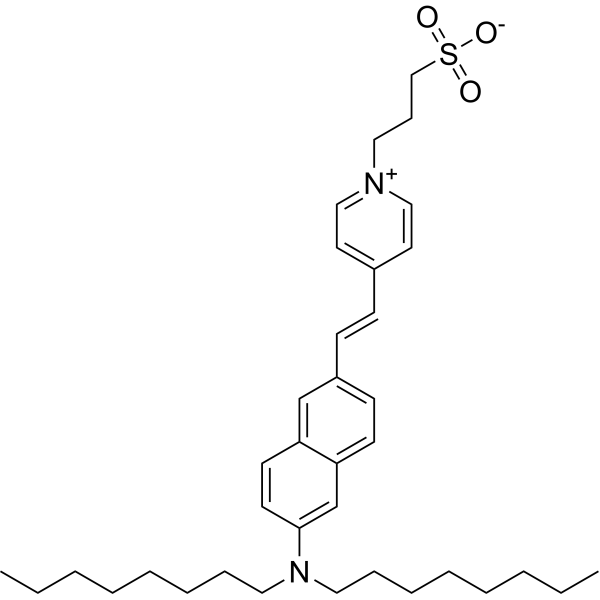
HY-101891
Di-8-ANEPPSVoltage-Sensitive Fluorescent Dye
Publications Citing Use of MedChemExpress (MCE) Peroxy Orange 1
More

Biological Activity
Description
In Vitro
Peroxy Orange 1 is a high sensitive fluorescent probe for H2O2 that emits orange fluorescence with excitation and emission wavelengths of 543 nm and 565 nm[1].
Peroxy Orange 1 contains a boronate group, which would be oxidized to a phenol group with bright orange fluorescence. This boronate-phenol conversion mechanism does not react with other ROS (such as superoxide anions, NO, etc.), and ensures the high selectivity of Peroxy Orange 1 for H2O2[1].
Peroxy Orange 1 exhibits good cell permeability that can detect H2O2 in living cells without significant toxicity in cells[1].
Peroxy Orange 1 is compatible with common green fluorescent probes (such as GFP, APF, etc.) and can be used for multicolor imaging experiments[1].
MedChemExpress (MCE) has not independently confirmed the accuracy of these methods. They are for reference only. Further protocols information, click here.
Clinical Trial
| NCT Number | Sponsor | Condition | Start Date |
Phase

|
|---|---|---|---|---|
| NCT01329991 | Plexxikon| | 2011-05 | PHASE1 |


Chemical Information
-
CAS No. 1199576-10-7
-
Appearance Solid
-
Molecular Weight 521.41
-
Formula C32H32BNO5
-
Color Off-white to pink
-
SMILES
O=C1OC2(C3=CC4=C5N(CCC4)CCCC5=C3OC6=C2C=CC(B7OC(C)(C)C(C)(C)O7)=C6)C8=C1C=CC=C8
-
Synonyms
PO1
-
Shipping
Room temperature in continental US; may vary elsewhere.
-
Storage
-20°C, sealed storage, away from moisture and light
* In solvent : -80°C, 6 months; -20°C, 1 month (sealed storage, away from moisture and light)


Publications (3)
-
Journal Impact Factor
-
Most Recent
-
Redox Biol
Pyrogallol intermediates elicit beta-amyloid secretion via radical formation and alterations in intracellular trafficking, distinct from pyrogallol-generated superoxide. [Abstract]2024 Jul:73:103180. PMID: 38795546 -
Phytomedicine
Celastrol induces ferroptosis in ccRCC through TEF-Driven ACOX2 upregulation and metabolic reprogramming. [Abstract]2026 Mar:152:157884. PMID: 41619549 -


Solvent & Solubility
In Vitro:
DMSO : 5.21 mg/mL (9.99 mM; Need ultrasonic and warming; Hygroscopic DMSO has a significant impact on the solubility of product, please use newly opened DMSO)
Please refer to the solubility information to select the appropriate solvent. Once prepared, please aliquot and store the solution to prevent product inactivation from repeated freeze-thaw cycles.
Storage method and period of stock solution: -80°C, 6 months; -20°C, 1 month (sealed storage, away from moisture and light). When stored at -80°C, please use it within 6 months. When stored at -20°C, please use it within 1 month.
Please refer to the solubility information to select the appropriate solvent. Once prepared, please aliquot and store the solution to prevent product inactivation from repeated freeze-thaw cycles.
Storage method and period of stock solution: -80°C, 6 months; -20°C, 1 month (sealed storage, away from moisture and light). When stored at -80°C, please use it within 6 months. When stored at -20°C, please use it within 1 month.
Concentration (start) × Volume (start) = Concentration (final) × Volume (final)

Protocols
-
ROS/oxidative-stress fluorescent staining
ROS/oxidative-stress fluorescent staining uses cell-permeant fluorogenic probes that become fluorescent after oxidation inside cells or tissues; commonly used examples include DCFH-DA/DCFDA for broad cellular oxidant detection, DHE for superoxide-related signal detection, MitoSOX for mitochondrial superoxide-related signal detection, and CellROX probes for oxidative-stress-associated fluorescence readouts. The assay detects probe oxidation rather than a single ROS species unless the probe and analysis method have been chemically validated for that species. DCFH-DA enters cells, is deacetylated by intracellular esterases to DCFH, and produces fluorescent DCF after oxidation, so the readout is used as an operational measure of total cellular oxidative stress rather than a species-specific ROS measurement. DHE and MitoSOX can report superoxide-related oxidation, but red fluorescence alone can include non-specific ethidium-like oxidation products; HPLC or optimized spectral approaches are


Purity & Documentation
-
Data Sheet (279 KB)
-
SDS (254 KB)
- English - EN (254 KB)
- Français - FR (254 KB)
- Deutsch - DE (254 KB)
- Norwegian - NO (254 KB)
- Español - ES (254 KB)
- Swedish - SV (254 KB)
- Italian - IT (254 KB)
- Korean - KR (254 KB)
- Portuguese - PT (254 KB)
-
Handling Instructions (2659 KB)
References
[1]. Dickinson BC, et al. A palette of fluorescent probes with varying emission colors for imaging hydrogen peroxide signaling in living cells. J Am Chem Soc. 2010 Apr 28;132(16):5906-15. [Content Brief]
[2]. Moloney JN, et al. Subcellular localization of the FLT3-ITD oncogene plays a significant role in the production of NOX- and p22phox-derived reactive oxygen species in acute myeloid leukemia. Leuk Res. 2017 Jan;52:34-42. [Content Brief]


Complete Stock Solution Preparation Table
Please refer to the solubility information to select the appropriate solvent. Once prepared, please aliquot and store the solution to prevent product inactivation from repeated freeze-thaw cycles.
Storage method and period of stock solution: -80°C, 6 months; -20°C, 1 month (sealed storage, away from moisture and light). When stored at -80°C, please use it within 6 months. When stored at -20°C, please use it within 1 month.
| Optional Solvent | Concentration Solvent Mass | 1 mg | 5 mg | 10 mg | 25 mg |
|---|---|---|---|---|---|
| DMSO | 1 mM | 1.9179 mL | 9.5894 mL | 19.1788 mL | 47.9469 mL |
| 5 mM | 0.3836 mL | 1.9179 mL | 3.8358 mL | 9.5894 mL |


Peroxy Orange 1 Related Classifications
HY-103469 Related Classifications
 Powered by Bioz