



Fascaplysin

Based on 1 Customer Validation
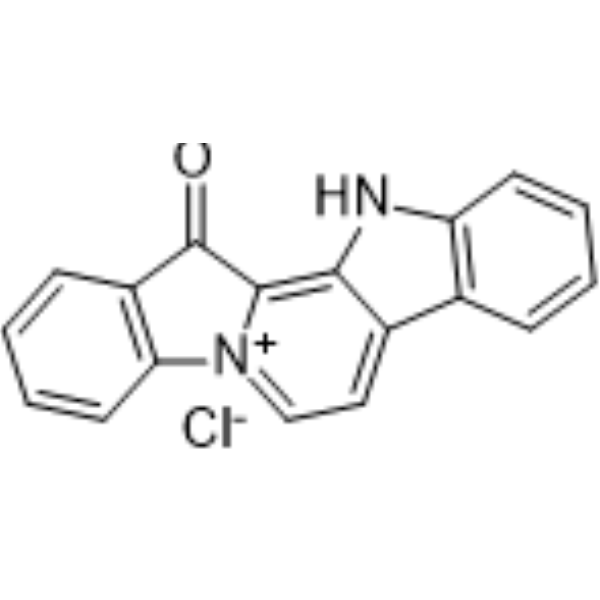
Fascaplysin is an antimicrobial and cytotoxic red pigment, that can come from the marine sponge (Fascaplysinopsis sp.). Fascaplysin has been synthesized in seven steps from indole (65% yield). Fascaplysin can induces apoptosis and autophagy in human leukemia HL-60 cells. Fascaplysin shows anti-tumor activity.
For research use only. We do not sell to patients.
- Purity : 95.64%
- CAS No.: 114719-57-2
- Formula: C18H11ClN2O
- Molecular Weight:306.75
-
Storage:
4°C, sealed storage, away from moisture
* In solvent : -80°C, 6 months; -20°C, 1 month (sealed storage, away from moisture)

To place orders, for customer services and technical support, please contact: MedChemExpress USA
Tel: 609-228-6898 E-mail: [email protected] [email protected]


-
 Biological Activity
-
Chemical Information
-
Solvent & Solubility
- Protocols
- Purity & Documentation
- References
-
 Help & FAQs


-
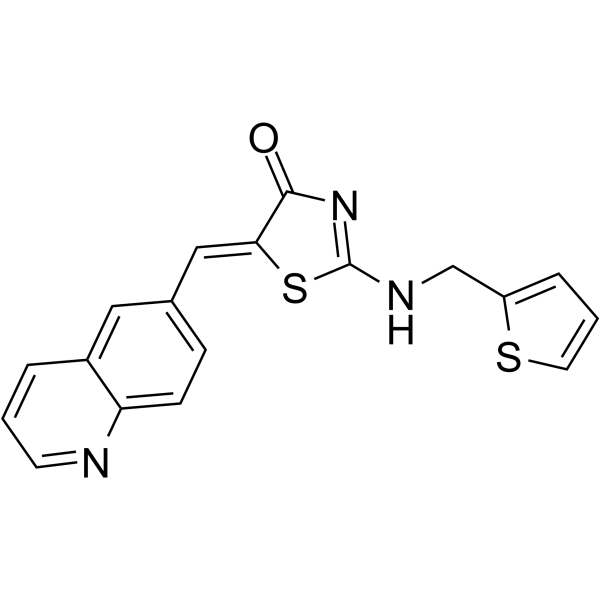
HY-12529
Ro-3306CDK1 Inhibitor -
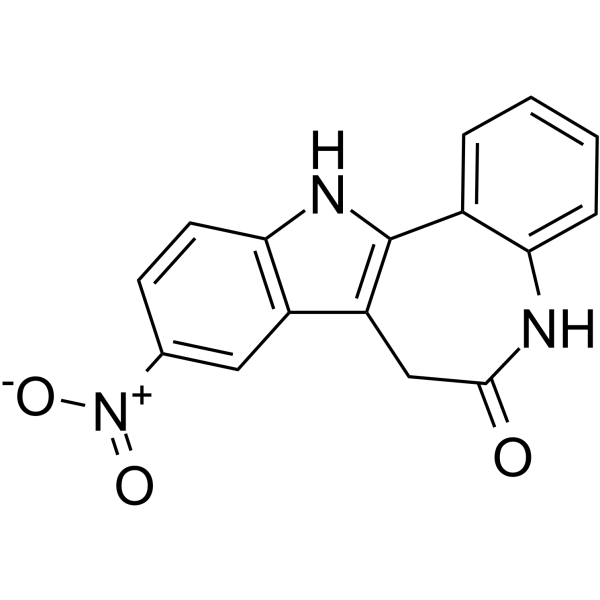
HY-108359
AlsterpaulloneCDK Inhibitor -
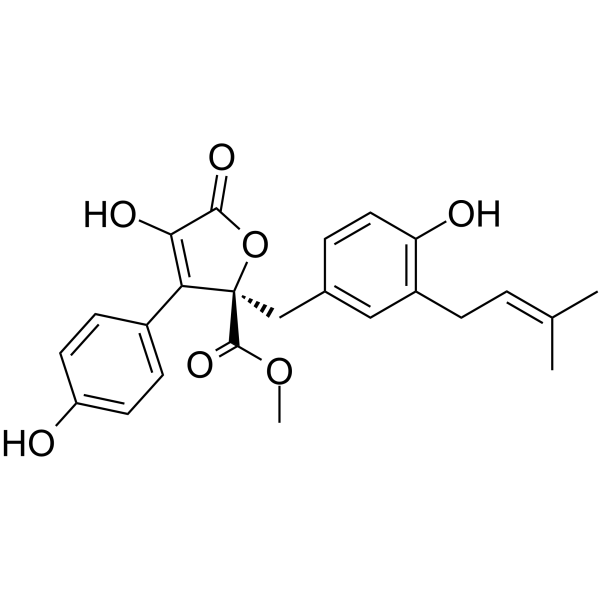
HY-111237
Butyrolactone ICDK Inhibitor -
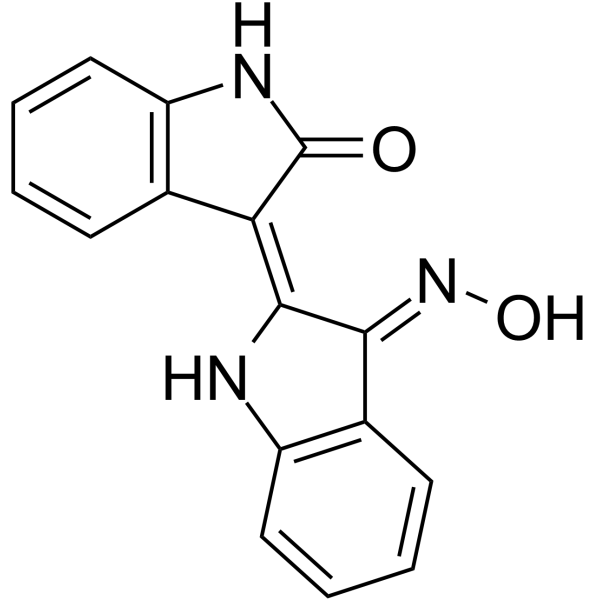
HY-19807
Indirubin-3'-monoximeGSK-3β Inhibitor -
HY-119244
Gly-Pro-pNA hydrochlorideChromogenic Peptide Substrate -
HY-19618
BRD3308HDAC3 Inhibitor -
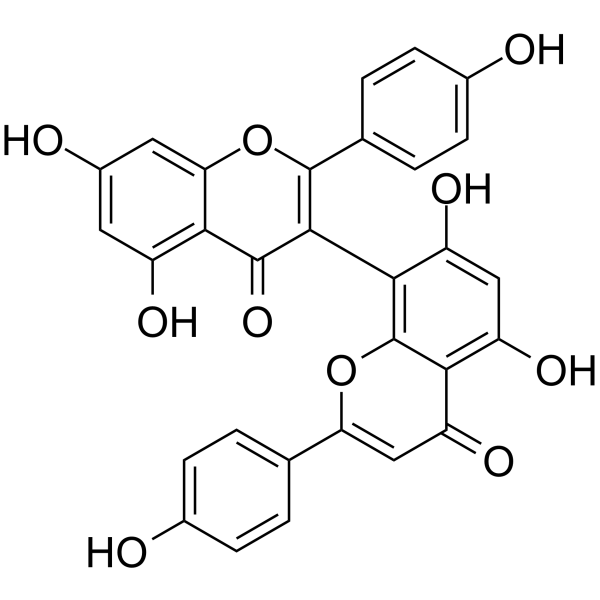
HY-N1799
3,8''-BiapigeninBiflavone -
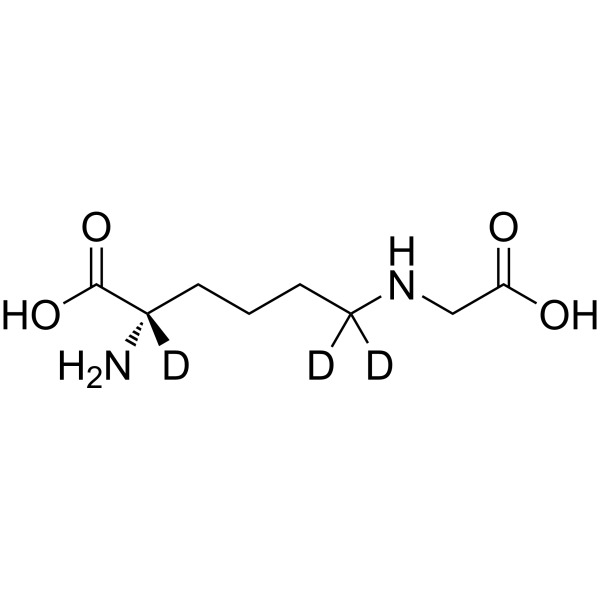
HY-W286743S1
CML-d3Stable Isotope -
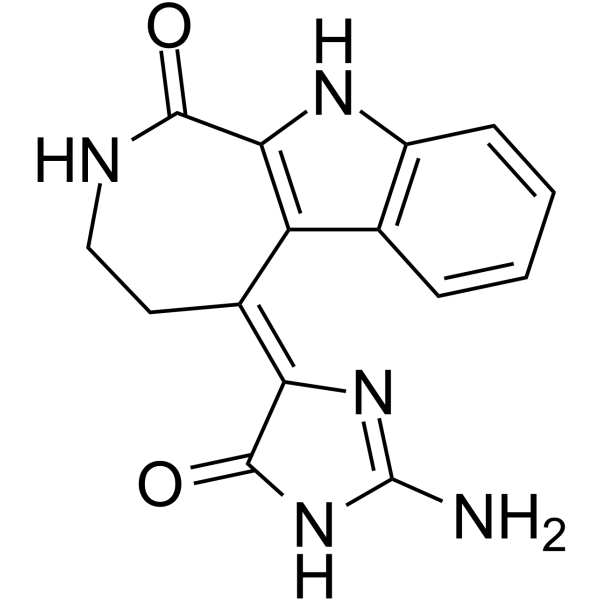
HY-112477
Chk2-IN-1Chk2 Inhibitor -
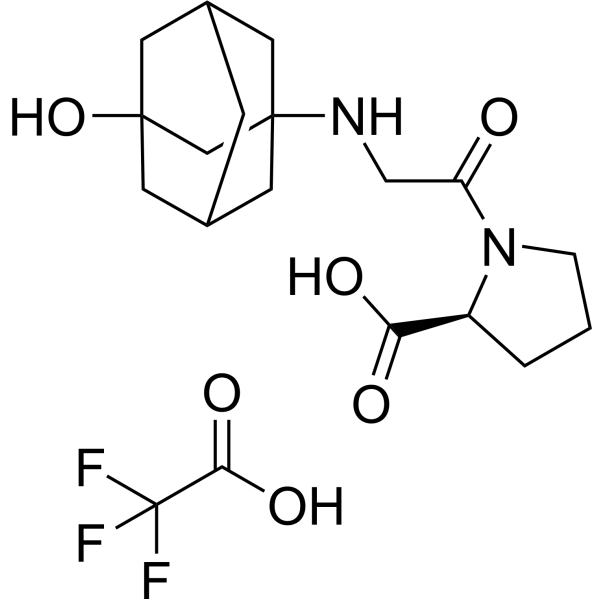
HY-G0024A
Vildagliptin carboxylic acid metabolite TFAP450 Inhibitor -
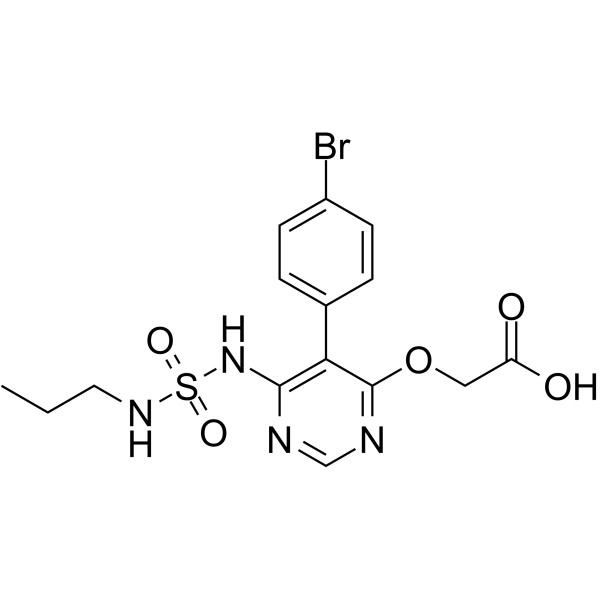
HY-135500
ACT-373898Macitentan Metabolite -
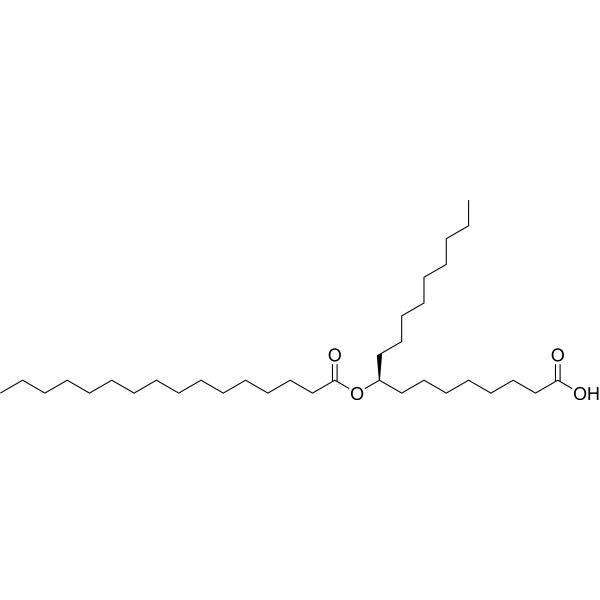
HY-124281A
9(S)-PAHSAS-Enantiomer


Biological Activity
Description
IC50 & Target
|
CDK4 |
Cellular Effect
|
Cell Line

|
Type | Value | Description | References |
|---|---|---|---|---|
| 786-0 | IC50 |
6.7 μM
Compound: 1, NSC-622398
|
Antitumor activity against human 786-O cells
Antitumor activity against human 786-O cells
|
[PMID: 15165138] |
| A498 | IC50 |
5.2 μM
Compound: 1, NSC-622398
|
Antitumor activity against human A498 cells
Antitumor activity against human A498 cells
|
[PMID: 15165138] |
| A549 | IC50 |
0.69 μM
Compound: 2
|
Growth inhibition of p53+, pRb+ human A549 cells after 48 hrs by MTT assay
Growth inhibition of p53+, pRb+ human A549 cells after 48 hrs by MTT assay
|
[PMID: 25368960] |
| A549 | IC50 |
4.2 μM
Compound: 1, NSC-622398
|
Antitumor activity against human A549/ATCC cells
Antitumor activity against human A549/ATCC cells
|
[PMID: 15165138] |
| ACHN | IC50 |
>10 μM
Compound: 1, NSC-622398
|
Antitumor activity against human ACHN cells
Antitumor activity against human ACHN cells
|
[PMID: 15165138] |
| BT-549 | IC50 |
>10 μM
Compound: 1, NSC-622398
|
Antitumor activity against human BT549 cells
Antitumor activity against human BT549 cells
|
[PMID: 15165138] |
| CAKI-1 | IC50 |
6.1 μM
Compound: 1, NSC-622398
|
Antitumor activity against human Caki1 cells
Antitumor activity against human Caki1 cells
|
[PMID: 15165138] |
| Calu-1 | IC50 |
1.3 μM
Compound: 2
|
Growth inhibition of p53 null, pRb+ human Calu1 cells after 48 hrs by MTT assay
Growth inhibition of p53 null, pRb+ human Calu1 cells after 48 hrs by MTT assay
|
[PMID: 25368960] |
| CCRF-CEM | IC50 |
>10 μM
Compound: 1, NSC-622398
|
Antitumor activity against human CCRF-CEM cells
Antitumor activity against human CCRF-CEM cells
|
[PMID: 15165138] |
| COLO 205 | IC50 |
1.2 μM
Compound: 1, NSC-622398
|
Antitumor activity against human COLO205 cells
Antitumor activity against human COLO205 cells
|
[PMID: 15165138] |
| DU-145 | IC50 |
4.9 μM
Compound: 1, NSC-622398
|
Antitumor activity against human DU145 cells
Antitumor activity against human DU145 cells
|
[PMID: 15165138] |
| EKVX | IC50 |
5.1 μM
Compound: 1, NSC-622398
|
Antitumor activity against human EKVX cells
Antitumor activity against human EKVX cells
|
[PMID: 15165138] |
| HCC 2998 | IC50 |
1.7 μM
Compound: 1, NSC-622398
|
Antitumor activity against human HCC2998 cells
Antitumor activity against human HCC2998 cells
|
[PMID: 15165138] |
| HCT-116 | IC50 |
0.6 μM
Compound: 1, NSC-622398
|
Antitumor activity against human HCT116 cells
Antitumor activity against human HCT116 cells
|
[PMID: 15165138] |
| HCT-15 | IC50 |
>10 μM
Compound: 1, NSC-622398
|
Antitumor activity against human HCT15 cells
Antitumor activity against human HCT15 cells
|
[PMID: 15165138] |
| HL-60(TB) | IC50 |
>10 μM
Compound: 1, NSC-622398
|
Antitumor activity against human HL-60(TB) cells
Antitumor activity against human HL-60(TB) cells
|
[PMID: 15165138] |
| HOP-62 | IC50 |
4.7 μM
Compound: 1, NSC-622398
|
Antitumor activity against human HOP62 cells
Antitumor activity against human HOP62 cells
|
[PMID: 15165138] |
| Hs-578T | IC50 |
>10 μM
Compound: 1, NSC-622398
|
Antitumor activity against human Hs 578T cells
Antitumor activity against human Hs 578T cells
|
[PMID: 15165138] |
| HT-29 | IC50 |
>10 μM
Compound: 1, NSC-622398
|
Antitumor activity against human HT-29 cells
Antitumor activity against human HT-29 cells
|
[PMID: 15165138] |
| Huh-7 | CC50 |
0.589 μM
Compound: GNF-Pf-1458
|
NOVARTIS: Cytotoxicity against human hepatocellular carcinoma cell line (Huh7)
NOVARTIS: Cytotoxicity against human hepatocellular carcinoma cell line (Huh7)
|
[PMID: 18579783] |
| IGROV-1 | IC50 |
4.5 μM
Compound: 1, NSC-622398
|
Antitumor activity against human IGROV1 cells
Antitumor activity against human IGROV1 cells
|
[PMID: 15165138] |
| K562 | IC50 |
>10 μM
Compound: 1, NSC-622398
|
Antitumor activity against human K562 cells
Antitumor activity against human K562 cells
|
[PMID: 15165138] |
| KM12 | IC50 |
4.6 μM
Compound: 1, NSC-622398
|
Antitumor activity against human KM12 cells
Antitumor activity against human KM12 cells
|
[PMID: 15165138] |
| LOX IMVI | IC50 |
>10 μM
Compound: 1, NSC-622398
|
Antitumor activity against human LOXIMVI cells
Antitumor activity against human LOXIMVI cells
|
[PMID: 15165138] |
| LS174T | IC50 |
0.88 μM
Compound: 2
|
Growth inhibition of p53+, pRb+ human LS 174T cells after 48 hrs by MTT assay
Growth inhibition of p53+, pRb+ human LS 174T cells after 48 hrs by MTT assay
|
[PMID: 25368960] |
| M14 | IC50 |
0.92 μM
Compound: 1, NSC-622398
|
Antitumor activity against human M14 cells
Antitumor activity against human M14 cells
|
[PMID: 15165138] |
| Malme-3M | IC50 |
0.36 μM
Compound: 1, NSC-622398
|
Antitumor activity against human MALME-3M cells
Antitumor activity against human MALME-3M cells
|
[PMID: 15165138] |
| MCF7 | IC50 |
>10 μM
Compound: 1, NSC-622398
|
Antitumor activity against ADF-resistant human MCF7 cells
Antitumor activity against ADF-resistant human MCF7 cells
|
[PMID: 15165138] |
| MCF7 | IC50 |
>10 μM
Compound: 1, NSC-622398
|
Antitumor activity against human MCF7 cells
Antitumor activity against human MCF7 cells
|
[PMID: 15165138] |
| MDA-MB-231 | IC50 |
>10 μM
Compound: 1, NSC-622398
|
Antitumor activity against human MDA-MB-231 cells
Antitumor activity against human MDA-MB-231 cells
|
[PMID: 15165138] |
| MDA-MB-435 | IC50 |
0.56 μM
Compound: 1, NSC-622398
|
Antitumor activity against human MDA-MB-435 cells
Antitumor activity against human MDA-MB-435 cells
|
[PMID: 15165138] |
| MDA-N | IC50 |
0.56 μM
Compound: 1, NSC-622398
|
Antitumor activity against human MDA-N cells
Antitumor activity against human MDA-N cells
|
[PMID: 15165138] |
| MOLT-4 | IC50 |
>10 μM
Compound: 1, NSC-622398
|
Antitumor activity against human MOLT4 cells
Antitumor activity against human MOLT4 cells
|
[PMID: 15165138] |
| NCI-H226 | IC50 |
9.6 μM
Compound: 1, NSC-622398
|
Antitumor activity against human NCI-H226 cells
Antitumor activity against human NCI-H226 cells
|
[PMID: 15165138] |
| NCI-H23 | IC50 |
4.5 μM
Compound: 1, NSC-622398
|
Antitumor activity against human NCI-H23 cells
Antitumor activity against human NCI-H23 cells
|
[PMID: 15165138] |
| NCI-H322M | IC50 |
5 μM
Compound: 1, NSC-622398
|
Antitumor activity against human NCI-H322M cells
Antitumor activity against human NCI-H322M cells
|
[PMID: 15165138] |
| NCI-H460 | IC50 |
4.2 μM
Compound: 1, NSC-622398
|
Antitumor activity against human NCI-H460 cells
Antitumor activity against human NCI-H460 cells
|
[PMID: 15165138] |
| NCI-H522 | IC50 |
4.5 μM
Compound: 1, NSC-622398
|
Antitumor activity against human NCI-H522 cells
Antitumor activity against human NCI-H522 cells
|
[PMID: 15165138] |
| OVCAR-3 | IC50 |
1.5 μM
Compound: 1, NSC-622398
|
Antitumor activity against human OVCAR-3 cells
Antitumor activity against human OVCAR-3 cells
|
[PMID: 15165138] |
| OVCAR-4 | IC50 |
5.3 μM
Compound: 1, NSC-622398
|
Antitumor activity against human OVCAR4 cells
Antitumor activity against human OVCAR4 cells
|
[PMID: 15165138] |
| OVCAR-5 | IC50 |
4.4 μM
Compound: 1, NSC-622398
|
Antitumor activity against human OVCAR5 cells
Antitumor activity against human OVCAR5 cells
|
[PMID: 15165138] |
| OVCAR-8 | IC50 |
>10 μM
Compound: 1, NSC-622398
|
Antitumor activity against human OVCAR8 cells
Antitumor activity against human OVCAR8 cells
|
[PMID: 15165138] |
| PC-3 | IC50 |
>10 μM
Compound: 1, NSC-622398
|
Antitumor activity against human PC3 cells
Antitumor activity against human PC3 cells
|
[PMID: 15165138] |
| PC-3 | IC50 |
0.92 μM
Compound: 2
|
Growth inhibition of p53 null,pRb+ human PC3 cells after 48 hrs by MTT assay
Growth inhibition of p53 null,pRb+ human PC3 cells after 48 hrs by MTT assay
|
[PMID: 25368960] |
| RPMI-8226 | IC50 |
>10 μM
Compound: 1, NSC-622398
|
Antitumor activity against human RPMI8226 cells
Antitumor activity against human RPMI8226 cells
|
[PMID: 15165138] |
| RXF 393 | IC50 |
3.5 μM
Compound: 1, NSC-622398
|
Antitumor activity against human RXF393 cells
Antitumor activity against human RXF393 cells
|
[PMID: 15165138] |
| SF-268 | IC50 |
>10 μM
Compound: 1, NSC-622398
|
Antitumor activity against human SF268 cells
Antitumor activity against human SF268 cells
|
[PMID: 15165138] |
| SF-295 | IC50 |
3.9 μM
Compound: 1, NSC-622398
|
Antitumor activity against human SF295 cells
Antitumor activity against human SF295 cells
|
[PMID: 15165138] |
| SF-539 | IC50 |
4.2 μM
Compound: 1, NSC-622398
|
Antitumor activity against human SF539 cells
Antitumor activity against human SF539 cells
|
[PMID: 15165138] |
| Sf9 | IC50 |
0.35 μM
Compound: Fascaplysin
|
Inhibition of CDK4/Cyclin D (unknown origin) expressed in baculovirus infected insect Sf9 cells using human pRB as substrate in presence of [gamma-32P]ATP
Inhibition of CDK4/Cyclin D (unknown origin) expressed in baculovirus infected insect Sf9 cells using human pRB as substrate in presence of [gamma-32P]ATP
|
[PMID: 26741853] |
| Sf9 | IC50 |
0.55 μM
Compound: 4
|
Inhibition of human CDK4/ Cyclin D1 catalytic subunit expressed in Sf9 insect cells assessed as GST-RB152 fusion protein phosphorylation-associated depletion in ATP level by luminescence assay
Inhibition of human CDK4/ Cyclin D1 catalytic subunit expressed in Sf9 insect cells assessed as GST-RB152 fusion protein phosphorylation-associated depletion in ATP level by luminescence assay
|
[PMID: 19632122] |
| Sf9 | IC50 |
0.55 μM
Compound: 1
|
Inhibition of human CDK4/GST-cyclin D1 expressed in Sf9 cells assessed as retinoblastoma GST-RB152 phosphorylation
Inhibition of human CDK4/GST-cyclin D1 expressed in Sf9 cells assessed as retinoblastoma GST-RB152 phosphorylation
|
[PMID: 18650093] |
| Sf9 | IC50 |
500 μM
Compound: 4
|
Inhibition of human CDK2/ Cyclin A catalytic subunit expressed in Sf9 insect cells assessed as histone H1 phosphorylation-associated depletion in ATP level by luminescence assay
Inhibition of human CDK2/ Cyclin A catalytic subunit expressed in Sf9 insect cells assessed as histone H1 phosphorylation-associated depletion in ATP level by luminescence assay
|
[PMID: 19632122] |
| Sf9 | IC50 |
500 μM
Compound: 1
|
Inhibition of human CDK2/GST-cyclin A expressed in Sf9 cells assessed as histone phosphorylation
Inhibition of human CDK2/GST-cyclin A expressed in Sf9 cells assessed as histone phosphorylation
|
[PMID: 18650093] |
| SK-MEL-28 | IC50 |
9.3 μM
Compound: 1, NSC-622398
|
Antitumor activity against human SK-MEL-28 cells
Antitumor activity against human SK-MEL-28 cells
|
[PMID: 15165138] |
| SK-MEL-5 | IC50 |
2 μM
Compound: 1, NSC-622398
|
Antitumor activity against human SK-MEL-5 cells
Antitumor activity against human SK-MEL-5 cells
|
[PMID: 15165138] |
| SK-OV-3 | IC50 |
>10 μM
Compound: 1, NSC-622398
|
Antitumor activity against human SKOV3 cells
Antitumor activity against human SKOV3 cells
|
[PMID: 15165138] |
| SN12C | IC50 |
4.2 μM
Compound: 1, NSC-622398
|
Antitumor activity against human SN12C cells
Antitumor activity against human SN12C cells
|
[PMID: 15165138] |
| SNB-19 | IC50 |
6.1 μM
Compound: 1, NSC-622398
|
Antitumor activity against human SNB19 cells
Antitumor activity against human SNB19 cells
|
[PMID: 15165138] |
| SNB-75 | IC50 |
5.4 μM
Compound: 1, NSC-622398
|
Antitumor activity against human SNB75 cells
Antitumor activity against human SNB75 cells
|
[PMID: 15165138] |
| SR | IC50 |
>10 μM
Compound: 1, NSC-622398
|
Antitumor activity against human SR cells
Antitumor activity against human SR cells
|
[PMID: 15165138] |
| SW-620 | IC50 |
3.7 μM
Compound: 1, NSC-622398
|
Antitumor activity against human SW620 cells
Antitumor activity against human SW620 cells
|
[PMID: 15165138] |
| T47D | IC50 |
>10 μM
Compound: 1, NSC-622398
|
Antitumor activity against human T47D cells
Antitumor activity against human T47D cells
|
[PMID: 15165138] |
| TK-10 | IC50 |
5.4 μM
Compound: 1, NSC-622398
|
Antitumor activity against human TK10 cells
Antitumor activity against human TK10 cells
|
[PMID: 15165138] |
| U-251 | IC50 |
3.6 μM
Compound: 1, NSC-622398
|
Antitumor activity against human U251 cells
Antitumor activity against human U251 cells
|
[PMID: 15165138] |
| UACC-257 | IC50 |
>10 μM
Compound: 1, NSC-622398
|
Antitumor activity against human UACC257 cells
Antitumor activity against human UACC257 cells
|
[PMID: 15165138] |
| UACC-62 | IC50 |
4.9 μM
Compound: 1, NSC-622398
|
Antitumor activity against human UACC62 cells
Antitumor activity against human UACC62 cells
|
[PMID: 15165138] |
| UO-31 | IC50 |
>10 μM
Compound: 1, NSC-622398
|
Antitumor activity against human UO31 cells
Antitumor activity against human UO31 cells
|
[PMID: 15165138] |
In Vitro
Fascaplysin induces autophagy as a cytoprotective response via ROS and p8 in vascular endothelial cells (VECs)[2].
Fascaplysin targets metabolic activity of the prostate cancer cells, without disrupting cell membrane's integrity[2].
.
Fascaplysin induces caspase mediated crosstalk between apoptosis and autophagy through the inhibition of PI3K/AKT/mTOR signaling cascade in human leukemia HL-60 cells[2].
MedChemExpress (MCE) has not independently confirmed the accuracy of these methods. They are for reference only.
In Vivo
MedChemExpress (MCE) has not independently confirmed the accuracy of these methods. They are for reference only.
- Research Protocol for Infectious Diseases
- Detection of Apoptosis
- TUNEL staining for apoptotic DNA fragmentation
- Annexin V plus membrane-impermeant dye apoptosis staining
- Autophagy
- Apoptosis Solutions
- Lysosome and acidic-vesicle live-cell staining
- Macroautophagy Solutions
- Cell Viability Determination by MTT Colorimetric Assay


Chemical Information
-
CAS No. 114719-57-2
-
Appearance Solid
-
Molecular Weight 306.75
-
Formula C18H11ClN2O
-
Color Brown to dark brown
-
SMILES
O=C1C2=C3NC4=C(C=CC=C4)C3=CC=[N+]2C5=C1C=CC=C5.[Cl-]
-
Structure Classification
-
Initial Source
-
Shipping
Room temperature in continental US; may vary elsewhere.
-
Storage
4°C, sealed storage, away from moisture
* In solvent : -80°C, 6 months; -20°C, 1 month (sealed storage, away from moisture)


Solvent & Solubility
In Vitro:
DMSO : 16 mg/mL (52.16 mM; Need ultrasonic and warming; Hygroscopic DMSO has a significant impact on the solubility of product, please use newly opened DMSO)
Please refer to the solubility information to select the appropriate solvent. Once prepared, please aliquot and store the solution to prevent product inactivation from repeated freeze-thaw cycles.
Storage method and period of stock solution: -80°C, 6 months; -20°C, 1 month (sealed storage, away from moisture). When stored at -80°C, please use it within 6 months. When stored at -20°C, please use it within 1 month.
Please refer to the solubility information to select the appropriate solvent. Once prepared, please aliquot and store the solution to prevent product inactivation from repeated freeze-thaw cycles.
Storage method and period of stock solution: -80°C, 6 months; -20°C, 1 month (sealed storage, away from moisture). When stored at -80°C, please use it within 6 months. When stored at -20°C, please use it within 1 month.
Concentration (start) × Volume (start) = Concentration (final) × Volume (final)


Purity & Documentation
-
Data Sheet (278 KB)
-
SDS (252 KB)
- English - EN (252 KB)
- Français - FR (252 KB)
- Deutsch - DE (252 KB)
- Norwegian - NO (252 KB)
- Español - ES (252 KB)
- Swedish - SV (252 KB)
- Italian - IT (252 KB)
- Korean - KR (252 KB)
- Portuguese - PT (252 KB)
-
Handling Instructions (2659 KB)
References


Complete Stock Solution Preparation Table
Please refer to the solubility information to select the appropriate solvent. Once prepared, please aliquot and store the solution to prevent product inactivation from repeated freeze-thaw cycles.
Storage method and period of stock solution: -80°C, 6 months; -20°C, 1 month (sealed storage, away from moisture). When stored at -80°C, please use it within 6 months. When stored at -20°C, please use it within 1 month.
| Optional Solvent | Concentration Solvent Mass | 1 mg | 5 mg | 10 mg | 25 mg |
|---|---|---|---|---|---|
| DMSO | 1 mM | 3.2600 mL | 16.2999 mL | 32.5998 mL | 81.4996 mL |
| 5 mM | 0.6520 mL | 3.2600 mL | 6.5200 mL | 16.2999 mL | |
| 10 mM | 0.3260 mL | 1.6300 mL | 3.2600 mL | 8.1500 mL | |
| 15 mM | 0.2173 mL | 1.0867 mL | 2.1733 mL | 5.4333 mL | |
| 20 mM | 0.1630 mL | 0.8150 mL | 1.6300 mL | 4.0750 mL | |
| 25 mM | 0.1304 mL | 0.6520 mL | 1.3040 mL | 3.2600 mL | |
| 30 mM | 0.1087 mL | 0.5433 mL | 1.0867 mL | 2.7167 mL | |
| 40 mM | 0.0815 mL | 0.4075 mL | 0.8150 mL | 2.0375 mL | |
| 50 mM | 0.0652 mL | 0.3260 mL | 0.6520 mL | 1.6300 mL |


Fascaplysin Related Classifications
HY-112328 Related Classifications
 Powered by Bioz