



Fluocinonide

Based on 1 Customer Validation
Fluocinonide (Vanos) is a potent glucocorticoid steroid used topically as anti-inflammatory agent for the treatment of skin disorders.
Para uso exclusivo en investigación. No vendemos a pacientes.
- Pureza : 99.63%
- No. CAS: 356-12-7
- Fòrmula: C26H32F2O7
- Peso molecular:494.52
-
Almacenamiento:Powder -20°C, 3 years , 4°C, 2 years ; In solvent -80°C, 2 years , -20°C, 1 year

To place orders, for customer services and technical support, please contact: MedChemExpress USA
Tel: 609-228-6898 E-mail: [email protected] [email protected]


-
 Actividad biológica
-
Chemical Information
-
Solvente y solubilidad
- Protocolo
- Pureza y Documentación
- Referencias
-
 Help & FAQs


-
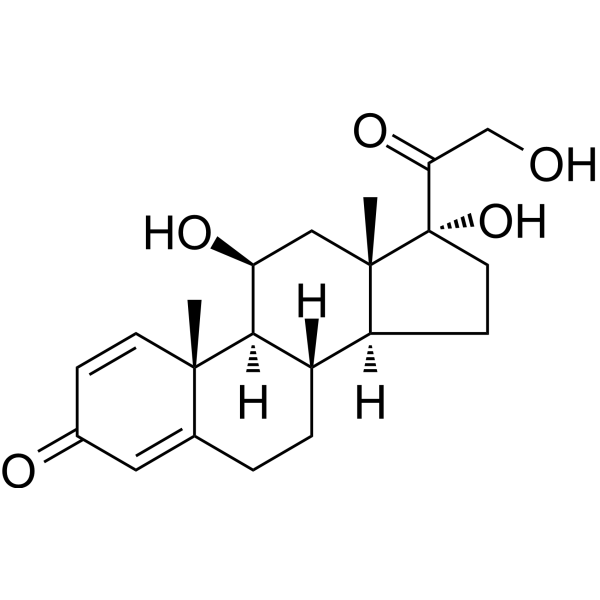
HY-17463
PrednisoloneGlucocorticoid -
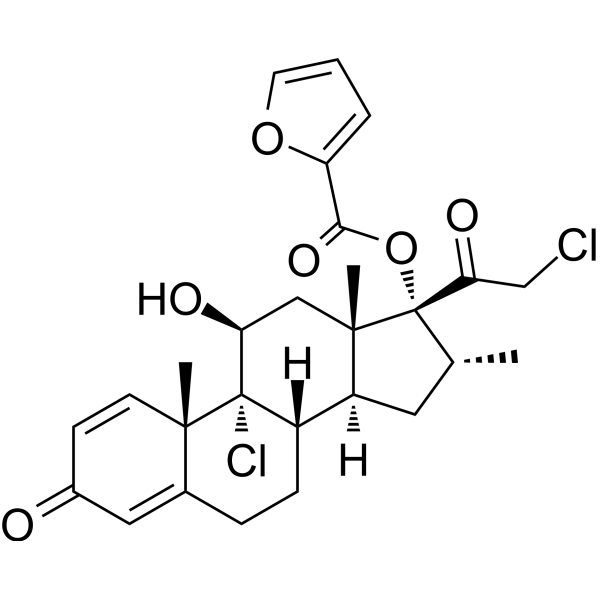
HY-13693
Mometasone furoateGlucocorticoid Receptor Agonist -
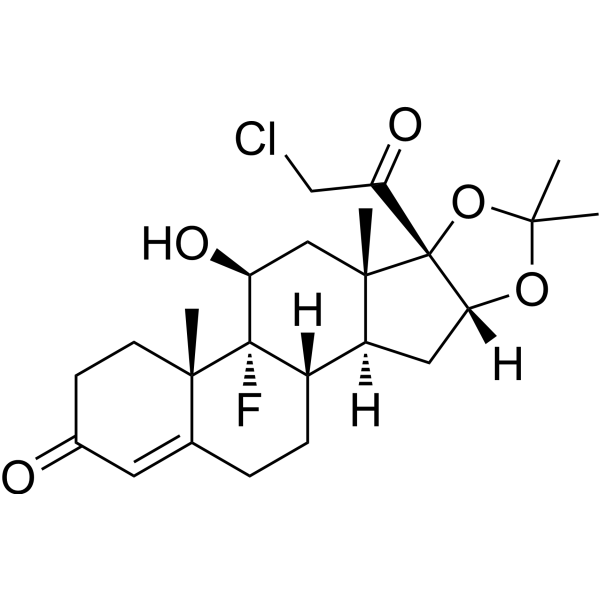
HY-B0877
HalcinonideSmo Activator -
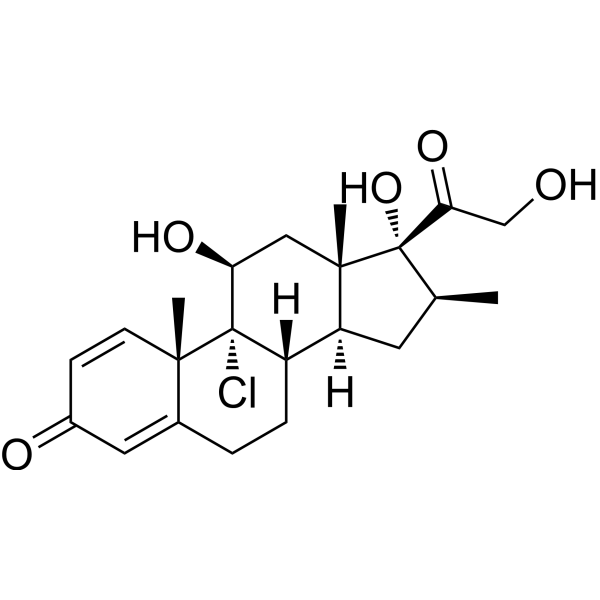
HY-B1540
BeclometasoneGlucocorticoid Receptor Agonist -
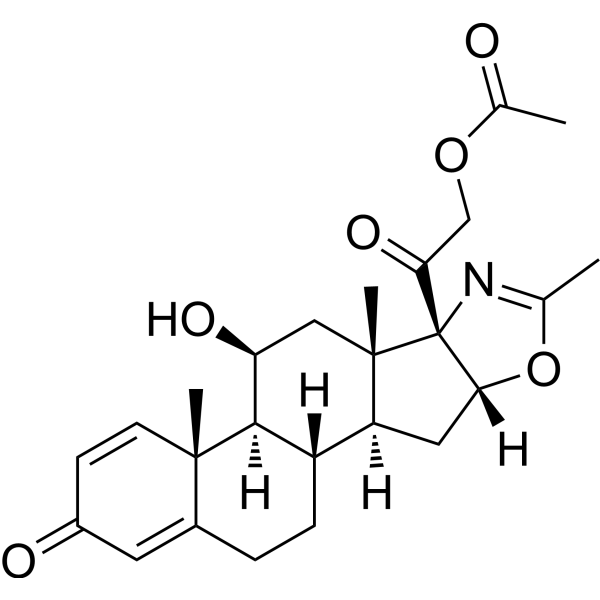
HY-13609
DeflazacortGlucocorticoid -
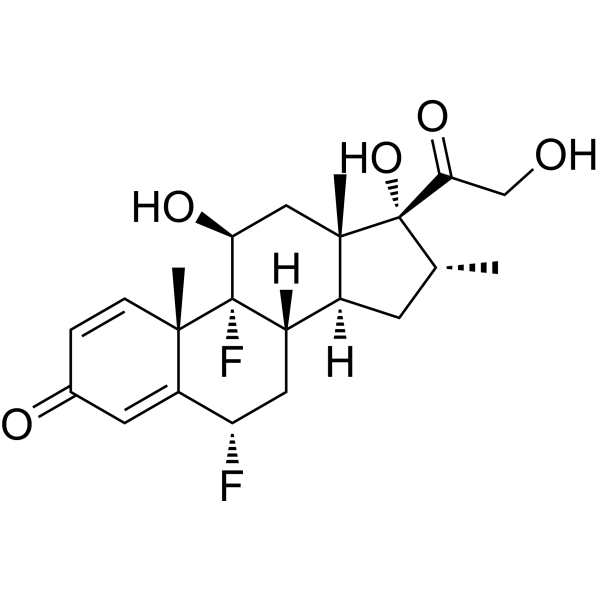
HY-B1051
FlumethasoneGR Agonist -
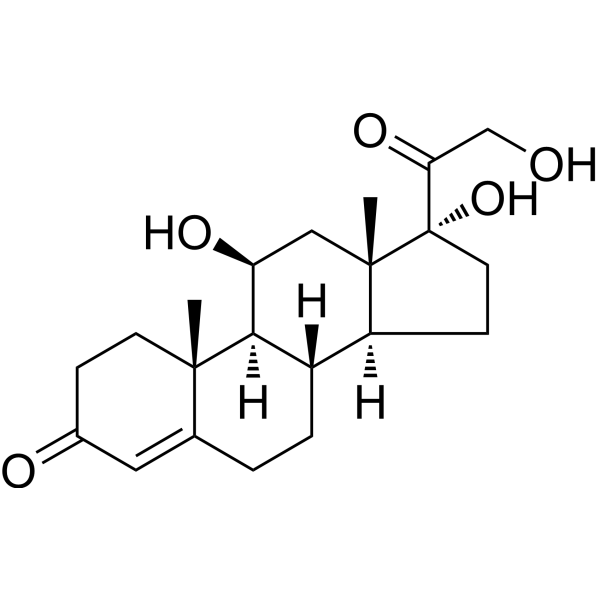
HY-N0583
HydrocortisoneGlucocorticoid Receptor Agonist -
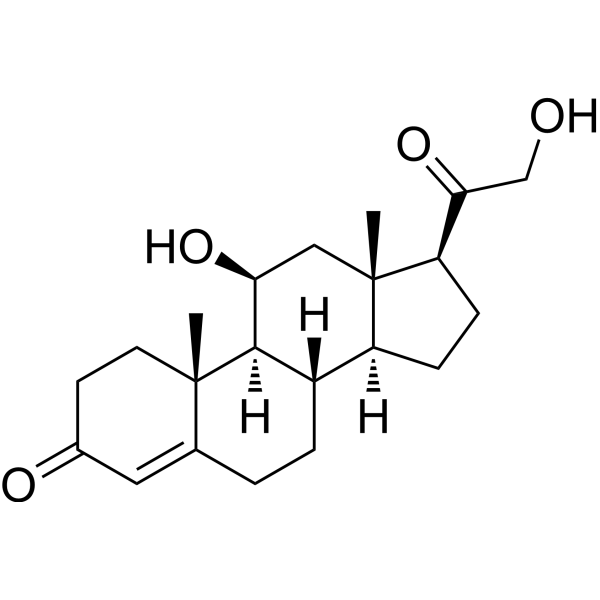
HY-B1618
CorticosteroneEndogenous Glucocorticoids -
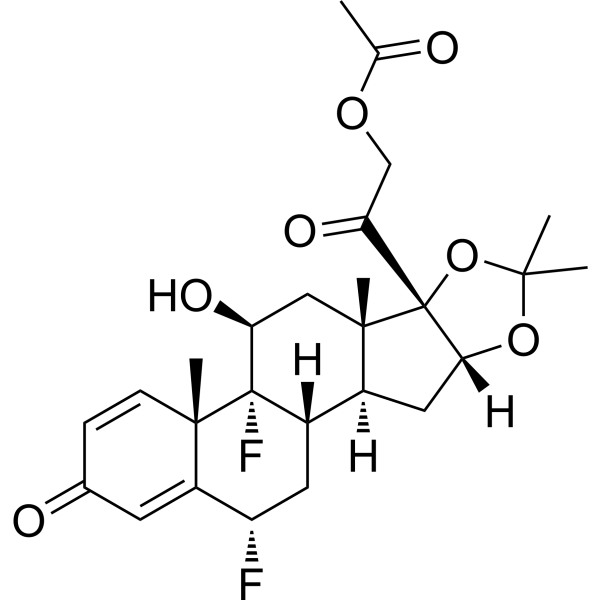
HY-B0485R
Fluocinonide (Standard) -
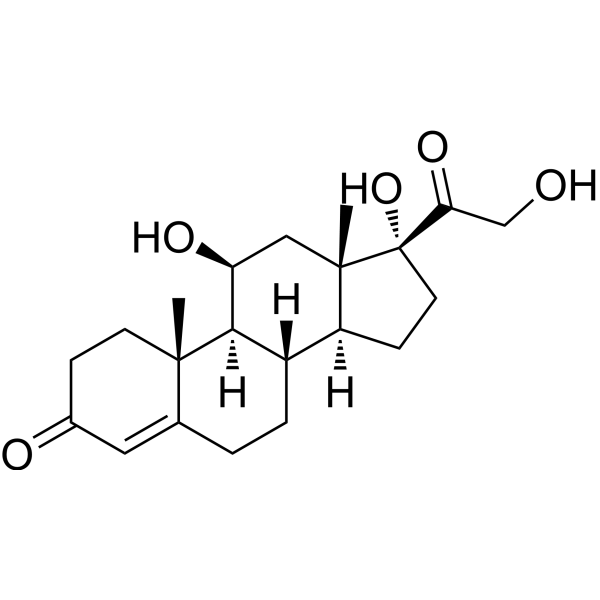
HY-N0583R
Hydrocortisone (Standard) -
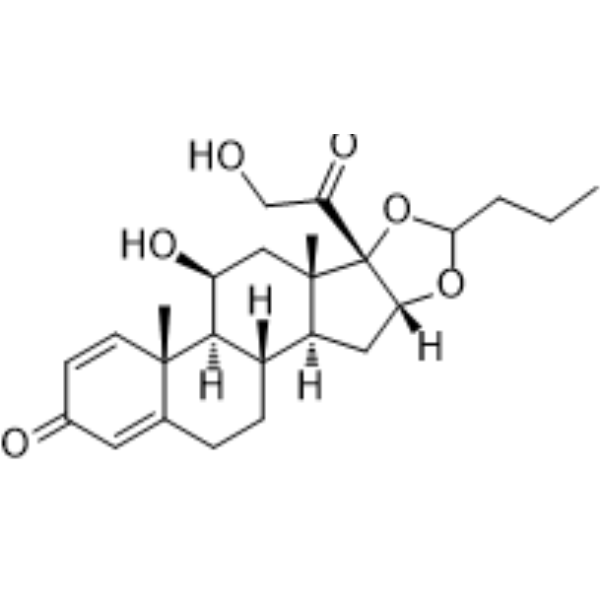
HY-13580
BudesonideGlucocorticoid Receptor Agonist -
HY-B1618R
Corticosterone (Standard)


Actividad biológica
Descripciòn
Ensayo clínico
| NCT Number | Sponsor | Condition | Start Date |
Phase

|
|---|---|---|---|---|
| NCT01329991 | Plexxikon| | 2011-05 | PHASE1 |


Chemical Information
-
No. CAS 356-12-7
-
Appearance Solid
-
Peso molecular 494.52
-
Fòrmula C26H32F2O7
-
Color White to off-white
-
SMILES
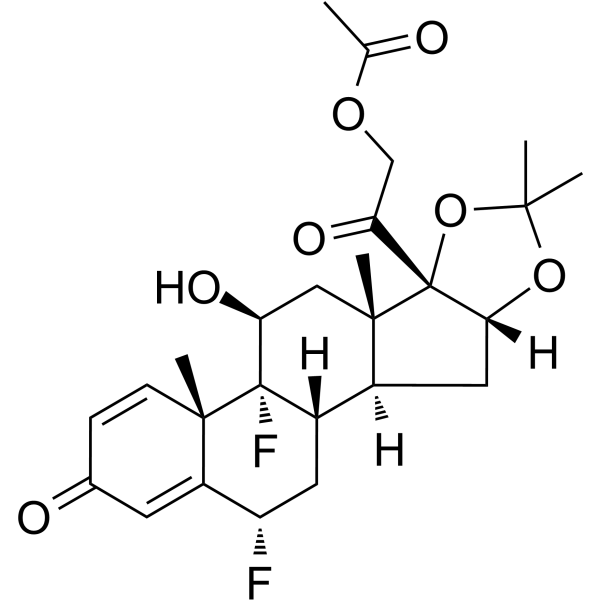
O=C([C@]([C@@]1([H])C[C@@]2([H])[C@@](C[C@H](F)C3=CC4=O)([H])[C@@](F)([C@]3(C=C4)C)[C@@H](O)C5)(OC(C)(C)O1)[C@]25C)COC(C)=O
-
Envío
Room temperature in continental US; may vary elsewhere.
-
Almacenamiento
Powder -20°C 3 years 4°C 2 years In solvent -80°C 2 years -20°C 1 year


Solvente y solubilidad
In Vitro:
DMSO : 100 mg/mL (202.22 mM; Need ultrasonic; Hygroscopic DMSO has a significant impact on the solubility of product, please use newly opened DMSO)
H2O : < 0.1 mg/mL (insoluble)
Please refer to the solubility information to select the appropriate solvent. Once prepared, please aliquot and store the solution to prevent product inactivation from repeated freeze-thaw cycles.
Storage method and period of stock solution: -80°C, 2 years; -20°C, 1 year. When stored at -80°C, please use it within 2 years. When stored at -20°C, please use it within 1 year.
Please refer to the solubility information to select the appropriate solvent. Once prepared, please aliquot and store the solution to prevent product inactivation from repeated freeze-thaw cycles.
Storage method and period of stock solution: -80°C, 2 years; -20°C, 1 year. When stored at -80°C, please use it within 2 years. When stored at -20°C, please use it within 1 year.
Concentration (start) × Volume (start) = Concentration (final) × Volume (final)
In Vivo:
Select the appropriate dissolution method based on your experimental animal and administration route.
- For the following dissolution methods, please ensure to first prepare a clear stock solution using an In Vitro approach and then sequentially add co-solvents:
- To ensure reliable experimental results, the clarified stock solution can be appropriately stored based on storage conditions. As for the working solution for In Vivo experiments, it is recommended to prepare freshly and use it on the same day.
- The percentages shown for the solvents indicate their volumetric ratio in the final prepared solution. If precipitation or phase separation occurs during preparation, heat and/or sonication can be used to aid dissolution.
In Vivo Dissolution Calculator
Please enter the basic information of animal experiments:
-
-
-
-
Recommended: Prepare an additional quantity of animals to account for potential losses during experiments.
Please enter your animal formula composition:
-
%DMSO +
Recommended: Keep the proportion of DMSO in working solution below 2% if your animal is weak.
-
%+
-
+%Tween-80 + +
-
%Saline +
The co-solvents required include: DMSO, . All of co-solvents are available by MedChemExpress (MCE). , Tween 80. All of co-solvents are available by MedChemExpress (MCE).
Working solution concentration: 0.22 mg/mL
Method for preparing stock solution: mg drug dissolved in μL DMSO. Stock solution concentration: mg/mL.
1. Take μL DMSO stock solution;
2. Add μL .
μL , mix evenly;
3. Then add μL Tween 80, mix evenly;
4. Then add μL
Please ensure that the stock solution in the first step is dissolved to a clear state, and add co-solvents in sequence. You can use ultrasonic heating (ultrasonic cleaner, recommended frequency 20-40 kHz), vortexing, etc. to assist dissolution.

Protocolo
-
Research Protocol for Endocrine Diseases
Endocrine diseases often arise from disrupted hormone production, hormone signaling, or target-tissue responsiveness; for diabetes-focused endocrine disease models, insulin signaling regulates glucose uptake, hepatic glucose output, lipid metabolism, and β-cell compensation. Type 2 diabetes develops through interacting defects in insulin resistance, β-cell dysfunction, adipose inflammation, hepatic glucose overproduction, altered incretin signaling, and ectopic lipid metabolism. A major unresolved question is whether endocrine dysfunction is driven primarily by target-tissue insulin resistance, intrinsic β-cell failure, immune/inflammatory stress, or combined multi-organ failure that differs by disease stage.
-
Research Protocol for Inflammation-related Diseases
The NLRP3 inflammasome is a cytosolic innate immune signaling platform that integrates priming signals and danger-signal activation to promote caspase-1 activation, maturation of IL-1β and IL-18, and gasdermin D-mediated pyroptotic cell death. The core experimental logic is to determine whether inflammatory disease phenotypes are driven by increased NLRP3 expression, ASC-containing inflammasome assembly, caspase-1 cleavage, GSDMD cleavage, and extracellular release of IL-1β/IL-18 rather than by nonspecific cell injury alone. The pathway is strongly linked to inflammation-related disease phenotypes because monosodium urate crystals activate NALP3/NLRP3 inflammasome signaling in gout-like crystal inflammation, cholesterol crystals activate NLRP3 inflammasomes in atherogenesis models, and DSS-induced intestinal inflammation has been reported to involve NLRP3 inflammasome activity. However, experimental colitis studies also show context-dependent protective effects of NLRP3 inflammasome co


Pureza y Documentación
-
Ficha de datos (277 KB)
-
SDS (583 KB)
- English - EN (583 KB)
- Français - FR (583 KB)
- Deutsch - DE (583 KB)
- Norwegian - NO (583 KB)
- Español - ES (583 KB)
- Swedish - SV (583 KB)
- Italian - IT (583 KB)
- Korean - KR (583 KB)
- Portuguese - PT (583 KB)
-
Instrucciones de manejo (2659 KB)
Referencias


Complete Stock Solution Preparation Table
Please refer to the solubility information to select the appropriate solvent. Once prepared, please aliquot and store the solution to prevent product inactivation from repeated freeze-thaw cycles.
Storage method and period of stock solution: -80°C, 2 years; -20°C, 1 year. When stored at -80°C, please use it within 2 years. When stored at -20°C, please use it within 1 year.
| Optional Solvent | Concentration Solvent Mass | 1 mg | 5 mg | 10 mg | 25 mg |
|---|---|---|---|---|---|
| DMSO | 1 mM | 2.0222 mL | 10.1108 mL | 20.2216 mL | 50.5541 mL |
| 5 mM | 0.4044 mL | 2.0222 mL | 4.0443 mL | 10.1108 mL | |
| 10 mM | 0.2022 mL | 1.0111 mL | 2.0222 mL | 5.0554 mL | |
| 15 mM | 0.1348 mL | 0.6741 mL | 1.3481 mL | 3.3703 mL | |
| 20 mM | 0.1011 mL | 0.5055 mL | 1.0111 mL | 2.5277 mL | |
| 25 mM | 0.0809 mL | 0.4044 mL | 0.8089 mL | 2.0222 mL | |
| 30 mM | 0.0674 mL | 0.3370 mL | 0.6741 mL | 1.6851 mL | |
| 40 mM | 0.0506 mL | 0.2528 mL | 0.5055 mL | 1.2639 mL | |
| 50 mM | 0.0404 mL | 0.2022 mL | 0.4044 mL | 1.0111 mL | |
| 60 mM | 0.0337 mL | 0.1685 mL | 0.3370 mL | 0.8426 mL | |
| 80 mM | 0.0253 mL | 0.1264 mL | 0.2528 mL | 0.6319 mL | |
| 100 mM | 0.0202 mL | 0.1011 mL | 0.2022 mL | 0.5055 mL |


Fluocinonide Related Classifications
HY-B0485 Related Classifications
 Powered by Bioz