



CM037
Based on 1 publication(s) in Google Scholar
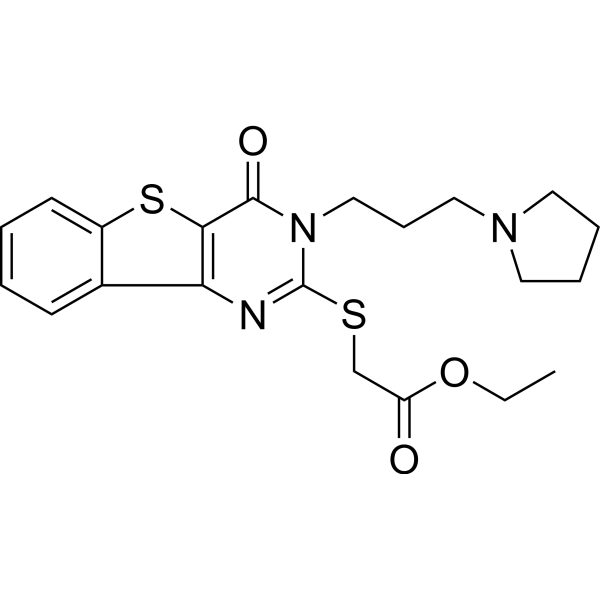
CM037 is a highly selective and competitive ALDH1A1 inhibitor (IC50=4.6 μM). CM037 blocks the catalytic activity of ALDH1A1, thereby inhibiting the activation of the downstream HIF-1α/VEGF pathway. CM037 is mainly used to study the ALDH1A1-mediated regulation of cancer stem cells (CSCs) and angiogenesis, especially in breast cancer, showing the potential to inhibit tumor angiogenesis and stem cell characteristics.
For research use only. We do not sell to patients.
- Purity : 99.55%
- CAS No.: 896795-60-1
- Formula: C21H25N3O3S2
- Molecular Weight:431.57
-
Storage:Powder -20°C, 3 years , 4°C, 2 years ; In solvent -80°C, 6 months , -20°C, 1 month

To place orders, for customer services and technical support, please contact: MedChemExpress USA
Tel: 609-228-6898 E-mail: [email protected] [email protected]


-
 Biological Activity
-
Chemical Information
-
Solvent & Solubility
- Protocols
- Purity & Documentation
- References
-
 Help & FAQs


-
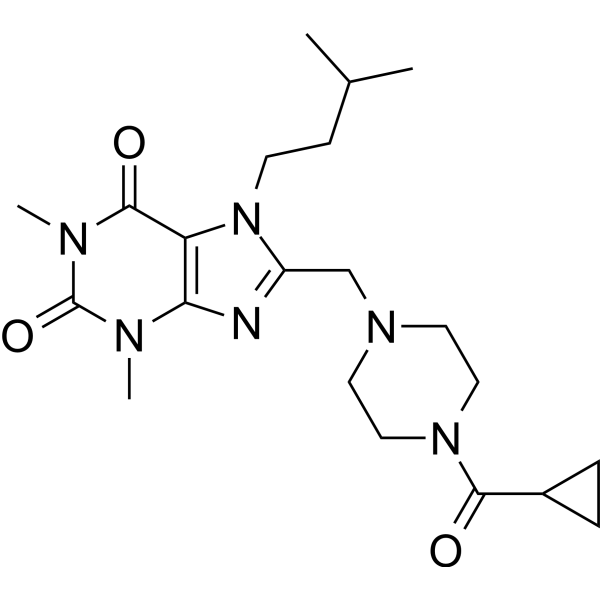
HY-18768
NCT-501ALDH1A1 Inhibitor -
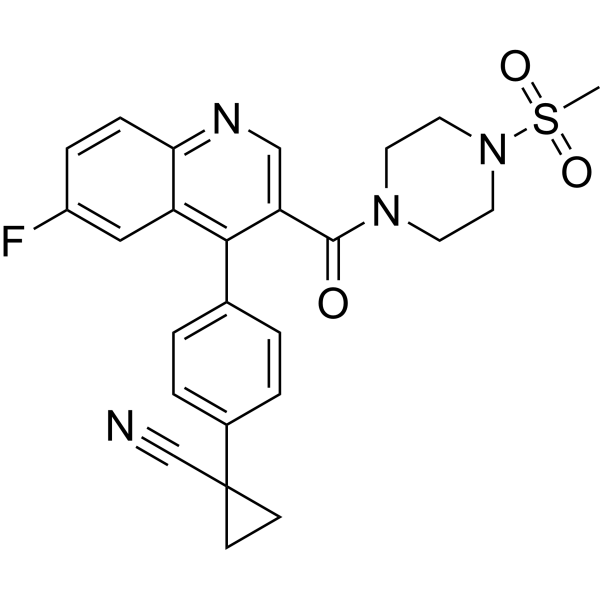
HY-112278
NCT-506ALDH Inhibitor -
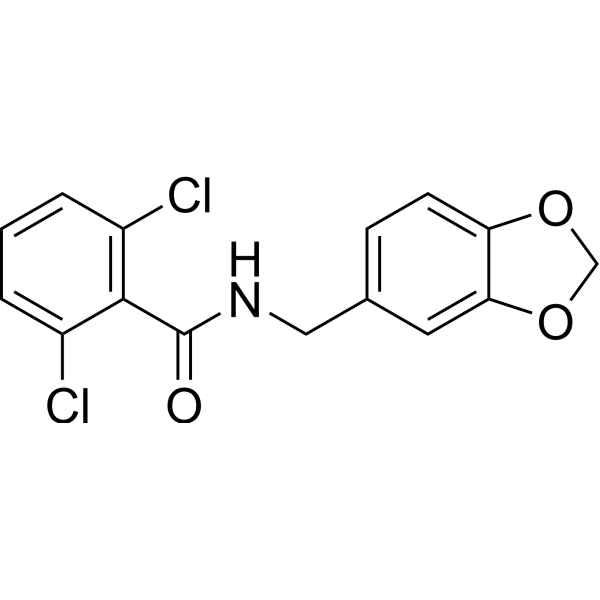
HY-18936
Alda-1ALDH2 Agonist -
HY-W011094
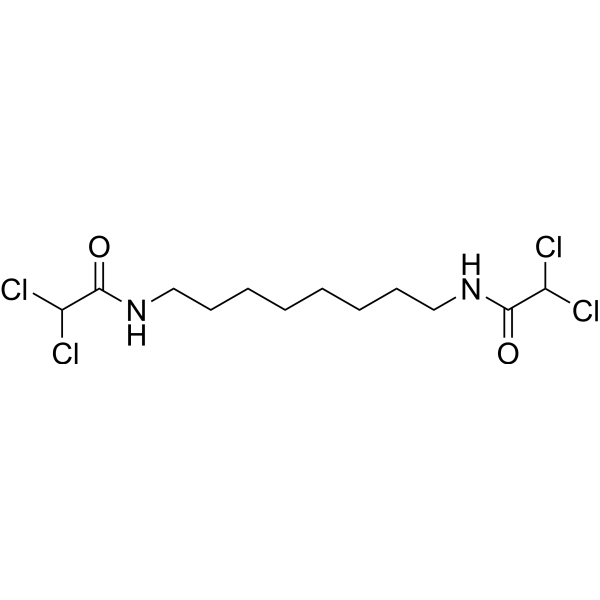
Win 18446ALDH1a2 Inhibitor -
HY-W016645
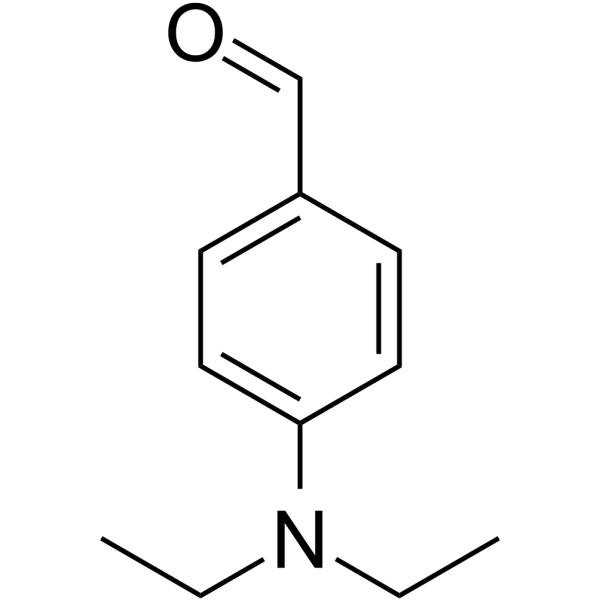
4-DiethylaminobenzaldehydeALDH Inhibitor -
HY-15128
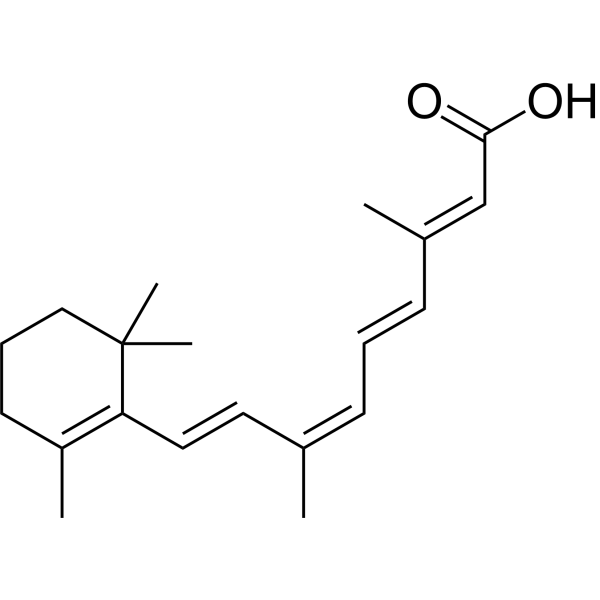
9-cis-Retinoic acidRAR/RXR Agonist -
HY-19801
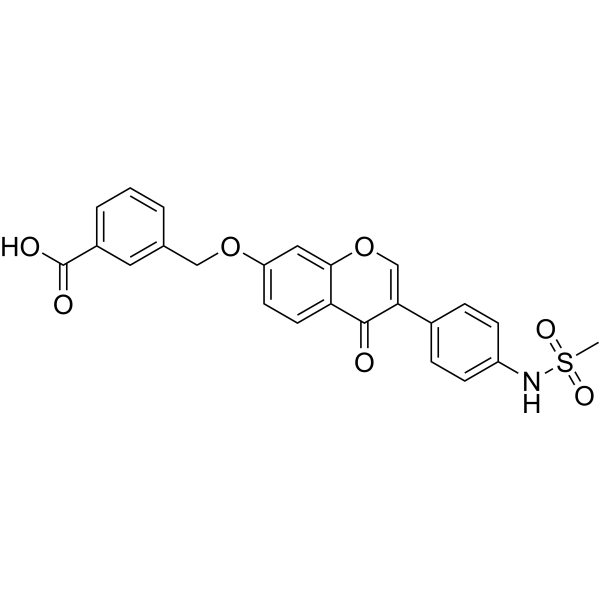
CVT-10216ALDH-2 Inhibitor -

HY-169884
MCI-INI-3ALDH1A3 Inhibitor -
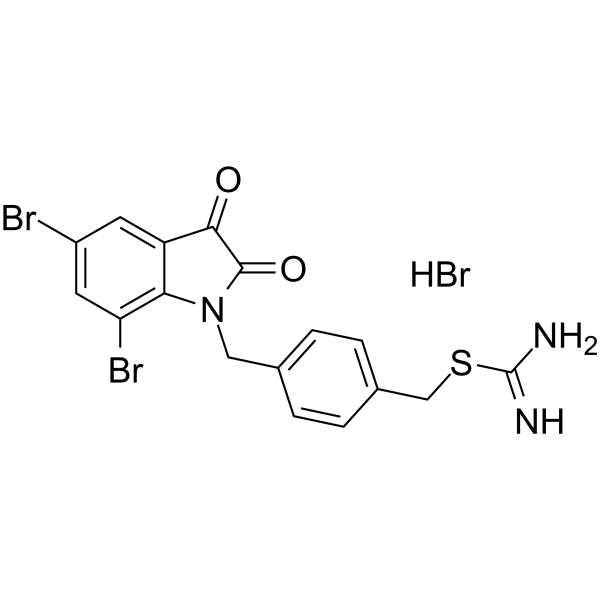
HY-146682
KS100ALDH Inhibitor -
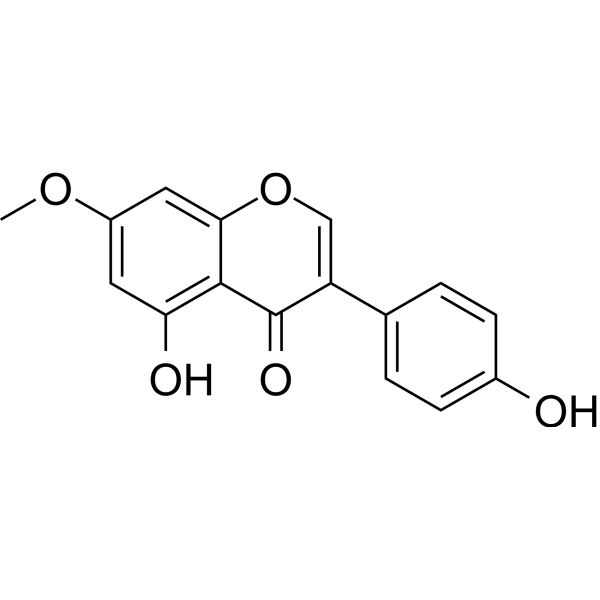
HY-N2597
PrunetinAldehyde Dehydrogenases Inhibitor -
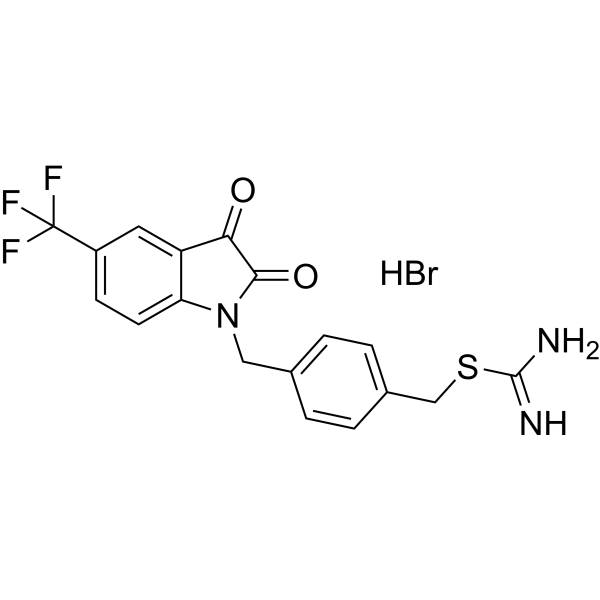
HY-146683
KS106ALDH Inhibitor -
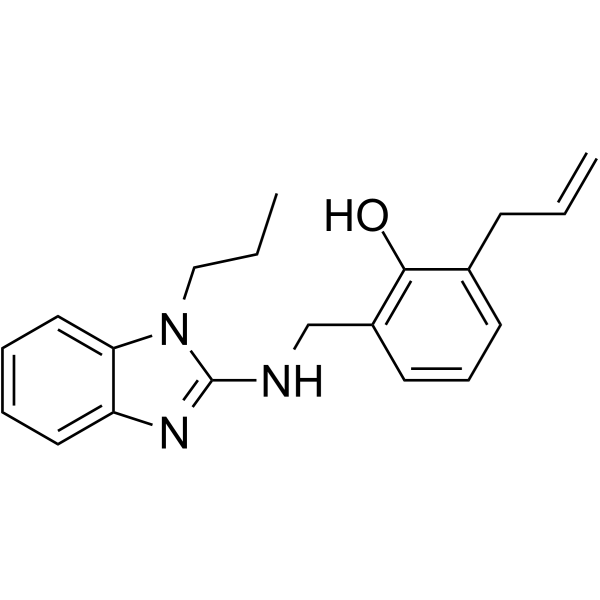
HY-135841
CM010ALDH1A Inhibitor
Publications Citing Use of MedChemExpress (MCE) CM037
More

Biological Activity
Description
IC50 & Target
|
ALDH1 |
Cellular Effect
|
Cell Line

|
Type | Value | Description | References |
|---|---|---|---|---|
| OV-90 | EC50 |
3.96 μM
Compound: 2
|
Cytotoxicity against 3D culture of human OV90 cells assessed as decrease in cell viability after 6 days by CellTiter-Glo assay
Cytotoxicity against 3D culture of human OV90 cells assessed as decrease in cell viability after 6 days by CellTiter-Glo assay
|
[PMID: 29767973] |
In Vitro
Cell viability and VEGF release experiments: CM037 (10 μM; 18 h) dose-dependently downregulates the expression and secretion of VEGF in MCF-7 cells and inhibited the proliferation and migration of endothelial cells[2].
Western blot experiment: CM037 (1 μM, 10 μM; 18 h) significantly reduces the levels of HIF-1α and VEGF proteins and blocked the RA/RAR signaling pathway[2].
MedChemExpress (MCE) has not independently confirmed the accuracy of these methods. They are for reference only. Further protocols information, click here.
-
Cell Line:MCF-7 breast cancer cells
-
Concentration:1-10 μM
-
Incubation Time:18-48 h
-
Result:Dose-dependently reduced VEGF secretion (ELISA) and HIF-1α expression (WB) in MCF-7 cells, without significant cytotoxicity (MTT assay).
-
Cell Line:MCF-7 cells
-
Concentration:1 μM
-
Incubation Time:48 h
-
Result:Decreased phosphorylated RARα and HIF-1α protein levels, concurrent with reduced VEGF expression, indicating inhibition of RA/RAR-mediated angiogenic signaling.


Chemical Information
-
CAS No. 896795-60-1
-
Appearance Solid
-
Molecular Weight 431.57
-
Formula C21H25N3O3S2
-
Color Light brown to brown
-
SMILES
O=C1C2=C(N=C(SCC(OCC)=O)N1CCCN3CCCC3)C4=CC=CC=C4S2
-
Synonyms
A37
-
Shipping
Room temperature in continental US; may vary elsewhere.
-
Storage
Powder -20°C 3 years 4°C 2 years In solvent -80°C 6 months -20°C 1 month


Publications (1)
-
Journal Impact Factor
-
Most Recent
-
iScience
Development of retinoid nuclear receptor pathway antagonists through targeting aldehyde dehydrogenase 1A3. [Abstract]2025 Oct 3;28(11):113675. PMID: 41210994


Solvent & Solubility
In Vitro:
DMSO : 83.33 mg/mL (193.09 mM; ultrasonic and warming and heat to 60°C; Hygroscopic DMSO has a significant impact on the solubility of product, please use newly opened DMSO)
Please refer to the solubility information to select the appropriate solvent. Once prepared, please aliquot and store the solution to prevent product inactivation from repeated freeze-thaw cycles.
Storage method and period of stock solution: -80°C, 6 months; -20°C, 1 month. When stored at -80°C, please use it within 6 months. When stored at -20°C, please use it within 1 month.
Please refer to the solubility information to select the appropriate solvent. Once prepared, please aliquot and store the solution to prevent product inactivation from repeated freeze-thaw cycles.
Storage method and period of stock solution: -80°C, 6 months; -20°C, 1 month. When stored at -80°C, please use it within 6 months. When stored at -20°C, please use it within 1 month.
Concentration (start) × Volume (start) = Concentration (final) × Volume (final)

Protocols
-
Human pluripotent stem cell endothelial-cell differentiation
Human pluripotent stem cell endothelial differentiation is based on stepwise developmental patterning: early activation of WNT/GSK3β inhibition promotes mesodermal or vascular progenitor entry, followed by endothelial specification using VEGF-related signaling, BMP4, FGF2, Notch modulation, or cAMP depending on the published protocol. Endothelial differentiation is read out by acquisition of CD31, CD34, VE-cadherin/CD144, KDR/VEGFR2, vWF, Tie2, NOS3, acetylated LDL uptake, tube/network formation, barrier function, and in vivo vessel-forming capacity where tested.
-
Cell Cytotoxicity Assay
Cytotoxicity assays are usually based on the assessment of cell membrane damage, which can also be indirectly detected by measuring cell viability. Detection methods include MTT assay, CKK-8 assay, LDH assay and ATP assay, etc.
-
Vascular/Branching Fractal Analysis
Vascular/branching fractal analysis quantifies the geometric complexity of vessel trees or vascular networks from segmented 2D images, commonly by converting vessels into binary and/or skeletonized maps and estimating fractal dimension using box-counting or related approaches. Fractal dimension is interpreted as an image-derived readout of vascular branching complexity, space filling, or density, and has been applied to retinal photographs, fluorescein angiography, OCT angiography, capillary perfusion maps, and in vitro Matrigel angiogenesis networks. The assay readout is generated from vessel-positive pixels after image preprocessing, vessel segmentation, binarization, and optional skeletonization; reported outputs include fractal dimension, vessel density, branchpoint density, endpoint density, vessel length density, tortuosity, and generation-based branching metrics when VESGEN-style analysis is used. The biological interpretation is limited to quantitative vascular patterning and s
-
Endothelial Tube Formation Assay
Endothelial tube formation assay evaluates the ability of endothelial cells to attach, migrate, align, and organize into capillary-like networks when cultured on gelled basement membrane extract or Matrigel; the readout is the morphology and quantity of tube-like networks, which reflects an in vitro endothelial morphogenesis step related to angiogenesis. Basement membrane extract/Matrigel provides laminin-rich extracellular matrix cues that support endothelial differentiation into capillary-like structures, but it can contain biologically active growth factors, so growth-factor-reduced matrix is preferred when testing defined angiogenic stimulators or inhibitors.
-
Breast Cancer Modeling
Breast cancer is a heterogeneous cancer, and it has been distinguished into four subtypes: luminal A, luminal B, HER2-positive and basal-like. Molecular mutations, epigenetic alterations, hormone exposure and immune microenvironment are related to the progression of breast cancer.
-
Endothelial Cell Migration/Angiogenic Sprouting Assay
Endothelial cell migration and angiogenic sprouting assays are in vitro (and partially ex vivo-adapted) functional models that quantify the ability of endothelial cells to undergo coordinated migration, extracellular matrix invasion, and multicellular organization into capillary-like sprouts in response to pro-angiogenic stimuli such as VEGF, bFGF, or conditioned microenvironments. These assays are used to model early angiogenic events including tip-cell formation, directional migration, and lumen-like sprout extension, which collectively reflect angiogenic activation and vascular morphogenesis processes observed in vivo.


Purity & Documentation
-
Data Sheet (275 KB)
-
SDS (393 KB)
- English - EN (393 KB)
- Français - FR (393 KB)
- Deutsch - DE (393 KB)
- Norwegian - NO (393 KB)
- Español - ES (393 KB)
- Swedish - SV (393 KB)
- Italian - IT (393 KB)
- Korean - KR (393 KB)
- Portuguese - PT (393 KB)
-
Handling Instructions (2659 KB)
References
[1]. Morgan CA, et al. Characterization of two distinct structural classes of selective aldehyde dehydrogenase 1A1 inhibitors. J Med Chem. 2015 Feb 26;58(4):1964-75.[Content Brief] [Content Brief]
[2]. Ciccone V, et al. Stemness marker ALDH1A1 promotes tumor angiogenesis via retinoic acid/HIF-1α/VEGF signalling in MCF-7 breast cancer cells. J Exp Clin Cancer Res. 2018 Dec 12;37(1):311. [Content Brief]


Complete Stock Solution Preparation Table
Please refer to the solubility information to select the appropriate solvent. Once prepared, please aliquot and store the solution to prevent product inactivation from repeated freeze-thaw cycles.
Storage method and period of stock solution: -80°C, 6 months; -20°C, 1 month. When stored at -80°C, please use it within 6 months. When stored at -20°C, please use it within 1 month.
| Optional Solvent | Concentration Solvent Mass | 1 mg | 5 mg | 10 mg | 25 mg |
|---|---|---|---|---|---|
| DMSO | 1 mM | 2.3171 mL | 11.5856 mL | 23.1712 mL | 57.9280 mL |
| 5 mM | 0.4634 mL | 2.3171 mL | 4.6342 mL | 11.5856 mL | |
| 10 mM | 0.2317 mL | 1.1586 mL | 2.3171 mL | 5.7928 mL | |
| 15 mM | 0.1545 mL | 0.7724 mL | 1.5447 mL | 3.8619 mL | |
| 20 mM | 0.1159 mL | 0.5793 mL | 1.1586 mL | 2.8964 mL | |
| 25 mM | 0.0927 mL | 0.4634 mL | 0.9268 mL | 2.3171 mL | |
| 30 mM | 0.0772 mL | 0.3862 mL | 0.7724 mL | 1.9309 mL | |
| 40 mM | 0.0579 mL | 0.2896 mL | 0.5793 mL | 1.4482 mL | |
| 50 mM | 0.0463 mL | 0.2317 mL | 0.4634 mL | 1.1586 mL | |
| 60 mM | 0.0386 mL | 0.1931 mL | 0.3862 mL | 0.9655 mL | |
| 80 mM | 0.0290 mL | 0.1448 mL | 0.2896 mL | 0.7241 mL | |
| 100 mM | 0.0232 mL | 0.1159 mL | 0.2317 mL | 0.5793 mL |


CM037 Related Classifications
HY-110294 Related Classifications
 Powered by Bioz