



Y 9000
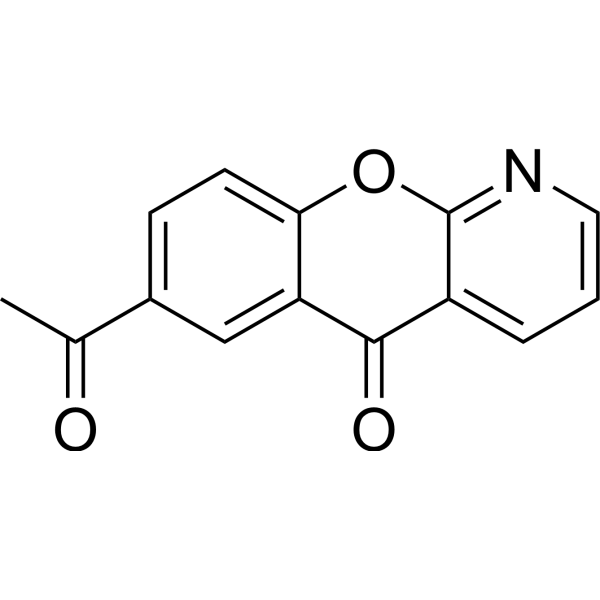
Y 9000 is an orally active antiallergic and anti-inflammatory compound. Y 9000 targets mast cells, inhibits the release of allergic mediators, stimulates the adrenal glands, exhibits glucocorticoid-like activity, and reduces adrenal ascorbic acid content. Y 9000 inhibits IgE-mediated and IgG-mediated allergic reactions as well as active systemic anaphylaxis in mice. Y 9000 inhibits allergic wheezing in passively sensitized guinea pigs and protects against active systemic anaphylactic shock in mice. Y 9000 inhibits non-immune responses in rats, including dextran-induced histamine release, anaphylactoid reactions and paw swelling. Y 9000 can be used in the research of allergic diseases (asthma, allergic rhinitis, urticaria, etc.).
For research use only. We do not sell to patients.
- CAS No.: 53944-40-4
- Formula: C14H9NO3
- Molecular Weight:239.23
-
Storage:
Please store the product under the recommended conditions in the Certificate of Analysis.

To place orders, for customer services and technical support, please contact: MedChemExpress USA
Tel: 609-228-6898 E-mail: [email protected] [email protected]


-
 Biological Activity
-
Chemical Information
- Protocols
- Purity & Documentation
- References
-
 Help & FAQs




Biological Activity
Description
In Vivo
Y 9000 (50-250 mg/kg; p.o.; single dose 1 hour pre-antigen; 5-100 mg/kg; i.p.; single dose 30 minutes pre-antigen; 25-100 mg/kg; p.o.; single dose 1 hour pre-antigen in adrenalectomized rats) inhibits IgG-mediated 4-hour heterologous PCA in intact rats in a dose-dependent manner, with an oral ED50 of 75 mg/kg and intraperitoneal ED50 of 14 mg/kg, and this inhibitory effect is reduced in adrenalectomized rats[1].
Y 9000 (5-25 mg/kg; i.p.; single dose 30 minutes pre-antigen; 100 mg/kg; p.o.; single dose 2 hours pre-antigen) inhibits IgE-mediated active anaphylactic bronchoconstriction in sensitized rats in a dose-dependent manner via intraperitoneal and oral routes[1].
Y 9000 (25-100 mg/kg; i.p.; single dose 30 minutes pre-aerosol challenge) inhibits IgG-mediated anaphylactic asthma in passively sensitized guinea pigs via intraperitoneal administration, with an ED50 of 50 mg/kg[1].
Y 9000 (100-500 mg/kg; p.o.; single dose 1 hour pre-antigen; 10-100 mg/kg; i.p.; single dose 30 minutes pre-antigen) dose-dependently protects against active systemic anaphylaxis in sensitized mice, with an oral ED50 of ~250 mg/kg and intraperitoneal ED50 of 50 mg/kg[1].
Y 9000 (2.5-25 mg/kg; p.o.; single dose 1 hour pre-induction; 0.5-10 mg/kg; i.p.; single dose 30 minutes pre-induction) inhibits egg albumin-induced anaphylactoid reactions in rats in a dose-dependent manner via oral and intraperitoneal routes, with an oral ED50 of 4 mg/kg and intraperitoneal ED50 of 1 mg/kg[1].
MedChemExpress (MCE) has not independently confirmed the accuracy of these methods. They are for reference only.
-
Animal Model:Wistar rats (male, 180g body weight; male, 200g body weight; allergic reaction model via 48-hour homologous passive cutaneous anaphylaxis induced by anti-egg albumin rat serum or anti-dinitrophenol-ascaris rat serum)[1]
-
Dosage:5-50 mg/kg (p.o.); 0.5-50 mg/kg (i.p.)
-
Administration:p.o.; single dose 1 hour pre-antigen; i.p.; single dose 30 minutes pre-antigen
-
Result:Suppressed egg albumin-triggered PCA dose-dependently via oral and intraperitoneal routes, with oral ED50 of 11 mg/kg and intraperitoneal ED50 of 2.7 mg/kg.
Suppressed DNP-As-induced PCA orally in a serum dilution-dependent fashion, with ED50 values of 30 mg/kg (1:30), 11 mg/kg (1:50) and ~4 mg/kg (1:100).
-
Animal Model:Wistar rats (male, 180g body weight; adrenalectomized male, 180g body weight, 5 days post-surgery; allergic reaction model via 4-hour heterologous passive cutaneous anaphylaxis induced by anti-egg albumin rabbit serum)[1]
-
Dosage:50-250 mg/kg (p.o. intact rats); 5-100 mg/kg (i.p. intact rats); 25-100 mg/kg (p.o. adrenalectomized rats)
-
Administration:p.o.; single dose 1 hour pre-antigen; i.p.; single dose 30 minutes pre-antigen
-
Result:Suppressed IgG-dependent 4 hr heterologous PCA in normal rats dose-dependently, with oral ED50 = 75 mg/kg and intraperitoneal ED50 = 14 mg/kg.
Suppressed IgG-dependent 4 hr heterologous PCA by 26% and 61% at oral 25 mg/kg and 100 mg/kg in adrenalectomized rats.
-
Animal Model:Wistar rats (female, 200g body weight; allergic asthma model via active anaphylactic bronchoconstriction induced by egg albumin and Bordetella pertussis vaccine sensitization)[1]
-
Dosage:5-25 mg/kg (i.p.); 100 mg/kg (p.o.)
-
Administration:i.p.; single dose 30 minutes pre-antigen; p.o.; single dose 2 hours pre-antigen
-
Result:Suppressed antigen-triggered anaphylactic bronchoconstriction dose-dependently via intraperitoneal injection and matched the potency of disodium cromoglycate; oral 100 mg/kg also exerted prominent suppressive effects.
-
Animal Model:Guinea pigs (male, 300-400g body weight; allergic asthma model via anaphylactic asthma induced by passive sensitization with anti-egg albumin rabbit serum and egg albumin aerosol challenge)[1]
-
Dosage:25-100 mg/kg
-
Administration:i.p.; single dose 30 minutes pre-aerosol challenge
-
Result:Protected 0/10, 5/10, 6/10 animals from anaphylactic asthma at intraperitoneal doses of 25 mg/kg, 50 mg/kg, 100 mg/kg respectively, with an ED50 of 50 mg/kg.
-
Animal Model:ICR mice (female, 20-25g body weight; allergic reaction model via active systemic anaphylaxis induced by egg albumin and Bordetella pertussis vaccine sensitization)[1]
-
Dosage:100-500 mg/kg (p.o.); 10-100 mg/kg (i.p.)
-
Administration:p.o.; single dose 1 hour pre-antigen; i.p.; single dose 30 minutes pre-antigen
-
Result:Suppressed lethal active systemic anaphylaxis dose-dependently.
-
Animal Model:Wistar rats (male, 180-200g body weight; anaphylactoid reaction model via egg albumin-induced anaphylactoid reaction)[1]
-
Dosage:2.5-25 mg/kg (p.o.); 0.5-10 mg/kg (i.p.)
-
Administration:p.o.; single dose 1 hour pre-induction; i.p.; single dose 30 minutes pre-induction
-
Result:Suppressed egg albumin-evoked anaphylactoid responses dose-dependently, with oral ED50 of 4 mg/kg and intraperitoneal ED50 of 1 mg/kg; intraperitoneal potency was approximately 3.4-fold higher than disodium cromoglycate.


Chemical Information
-
CAS No. 53944-40-4
-
Molecular Weight 239.23
-
Formula C14H9NO3
-
SMILES
O=C1C2=CC(C(C)=O)=CC=C2OC3=NC=CC=C31
-
Shipping
Room temperature in continental US; may vary elsewhere.
-
Storage
Please store the product under the recommended conditions in the Certificate of Analysis.

Protocols
-
Collagen-Induced Arthritis
Collagen-induced arthritis (CIA) is an autoimmune murine model of rheumatoid arthritis in which immunization with type II collagen (CII) emulsified in an adjuvant induces a T cell- and autoantibody-driven inflammatory arthritis characterized by synovial hyperplasia, immune cell infiltration, and joint destruction. The model typically relies on genetically susceptible mouse strains (e. g. , DBA/1) and reproduces key features of human rheumatoid arthritis, including anti-collagen immune responses and progressive joint inflammation. Disease onset generally occurs within ~3-4 weeks after immunization, depending on antigen/adjuvant combinations and protocol variation. The immunopathology is driven by adaptive immune activation against CII, leading to systemic and local joint inflammation mediated by pro-inflammatory cytokines and effector immune cells, making CIA a standard preclinical platform for evaluating immunomodulatory and anti-arthritic interventions.
-
Research Protocol for Endocrine Diseases
Endocrine diseases often arise from disrupted hormone production, hormone signaling, or target-tissue responsiveness; for diabetes-focused endocrine disease models, insulin signaling regulates glucose uptake, hepatic glucose output, lipid metabolism, and β-cell compensation. Type 2 diabetes develops through interacting defects in insulin resistance, β-cell dysfunction, adipose inflammation, hepatic glucose overproduction, altered incretin signaling, and ectopic lipid metabolism. A major unresolved question is whether endocrine dysfunction is driven primarily by target-tissue insulin resistance, intrinsic β-cell failure, immune/inflammatory stress, or combined multi-organ failure that differs by disease stage.
-
Research Protocol for Inflammation-related Diseases
The NLRP3 inflammasome is a cytosolic innate immune signaling platform that integrates priming signals and danger-signal activation to promote caspase-1 activation, maturation of IL-1β and IL-18, and gasdermin D-mediated pyroptotic cell death. The core experimental logic is to determine whether inflammatory disease phenotypes are driven by increased NLRP3 expression, ASC-containing inflammasome assembly, caspase-1 cleavage, GSDMD cleavage, and extracellular release of IL-1β/IL-18 rather than by nonspecific cell injury alone. The pathway is strongly linked to inflammation-related disease phenotypes because monosodium urate crystals activate NALP3/NLRP3 inflammasome signaling in gout-like crystal inflammation, cholesterol crystals activate NLRP3 inflammasomes in atherogenesis models, and DSS-induced intestinal inflammation has been reported to involve NLRP3 inflammasome activity. However, experimental colitis studies also show context-dependent protective effects of NLRP3 inflammasome co


Purity & Documentation
References

Calculators
Concentration (start) × Volume (start) = Concentration (final) × Volume (final)


Y 9000 Related Classifications
HY-123013 Related Classifications
 Powered by Bioz
Keywords
- Y 9000
- 53944-40-4
- Y9000
- Y-9000
- Biochemical Assay Reagents
- IgG-mediated reactions
- dextran-induced histamine release
- IgE-mediated reactions
- glucocorticoid-like activity
- allergic diseases
- paw edema
- mouse active systemic anaphylactic reactions
- anaphylactoid reaction
- allergic mediators
- adrenals
- Inhibitor
- inhibitor
- inhibit