



Ulinastatin
Based on 5 publication(s) in Google Scholar
Ulinastatin (Uristatin) is a trypsin and serine protease inhibitor. Ulinastatin is the main protein binding inhibitor of various trypsin, chymotrypsin, and various pancreatic proteases. Ulinastatin shows neuroprotective, anti-inflammatory, anti-apoptotic, anti-oxidant effects.
For research use only. We do not sell to patients.
- CAS No.: 80449-31-6
-
Storage:
-20°C, protect from light
* In solvent : -80°C, 6 months; -20°C, 1 month (protect from light)

To place orders, for customer services and technical support, please contact: MedChemExpress USA
Tel: 609-228-6898 E-mail: [email protected] [email protected]


-
 Biological Activity
-
Chemical Information
-
Solvent & Solubility
- Protocols
- Purity & Documentation
- References
-
 Help & FAQs


-
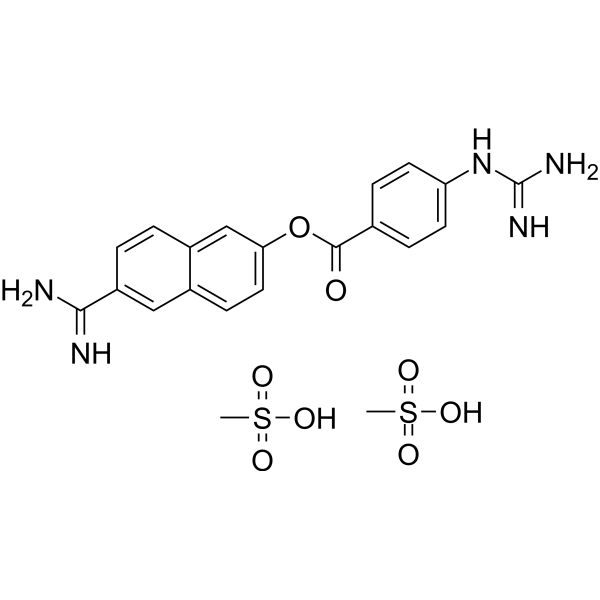
HY-B0190A
Nafamostat mesylateSerine Protease Inhibitor -
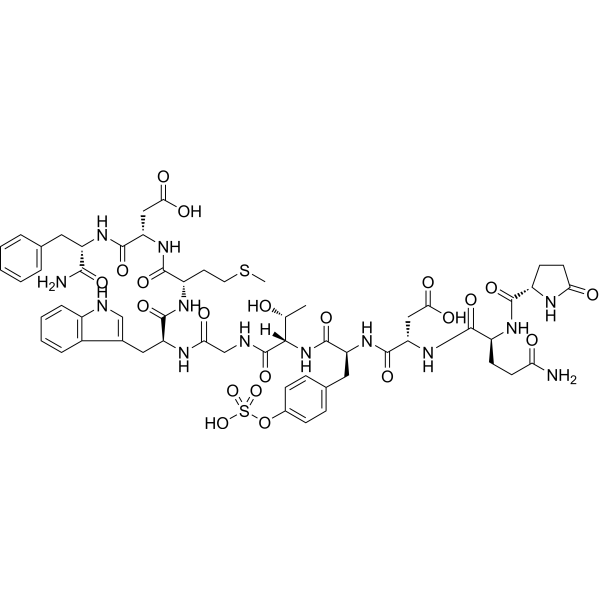
HY-A0190
CaeruleinCholecystokinin Receptor Agonist -
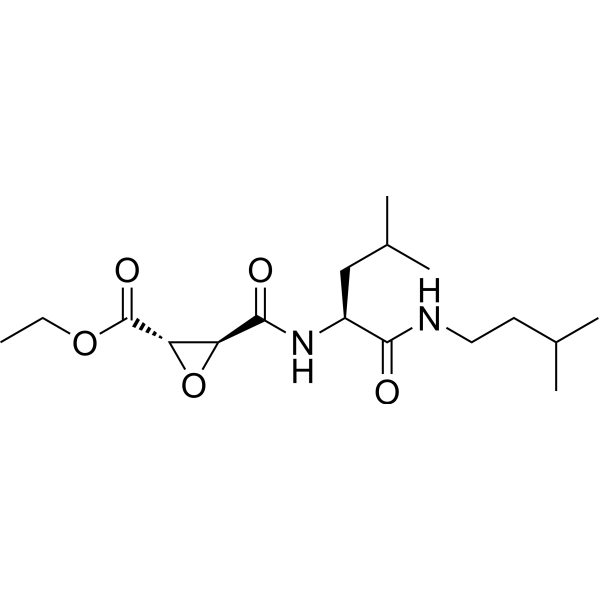
HY-100229
AloxistatinCysteine Protease Inhibitor -
HY-W090090
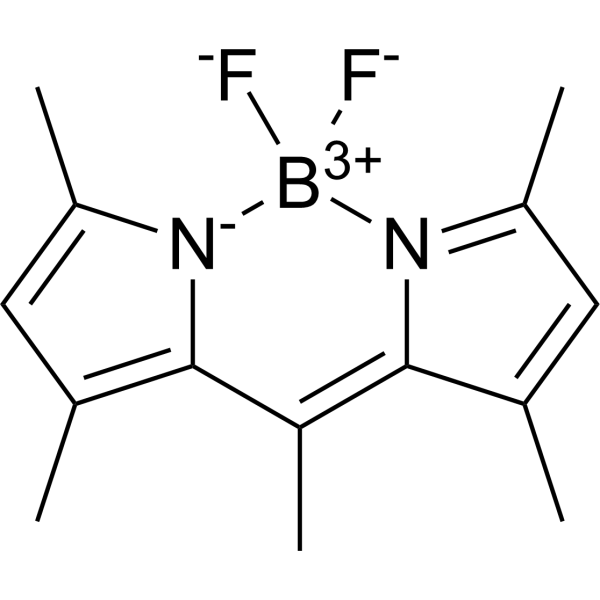
BODIPY 493/503Neutral Lipid Dye -
HY-10431
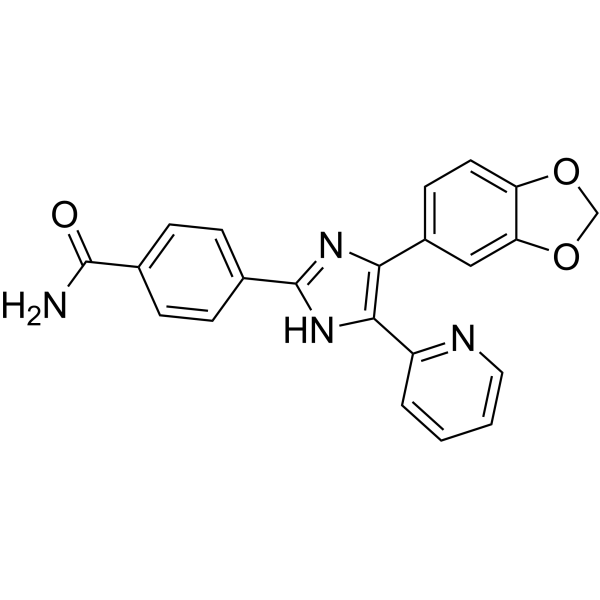
SB-431542TGF-β Receptor Kinase Inhibitor -
HY-P0017
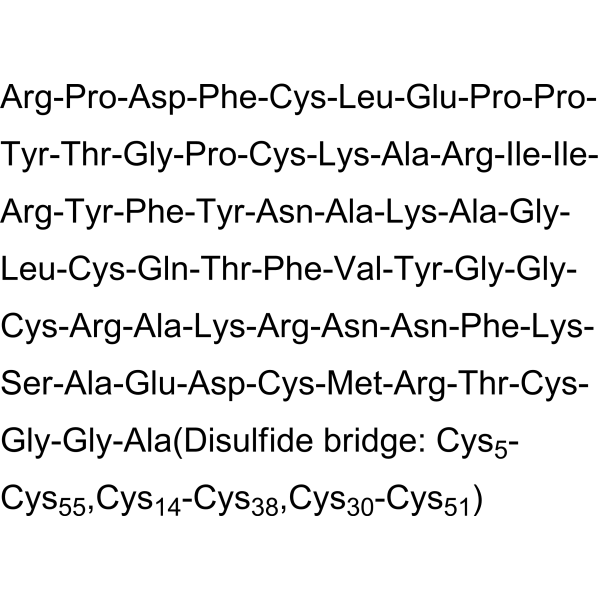
AprotininBPTI Inhibitor -
HY-19727A
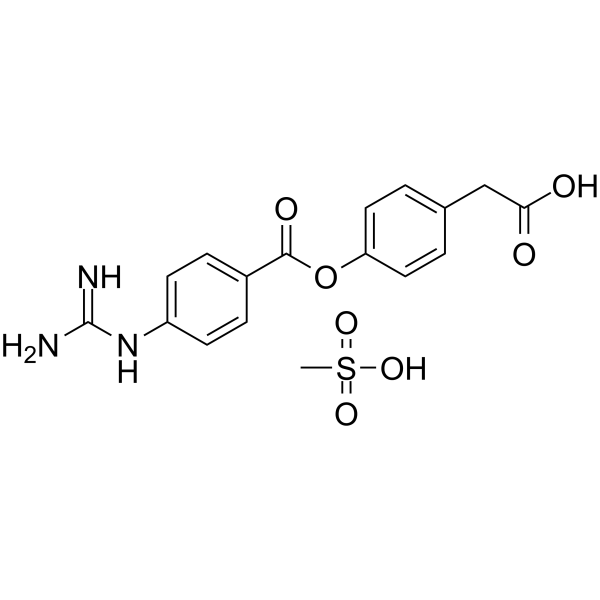
FOY 251Proteinase Inhibitor -

HY-B0190AR
Nafamostat mesylate (Standard)Serine Protease Inhibitor -
HY-E70203
Recombinant aprotininSerine Protease Inhibitor -

HY-19727AR
FOY 251 (Standard)Proteinase Inhibitor -
HY-15651
AlvelestatNeutrophil Elastase Inhibitor -
HY-B0385
Gabexate mesylateProteasome Inhibitor
Publications Citing Use of MedChemExpress (MCE) Ulinastatin
More Customer Validation & Images

-
Histological Imaging/Staining

-
IF

-
RT-PCR

-
WB

-
IHC


Biological Activity
Description
In Vitro
Ulinastatin (500-5000 U; 24 hours) markedly attenuates TLR4 expression and NF-κB activation in LPS-stimulated BEAS-2B cells[1].
MedChemExpress (MCE) has not independently confirmed the accuracy of these methods. They are for reference only. Further protocols information, click here.
-
Cell Line:Human lung epithelial BEAS-2B cells
-
Concentration:500 U, 2500 U, 5000 U
-
Incubation Time:24 hours
-
Result:Markedly attenuated TLR4 expression and NF-κB activation in LPS-stimulated BEAS-2B cells.
In Vivo
MedChemExpress (MCE) has not independently confirmed the accuracy of these methods. They are for reference only.
-
Animal Model:Male C57BL/6 mice (8-10 weeks old, 18-22 g)[1]
-
Dosage:10000 U/kg
-
Administration:i.v.; twice (1 h before and 6 h after LPS treatment)
-
Result:Significantly protected animals from LPS-induced ALI.
Clinical Trial
| NCT Number | Sponsor | Condition | Start Date |
Phase

|
|---|---|---|---|---|
| NCT01329991 | Plexxikon| | 2011-05 | PHASE1 |


Chemical Information
-
CAS No. 80449-31-6
-
Appearance Solid
-
Color White to off-white
-
SMILES
[Ulinastatin]
-
Synonyms
Uristatin
-
Shipping
Room temperature in continental US; may vary elsewhere.
-
Storage
-20°C, protect from light
* In solvent : -80°C, 6 months; -20°C, 1 month (protect from light)


Publications (5)
-
Journal Impact Factor
-
Most Recent
-
Phytomedicine
Qingjie Huagong decoction inhibits pancreatic acinar cell pyroptosis by regulating circHipk3/miR-193a-5p/NLRP3 pathway. [Abstract]2024 Apr:126:155265. PMID: 38422649 -
Acta Pharmacol Sin
A sinomenine derivative protects life-threatening inflammatory injuries via covalently binding to a novel allosteric inhibition site of IRF3. [Abstract]2026 Jan 16. PMID: 41545756 -
Eur J Pharmacol
Octreotide attenuates experimental severe acute pancreatitis through inhibiting pyroptosis and modulating intestinal homeostasis. [Abstract]2025 May 5:994:177314. PMID: 39922420 -
J Ovarian Res
2025 Sep 29;18(1):207. PMID: 41024007
Ulinastatin purchased from MedChemExpress. Usage Cited in: J Ovarian Res. 2025 Sep 29;18(1):207. [Abstract]
H&E staining results of rat ovaries treated with cisplatin on days 14 and 35 treated with Ulinastatin (15, 30 mg/kg, i.p.).
Ulinastatin purchased from MedChemExpress. Usage Cited in: J Ovarian Res. 2025 Sep 29;18(1):207. [Abstract]
TUNEL staining of ovarian tissues of rats treated with Ulinastatin (15, 30 mg/kg, i.p.).
Ulinastatin purchased from MedChemExpress. Usage Cited in: J Ovarian Res. 2025 Sep 29;18(1):207. [Abstract]
qPCR results of Keap1, Nrf2, TGFβ-1, FN, Cleaved-caspase3, BAX, and Bcl2 in cells of each group after treatment with Ulinastatin (15, 30 mg/kg, i.p.) on day 14 using Cisplatin.
Ulinastatin purchased from MedChemExpress. Usage Cited in: J Ovarian Res. 2025 Sep 29;18(1):207. [Abstract]
WB results of Keap1, Nrf2, TGFβ-1, FN, Cleaved-caspase3, BAX, and Bcl2 in cells of each group after treatment with Ulinastatin (15, 30 mg/kg, i.p.) on days 14 and 35 using Cisplatin.
Ulinastatin purchased from MedChemExpress. Usage Cited in: J Ovarian Res. 2025 Sep 29;18(1):207. [Abstract]
Immunohistochemical results of Keap1, Nrf2, TGFβ-1, and FN in cells of each group after treatment with Ulinastatin (15, 30 mg/kg, i.p.) on day 14 of Cisplatin use.
-


Solvent & Solubility
In Vitro:
H2O : 10 mg/mL (Need ultrasonic)
DMSO : 1 mg/mL (Need ultrasonic; Hygroscopic DMSO has a significant impact on the solubility of product, please use newly opened DMSO)

Protocols
-
Apoptosis
Apoptosis, also called programmed cell death, is generally characterized by distinct morphological characteristics.
-
Immunoprecipitation
Immunoprecipitation (IP) is an experimental method that uses the principle of antibody specific binding to purify and enrich target proteins.
-
Apoptosis Solutions
Apoptosis is a regulated, generally non-lytic cell-death pathway that removes unwanted, damaged, infected, or abnormal cells through coordinated morphological changes, caspase activation, DNA fragmentation, and membrane remodeling. The intrinsic apoptosis pathway is controlled mainly by mitochondrial outer membrane permeabilization, BCL-2 family proteins, cytochrome c release, apoptosome formation, caspase-9 activation, and downstream executioner caspase-3/7 activation. The extrinsic apoptosis pathway is initiated by death receptors such as Fas, TNFR, and TRAIL receptors, which recruit adaptor proteins and activate caspase-8 before engaging executioner caspases or mitochondrial amplification through BID cleavage. Apoptosis is linked to many phenotypes, including cancer cell killing, tissue homeostasis, immune regulation, neurodegeneration, infection response, and treatment-induced cytotoxicity; unresolved questions include how apoptosis interacts with necroptosis, pyroptosis, ferroptos
-
Research Protocol for Inflammation-related Diseases
The NLRP3 inflammasome is a cytosolic innate immune signaling platform that integrates priming signals and danger-signal activation to promote caspase-1 activation, maturation of IL-1β and IL-18, and gasdermin D-mediated pyroptotic cell death. The core experimental logic is to determine whether inflammatory disease phenotypes are driven by increased NLRP3 expression, ASC-containing inflammasome assembly, caspase-1 cleavage, GSDMD cleavage, and extracellular release of IL-1β/IL-18 rather than by nonspecific cell injury alone. The pathway is strongly linked to inflammation-related disease phenotypes because monosodium urate crystals activate NALP3/NLRP3 inflammasome signaling in gout-like crystal inflammation, cholesterol crystals activate NLRP3 inflammasomes in atherogenesis models, and DSS-induced intestinal inflammation has been reported to involve NLRP3 inflammasome activity. However, experimental colitis studies also show context-dependent protective effects of NLRP3 inflammasome co


Purity & Documentation
-
Data Sheet (270 KB)
-
SDS (251 KB)
- English - EN (251 KB)
- Français - FR (251 KB)
- Deutsch - DE (251 KB)
- Norwegian - NO (251 KB)
- Español - ES (251 KB)
- Swedish - SV (251 KB)
- Italian - IT (251 KB)
- Korean - KR (251 KB)
- Portuguese - PT (251 KB)
-
Handling Instructions (2659 KB)
References
[1]. Shangping Fang, et al. Research progress of ulinastatin in the treatment of liver diseases. Int J Clin Exp Pathol. 2020 Nov 1;13(11):2720-2726. [Content Brief]
[2]. Cao C, et al. Ulinastatin Protects Against LPS-Induced Acute Lung Injury By Attenuating TLR4/NF-κB Pathway Activation and Reducing Inflammatory Mediators. Shock. 2018 Nov;50(5):595-605. [Content Brief]

Calculators
Concentration (start) × Volume (start) = Concentration (final) × Volume (final)


Ulinastatin Related Classifications
HY-134616 Related Classifications
 Powered by Bioz