



Thyroglobulin

Based on 1 Customer Validation
Thyroglobulin is a 660 kDa, dimeric glycoprotein produced by the follicular cells of the thyroid and used entirely within the thyroid gland. Thyroglobulin acts as a substrate for the synthesis of the thyroid hormones thyroxine (T4) and triiodothyronine (T3), as well as the storage of the inactive forms of thyroid hormone and iodine within the follicular lumen of a thyroid follicle. Thyroglobulin activates Akt kinase activity in FRTL-5 thyroid cell.
商品は「研究用試薬」です。人や動物の医療用・臨床診断用・食品用の製品ではありません。
研究用途以外に使用した場合、当社は一切の責任を負いかねます。
- 純度 : 93%
- CAS 番号: 9010-34-8
-
保管条件:
Please store the product under the recommended conditions in the Certificate of Analysis.

To place orders, for customer services and technical support, please contact: MedChemExpress USA
Tel: 609-228-6898 E-mail: [email protected] [email protected]


-
 生物活性
生物活性
-
化学情報
- プロトコル
- 純度とドキュメンテーション
- 参考文献
-
 Help & FAQs


-

HY-W250978
OvalbuminsAllergen -
HY-P3160
FibronectinTissue Injury Biomarker -
HY-NP008
β-LactoglobulinGlobular Protein -

HY-P3160C
Fibronectin, bovine plasmaFibronectin Dderived From Bovine Plasma -

HY-W134328
Blue dextran (MW 2000000)Polyglucose -
HY-P1791
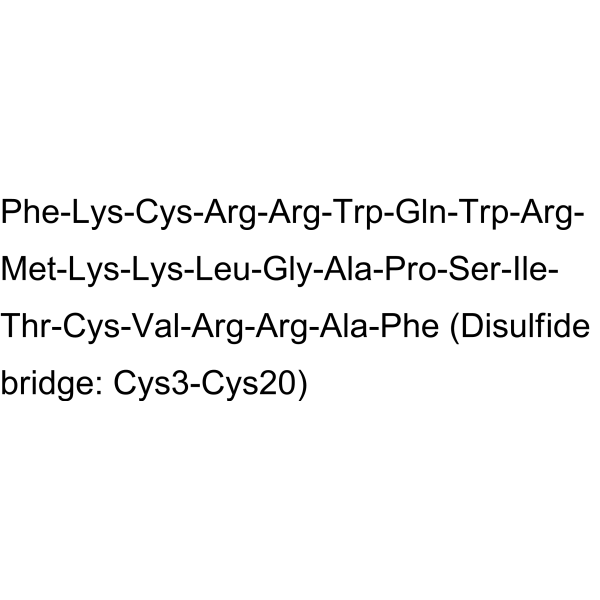
Lactoferrin (17-41)Antimicrobial/Antitumor Agent -
HY-P3025
Salmine sulfateAntimicrobial Protein


生物活性
製品説明
IC50 & Target
others
体外実験
Thyroglobulin (0-10 mg/mL; 12 h to 5 days) stimulates cell growth and DNA synthesis in quiescent FRTL-5 thyroid cells, with maximal activity at 5 mg/mL and reduced activity at higher concentrations[1].
Thyroglobulin (5 mg/mL; 12 h) does not increase cAMP levels in FRTL-5 thyroid cells[1].
Thyroglobulin (5 mg/mL; 30-180 min) activates Akt kinase activity in FRTL-5 thyroid cells within 30 min[1].
Thyroglobulin (0-10 mg/mL) suppresses TPO promoter activity in FRTL-5 thyroid cells in vitro in a concentration-dependent manner[1].
Thyroglobulin (0-10 mg/mL; 24 h) modulates PDS mRNA expression in FRTL-5 thyroid cells, with maximal expression at 5 mg/mL and reduced expression at higher concentrations[1].
MedChemExpress (MCE) has not independently confirmed the accuracy of these methods. They are for reference only.
-
Cell Line:rat FRTL-5 thyroid cells
-
Concentration:5 mg/mL (cell counting; maximal ³H-TdR incorporation); 0-10 mg/mL (³H-TdR concentration dependence)
-
Incubation Time:up to 5 days (cell counting); 12 h (³H-TdR incorporation)
-
Result:Increased cell number to levels comparable to complete medium (TSH + insulin + 5% serum) over 5 days using 5 mg/mL. Maximized ³H-TdR incorporation at 5 mg/mL, and reduced incorporation at 10 mg/mL.
臨床実験
| NCT Number | Sponsor | Condition | Start Date |
Phase

|
|---|---|---|---|---|
| NCT01329991 | 2011-05 | PHASE1 |


化学情報
-
CAS 番号 9010-34-8
-
性状 Solid
-
Color Light brown to brown
-
SMILES
[Thyroglobulin]
-
別名
チログロブリン; Thyroglobulin from bovine
-
輸送条件
Room temperature in continental US; may vary elsewhere.
-
保管条件
Please store the product under the recommended conditions in the Certificate of Analysis.


純度とドキュメンテーション
-
データシート (273 KB)
-
SDS (251 KB)
- English - EN (251 KB)
- Français - FR (251 KB)
- Deutsch - DE (251 KB)
- Norwegian - NO (251 KB)
- Español - ES (251 KB)
- Swedish - SV (251 KB)
- Italian - IT (251 KB)
- Korean - KR (251 KB)
- Portuguese - PT (251 KB)
-
取扱説明書 (2659 KB)
参考文献

Calculators
濃度 (開始) × 体積 (開始) = 濃度 (終了) × 体積 (終了)


Thyroglobulin 関連分類
HY-107903 関連分類
 Powered by Bioz