



Cligosiban
Based on 7 publication(s) in Google Scholar
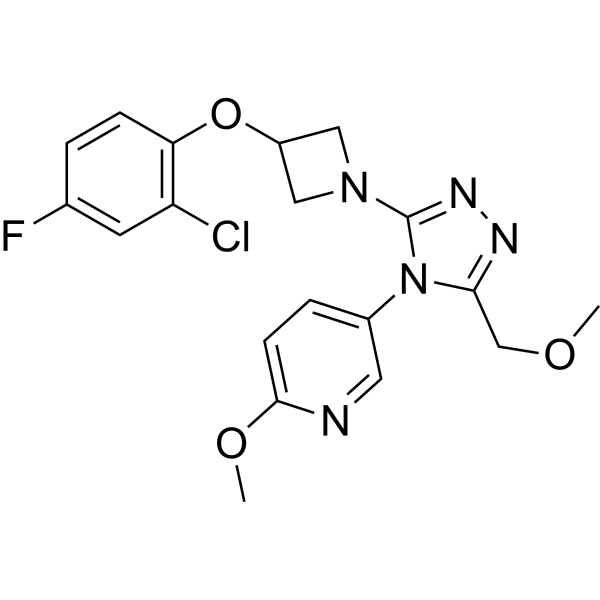
Cligosiban (PF-3274167) is an orally active, highly selective, and centrally permeable oxytocin receptor antagonist with good pharmacokinetics in rats and can inhibit physiological ejaculation in rodents[1][2].
연구목적의 판매만을 진행합니다. 환자를 대상으로 한 판매는 하지 않습니다.
- Purity : 99.95%
- CAS No.: 900510-03-4
- 화학식: C19H19ClFN5O3
- 분자량:419.84
-
보관:Powder -20°C, 3 years , 4°C, 2 years ; In solvent -80°C, 2 years , -20°C, 1 year

To place orders, for customer services and technical support, please contact: MedChemExpress USA
Tel: 609-228-6898 E-mail: [email protected] [email protected]


-
 Biological Activity
-
Chemical Information
-
용액&용해도
- Protocol
- 순도&문서
- References
-
 Help & FAQs


-
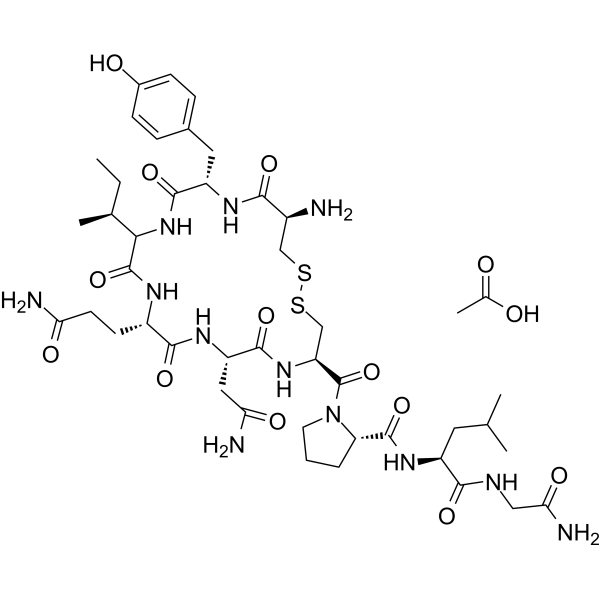
HY-17571A
Oxytocin acetateHypothalamic Peptide -
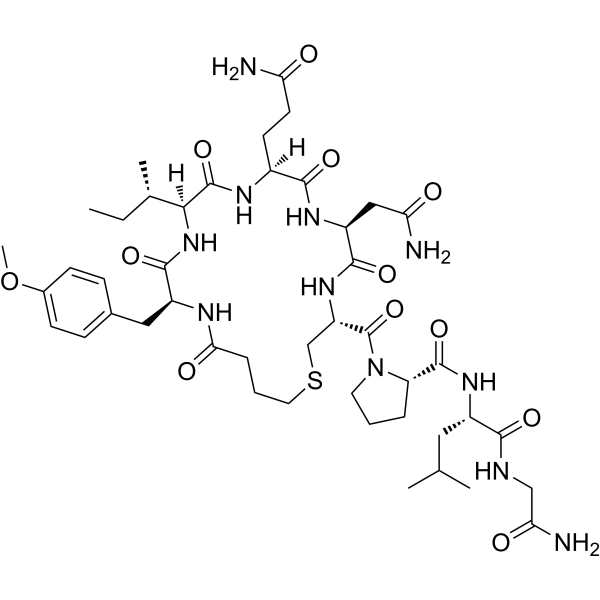
HY-17573
CarbetocinOxytocin Receptor Agonist -
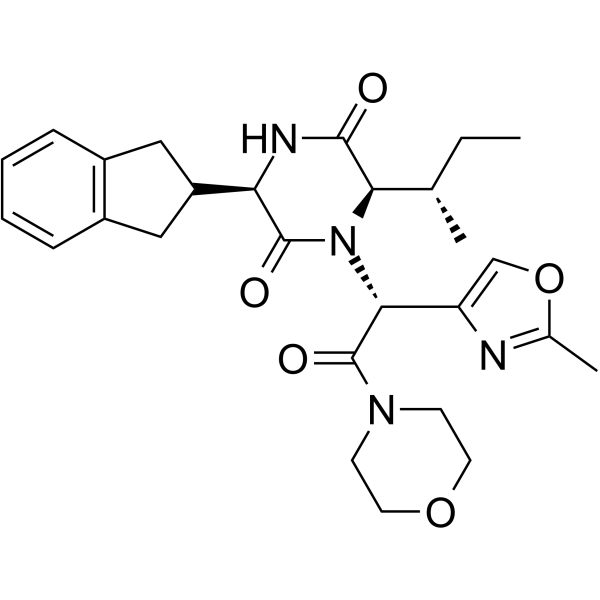
HY-14778
RetosibanOxytocin Receptor Antagonist -
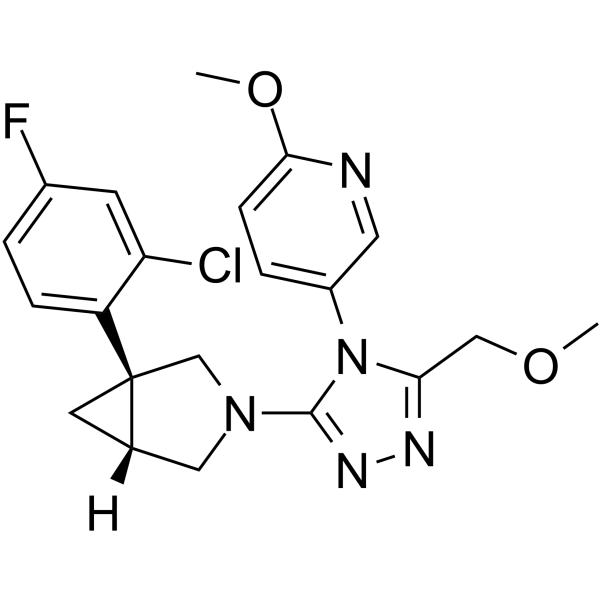
HY-128351
SHR1653Oxytocin Receptor Antagonist -
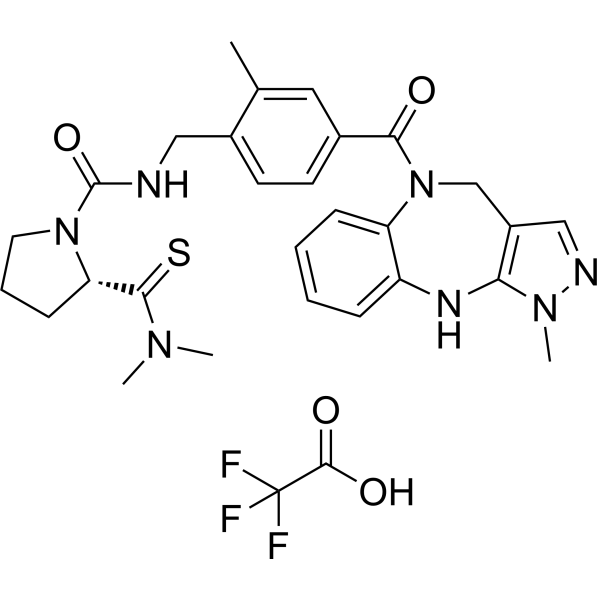
HY-124733A
LIT-001Oxytocin Receptor Agonist -
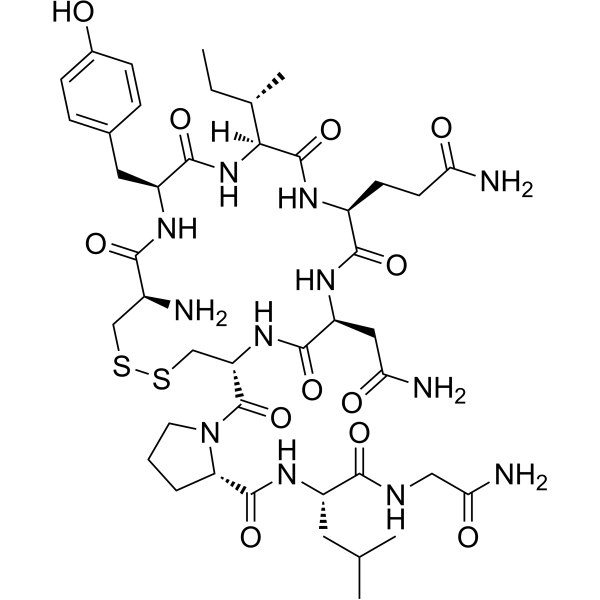
HY-17571
OxytocinHypothalamic Peptide -
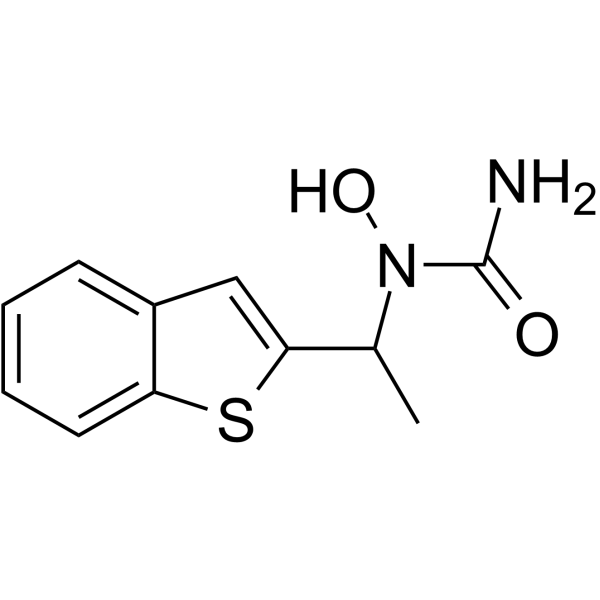
HY-14164
Zileuton5-Lipoxygenase Inhibitor -
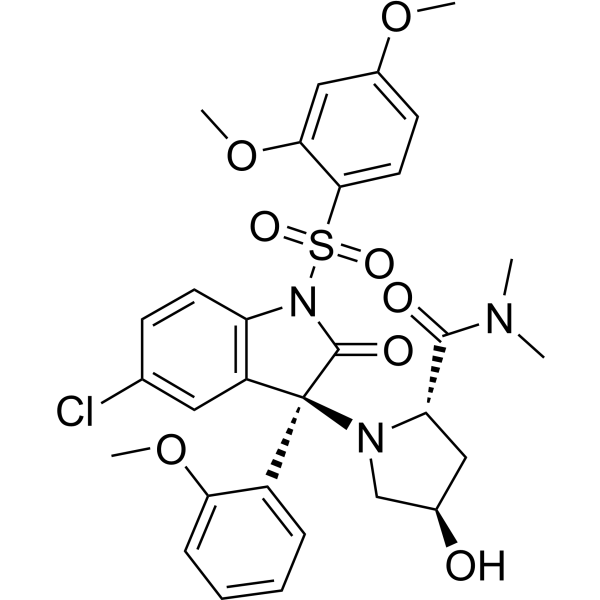
HY-10066
NelivaptanV1b Receptor Antagonist -
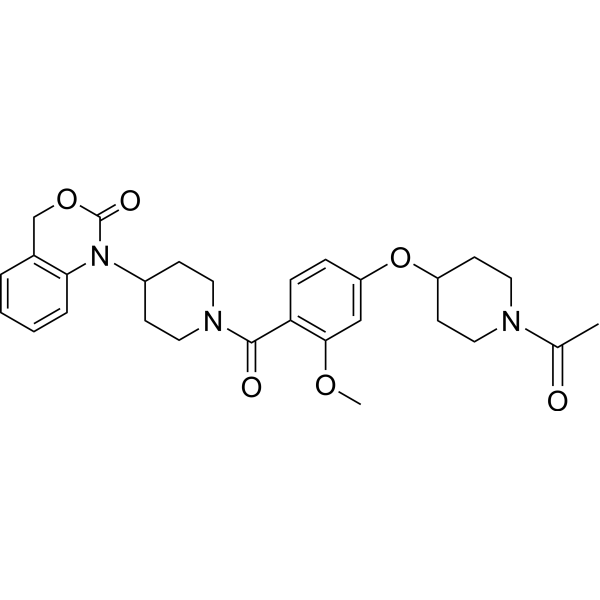
HY-15010
L-371,257Oxytocin Receptor Antagonist -
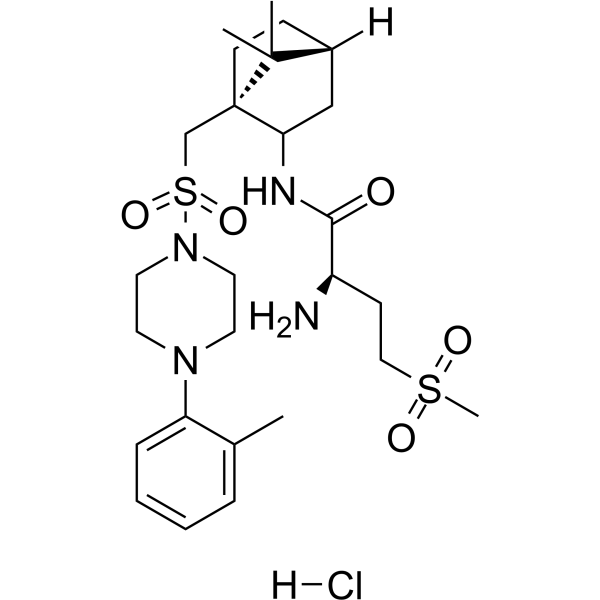
HY-108677
L-368,899 hydrochlorideOxytocin Antagonist -
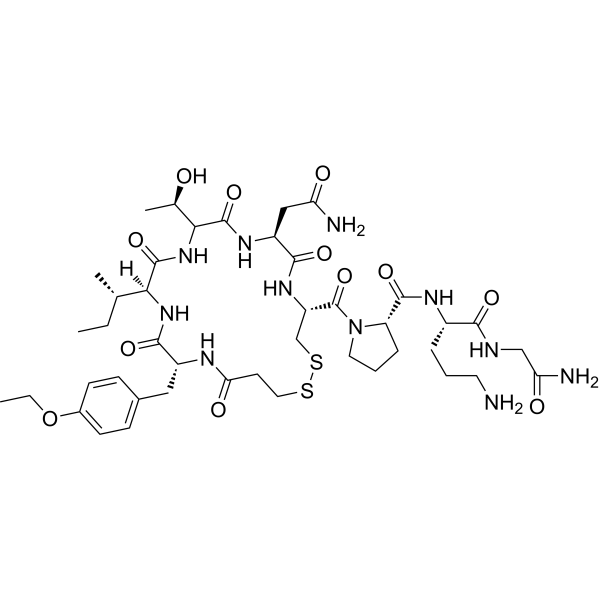
HY-17572
AtosibanOxytocin/Vasopressin Receptor Antagonist -

HY-15023R
Cligosiban (Standard)Oxytocin Receptor Antagonist
Publications Citing Use of MedChemExpress (MCE) Cligosiban
More- Br J Pharmacol. 2024 Aug;181(16):2869-2885. [Abstract]
- Biomedicines. 2024 Mar 18;12(3):674. [Abstract]
- Biomedicines. 2023 Nov 1;11(11):2956. [Abstract]
- FASEB J. 2021 Jun;35(6):e21639. [Abstract]
- J Pharm Biomed Anal. 2019 Feb 5:164:725-733. [Abstract]
- Biomed Chromatogr. 2019 Oct;33(10):e4611. [Abstract]
- Northwestern University. 2026.


Biological Activity
제품 설명
IC50 & Target
oxytocin receptor[1]
Cellular Effect
|
Cell Line

|
Type | Value | Description | References |
|---|---|---|---|---|
| HEK293 | IC50 |
23.2 nM
Compound: IX-01
|
Antagonist activity at human OTR expressed in HEK293 cells assessed as decrease in calcium flux measured after 10 mins in presence of vasopressin by Fluo-4 dye based microplate reader based assay
Antagonist activity at human OTR expressed in HEK293 cells assessed as decrease in calcium flux measured after 10 mins in presence of vasopressin by Fluo-4 dye based microplate reader based assay
|
[PMID: 31223461] |
In Vitro
Cligosiban (1 μM) has an antagonistic effect on endogenous release of oxytocin (OT) induced prostate motility in rats[3]. Cligosiban (1, 10 μM) can reduce the frequency of spontaneous bladder contractions in young and old rats[4].
MedChemExpress (MCE) has not independently confirmed the accuracy of these methods. They are for reference only.
In Vivo
MedChemExpress (MCE) has not independently confirmed the accuracy of these methods. They are for reference only.
-
Animal Model:Male Sprague Dawley rats (280-350 g), Anesthetized Rat CNS Neuronal Firing Model (Pre injection of Apomorphine (200 mg/kg, intravenous injection) into rats to regulate neuronal firing)[1].
-
Dosage:0.9 mg/kg
-
Administration:Intravenous injection (i.v.); 3 to 5 minutes after injection of Apomorphine
-
Result:Reversed the reduced firing of nucleus tractus solitaries (NTS) neurons induced by Apomorphine and reduced the bulbospongiosum burst pattern and contraction amplitude associated with ejaculation.
-
Animal Model:Male Sprague-Dawley rats with body weight of 200-220 g[2].
-
Dosage:1 mg/kg
-
Administration:Intravenous injection (i.v.) or oral gavage (p.o.)
-
Result:Was rapidly absorbed into the plasma after oral administration and reached its maximum blood concentration 1.41 hours after administration, and was quickly eliminated from the plasma after absorption.


Chemical Information
-
CAS No. 900510-03-4
-
Appearance Solid
-
분자량 419.84
-
화학식 C19H19ClFN5O3
-
Color Off-white to pink
-
SMILES
FC1=CC(Cl)=C(OC2CN(C3=NN=C(COC)N3C4=CC=C(OC)N=C4)C2)C=C1
-
Synonyms
PF-3274167
-
선적
Room temperature in continental US; may vary elsewhere.
-
보관
Powder -20°C 3 years 4°C 2 years In solvent -80°C 2 years -20°C 1 year


Publications (7)
-
Journal Impact Factor
-
Most Recent
-
Br J Pharmacol
The oxytocin antagonist cligosiban reduces human prostate contractility: Implications for the treatment of benign prostatic hyperplasia. [Abstract]2024 Aug;181(16):2869-2885. PMID: 38676555 -
Biomedicines
Age-Dependent Effects of Oxytocin and Oxytocin Receptor Antagonists on Bladder Contractions: Implications for the Treatment of Overactive Bladder Syndrome. [Abstract]2024 Mar 18;12(3):674. PMID: 38540287 -
Biomedicines
2023 Nov 1;11(11):2956. PMID: 38001957 -
FASEB J
Physiological and pharmacological impact of oxytocin on epididymal propulsion during the ejaculatory process in rodents and men. [Abstract]2021 Jun;35(6):e21639. PMID: 34041782 -
J Pharm Biomed Anal
Pharmacokinetics, bioavailability and metabolism of cligosiban, an antagonist of oxytocin receptor, in rat by liquid chromatography hyphenated with electrospray ionization tandem mass spectrometry. [Abstract]2019 Feb 5:164:725-733. PMID: 30472591 -
Biomed Chromatogr
Pharmacokinetics of cligosiban in dog plasma after oral administration by liquid chromatography electrospray ionization tandem mass spectrometry. [Abstract]2019 Oct;33(10):e4611. PMID: 31145820 -


용액&용해도
In Vitro:
DMSO : ≥ 50 mg/mL (119.09 mM; Hygroscopic DMSO has a significant impact on the solubility of product, please use newly opened DMSO)
* "≥" means soluble, but saturation unknown.
Please refer to the solubility information to select the appropriate solvent. Once prepared, please aliquot and store the solution to prevent product inactivation from repeated freeze-thaw cycles.
Storage method and period of stock solution: -80°C, 2 years; -20°C, 1 year. When stored at -80°C, please use it within 2 years. When stored at -20°C, please use it within 1 year.
Please refer to the solubility information to select the appropriate solvent. Once prepared, please aliquot and store the solution to prevent product inactivation from repeated freeze-thaw cycles.
Storage method and period of stock solution: -80°C, 2 years; -20°C, 1 year. When stored at -80°C, please use it within 2 years. When stored at -20°C, please use it within 1 year.
Concentration (start) × Volume (start) = Concentration (final) × Volume (final)
In Vivo:
Select the appropriate dissolution method based on your experimental animal and administration route.
- For the following dissolution methods, please ensure to first prepare a clear stock solution using an In Vitro approach and then sequentially add co-solvents:
- To ensure reliable experimental results, the clarified stock solution can be appropriately stored based on storage conditions. As for the working solution for In Vivo experiments, it is recommended to prepare freshly and use it on the same day.
- The percentages shown for the solvents indicate their volumetric ratio in the final prepared solution. If precipitation or phase separation occurs during preparation, heat and/or sonication can be used to aid dissolution.
Add each solvent one by one: 10% DMSO 40% PEG300 5% Tween-80 45% Saline
Solubility: ≥ 3 mg/mL (7.15 mM); Clear solution
This protocol yields a clear solution of ≥ 3 mg/mL (saturation unknown).
Taking 1 mL working solution as an example, add 100 μL DMSO stock solution (30.0 mg/mL) to 400 μL PEG300, and mix evenly; then add 50 μL Tween-80 and mix evenly; then add 450 μL Saline to adjust the volume to 1 mL.
Preparation of Saline: Dissolve 0.9 g sodium chloride in ddH₂O and dilute to 100 mL to obtain a clear Saline solution.
Add each solvent one by one: 10% DMSO 90% (20% SBE-β-CD in Saline)
Solubility: ≥ 3 mg/mL (7.15 mM); Clear solution
This protocol yields a clear solution of ≥ 3 mg/mL (saturation unknown).
Taking 1 mL working solution as an example, add 100 μL DMSO stock solution (30.0 mg/mL) to 900 μL 20% SBE-β-CD in Saline, and mix evenly.
Preparation of 20% SBE-β-CD in Saline (4°C, storage for one week): 2 g SBE-β-CD powder is dissolved in 10 mL Saline, completely dissolve until clear.
In Vivo Dissolution Calculator
Please enter the basic information of animal experiments:
-
-
-
-
Recommended: Prepare an additional quantity of animals to account for potential losses during experiments.
Please enter your animal formula composition:
-
%DMSO +
Recommended: Keep the proportion of DMSO in working solution below 2% if your animal is weak.
-
%+
-
+%Tween-80 + +
-
%Saline +
The co-solvents required include: DMSO, . All of co-solvents are available by MedChemExpress (MCE). , Tween 80. All of co-solvents are available by MedChemExpress (MCE).
Working solution concentration: 0.22 mg/mL
Method for preparing stock solution: mg drug dissolved in μL DMSO. Stock solution concentration: mg/mL.
1. Take μL DMSO stock solution;
2. Add μL .
μL , mix evenly;
3. Then add μL Tween 80, mix evenly;
4. Then add μL
Please ensure that the stock solution in the first step is dissolved to a clear state, and add co-solvents in sequence. You can use ultrasonic heating (ultrasonic cleaner, recommended frequency 20-40 kHz), vortexing, etc. to assist dissolution.


순도&문서
-
Data Sheet (282 KB)
-
SDS (393 KB)
- English - EN (393 KB)
- Français - FR (393 KB)
- Deutsch - DE (393 KB)
- Norwegian - NO (393 KB)
- Español - ES (393 KB)
- Swedish - SV (393 KB)
- Italian - IT (393 KB)
- Korean - KR (393 KB)
- Portuguese - PT (393 KB)
-
Handling Instructions (2659 KB)
References
[1]. Wayman C, et al. Cligosiban, A Novel Brain-Penetrant, Selective Oxytocin Receptor Antagonist, Inhibits Ejaculatory Physiology in Rodents. J Sex Med. 2018 Dec;15(12):1698-1706. [Content Brief]
[2]. Yue X, et al. Pharmacokinetics, bioavailability and metabolism of cligosiban, an antagonist of oxytocin receptor, in rat by liquid chromatography hyphenated with electrospray ionization tandem mass spectrometry. J Pharm Biomed Anal. 2019 Feb 5;164:725-733. [Content Brief]
[3]. Badshah M, et al. The Effects of Age on Prostatic Responses to Oxytocin and the Effects of Antagonists. Biomedicines. 2023 Nov 1;11(11):2956. [Content Brief]
[4]. Badshah M, et al. Age-Dependent Effects of Oxytocin and Oxytocin Receptor Antagonists on Bladder Contractions: Implications for the Treatment of Overactive Bladder Syndrome. Biomedicines. 2024 Mar 18;12(3):674. [Content Brief]


Complete Stock Solution Preparation Table
Please refer to the solubility information to select the appropriate solvent. Once prepared, please aliquot and store the solution to prevent product inactivation from repeated freeze-thaw cycles.
Storage method and period of stock solution: -80°C, 2 years; -20°C, 1 year. When stored at -80°C, please use it within 2 years. When stored at -20°C, please use it within 1 year.
| Optional Solvent | Concentration Solvent Mass | 1 mg | 5 mg | 10 mg | 25 mg |
|---|---|---|---|---|---|
| DMSO | 1 mM | 2.3819 mL | 11.9093 mL | 23.8186 mL | 59.5465 mL |
| 5 mM | 0.4764 mL | 2.3819 mL | 4.7637 mL | 11.9093 mL | |
| 10 mM | 0.2382 mL | 1.1909 mL | 2.3819 mL | 5.9546 mL | |
| 15 mM | 0.1588 mL | 0.7940 mL | 1.5879 mL | 3.9698 mL | |
| 20 mM | 0.1191 mL | 0.5955 mL | 1.1909 mL | 2.9773 mL | |
| 25 mM | 0.0953 mL | 0.4764 mL | 0.9527 mL | 2.3819 mL | |
| 30 mM | 0.0794 mL | 0.3970 mL | 0.7940 mL | 1.9849 mL | |
| 40 mM | 0.0595 mL | 0.2977 mL | 0.5955 mL | 1.4887 mL | |
| 50 mM | 0.0476 mL | 0.2382 mL | 0.4764 mL | 1.1909 mL | |
| 60 mM | 0.0397 mL | 0.1985 mL | 0.3970 mL | 0.9924 mL | |
| 80 mM | 0.0298 mL | 0.1489 mL | 0.2977 mL | 0.7443 mL | |
| 100 mM | 0.0238 mL | 0.1191 mL | 0.2382 mL | 0.5955 mL |


Cligosiban Related Classifications
HY-15023 Related Classifications
 Powered by Bioz