



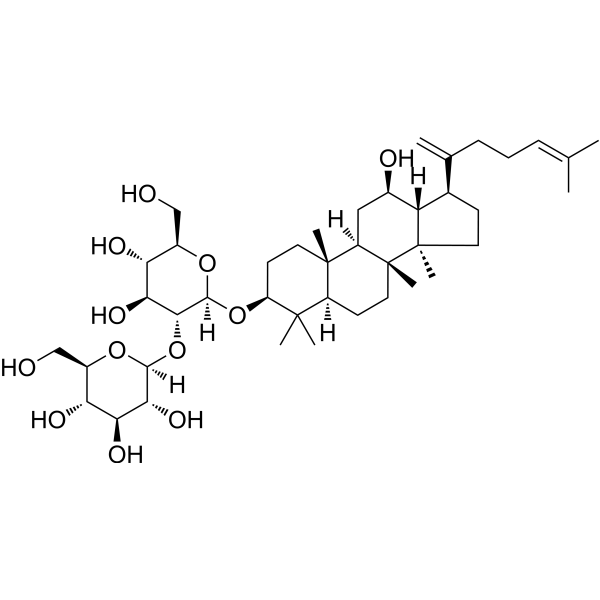
Ginsenoside Rk1
Based on 9 publication(s) in Google Scholar
Ginsenoside Rk1 is a unique component created by processing the ginseng plant (mainly Sung Ginseng, SG) at high temperatures. Ginsenoside Rk1 has anti-inflammatory effect, suppresses the activation of Jak2/Stat3 signaling pathway and NF-κB. Ginsenoside Rk1 has anti-tumor effect, antiplatelet aggregation activities, anti-insulin resistance, nephroprotective effect, antimicrobial effect, cognitive function enhancement, lipid accumulation reduction and prevents osteoporosis. Ginsenoside Rk1 induces cell apoptosis by triggering intracellular reactive oxygen species (ROS) generation and blocking PI3K/Akt pathway.
For research use only. We do not sell to patients.
- Purity: 99.37%
- CAS No.: 494753-69-4
- Formula: C42H70O12
- Molecular Weight:767.00
-
Storage:
-20°C, protect from light
* In solvent : -80°C, 6 months; -20°C, 1 month (protect from light)


-
 Biological Activity
-
Chemical Information
-
Solvent & Solubility
- Purity & Documentation
- References
-
 Help & FAQs
-


Apoptosis Compound Library
HY-L003
-
Epigenetics Compound Library
HY-L005
-
Immunology/Inflammation Compound Library
HY-L007
-
JAK/STAT Compound Library
HY-L008
-
Kinase Inhibitor Library
HY-L009
-
NF-κB Signaling Compound Library
HY-L014
-
PI3K/Akt/mTOR Compound Library
HY-L015
-
Protein Tyrosine Kinase Compound Library
HY-L016
-
Stem Cell Signaling Compound Library
HY-L017
-
Natural Product Library
HY-L021
-
Anti-Cancer Compound Library
HY-L025
-
Autophagy Compound Library
HY-L029
-
Anti-Aging Compound Library
HY-L034
-
Antioxidant Compound Library
HY-L037
-
Differentiation Inducing Compound Library
HY-L038
-
Reprogramming Compound Library
HY-L039
-
Glycoside Compound Library
HY-L042
-
Oxygen Sensing Compound Library
HY-L045
-
Medicine Food Homology Compound Library
HY-L055
-
Terpenoids Library
HY-L056
-
Glycolysis Compound Library
HY-L058
-
Pyroptosis Compound Library
HY-L059
-
Cytoskeleton Compound Library
HY-L060
-
Anti-Breast Cancer Compound Library
HY-L074
-
Anti-Lung Cancer Compound Library
HY-L075
-
Anti-Pancreatic Cancer Compound Library
HY-L077
-
Anti-Blood Cancer Compound Library
HY-L079
-
Anti-Cancer Metabolism Compound Library
HY-L083
-
Anti-Obesity Compound Library
HY-L087
-
Angiogenesis-Related Compound Library
HY-L088
-
Transcription Factor-Targeted Library
HY-L090
-
Glucose Metabolism Compound Library
HY-L092
-
Anti-Liver Cancer Compound Library
HY-L101
-
Anti-Colorectal Cancer Compound Library
HY-L103
-
Anti-Cancer Natural Product Library
HY-L107
-
Antidepressant Compound Library
HY-L108
-
Plant-Sourced Natural Product Library
HY-L115
-
Human Metabolite Library
HY-L123
-
Anti-Prostate Cancer Compound Library
HY-L124
-
Anti-Pulmonary Fibrosis Compound Library
HY-L125
-
Cancer Stem Cells Compound Library
HY-L135
-
Coagulation and Anti-coagulation Compound Library
HY-L136
-
Pain-Related Compound Library
HY-L139
-
Membrane Protein-targeted Compound Library
HY-L149
-
Autoimmune Disease Compound Library
HY-L156
-
Cell Death Library
HY-L162
-
Anti-Drug-Resistant Compound Library
HY-L169
-
Anti-Hematopathy Compound Library
HY-L171
-
Anti-Ovarian Cancer Compound Library
HY-L173
-
Multi-Target Compound Library
HY-L176
-
Radioprotector Library
HY-L178
-
Bioactive Compound Library Max
HY-L181
-
MCE Bioactive Compound Library
HY-L001V
-
Natural Product Library Plus
HY-L021P
-
Natural Product and Natural Product-Like Compound Library
HY-L021M
-
Bioactive Compound Library
HY-L001
-
Anti-Fibrosis Compound Library
HY-L185
-
Anti-Brain Cancer Compound Library
HY-L188
-
Protein Kinase Compound Library
HY-L196
-
Non-Alcoholic Fatty Liver Disease (NAFLD) Compound Library
HY-L199
-
Cell Proliferation Compound Library
HY-L201
-
High-Throughput Bioactive Compound Library
HY-L205
-
High-Throughput Natural Product Library
HY-L206
-
Anti-Rheumatic Arthritis Compound Library
HY-L210
-
Mass Spectrometry Human Metabolite Library
HY-L215
-
Posttranslational Modification Library
HY-L226
-
Tonifying Traditional Chinese Medicine Monomer Compound Library
HY-L246
-
Lactylation Compound Library
HY-L249
-
Mass Spectrometry Natural Product Library
HY-L262


Publications Citing Use of MedChemExpress (MCE) Ginsenoside Rk1
More- Acta Pharmacol Sin. 2025 Jun 23. [Abstract]
- Biomed Pharmacother. 2024 May:174:116468. [Abstract]
- J Agric Food Chem. 2025 Jul 9;73(27):17205-17218. [Abstract]
- Am J Chin Med. 2024 May 27:1-17. [Abstract]
- Chem Biol Interact. 2025 Sep 29:421:111760. [Abstract]
- Food Funct. 2024 May 20;15(10):5485-5495. [Abstract]
- Food Funct. 2022 Apr 4;13(7):3793-3811. [Abstract]
- Pharmaceuticals (Basel). 2024 Jul 2;17(7):871. [Abstract]
- Drug Chem Toxicol. 2024 Dec 29:1-10. [Abstract]


Biological Activity
|
Cell Line

|
Type | Value | Description | References |
|---|---|---|---|---|
| HepG2 | IC50 |
79.76 μM
Compound: 14
|
Cytotoxicity against human HepG2 cells after 48 hrs by MTT assay
Cytotoxicity against human HepG2 cells after 48 hrs by MTT assay
|
[PMID: 26420067] |
| HL-60 | IC50 |
58.08 μM
Compound: 14
|
Cytotoxicity against human HL60 cells after 48 hrs by MTT assay
Cytotoxicity against human HL60 cells after 48 hrs by MTT assay
|
[PMID: 26420067] |
Ginsenoside Rk1 (0-40 μM; 6 hours) inhibits MCP-1 and TNF-α mRNA induced by lipopolysaccharide (LPS), expression of IL-1β is inhibited at 40 μM[2]. Ginsenoside Rk1 (0-40 μM; 24 hours) inhibits phosphorylation of JAK2 and STAT3 (Tyr705 and Ser727) in LPS-induced RAW264.7 cells in a dose-dependent manner[2]. Ginsenoside Rk1 (0-160 μM; 48 hours) results in cell viability significant decrease 75.52 ± 2.51% (40 μM), 52.72 ± 2.54% (80 μM), 17.41 ± 2.94% (120 μM)and 12.63 ± 3.24% (160 μM) compared with control[3]. Ginsenoside Rk1 (0-120 μM; 24 hours) increases G0/G1 phase proportion accompanied with S and G2/M phase proportion decrease in MDA-MB-231 cells[3]. Ginsenoside Rk1 (0-120 μM; 24 hours) promotes the percentage of apoptotic cells in a dose-dependent manner, exhibits to reduction of cell number with nucleus fragmentation, condensation and apoptotic body formation[3].
MedChemExpress (MCE) has not independently confirmed the accuracy of these methods. They are for reference only.
-
Cell Line:RAW264.7 cells
-
Concentration:10 μM, 20 μM, 40 μM
-
Incubation Time:6 hours
-
Result:Inhibited JAK2-dependent STAT3 activation in LPS-activated RAW264.7 cells.
-
Cell Line:RAW264.7 cells
-
Concentration:10 μM, 20 μM, 40 μM
-
Incubation Time:6 hours
-
Result:Inhibited JAK2-dependent STAT3 activation in LPS-activated RAW264.7 cells
-
Cell Line:MDA-MB-231 cells
-
Concentration:0 μM, 40 μM, 80 μM, 120 μM
-
Incubation Time:48 hours
-
Result:Inhibited MDA-MB-231 cells proliferation in a dose- and time-dependent manner.
-
Cell Line:MDA-MB-231 cells
-
Concentration:0 μM, 40 μM, 80 μM, 120 μM
-
Incubation Time:24 hours
-
Result:Induced G0/G1 phase arrest.
-
Cell Line:MDA-MB-231 cells
-
Concentration:0 μM, 40 μM, 80 μM, 120 μM
-
Incubation Time:24 hours
-
Result:Induced apoptosis in MDA-MB-231 cells.


Chemical Information
-
CAS No. 494753-69-4
-
Appearance Solid
-
Molecular Weight 767.00
-
Formula C42H70O12
-
Color White to light yellow
-
SMILES
C[C@]12[C@@](C[C@@H](O)[C@@]3([H])[C@]2(CC[C@@H]3C(CC/C=C(C)/C)=C)C)([H])[C@@]4([C@@](C(C)([C@@H](O[C@@]5([H])[C@@H]([C@H]([C@H](O)[C@@H](CO)O5)O)O[C@]6([H])O[C@@H]([C@@H](O)[C@H](O)[C@H]6O)CO)CC4)C)([H])CC1)C
-
Structure Classification
-
Initial Source
-
Shipping
Room temperature in continental US; may vary elsewhere.
-
Storage
-20°C, protect from light
* In solvent : -80°C, 6 months; -20°C, 1 month (protect from light)


Publications (9)
-
Journal Impact Factor
-
Most Recent
-
Acta Pharmacol Sin
Ginsenoside (20)S-APPT induces ferroptosis in hepatocellular carcinoma and cholangiocarcinoma by targeting FSP1. [Abstract]2025 Jun 23. PMID: 40550962 -
Biomed Pharmacother
Botulinum toxin type A inhibits M1 macrophage polarization by deactivation of JAK2/STAT1 and IκB/NFκB pathway and contributes to scar alleviation in aseptic skin wound healing. [Abstract]2024 May:174:116468. PMID: 38518603 -
J Agric Food Chem
Ginsenoside RK1 Promotes Hepatic Stellate Cell Glycolysis-Mediated Ferroptosis by Activating the HK2/ACSL4/LPCAT3/ALOX5 Signaling Pathway. [Abstract]2025 Jul 9;73(27):17205-17218. PMID: 40570179 -
Am J Chin Med
Ginsenoside Rk1 Ameliorates ER Stress-Induced Apoptosis through Directly Activating IGF-1R in Mouse Pancreatic [Formula: see text]-Cells and Diabetic Pancreas. [Abstract]2024 May 27:1-17. PMID: 38798150 -
Chem Biol Interact
Ginsenoside Rk1 suppresses the epithelial-mesenchymal transition of hepatic stellate cells via PFKFB2-mediated aerobic glycolysis. [Abstract]2025 Sep 29:421:111760. PMID: 41033411 -
Food Funct
Ginsenoside Rk1 improves endothelial function in diabetes through activating peroxisome proliferator-activated receptors. [Abstract]2024 May 20;15(10):5485-5495. PMID: 38690748 -
Food Funct
Ginsenoside Rk1 regulates glutamine metabolism in hepatocellular carcinoma through inhibition of the ERK/c-Myc pathway. [Abstract]2022 Apr 4;13(7):3793-3811. PMID: 35316310 -
Pharmaceuticals (Basel)
Ginsenoside RK1 Induces Ferroptosis in Hepatocellular Carcinoma Cells through an FSP1-Dependent Pathway. [Abstract]2024 Jul 2;17(7):871. PMID: 39065721 -
Drug Chem Toxicol
Ginsenoside Rk1 exerts protective effects of LPS-induced podocyte apoptosis and inflammation by inactivating JAK2/STAT3 and NF-κB pathways. [Abstract]2024 Dec 29:1-10. PMID: 39734090


Solvent & Solubility
Ethanol : 100 mg/mL (130.38 mM; Need ultrasonic)
DMSO : 50 mg/mL (65.19 mM; Need ultrasonic; Hygroscopic DMSO has a significant impact on the solubility of product, please use newly opened DMSO)
Please refer to the solubility information to select the appropriate solvent. Once prepared, please aliquot and store the solution to prevent product inactivation from repeated freeze-thaw cycles.
Storage method and period of stock solution: -80°C, 6 months; -20°C, 1 month (protect from light). When stored at -80°C, please use it within 6 months. When stored at -20°C, please use it within 1 month.
Please refer to the solubility information to select the appropriate solvent. Once prepared, please aliquot and store the solution to prevent product inactivation from repeated freeze-thaw cycles.
Storage method and period of stock solution: -80°C, 6 months; -20°C, 1 month (protect from light). When stored at -80°C, please use it within 6 months. When stored at -20°C, please use it within 1 month.
Concentration (start) × Volume (start) = Concentration (final) × Volume (final)
Select the appropriate dissolution method based on your experimental animal and administration route.
- For the following dissolution methods, please ensure to first prepare a clear stock solution using an In Vitro approach and then sequentially add co-solvents:
- To ensure reliable experimental results, the clarified stock solution can be appropriately stored based on storage conditions. As for the working solution for In Vivo experiments, it is recommended to prepare freshly and use it on the same day.
- The percentages shown for the solvents indicate their volumetric ratio in the final prepared solution. If precipitation or phase separation occurs during preparation, heat and/or sonication can be used to aid dissolution.
Add each solvent one by one: 10% DMSO 40% PEG300 5% Tween-80 45% Saline
Solubility: ≥ 2.5 mg/mL (3.26 mM); Clear solution
This protocol yields a clear solution of ≥ 2.5 mg/mL (saturation unknown).
Taking 1 mL working solution as an example, add 100 μL DMSO stock solution (25.0 mg/mL) to 400 μL PEG300, and mix evenly; then add 50 μL Tween-80 and mix evenly; then add 450 μL Saline to adjust the volume to 1 mL.
Preparation of Saline: Dissolve 0.9 g sodium chloride in ddH₂O and dilute to 100 mL to obtain a clear Saline solution.
Add each solvent one by one: 10% DMSO 90% (20% SBE-β-CD in Saline)
Solubility: ≥ 2.5 mg/mL (3.26 mM); Clear solution
This protocol yields a clear solution of ≥ 2.5 mg/mL (saturation unknown).
Taking 1 mL working solution as an example, add 100 μL DMSO stock solution (25.0 mg/mL) to 900 μL 20% SBE-β-CD in Saline, and mix evenly.
Preparation of 20% SBE-β-CD in Saline (4°C, storage for one week): 2 g SBE-β-CD powder is dissolved in 10 mL Saline, completely dissolve until clear.
Please enter the basic information of animal experiments:
-
-
-
-
Recommended: Prepare an additional quantity of animals to account for potential losses during experiments.
Please enter your animal formula composition:
-
%DMSO +
Recommended: Keep the proportion of DMSO in working solution below 2% if your animal is weak.
-
%+
-
+%Tween-80 + +
-
%Saline +
The co-solvents required include: DMSO, . All of co-solvents are available by MedChemExpress (MCE). , Tween 80. All of co-solvents are available by MedChemExpress (MCE).
Working solution concentration: 0.22 mg/mL
Method for preparing stock solution: mg drug dissolved in μL DMSO. Stock solution concentration: mg/mL. * In solvent : -80°C, 6 months; -20°C, 1 month (protect from light)
1. Take μL DMSO stock solution;
2. Add μL .
μL , mix evenly;
3. Then add μL Tween 80, mix evenly;
4. Then add μL
Please ensure that the stock solution in the first step is dissolved to a clear state, and add co-solvents in sequence. You can use ultrasonic heating (ultrasonic cleaner, recommended frequency 20-40 kHz), vortexing, etc. to assist dissolution.


Purity & Documentation
-
Data Sheet (282 KB)
-
SDS (252 KB)
- Français - FR (252 KB)
- Deutsch - DE (252 KB)
- Norwegian - NO (252 KB)
- Español - ES (252 KB)
- Swedish - SV (252 KB)
- Italian - IT (252 KB)
- Portuguese - PT (252 KB)
-
Handling Instructions (2659 KB)
References
[1]. Elshafay A, et al. Ginsenoside Rk1 bioactivity: a systematic review. PeerJ. 2017 Nov 17;5:e3993. [Content Brief]
[2]. Yu Q,et al. Ginsenoside Rk1 suppresses pro-inflammatory responses in lipopolysaccharide-stimulated RAW264.7 cells by inhibiting the Jak2/Stat3 pathway. Chin J Nat Med. 2017 Oct;15(10):751-757. [Content Brief]
[3]. Hong Y, et al. Ginsenoside Rk1 induces cell cycle arrest and apoptosis in MDA-MB-231 triple negative breast cancer cells. Toxicology. 2019 Apr 15;418:22-31. [Content Brief]


Complete Stock Solution Preparation Table
Please refer to the solubility information to select the appropriate solvent. Once prepared, please aliquot and store the solution to prevent product inactivation from repeated freeze-thaw cycles.
Storage method and period of stock solution: -80°C, 6 months; -20°C, 1 month (protect from light). When stored at -80°C, please use it within 6 months. When stored at -20°C, please use it within 1 month.
| Optional Solvent | Concentration Solvent Mass | 1 mg | 5 mg | 10 mg | 25 mg |
|---|---|---|---|---|---|
| DMSO / Ethanol | 1 mM | 1.3038 mL | 6.5189 mL | 13.0378 mL | 32.5945 mL |
| 5 mM | 0.2608 mL | 1.3038 mL | 2.6076 mL | 6.5189 mL | |
| 10 mM | 0.1304 mL | 0.6519 mL | 1.3038 mL | 3.2595 mL | |
| 15 mM | 0.0869 mL | 0.4346 mL | 0.8692 mL | 2.1730 mL | |
| 20 mM | 0.0652 mL | 0.3259 mL | 0.6519 mL | 1.6297 mL | |
| 25 mM | 0.0522 mL | 0.2608 mL | 0.5215 mL | 1.3038 mL | |
| 30 mM | 0.0435 mL | 0.2173 mL | 0.4346 mL | 1.0865 mL | |
| 40 mM | 0.0326 mL | 0.1630 mL | 0.3259 mL | 0.8149 mL | |
| 50 mM | 0.0261 mL | 0.1304 mL | 0.2608 mL | 0.6519 mL | |
| 60 mM | 0.0217 mL | 0.1086 mL | 0.2173 mL | 0.5432 mL | |
| Ethanol | 80 mM | 0.0163 mL | 0.0815 mL | 0.1630 mL | 0.4074 mL |
| 100 mM | 0.0130 mL | 0.0652 mL | 0.1304 mL | 0.3259 mL |


 Powered by Bioz