



Pivmecillinam hydrochloride (Standard)

Based on 1 Customer Validation
Pivmecillinam (hydrochloride) (Standard) is the analytical standard of Pivmecillinam (hydrochloride). This product is intended for research and analytical applications. Pivmecillinam hydrochloride (FL-1039 hydrochloride) is an orally active proagent of mecillinam, an extended-spectrum penicillin antibiotic.
For research use only. We do not sell to patients.
- Purity : 99.90%
- CAS No.: 32887-03-9
- Formula: C21H34ClN3O5S
- Molecular Weight:476.03
-
Storage:
Please store the product under the recommended conditions in the Certificate of Analysis.


To place orders, for customer services and technical support, please contact: MedChemExpress USA
Tel: 609-228-6898 E-mail: [email protected] [email protected]


-
 Product Information
-
Chemical Information
- Purity & Documentation
-
 Help & FAQs


-
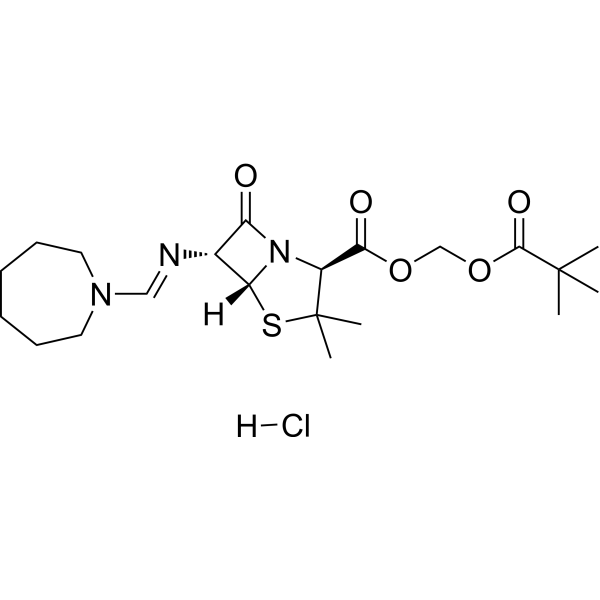
HY-B0810A
Pivmecillinam hydrochloride -
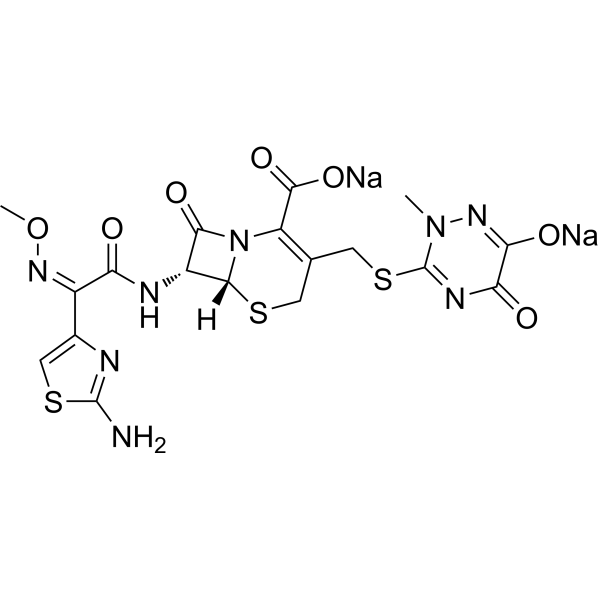
HY-B0712B
Ceftriaxone sodium salt -
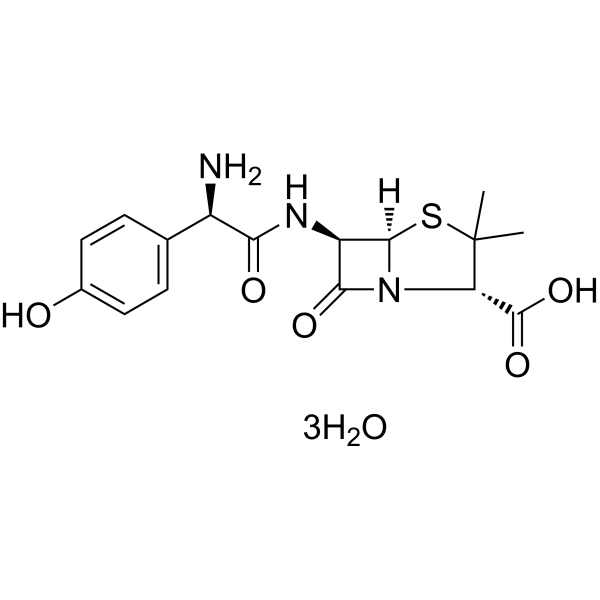
HY-B0467B
Amoxicillin trihydrate -
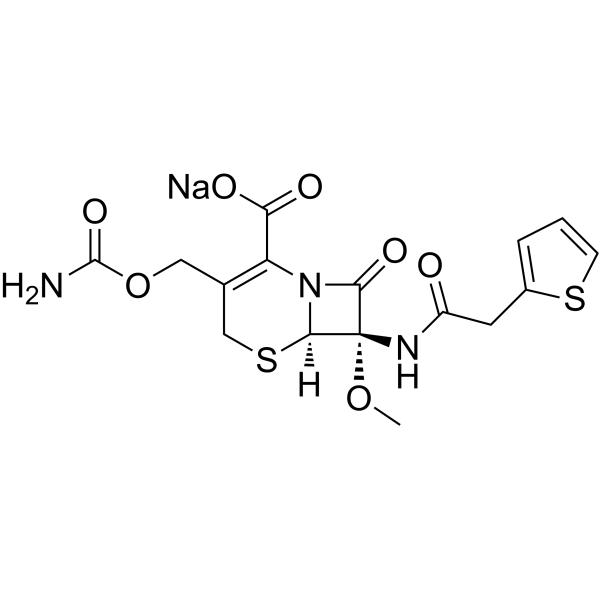
HY-B1117
Cefoxitin sodium -
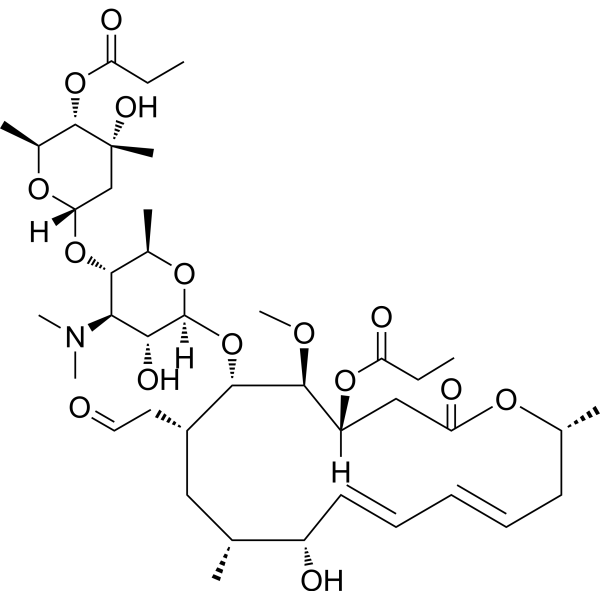
HY-B1908
Midecamycin -
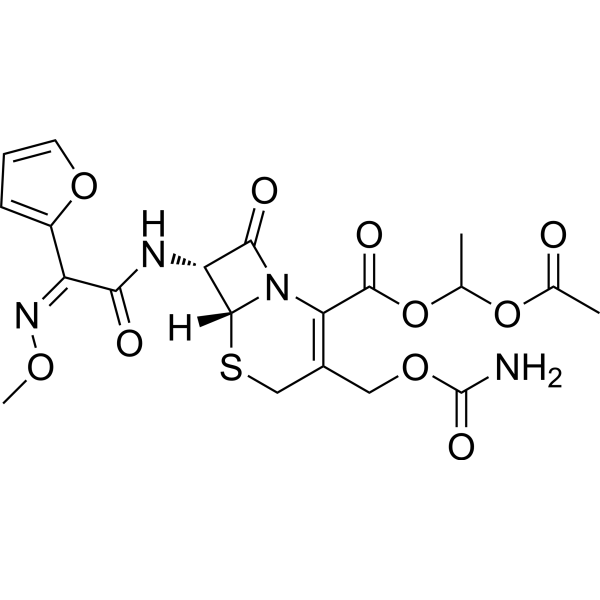
HY-B1325
Cefuroxime axetil -
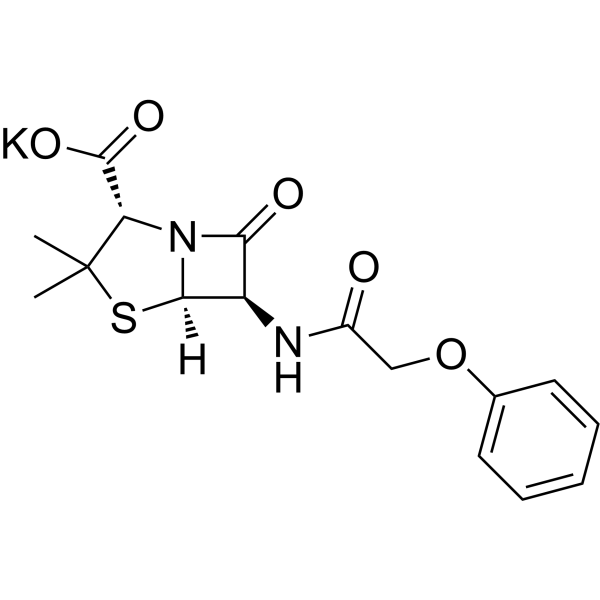
HY-B0975
Penicillin V Potassium -
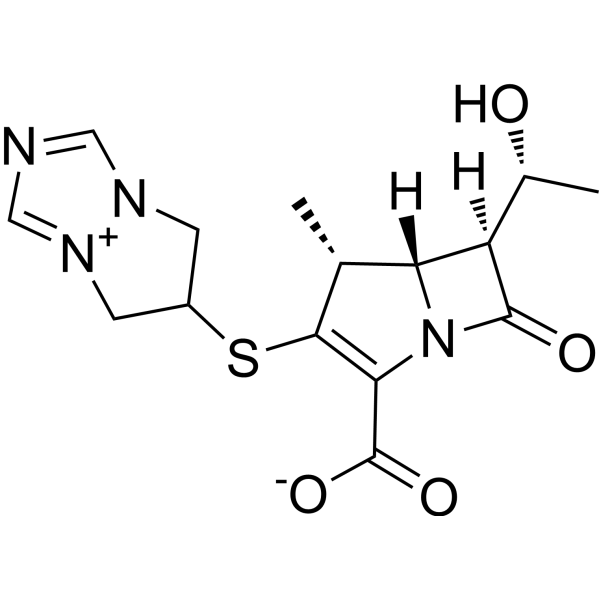
HY-13573
Biapenem -

HY-B1117R
Cefoxitin sodium (Standard) -
HY-B1190A
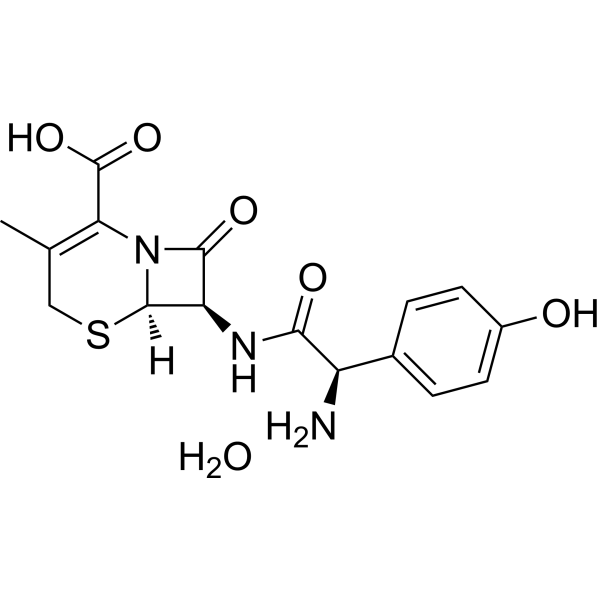
Cefadroxil hydrate -
HY-B1781
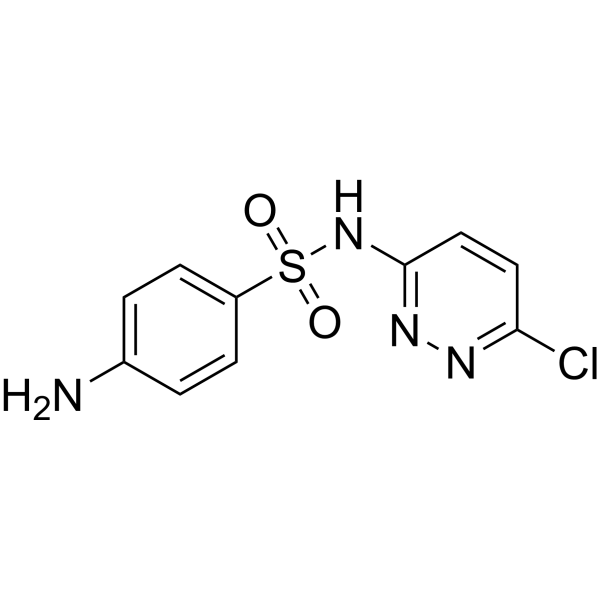
Sulfachloropyridazine -

HY-B1781R
Sulfachloropyridazine (Standard)


Product Information
Information
Application
The compound is the grade of analytical standard, which is the reference standard supplied assay. It is commonly used in qualitative, quantitative and methodological research experiments in HPLC, GC and MS.


Chemical Information
-
CAS No. 32887-03-9
-
Appearance Solid
-
Molecular Weight 476.03
-
Formula C21H34ClN3O5S
-
Color White to off-white
-
SMILES
O=C([C@@H](C(C)(C)S[C@]1([H])[C@@H]2/N=C/N3CCCCCC3)N1C2=O)OCOC(C(C)(C)C)=O.[H]Cl
-
Synonyms
FL-1039 hydrochloride (Standard)
-
Shipping
Room temperature in continental US; may vary elsewhere.
-
Storage
Please store the product under the recommended conditions in the Certificate of Analysis.


Purity & Documentation
-
SDS (252 KB)
- English - EN (252 KB)
- Français - FR (252 KB)
- Deutsch - DE (252 KB)
- Norwegian - NO (252 KB)
- Español - ES (252 KB)
- Swedish - SV (252 KB)
- Italian - IT (252 KB)
- Korean - KR (252 KB)
- Portuguese - PT (252 KB)
-
Handling Instructions (2659 KB)
References
[1]. Nicolle LE. Pivmecillinam in the treatment of urinary tract infections. J Antimicrob Chemother. 2000 Aug;46 Suppl A:35-39. [Content Brief]
[2]. Graninger W. Pivmecillinam--therapy of choice for lower urinary tract infection. Int J Antimicrob Agents. 2003 Oct;22 Suppl 2:73-8. [Content Brief]
[3]. Holme E, et al. Carnitine deficiency induced by pivampicillin and pivmecillinam therapy. Lancet. 1989 Aug 26;2(8661):469-73. [Content Brief]

Calculators
Concentration (start) × Volume (start) = Concentration (final) × Volume (final)


Pivmecillinam hydrochloride (Standard) Related Classifications
HY-B0810AR Related Classifications
 Powered by Bioz