



GDNF Protein, Human
Based on 5 publication(s) in Google Scholar
Glial-cell-line-derived neurotrophic factor (GDNF), a neurotrophic factor belongs to the GDNF family ligands (GFLs)., promotes survival of dopamine neurons. GDNF demonstrates a variety of neuroprotective roles for mammalian neurons. GDNF Protein, Human is produced in E.coil, and consists of 134 amino acids (S78-I211).
- Species: Human
- Source: E. coli
-
Storage:Stored at -20°C for 2 years from date of receipt. After reconstitution, it is stable at 4°C for 1 week or -20°C for longer (with carrier protein). It is recommended to freeze aliquots at -20°C or -80°C for extended storage.


To place orders, for customer services and technical support, please contact: MedChemExpress USA
Tel: 609-228-6898 E-mail: [email protected] [email protected]


-
 Biological Activity
-
Technical Parameters
-
Product Properties
- Documentation
- References
- Help & FAQs




Biological Activity
Description
Glial-cell-line-derived neurotrophic factor (GDNF), a neurotrophic factor belongs to the GDNF family ligands (GFLs)., promotes survival of dopamine neurons. GDNF demonstrates a variety of neuroprotective roles for mammalian neurons[1]. GDNF Protein, Human is produced in E.coil, and consists of 134 amino acids (S78-I211).
Background
Glial cell line-derived neurotrophic factor (GDNF) is a 134 amino acid protein belonging in the GDNF family ligands (GFLs). GDNF protein is widely distributed throughout both the central and peripheral nervous systems. Synthesis and secretion of GDNF occur in many cell types such as glial cells like astrocytes, oligodendrocytes, and Schwann cells; motor neurons (MNs); and skeletal muscle[1].
Mature human GDNF shares 91-92% amino acid sequence identity with mouse, rat, and Canine GDNF proteins. While, mouse GDNF shares 99% aa sequence identity with rat GDNF protein.
GDNF is originally isolated from cultured B49 rat glial cells and found to enhance the survival and differentiation of dopaminergic neurons in primary cultures by promoting dopamine uptake. Similar to other members of the TGF-β superfamily, GDNF is first synthesized as a precursor protein (pro-GDNF). After a series of protein cleavage and processing, the 211 amino acid pro-GDNF is finally converted into the active and mature form of GDNF. GDNF has the ability to trigger receptor tyrosine kinase RET phosphorylation, whose downstream effects have been found to promote neuronal health and survival. The binding of GDNF to its receptors triggers several intracellular signaling pathways which play roles in promoting the development, survival, and maintenance of neuron-neuron and neuron-target tissue interactions. The synthesis and regulation of GDNF have been shown to be altered in many diseases, aging, exercise, and addiction. The neuroprotective effects of GDNF may be used to develop treatments and therapies to ameliorate neurodegenerative diseases such as amyotrophic lateral sclerosis (ALS)[1].
GDNF is a potent neurotrophic factor for regulating MN survival in the peripheral nervous system. GDNF prevents apoptosis of MNs during development in vivo, decreases the loss of MNs in animal models of motor neuropathy and degeneration, rescues MNs from axotomy-induced cell death, and protects MNs from chronic degeneration. Intracerebral GDNF administration exerts both protective and reparative effects on the nigrostriatal dopamine system, which may have implications for the development of new treatment strategies for Parkinson's disease[1][2].
In Vitro
Recombinant human GDNF (100 ng/mL; 24 hours) increases transepithelial electric resistance (TER) significantly to 2.99 of baseline (2.23-fold of controls) in Caco2 cells. GDNF contributes to IEB maturation[3].
Verified Bioactivity
1.The ED50 is <5 μg/mL as measured by C6 cells in a proliferation assay.
2.Measured in a cell proliferation assay using SH-SY5Y human neuroblastoma cells. The ED50 for this effect is 1-8 ng/mL in the presence of Recombinant Human GFR alpha-1/GDNF R alpha-1 .
MCE Validation Data
-
Purity - SDS-PAGE
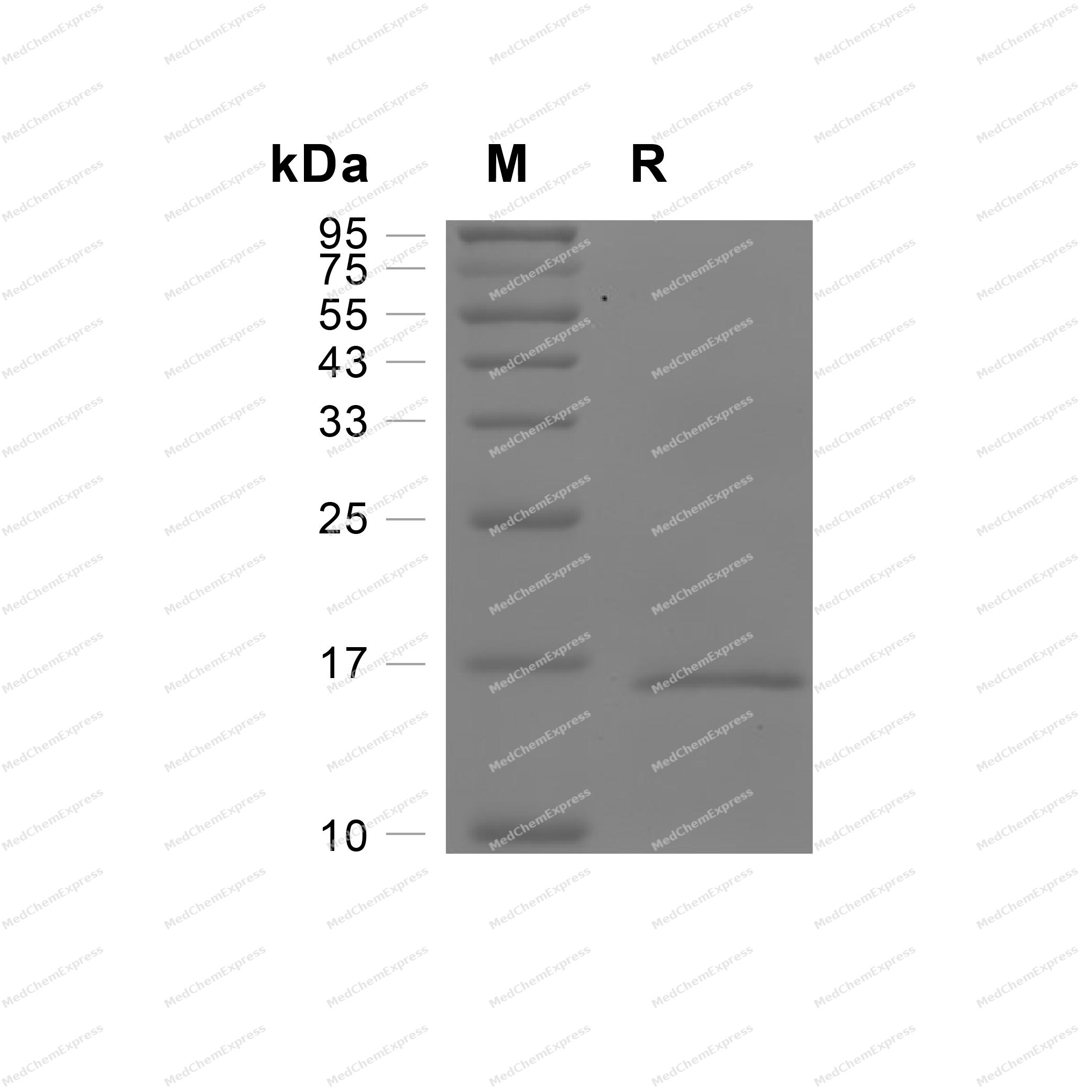
Purity - SDS-PAGE
-
Bioactivity - Cell-Based Assay
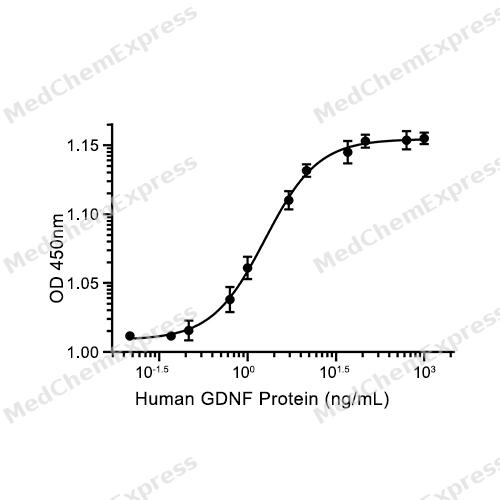
Bioactivity - Cell-Based Assay


Publications (5)
-
Journal Impact Factor
-
Most Recent
-
Cell Stem Cell
Human PSC-derived sinoatrial node-cardiac plexus assembloids model innervation-associated maturation of pacemaker systems. [Abstract]2026 May 15:S1934-5909(26)00158-X. PMID: 42143017 -
Stem Cell Res Ther
Mesenchymal stem cells derived from hPSC via neural crest attenuate chemotherapy-induced premature ovarian insufficiency by ameliorating apoptosis and oxidative stress in granulosa cells. [Abstract]2025 May 13;16(1):239. PMID: 40361250 -
J Mol Cell Biol
2026 Mar 20:mjag013. PMID: 41860434 -
Int J Mol Sci
Glial-Cell-Line-Derived Neurotrophic Factor Promotes Glioblastoma Cell Migration and Invasion via the SMAD2/3-SERPINE1-Signaling Axis. [Abstract]2024 Sep 23;25(18):10229. PMID: 39337713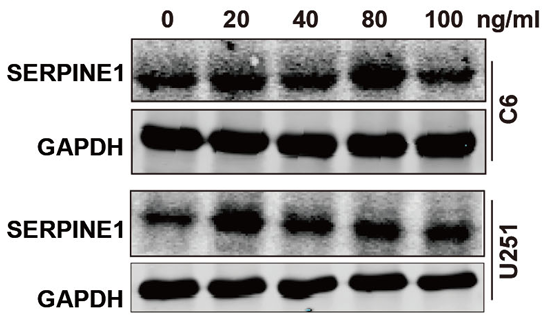
GDNF Protein, Human purchased from MedChemExpress. Usage Cited in: Int J Mol Sci. 2024 Sep 23;25(18):10229. [Abstract]
Western blotting was used to detect the protein expressions of SERPINE1 in C6 and U251 cells treated with various doses of GDNF (0, 20, 40, 80, 100 ng/mL) for 48 h.
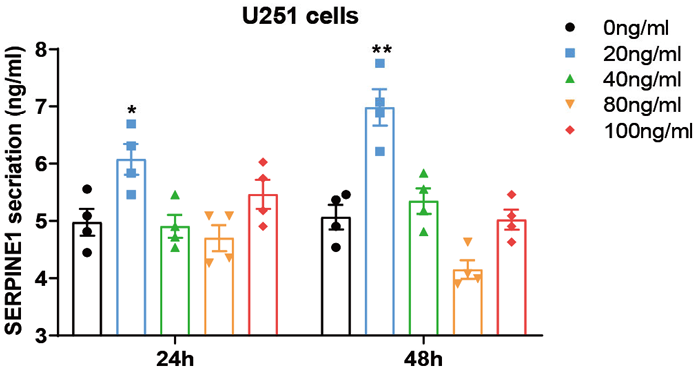
GDNF Protein, Human purchased from MedChemExpress. Usage Cited in: Int J Mol Sci. 2024 Sep 23;25(18):10229. [Abstract]
GDNF (0-100 ng/mL; 24-48 h). The contents of SERPINE1 were tested in U251 cells after 24 and 48 h of treatment with different concentrations of GDNF using ELISA kits.
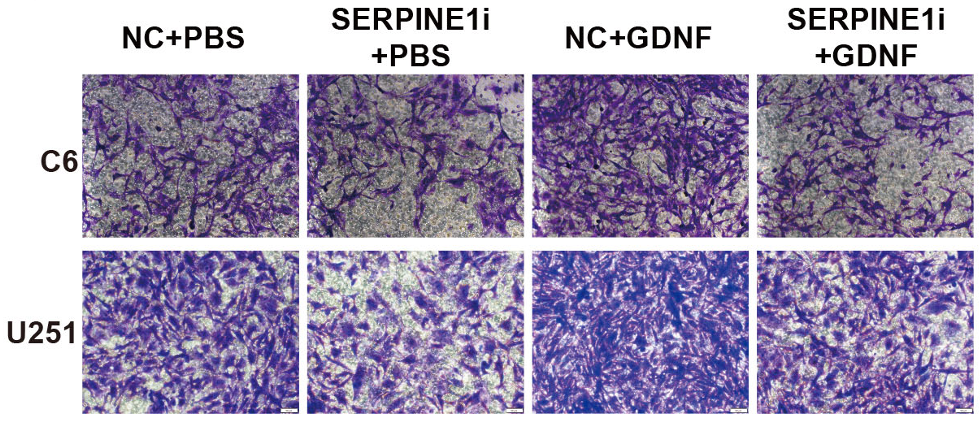
GDNF Protein, Human purchased from MedChemExpress. Usage Cited in: Int J Mol Sci. 2024 Sep 23;25(18):10229. [Abstract]
Transwell invasion assay was conducted to evaluate the influences of SERPINE1 knockdown on cell invasion in C6 and U251 cells after 48 h of separate treatment with 80 and 20 ng/mL GDNF.
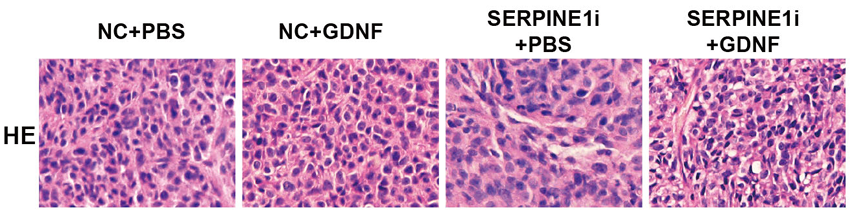
GDNF Protein, Human purchased from MedChemExpress. Usage Cited in: Int J Mol Sci. 2024 Sep 23;25(18):10229. [Abstract]
GDNF (0.1 μg for each mouse). Hematoxylin-Eosin (HE) staining of the tumor tissues was performed.
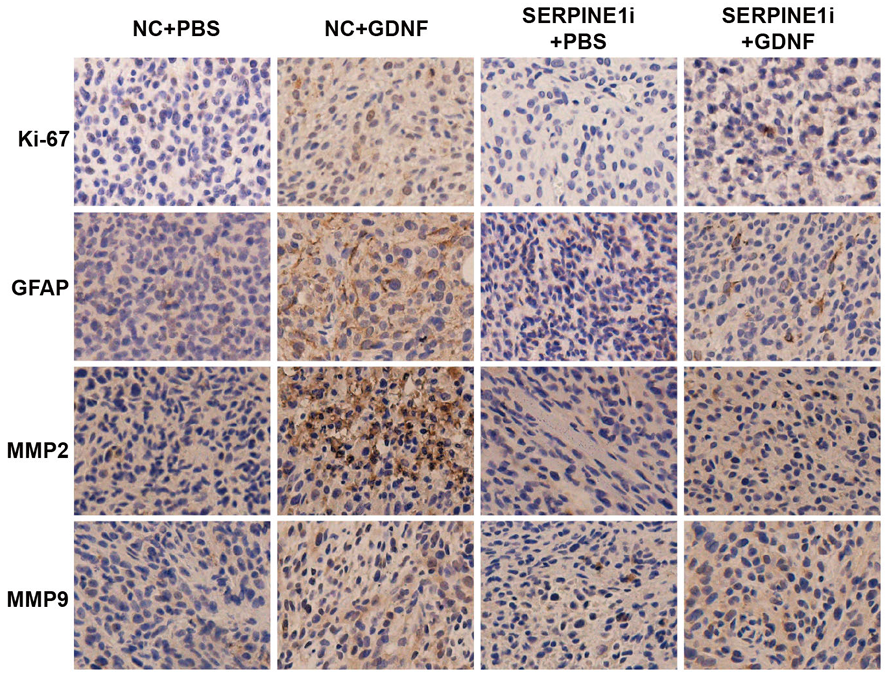
GDNF Protein, Human purchased from MedChemExpress. Usage Cited in: Int J Mol Sci. 2024 Sep 23;25(18):10229. [Abstract]
GDNF (0.1 μg for each mouse). IHC staining was used to detect the levels of Ki-67, GFAP, MMP2 and MMP9.
-


Technical Parameters
-
Species Human
-
Source E. coli
-
Tag Tag Free
-
Accession
P39905-1 (S78-I211)
-
Molecular Construction
-
N-term
-
GDNF (S78-I211)
Accession # P39905 -
C-term
-
-
Protein Length
Full Length of Mature Protein
-
Synonyms
GDNF; ATF2; Glial Cell Derived Neurotrophic Factor; ATF; Astrocyte-Derived Trophic Factor; Glial Cell Line Derived Neurotrophic Factor; Glial Cell Line-Derived Neurotrophic Factor; Glial Derived Neurotrophic Factor; HFB1-GDNF; HSCR3; ATF1; HGDNF
-
AA Sequence
SPDKQMAVLPRRERNRQAAAANPENSRGKGRRGQRGKNRGCVLTAIHLNVTDLGLGYETKEELIFRYCSGSCDAAETTYDKILKNLSRNRRLVSDKVGQACCRPIAFDDDLSFLDDNLVYHILRKHSAKRCGCI
-
Predicted Molecular Mass
15.1 kDa
-
Molecular Weight
Approximately 12-18 kDa, based on SDS-PAGE under reducing conditions, due to the glycosylation.
-
Purity
≥ 95%, as determined by reducing SDS-PAGE.


Product Properties
Lyophilized powder
1.Lyophilized from a 0.22 μm filtered solution of 50 mM Tris-HCl, 300 mM NaCl, pH 8.0.
2.Lyophilized from a 0.22 μm filtered solution of PBS.
3.Lyophilized from a 0.22 μm filtered solution of PBS, pH 7.4, 8% trehalose.
Please refer to the lot-specific COA for specific buffer information.
Note: For SPR assay, please replace the buffer. Primary amine components (e.g., Tris, imidazole) can affect protein-coupled chips.
<1 EU/μg, determined by LAL method.
It is not recommended to reconstitute to a concentration less than 100 μg/mL in ddH2O or PBS. For long term storage it is recommended to add a carrier protein (0.1% BSA, 5% HSA, 10% FBS or 5% Trehalose).
Stored at -20°C for 2 years from date of receipt. After reconstitution, it is stable at 4°C for 1 week or -20°C for longer (with carrier protein). It is recommended to freeze aliquots at -20°C or -80°C for extended storage.
Room temperature in continental US; may vary elsewhere.


Documentation
-
Data Sheet (264 KB)
-
SDS (251 KB)
- English - EN (251 KB)
- Français - FR (251 KB)
- Deutsch - DE (251 KB)
- Norwegian - NO (251 KB)
- Español - ES (251 KB)
- Swedish - SV (251 KB)
- Italian - IT (251 KB)
- Korean - KR (251 KB)
- Portuguese - PT (251 KB)
-
Handling Instructions (2659 KB)


References
[1]. Alberto F Cintrón-Colón, et al. GDNF synthesis, signaling, and retrograde transport in motor neurons. Cell Tissue Res. 2020 Oct;382(1):47-56. [Content Brief]
[2]. Schaar DG, et al. Multiple astrocyte transcripts encode nigral trophic factors in rat and human. Exp Neurol. 1994 Dec;130(2):387-93. [Content Brief]
[3]. Tomac A, et al. Protection and repair of the nigrostriatal dopaminergic system by GDNF in vivo. Nature.1995;373 (6512): 335-339. [Content Brief]
[4]. Tomac A, et al. Protection and repair of the nigrostriatal dopaminergic system by GDNF in vivo. Nature.1995;373 (6512): 335-339. [Content Brief]
[5]. Michael Meir, et al. Intestinal Epithelial Barrier Maturation by Enteric Glial Cells Is GDNF-Dependent. Int J Mol Sci. 2021 Feb 14;22(4):1887. [Content Brief]

Calculators
Concentration (start) × Volume (start) = Concentration (final) × Volume (final)


 Powered by Bioz

