



Betacellulin Protein, Human
Based on 2 publication(s) in Google Scholar
Probetacellulin Protein, Human is a glycoprotein, improves glucose tolerance by promoting β-cell differentiation and regeneration from ductal and/or acinar cells.
- Species: Human
- Source: E. coli
-
Storage:Stored at -20°C for 2 years from date of receipt. After reconstitution, it is stable at 4°C for 1 week or -20°C for longer (with carrier protein). It is recommended to freeze aliquots at -20°C or -80°C for extended storage.


To place orders, for customer services and technical support, please contact: MedChemExpress USA
Tel: 609-228-6898 E-mail: [email protected] [email protected]


-
 Biological Activity
-
Technical Parameters
-
Product Properties
- Documentation
- References
- Help & FAQs


-
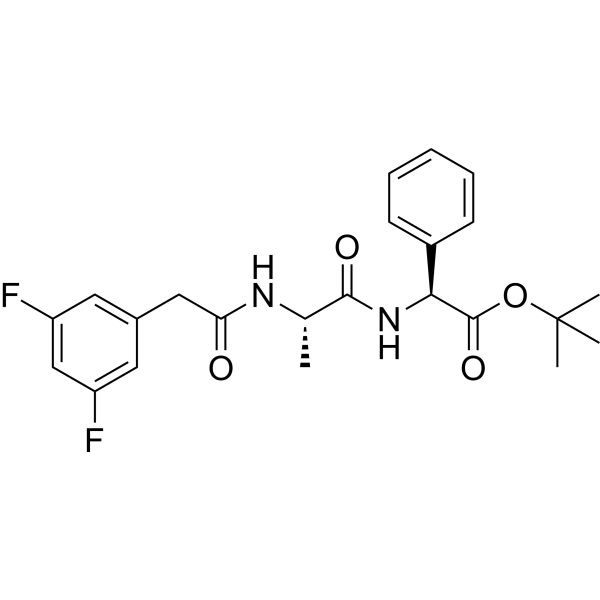
HY-13027
DAPT -
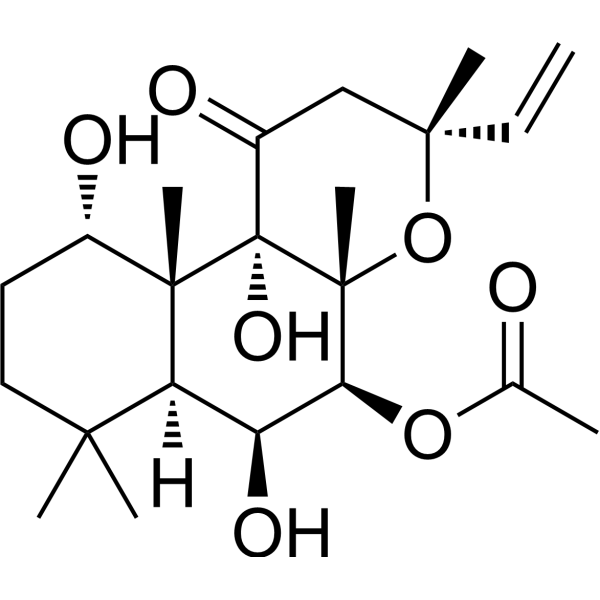
HY-15371
Forskolin -

HY-P70311
Activin A Protein, Human/Mouse/Rat (HEK293) -
HY-P7017
HB-EGF Protein, Human -
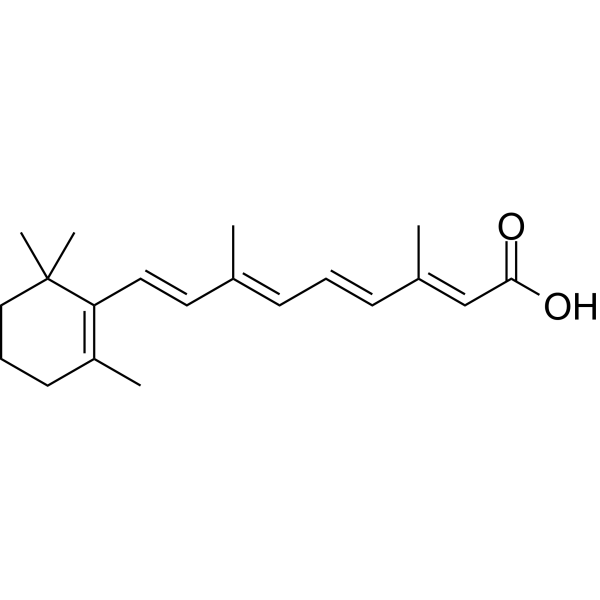
HY-14649
Retinoic acid -
HY-P7011
Epiregulin Protein, Human -
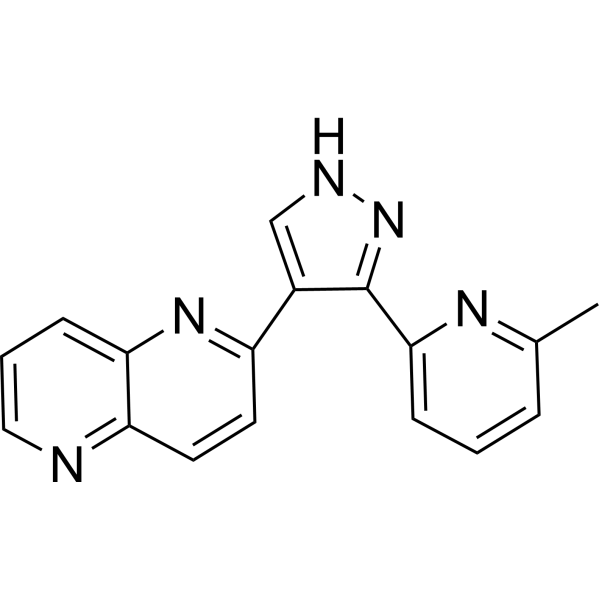
HY-13012
RepSox -
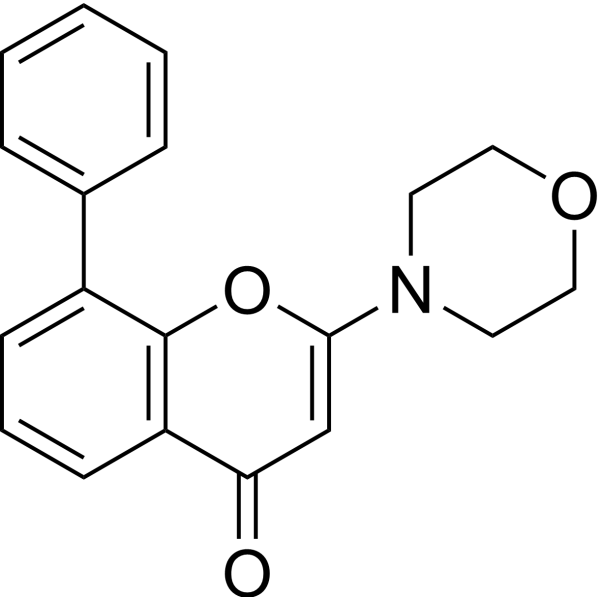
HY-10108
LY294002 -
HY-P7411
TGF alpha/TGFA Protein, Human -
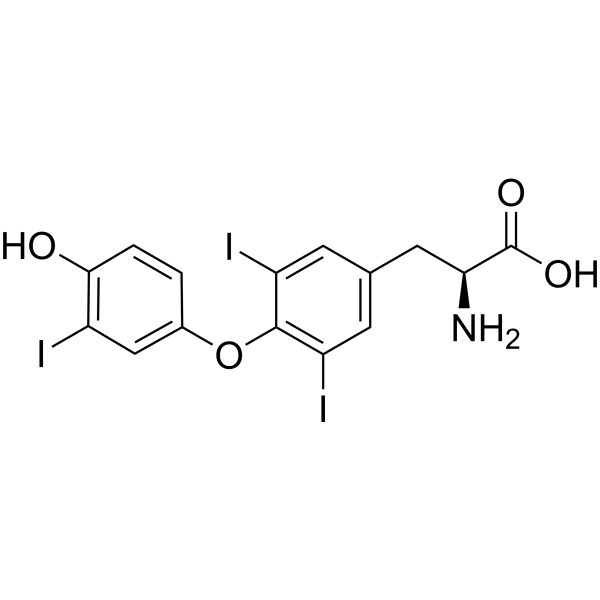
HY-A0070A
Liothyronine -
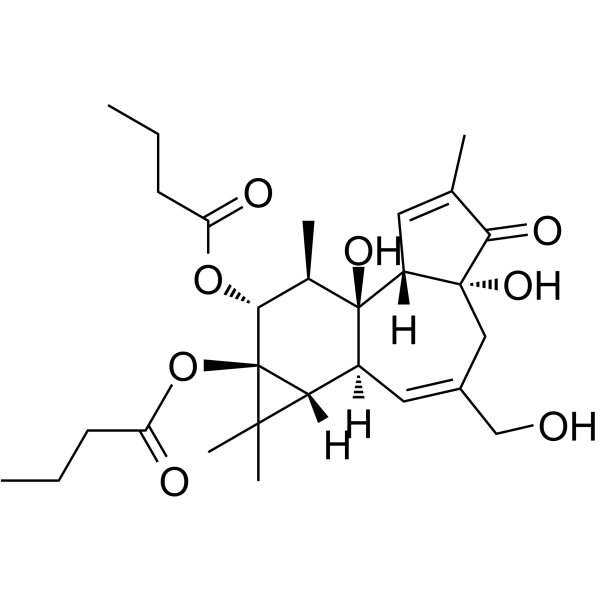
HY-18985
Phorbol 12,13-dibutyrate -
HY-P7365
NRG1-beta 1 Protein, Human


Biological Activity
Description
Probetacellulin Protein, Human is a glycoprotein, improves glucose tolerance by promoting β-cell differentiation and regeneration from ductal and/or acinar cells.
Background
Betacellulin (BTC), a member of the epidermal growth factor family, is expressed predominantly in the human pancreas and induces the differentiation of a pancreatic acinar cell line (AR42J) into insulin-secreting cells. Betacellulin binds and activates the EGF receptor (EGFR/erbB-1) and erbB-4, and it induces tyrosine phosphorylation of erbB-2, which couples with the EGFR or erbB-4[1].
Verified Bioactivity
The ED50 is <0.01 ng/mL as measured by murine Balb/3T3 cells, corresponding to a specific activity of >1.0 × 10⁸ units/mg.


Publications (2)
-
Journal Impact Factor
-
Most Recent
-
J Extracell Vesicles
Umbilical Cord-Mesenchymal Stromal Cell-Derived Extracellular Vesicles Target the Liver to Improve Neurovascular Health in Type 2 Diabetes With Non-Alcoholic Fatty Liver Disease. [Abstract]2025 Jul;14(7):e70125. PMID: 40620065 -
Nat Commun
2024 Jul 27;15(1):6344. PMID: 39068220


Technical Parameters
-
Species Human
-
Source E. coli
-
Tag Tag Free
-
Accession
P35070 (D32-Y111)
-
Gene ID685 [NCBI]
-
Molecular Construction
-
N-term
-
Betacellulin (D32-Y111)
Accession # P35070 -
C-term
-
-
Protein Length
Full Length of Betacellulin Chain
-
Synonyms
BTC; Probetacellulin; Betacellulin; Betacellulin Isoform 2
-
AA Sequence
DGNSTRSPETNGLLCGDPEENCAATTTQSKRKGHFSRCPKQYKHYCIKGRCRFVVAEQTPSCVCDEGYIGARCERVDLFY
-
Predicted Molecular Mass
9 kDa
-
Molecular Weight
Approximately 15 kDa, based on SDS-PAGE under reducing conditions.
-
Purity
≥ 95%, as determined by reducing SDS-PAGE.


Product Properties
Lyophilized powder
Lyophilized from a 0.22 μm filtered solution of PBS.
< 0.2 EU/μg of protein by gel clotting method
It is not recommended to reconstitute to a concentration less than 100 μg/mL in ddH2O. For long term storage it is recommended to add a carrier protein (0.1% BSA, 5% HSA, 10% FBS or 5% Trehalose).
Stored at -20°C for 2 years from date of receipt. After reconstitution, it is stable at 4°C for 1 week or -20°C for longer (with carrier protein). It is recommended to freeze aliquots at -20°C or -80°C for extended storage.
Room temperature in continental US; may vary elsewhere.


Documentation
-
Data Sheet (260 KB)
-
SDS (251 KB)
- English - EN (251 KB)
- Français - FR (251 KB)
- Deutsch - DE (251 KB)
- Norwegian - NO (251 KB)
- Español - ES (251 KB)
- Swedish - SV (251 KB)
- Italian - IT (251 KB)
- Korean - KR (251 KB)
- Portuguese - PT (251 KB)
-
Handling Instructions (2659 KB)


References

Calculators
Concentration (start) × Volume (start) = Concentration (final) × Volume (final)


 Powered by Bioz

