



NRG1-beta 1 Protein, Human
Based on 10 publication(s) in Google Scholar
NRG1-beta 1 Protein, a specific ligand for ERBB3, belongs to a family of structurally related polypeptide growth factors. NRG1-beta 1 Protein can regulate cell proliferation, differentiation, apoptosis and migration. NRG1-beta 1 Protein plays an important role in tumors and neurological diseases, and also has certain neuroprotective activity. NRG-1 Protein, Human is a recombinant NRG1-beta 1 protein expressed by E. coli without tags.
- Species: Human
- Source: E. coli
-
Storage:Stored at -20°C for 2 years from date of receipt. After reconstitution, it is stable at 4°C for 1 week or -20°C for longer (with carrier protein). It is recommended to freeze aliquots at -20°C or -80°C for extended storage.


To place orders, for customer services and technical support, please contact: MedChemExpress USA
Tel: 609-228-6898 E-mail: [email protected] [email protected]


-
 Biological Activity
-
Technical Parameters
-
Product Properties
- Documentation
- References
- Help & FAQs




Biological Activity
Description
NRG1-beta 1 Protein, a specific ligand for ERBB3, belongs to a family of structurally related polypeptide growth factors. NRG1-beta 1 Protein can regulate cell proliferation, differentiation, apoptosis and migration. NRG1-beta 1 Protein plays an important role in tumors and neurological diseases, and also has certain neuroprotective activity. NRG-1 Protein, Human is a recombinant NRG1-beta 1 protein expressed by E. coli without tags[1][2][3][4][5].
Background
NRG1-beta 1 has an epidermal growth factor-like domain. As a ligand for ErbB3, NRG1-beta 1 can induce the formation of ErbB2-ErbB3 (HER2-HER3) heterodimers, thereby activating downstream signaling pathways such as PI3K/AKT and MAPK. NRG1-beta 1 promotes tumor cell survival, migration and invasion. NRG1-beta 1 also participates in processes such as neuronal migration, proliferation, differentiation and synaptic establishment[1][2][3][4][5].
In Vitro
NRG1-beta 1 Protein (Human; 40 ng/mL; 12 h) can inhibit DEPTOR protein levels in MCF7 and MDA-MB-361 cells[4].
In Vivo
NRG1-beta 1 Protein (Human; 0.05-1 μg/kg; intravenous injection; 7 days) has a protective effect in a mouse model of photothrombotic ischemia, reducing cerebral infarction, restoring forelimb function, and promoting the proliferation and differentiation of neurons and oligodendrocytes[5].
Verified Bioactivity
Measured in a serum-free cell proliferation assay using MCF-7 human breast cancer cells. The ED50 this effect is ≤ 2.158 ng/mL, corresponding to a specific activity is ≥ 4.6339×10⁵ units/mg.
MCE Validation Data
-
Purity - SDS-PAGE
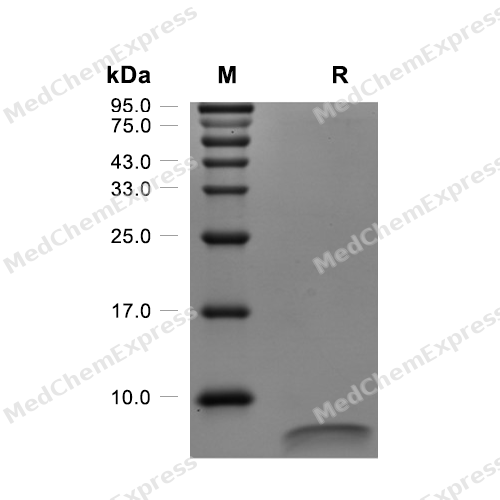
Purity - SDS-PAGE
-
Bioactivity - Cell-Based Assay
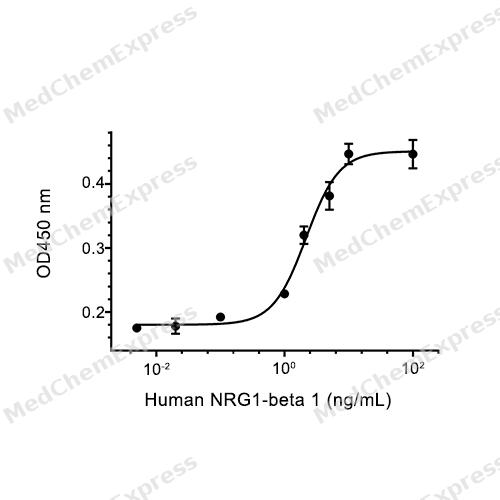
Bioactivity - Cell-Based Assay


Publications (10)
-
Journal Impact Factor
-
Most Recent
-
Cell Death Dis
Nuclear ErbB2 represses DEPTOR transcription to inhibit autophagy in breast cancer cells. [Abstract]2021 Apr 14;12(4):397. PMID: 33854045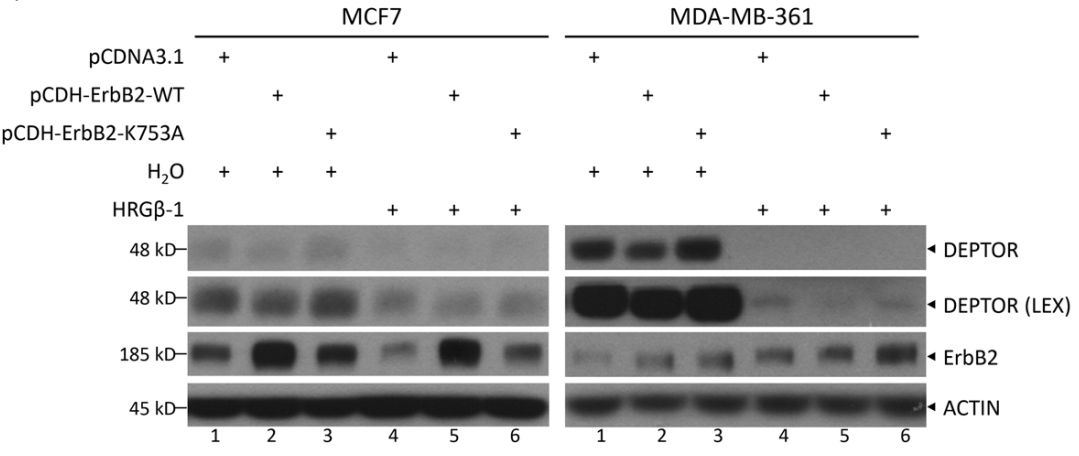
NRG1-beta 1 Protein, Human purchased from MedChemExpress. Usage Cited in: Cell Death Dis. 2021 Apr 14;12(4):397. [Abstract]
Cells were transfected with indicated plasmids, and treated with or without 40 ng/ml of HRGβ-1 (NRG1-beta 1 Protein, Human) for 12 h, and then, subjected to IB with indicated Abs.
-
Phytomedicine
6-C-methylquercetin in Baeckea frutescens exerts anti-prostate cancer effect via ErbB/PI3K/AKT pathway. [Abstract]2025 Apr:139:156463. PMID: 39922146 -
Phytomedicine
Oxypalmatine regulates proliferation and apoptosis of breast cancer cells by inhibiting PI3K/AKT signaling and its efficacy against breast cancer organoids. [Abstract]2023 Jun:114:154752. PMID: 36948141 -
Neural Regen Res
RNA sequencing of exosomes secreted by fibroblast and Schwann cells elucidates mechanisms underlying peripheral nerve regeneration. [Abstract]2024 Aug 1;19(8):1812-1821. PMID: 38103248 -
Glia
Sphingosine 1-phosphate promotes the proliferation of olfactory ensheathing cells through YAP signaling and participates in the formation of olfactory nerve layer. [Abstract]2020 Sep;68(9):1757-1774. PMID: 32057144 -
Exp Neurol
Neuregulin-1/PI3K signaling effects on oligodendrocyte proliferation, remyelination and behaviors deficit in a male mouse model of ischemic stroke. [Abstract]2023 Apr:362:114323. PMID: 36690057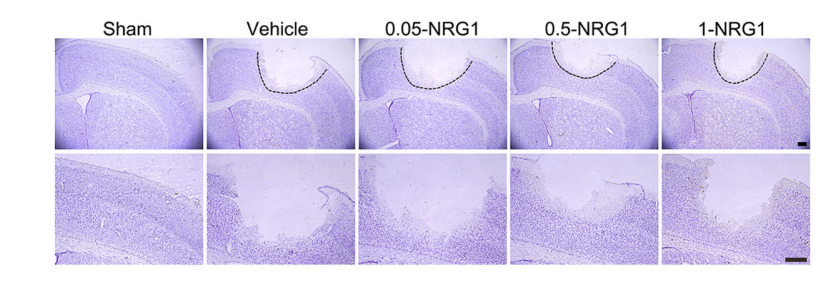
NRG1-beta 1 Protein, Human purchased from MedChemExpress. Usage Cited in: Exp Neurol. 2023 Apr:362:114323. [Abstract]
Effect of NRG1 (0.05, 0.5 and 1 μg/kg) treatment on the brain infarct size by CV staining at 1-day post-ischemia.
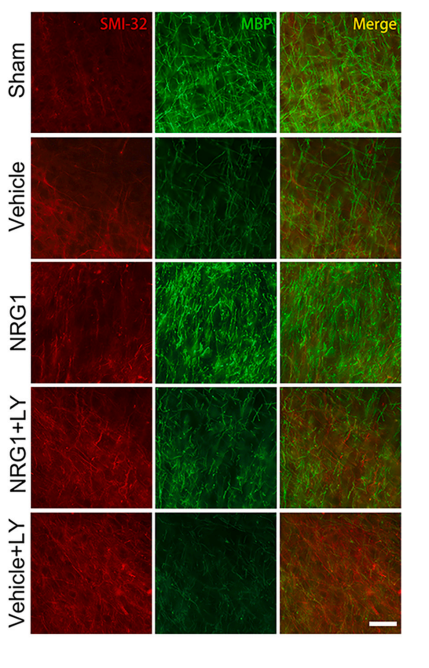
NRG1-beta 1 Protein, Human purchased from MedChemExpress. Usage Cited in: Exp Neurol. 2023 Apr:362:114323. [Abstract]
NRG1 (NRG1-beta 1 Protein, Human: 0.5 μg/kg). Dual immunofluorescence staining for SMI-32 and MBP was performed. Relative optical density (ROD) is expressed as a percentage of SMI-32 and MBP immunofluorescence in the peri-infarct region.
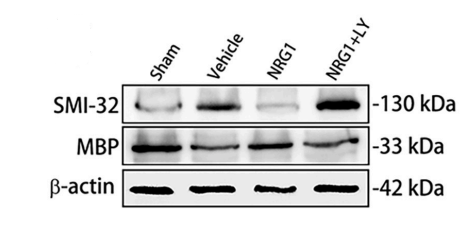
NRG1-beta 1 Protein, Human purchased from MedChemExpress. Usage Cited in: Exp Neurol. 2023 Apr:362:114323. [Abstract]
NRG1 (NRG1-beta 1 Protein, Human: 0.5 μg/kg). Western blot analysis was performed on SMI-32 and MBP in the periinfarct region of the sham-operated group, vector group, NRG1 treatment group, and NRG1 + LY treatment group.
-
Breast Cancer Res Treat
2023 Jul;200(2):193-201. PMID: 37204665 -
-
-


Technical Parameters
-
Species Human
-
Source E. coli
-
Tag Tag Free
-
Accession
Q02297-6 (S177-E241)
-
Molecular Construction
-
N-term
-
NRG1-beta 1 (S177-E241)
Accession # Q02297-6 -
C-term
-
-
Protein Length
Partial Extracellular Domain
-
Synonyms
NRG1; NRG1 Class VII Isoform Alpha 2a; Prev. HGL; NRG1 Class VII Isoform Beta 2a; Prev. NRG1-IT2; Neuregulin 1 Isoform HRG-Gamma; NDF; Neuregulin 1 Isoform HRG-Beta3; GGF; Neuregulin 1 Isoform HRG-Beta2; Pro-Neuregulin-1, Membrane-Bound Isoform; Neureguli
-
AA Sequence
SHLVKCAEKEKTFCVNGGECFMVKDLSNPSRYLCKCPNEFTGDRCQNYVMASFYKHLGIEFMEAE
-
Predicted Molecular Mass
7.5 kDa
-
Molecular Weight
Approximately 8-10 kDa, based on SDS-PAGE under reducing conditions, due to the glycosylation.
-
Purity
≥ 95%, as determined by reducing SDS-PAGE.


Product Properties
Lyophilized powder
1.Lyophilized from a 0.22 μm filtered solution of PBS.
2.Lyophilized from a 0.22 μm filtered solution of 50 mM Tris-HCl, 300 mM NaCl, 200 mM arginine, pH 8.0.
3.Lyophilized from a 0.22 μm filtered solution of PBS, 8% trehalose, pH 7.4.
Please refer to the lot-specific COA for specific buffer information.
Note: For SPR assay, please replace the buffer. Primary amine components (e.g., Tris, imidazole) can affect protein-coupled chips.
<1 EU/μg, determined by LAL method.
It is not recommended to reconstitute to a concentration less than 100 μg/mL in ddH2O. For long term storage it is recommended to add a carrier protein (0.1% BSA, 5% HSA, 10% FBS or 5% Trehalose).
Stored at -20°C for 2 years from date of receipt. After reconstitution, it is stable at 4°C for 1 week or -20°C for longer (with carrier protein). It is recommended to freeze aliquots at -20°C or -80°C for extended storage.
Room temperature in continental US; may vary elsewhere.


Documentation
-
Data Sheet (263 KB)
-
SDS (252 KB)
- English - EN (252 KB)
- Français - FR (252 KB)
- Deutsch - DE (252 KB)
- Norwegian - NO (252 KB)
- Español - ES (252 KB)
- Swedish - SV (252 KB)
- Italian - IT (252 KB)
- Korean - KR (252 KB)
- Portuguese - PT (252 KB)
-
Handling Instructions (2659 KB)


References
[1]. Asrani K, et al. The HER2- and heregulin β1 (HRG)-inducible TNFR superfamily member Fn14 promotes HRG-driven breast cancer cell migration, invasion, and MMP9 expression. Mol Cancer Res. 2013 Apr;11(4):393-404. [Content Brief]
[2]. Curley MD, et al. Seribantumab, an Anti-ERBB3 Antibody, Delays the Onset of Resistance and Restores Sensitivity to Letrozole in an Estrogen Receptor-Positive Breast Cancer Model. Mol Cancer Ther. 2015 Nov;14(11):2642-52. [Content Brief]
[3]. Yao YL, et al. Proliferation of colorectal cancer is promoted by two signaling transduction expression patterns: ErbB2/ErbB3/AKT and MET/ErbB3/MAPK. PLoS One. 2013 Oct 30;8(10):e78086. [Content Brief]
[4]. Bi Y, et al. Nuclear ErbB2 represses DEPTOR transcription to inhibit autophagy in breast cancer cells. Cell Death Dis. 2021 Apr 14;12(4):397. [Content Brief]
[5]. Cui MY, et al. Neuregulin-1/PI3K signaling effects on oligodendrocyte proliferation, remyelination and behaviors deficit in a male mouse model of ischemic stroke. Exp Neurol. 2023 Apr;362:114323. [Content Brief]

Calculators
Concentration (start) × Volume (start) = Concentration (final) × Volume (final)


 Powered by Bioz

