



Activin A Protein, Human/Mouse/Rat (HEK293)
Based on 24 publication(s) in Google Scholar
Activin A, a multifunctional cytokine, is a member of TGF-β superfamily. Activin A first binds to the type II activin receptors (ActIIRA or ActRIIB) on the member surface, and then recruits and phosphorylates type I activin receptors (ActRI). Activin A primarily signal through SMAD2/3 proteins to regulate a variety of functions, including inflammation, fibrosis, and tumorigenesis. Activin A Protein, Human/Mouse/Rat (HEK293) is produced in HEK293 cells, and consists of 117 amino acids (G310-S426).
- Species: Rat; Mouse; Human
- Source: HEK293
-
Storage:Stored at -20°C for 2 years from date of receipt. After reconstitution, it is stable at 4°C for 1 week or -20°C for longer (with carrier protein). It is recommended to freeze aliquots at -20°C or -80°C for extended storage.


To place orders, for customer services and technical support, please contact: MedChemExpress USA
Tel: 609-228-6898 E-mail: [email protected] [email protected]


-
 Biological Activity
-
Technical Parameters
-
Product Properties
- Documentation
- References
- Help & FAQs




Biological Activity
Description
Activin A, a multifunctional cytokine, is a member of TGF-β superfamily. Activin A first binds to the type II activin receptors (ActIIRA or ActRIIB) on the member surface, and then recruits and phosphorylates type I activin receptors (ActRI). Activin A primarily signal through SMAD2/3 proteins to regulate a variety of functions, including inflammation, fibrosis, and tumorigenesis[1]. Activin A Protein, Human/Mouse/Rat (HEK293) is produced in HEK293 cells, and consists of 117 amino acids (G310-S426).
Background
Activin is a member of transforming growth factor-β (TGF-β) superfamily consisting of two inhibin β subunits linked by disulfide bonds. Activin A is expressed widely in various tissues and cells with strong bioactivities and is the mostly studied activin[1].
The sequence of amino acids in Activin A proteins from different species is very stable, which leads to the conclusion that in the process of evolution, Activin A has been only slightly altered, and that both in humans and in animals, its function is similar.
Activin exists in three basic molecular forms composed of two inhibin β subunits: activin A (βAβA), activin B (βBβB), and activin AB (βAβB). Activin A binds with high affinity to activin type II receptors, which recruit type I receptors and are necessary for the activation of Smad2/3 signaling. The phosphorylated ActRI activates Smad2 and Smad3, which form a complex with Smad4 to translocate to the nucleus. Activin and TGF-β share the same signaling pathway at the level of Smad2/3/4. Activin A exerts a variety of biological functions including regulation of hematopoietic cell proliferation, neuron differentiation, pituitary hormone secretion, and tissue repair. It is also involved in the process of many diseases, for example, inflammation, fibrosis and tumorigenesis[1][2].
Activin A has pro- and anti-tumorigenic functions depending on the tumor type. In breast, liver and colon cancers, activin signals were revealed to inhibit tumor cell growth. In addition, tumor tissues were revealed to express decreased levels of activin A or increased levels of activin antagonists or demonstrated the downregulation of activin receptors or Smad proteins. Moreover, its roles include embryonic differentiation, trophoblast invasion of the uterine wall in early pregnancy, and fetal/neonate brain protection in hypoxic conditions. Activin A also regulates bone formation and regeneration, enhances joint inflammation in rheumatoid arthritis, and triggers pathogenic mechanisms in the respiratory system[1][2].
In Vitro
Recombinant Activin A (0-10 ng/mL; for 12 and 24 h) inhibits the proliferation of myeloma cell line NS-1 cells and induces NS-1 cell apoptosis. Activin A upregulates the expression of CHOP, GADD34, caspase-3, and caspase-12. Moreover, both Smad3 and p-Smad3 levels are increased with treatment of activin A in NS-1 cells[1].
Recombinant Activin A (1, 5, 50, 100, 200 ng/mL) increases the abundance of specific globin probe fragments for gamma and epsilon globins (209 nucleotides) as well as alpha (180 nucleotides), which are protected from S1 digestion, in the human erythroid cell line, K562[3].
Recombinant Activin A (50 ng/mL; 6-72 hours) increases the cell content of FSH and total FSH (secreted plus intracellular) in rat pituitary cells[5].
In Vivo
Recombinant Activin A (20 ng/1 µL; intratumoral injection; for 6 days) inhibits the growth of solid tumors in tumor-bearing mice with NS-1 cells[1].
Recombinant Activin A (1 μg/20 μL; i.c.v.; once) reduces the neuronal loss in the hippocampal CA1/2 region, dorsolateral striatum but not in the parietal cortex in a 15-min hypoxic-ischemic (HI) injury in the rat brain. Activin A can enhance the survival of injured hippocampal and striatal neurons[4].
Verified Bioactivity
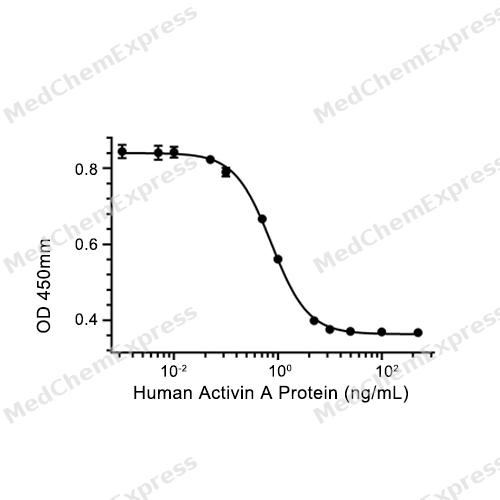
1. The ED50 for this effect is <8 ng/mL, as measured by its ability to inhibit proliferation of MPC-11 cells.
2. The ED50 is less than 8 ng/mL, as measured by its ability to induce SMAD signaling in 293-Activin A Res cells.
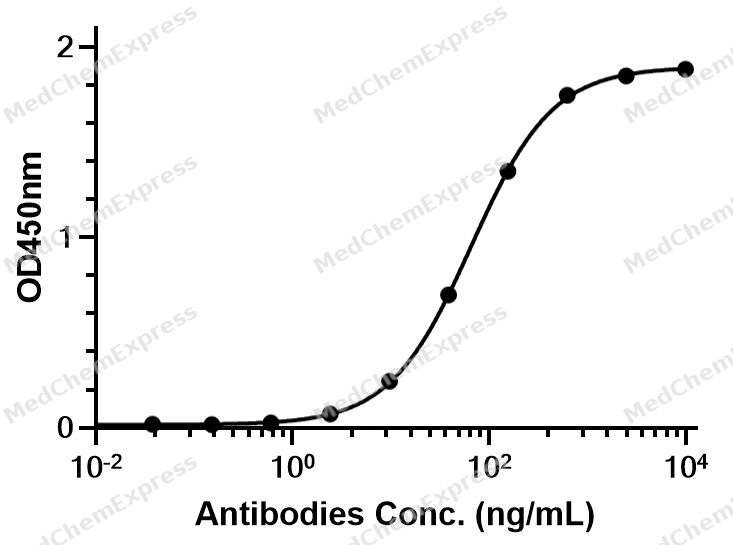
3.Measured by its binding ability in a functional ELISA. Immobilized Human/ Mouse/Rat Activin A at 5 μg/mL (100 μL/well) can bind Biotinylated Human Activin RIIB(HY-P7456), The ED50 for this effect is 28.27 ng/mL.
4.Measured by its binding ability in a functional ELISA. Immobilized Human /Mouse/Rat Activin A at 5 μg/mL (100μL/well) can bind ACVR2A(HY-P75537), The ED50 for this effect is 19.1 ng/mL.
MCE Validation Data
-
Purity - SDS-PAGE
Purity - SDS-PAGE
-
Bioactivity - ELISA
Bioactivity - ELISA
-
Bioactivity - Cell-Based Assay
Bioactivity - Cell-Based Assay
-
Bioactivity - ELISA
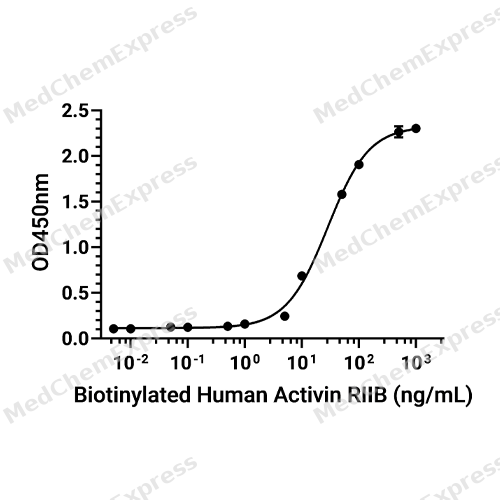
Bioactivity - ELISA
-
Bioactivity - ELISA
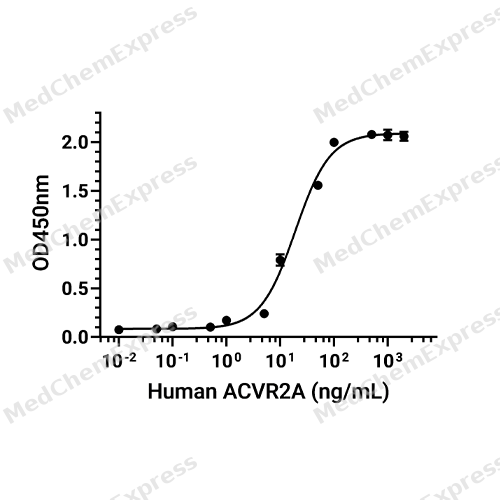
Bioactivity - ELISA


Publications (24)
-
Journal Impact Factor
-
Most Recent
-
Cancer Cell
Mapping cell type-resolved transcriptomic profiles to patient survival in pancreatic cancer. [Abstract]2026 Jun 11:S1535-6108(26)00257-6. PMID: 42276047 -
Trends Biotechnol
Rationally designed light-inducible RNA-releasing protein for translational regulation and optogenetic control of gene therapies. [Abstract]2026 Apr 8:S0167-7799(26)00089-2. PMID: 41956945 -
Nucleic Acids Res
Naïve pluripotency and genomic stability are coordinated in embryonic stem cells by a novel pluripotency regulator ZFP998. [Abstract]2026 May 20;54(10):gkag546. PMID: 42200297 -
MedComm (2020)
Gene Therapy Targeting Pkp2 Deficiency Attenuates Cardiac Fibrosis: Insights From Single-Cell Transcriptomics in Pkp2-Knockout Rats. [Abstract]2025 Sep 18;6(10):e70392. PMID: 40979216 -
Sci Adv
GPAM mediates mitochondrial dysfunction and the progression of alcoholic liver disease through lipid remodeling. [Abstract]2026 Jun 26;12(26):eaef1896. PMID: 42341117 -
Cell Rep
2022 Dec 27;41(13):111891. PMID: 36577384 -
Commun Biol
Enhancing reprogramming towards induced human expanded pluripotency through substitution of SOX2 with engineered SOX17 transcription factors. [Abstract]2026 Apr 9;9(1):780. PMID: 41957290 -
Int J Mol Sci
2025 Mar 28;26(7):3122. PMID: 40243906 -
Cell Regen
2024 Sep 13;13(1):17. PMID: 39269631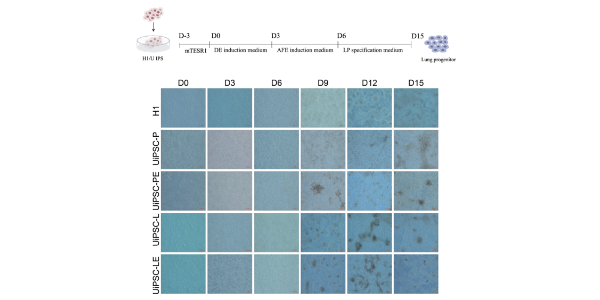
Activin A Protein, Human/Mouse/Rat (HEK293) purchased from MedChemExpress. Usage Cited in: Cell Regen. 2024 Sep 13;13(1):17. [Abstract]
Cell morphology at different time points during myocardial differentiation from UiPSCs and hPSCs.All hPSC lines were induced to differentiate to definitive endoderm (DE) by treatment with 100 ng/ml Activin A (MCE, HY-P70311), 2.5 ng/ml human bFGF, 0.5 ng/ ml human BMP4 and 10 μM Y27632 for 3 days in SFD medium.
-
Biochim Biophys Acta Mol Basis Dis
METTL3 promotes human amniotic epithelial stem cells differentiation into insulin-producing cells by regulation of MaFA expression. [Abstract]2025 Aug;1871(6):167904. PMID: 40374016 -
Poult Sci
NRF2 deficiency impairs proliferation and survival of chicken primordial germ cells via oxidative stress, mitochondrial dysfunction and apoptosis. [Abstract]2026 Mar 12;105(6):106765. PMID: 41850075 -
Poult Sci
Research note: Unveiling the impact of ovotransferrin on chicken primordial germ cells biological processes. [Abstract]2025 May 3;104(7):105259. PMID: 40359719 -
Poult Sci
Comparative study of PGCs cultivation systems HiS and FAcs: a transcriptomic and cellular biology perspective. [Abstract]2024 Oct;103(10):104058. PMID: 39094492 -
Poult Sci
Role of PI3K/AKT signaling pathway involved in self-renewing and maintaining biological properties of chicken primordial germ cells. [Abstract]2024 Aug 8;103(11):104140. PMID: 39173217 -
J Anim Sci
Ubiquitination plays an important role during the formation of chicken primordial germ cells. [Abstract]2024 Jan 3:102:skae251. PMID: 39187982 -
Mol Carcinog
Activin A/ACVR2A axis inhibits epithelial-to-mesenchymal transition in colon cancer by activating SMAD2. [Abstract]2023 Oct;62(10):1585-1598. PMID: 37378449 -
Neuroscience
Activin A protects against lipopolysaccharide/TNF-α induced damage of dopaminergic neurons both in vivo and in vitro by regulating mitochondrial fusion. [Abstract]2025 Sep 26:587:108-122. PMID: 41016503 -
Biol Reprod
Activin A promotes bovine pituitary FSH synthesis and secretion through the cooperative action of the SMAD signaling pathway and FOXO3†. [Abstract]2025 Aug 7:ioaf179. PMID: 40795281 -
Theriogenology
MiR-29c-5p regulates the function of buffalo granulosa cells to induce follicular atresia by targeting INHBA. [Abstract]2023 Jul 15:205:50-62. PMID: 37086585 -
-
-
bioRxiv
2025 Jun 19:2025.06.15.659815. PMID: 40667248 -
-


Technical Parameters
-
Species Rat; Mouse; Human
-
Source HEK293
-
Tag Tag Free
-
Accession
P08476 (G311-S426)
-
Molecular Construction
-
N-term
-
Activin A (G311-S426)
Accession # P08476 -
C-term
-
-
Protein Length
Full Length of Mature Protein
-
Synonyms
Interleukin-18 receptor 1; IL-18R1; CDw218a; IL1RRP; IL-18R-alpha; CD218a
-
AA Sequence
GLECDGKVNICCKKQFFVSFKDIGWNDWIIAPSGYHANYCEGECPSHIAGTSGSSLSFHSTVINHYRMRGHSPFANLKSCCVPTKLRPMSMLYYDDGQNIIKKDIQNMIVEECGCS
-
Predicted Molecular Mass
13 kDa
-
Molecular Weight
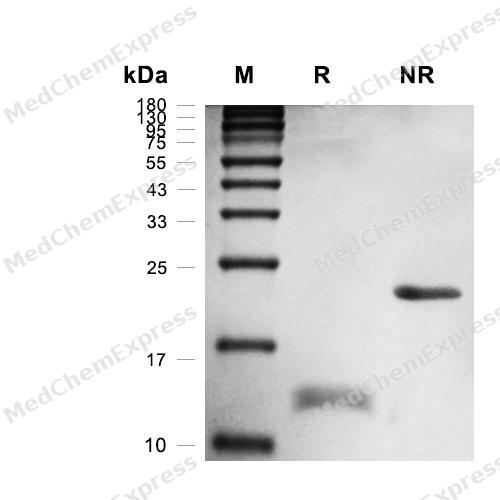
Approximately 14-15 kDa, based on SDS-PAGE under reducing conditions, due to the glycosylation.
-
Purity
≥ 95%, as determined by reducing SDS-PAGE.


Product Properties
Lyophilized powder.
1.Lyophilized from a 0.22 μm filtered solution of 4 mM HCl, 4% mannitol, pH 2.5.
2.Lyophilized from a 0.22 μm filtered solution of 4 mM HCl, pH 0.8.
3.Lyophilized from a 0.22 μm filtered solution of 4 mM HCl, pH 2.5.
Please refer to the lot-specific COA for specific buffer information.
<0.01 EU/μg, determined by LAL method.
It is not recommended to reconstitute to a concentration less than 100 μg/mL in ddH2O. For long term storage it is recommended to add a carrier protein (0.1% BSA, 5% HSA, 10% FBS or 5% Trehalose).
Stored at -20°C for 2 years from date of receipt. After reconstitution, it is stable at 4°C for 1 week or -20°C for longer (with carrier protein). It is recommended to freeze aliquots at -20°C or -80°C for extended storage.
Room temperature in continental US; may vary elsewhere.


Documentation
-
Data Sheet (265 KB)
-
SDS (252 KB)
- English - EN (252 KB)
- Français - FR (252 KB)
- Deutsch - DE (252 KB)
- Norwegian - NO (252 KB)
- Español - ES (252 KB)
- Swedish - SV (252 KB)
- Italian - IT (252 KB)
- Korean - KR (252 KB)
- Portuguese - PT (252 KB)
-
Handling Instructions (2659 KB)


References
[1]. Ge J, et al. Involvement of CHOP in activin A induced myeloma NS 1 cell apoptosis. Oncol Rep. 2019;42(6):2644-2654. [Content Brief]
[2]. Enrrico Bloise, et al. Activin A in Mammalian Physiology. Physiol Rev. 2019 Jan 1;99(1):739-780. [Content Brief]
[3]. N L Frigon Jr, et al. Regulation of globin gene expression in human K562 cells by recombinant activin A. Blood. 1992 Feb 1;79(3):765-72. [Content Brief]
[4]. D D Wu, et al. Expression of the activin axis and neuronal rescue effects of recombinant activin A following hypoxic-ischemic brain injury in the infant rat. Brain Res. 1999 Jul 24;835(2):369-78. [Content Brief]
[5]. B Attardi, et al. Rapid stimulatory effect of activin-A on messenger RNA encoding the follicle-stimulating hormone beta-subunit in rat pituitary cell cultures. Mol Endocrinol. 1990 May;4(5):721-6. [Content Brief]

Calculators
Concentration (start) × Volume (start) = Concentration (final) × Volume (final)


 Powered by Bioz

