244 Results for "

programmed

" in MedChemExpress (MCE) Product Catalog:
Products (244)

244 Results for "programmed" in MCE Product Catalog:

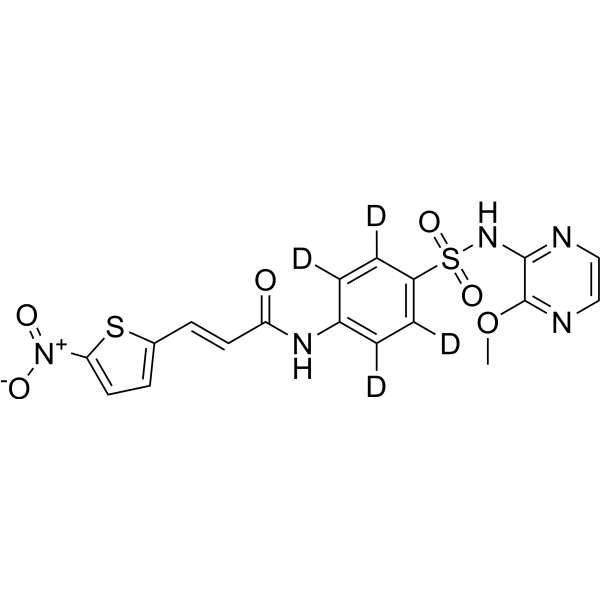
Cat. No.: HY-100573S
CAS No.: 1795144-22-7
Purity:  99.26%
Necrosulfonamide-d4 is the deuterium labeled Necrosulfonamide (HY-100573). Necrosulfonamide is a MLKL and Gasdermin D (GSDMD) inhibitor, capable of separately inhibiting necroptosis and pyroptosis of cells. Necrosulfonamide does not affect the activation of upstream signals, but specifically inhibits the downstream executor oligomerization step. Necrosulfonamide reduces the expression of the key kinases NLRP3 and caspase-1 involved in necroptosis and pyroptosis, activate the Nrf2 pathway and the downstream antioxidant enzymes, and also downregulates a variety of inflammatory factors. Necrosulfonamide plays significant roles in various diseases such as neurodegenerative diseases (such as Parkinson’s disease), tissue damage and ischemia-reperfusion injury, inflammatory bowel disease, osteoarthritis and fracture repair, and hair loss by regulating two important programmed necrosis pathways.
loading...
    loading...
Cat. No.: HY-135752
CAS No.: 99827-19-7
Target:  

Bacterial

Research Areas:  

Infection

Carbendazim mixture with flusilazole is a fungicide used to control sooty mold caused by Botrytis narcissicola. The disease is the most common foliar disease of daffodils (Narcissus cultivars) in the UK and causes significant losses in bulb and flower production. Carbendazim mixture with flusilazole was found to be effective in reducing lesion size and significantly reducing symptoms of secondary sooty mold after spraying when used in combination with several other fungicides. In field trials in Cambridgeshire and Lincolnshire, a spraying program using this fungicide mixture was effective in controlling sooty mold. In addition, alternating four to six sprays using two or three fungicides with different modes of action not only reduced disease damage but also increased bulb production. The study discusses the selection of appropriate fungicides and control methods that may reduce the number of spraying applications.
loading...
    loading...
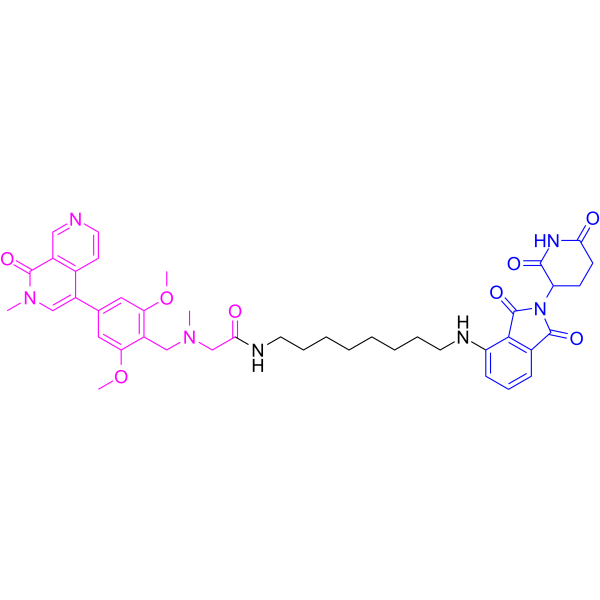
Cat. No.: HY-184556
Research Areas:  

Cancer

dCBP-30 is an orally active, selective and dual-acting CBP/p300 PROTAC degrader with DC50 values of 0.05 nM (CBP) and 0.04 nM (p300), respectively. dCBP-30 reduces the acetylation levels of histone substrates H3K27, H3K18, H2BK5 and H2BK20, downregulates multiple myeloma-specific dependency programs, and induces multiple myeloma cell apoptosis. dCBP-30 triggers tumor regression and prolongs survival in multiple myeloma xenograft mouse models, and exhibits synergistic antiproliferative activity with dexamethasone. dCBP-30 can be used for the research of multiple myeloma .
loading...
    loading...
Cat. No.: HY-P992448

Target:  

PD-1/PD-L1

Research Areas:  

Cancer

RC98 is a monoclonal antibody targeting programmed cell death ligand 1 (PD-L1) and acts as a selective PD-L1 inhibitor. RC98 binds specifically to human and cynomolgus monkey PD-L1. RC98 blocks the interaction between PD-L1 and its receptor PD-1 to reverse T-cell inactivation mediated by PD-1/PD-L1 signaling. RC98 enhances the cytotoxic T-lymphocyte-mediated anti-tumor immune response against PD-L1-expressing tumor cells. RC98 can be used for the research of tumor immunity and solid tumors .
loading...
    loading...
Cat. No.: HY-P70964
Purity:  ≥ 95%, as determined by reducing SDS-PAGE.
Synonyms: PDCD1LG2; B7 Dendritic Cell Molecule; programmed Cell Death 1 Ligand 2; programmed Death Ligand 2; PD-L2; Butyrophilin B7-DC; CD273; PDCD1 Ligand 2; B7-DC; PDCD1L2; PDL2; PD-1-Ligand 2; B7DC; CD273 Antigen; BA574F11.2; PD-1 Ligand 2; Btdc
Species:  
Rhesus Macaque
Source:  
HEK293
loading...
    loading...
Cat. No.: HY-P72407
Purity:  ≥ 95%, as determined by reducing SDS-PAGE.
Synonyms: PDCD1LG2; B7 Dendritic Cell Molecule; programmed Cell Death 1 Ligand 2; programmed Death Ligand 2; PD-L2; Butyrophilin B7-DC; CD273; PDCD1 Ligand 2; B7-DC; PDCD1L2; PDL2; PD-1-Ligand 2; B7DC; CD273 Antigen; BA574F11.2; PD-1 Ligand 2; Btdc
Species:  
Human
Source:  
HEK293
loading...
    loading...
Cat. No.: HY-P72493
Purity:  ≥ 95%, as determined by reducing SDS-PAGE.
Synonyms: PDCD1LG2; B7 Dendritic Cell Molecule; programmed Cell Death 1 Ligand 2; programmed Death Ligand 2; PD-L2; Butyrophilin B7-DC; CD273; PDCD1 Ligand 2; B7-DC; PDCD1L2; PDL2; PD-1-Ligand 2; B7DC; CD273 Antigen; BA574F11.2; PD-1 Ligand 2; Btdc
Species:  
Rhesus Macaque
Source:  
HEK293
loading...
    loading...
Cat. No.: HY-P77528
Purity:  ≥ 95%, as determined by reducing SDS-PAGE.
Synonyms: PDCD1LG2; B7 Dendritic Cell Molecule; programmed Cell Death 1 Ligand 2; programmed Death Ligand 2; PD-L2; Butyrophilin B7-DC; CD273; PDCD1 Ligand 2; B7-DC; PDCD1L2; PDL2; PD-1-Ligand 2; B7DC; CD273 Antigen; BA574F11.2; PD-1 Ligand 2; Btdc
Species:  
Human
Source:  
HEK293
loading...
    loading...
Cat. No.: HY-P78505
Purity:  ≥ 95%, as determined by Bis-Tris PAGE.
Synonyms: PDCD1LG2; B7 Dendritic Cell Molecule; programmed Cell Death 1 Ligand 2; programmed Death Ligand 2; PD-L2; Butyrophilin B7-DC; CD273; PDCD1 Ligand 2; B7-DC; PDCD1L2; PDL2; PD-1-Ligand 2; B7DC; CD273 Antigen; BA574F11.2; PD-1 Ligand 2; Btdc
Species:  
Human
Source:  
HEK293
loading...
    loading...
Cat. No.: HY-P78821
Purity:  ≥ 95%, as determined by reducing SDS-PAGE.
Synonyms: PDCD1LG2; B7 Dendritic Cell Molecule; programmed Cell Death 1 Ligand 2; programmed Death Ligand 2; PD-L2; Butyrophilin B7-DC; CD273; PDCD1 Ligand 2; B7-DC; PDCD1L2; PDL2; PD-1-Ligand 2; B7DC; CD273 Antigen; BA574F11.2; PD-1 Ligand 2; Btdc
Species:  
Human
Source:  
HEK293
loading...
    loading...
Cat. No.: HY-P700894
Purity:  ≥ 95%, as determined by reducing SDS-PAGE.
Synonyms: PDCD1LG2; B7 Dendritic Cell Molecule; programmed Cell Death 1 Ligand 2; programmed Death Ligand 2; PD-L2; Butyrophilin B7-DC; CD273; PDCD1 Ligand 2; B7-DC; PDCD1L2; PDL2; PD-1-Ligand 2; B7DC; CD273 Antigen; BA574F11.2; PD-1 Ligand 2; Btdc
Species:  
Cynomolgus
Source:  
HEK293
loading...
    loading...
Cat. No.: HY-P705267
Purity:  ≥ 90%, as determined by reducing SDS-PAGE.
Synonyms: PDCD1LG2; B7 Dendritic Cell Molecule; programmed Cell Death 1 Ligand 2; programmed Death Ligand 2; PD-L2; Butyrophilin B7-DC; CD273; PDCD1 Ligand 2; B7-DC; PDCD1L2; PDL2; PD-1-Ligand 2; B7DC; CD273 Antigen; BA574F11.2; PD-1 Ligand 2; Btdc
Species:  
Mouse
Source:  
HEK293
loading...
    loading...
Cat. No.: HY-174811
Research Areas:  

Cancer

PROTAC BRD4 Degrader-33 is a BRD4 PROTAC degrader that recruits CRBN. PROTAC BRD4 Degrader-33 downregulates PD-L1 expression, inhibits tumor cell proliferation and tumor growth in mice by inducing ubiquitination and proteasomal degradation of BRD4. PROTAC BRD4 Degrader-33 can be used in the research of breast cancer .
loading...
    loading...
Cat. No.: HY-182980
N-(8-Carboxyoctanoyl)-deacetyl BMS-202 is a target protein ligand-linker conjugate. N-(8-Carboxyoctanoyl)-deacetyl BMS-202 contains the target protein PD-1/PD-L1 ligand and a PROTAC linker. N-(8-Carboxyoctanoyl)-deacetyl BMS-202 can be used for the synthesis of PROTAC PD-L1 Degrader-3 (HY-182959) .
loading...
    loading...
Cat. No.: HY-100573R
CAS No.: 1360614-48-7
Necrosulfonamide (Standard) is the analytical standard of Necrosulfonamide (HY-100573). This product is intended for research and analytical applications. Necrosulfonamide is a MLKL and Gasdermin D (GSDMD) inhibitor, capable of separately inhibiting necroptosis and pyroptosis of cells. Necrosulfonamide does not affect the activation of upstream signals, but specifically inhibits the downstream executor oligomerization step. Necrosulfonamide reduces the expression of the key kinases NLRP3 and caspase-1 involved in necroptosis and pyroptosis, activate the Nrf2 pathway and the downstream antioxidant enzymes, and also downregulates a variety of inflammatory factors. Necrosulfonamide plays significant roles in various diseases such as neurodegenerative diseases (such as Parkinson’s disease), tissue damage and ischemia-reperfusion injury, inflammatory bowel disease, osteoarthritis and fracture repair, and hair loss by regulating two important programmed necrosis pathways .
loading...
    loading...
Cat. No.: HY-148739
CAS No.: 2170679-42-0
Research Areas:  

Cancer

dBRD 9-A is a selective BRD9 PROTAC degrader. dBRD 9-A induces near complete BRD9 degradation dependent on E3 ubiquitin ligase CRBN and BRD9 bromodomain engagement, and drives loss of BRD9 chromatin binding genome-wide. dBRD 9-A downregulates oncogenic SS18-SSX-driven transcriptional programs, super enhancer-associated gene expression, and SS18-SSX1 super enhancer binding, and depletes GBAF complex members GLTSCR1/1L from SS18-SSX complexes. dBRD 9-A induces cell cycle arrest and increases apoptosis in synovial sarcoma cells. dBRD 9-A can be used for the research of synovial sarcoma .
loading...
    loading...
Cat. No.: HY-149209
CAS No.: 3034487-84-5
Purity:  99.76%
Research Areas:  

Metabolic Disease Cancer

LL-K8-22 is a dual degrader of CDK8 and cyclin C HyT, with DC50 values of 2.52 μM and 2.64 μM, respectively. LL-K8-22 inhibits phosphorylation of STAT1 Ser 727, phosphorylation of the C-terminal domain Ser 2/5 of RNA polymerase II, and phosphorylation of Rb. LL-K8-22 represses E2F- and MYC-driven transcriptional programs and exhibits antiproliferative effects. LL-K8-22 synchronously induces proteasome-dependent selective degradation of CDK8 and cyclin C without degrading CDK19, other CDK family members, or other cyclins. LL-K8-22 can be used in the research of triple-negative breast cancer and colon cancer .
loading...
    loading...
Cat. No.: HY-179558
Research Areas:  

Cancer

MS1-96 is an orally active PD-L1 (programmed death-ligand 1) molecular glue degrader. MS1-96 effectively reduced PD-L1 protein levels across multiple colorectal cancer (CRC) cell lines. MS1-96 directly binds to PD-L1 (KD = 2.58 μM) and enhances the interaction between HIP1R and PD-L1, thereby altering the intracellular trafficking of PD-L1 within clathrin-coated vesicles. MS1-96 induces abnormal N-glycosylation of PD-L1, destabilizing the protein and hastening its lysosome-mediated degradation. MS1-96 can be used for the study of colorectal cancer .
loading...
    loading...
Cat. No.: HY-182037
Research Areas:  

Cancer

Multi-target kinase-IN-9 is a multi-target enzyme inhibitor with antiproliferative and antiangiogenic activities, and exhibits remarkable selectivity against hepatocellular carcinoma cells. By broadly binding to the active sites or ATP-binding regions of multiple key enzymes including DNA polymerase β, Pyruvate Kinase M2 (PKM2), Multi-target kinase-IN-9 comprehensively disrupts DNA repair and replication, glycolysis, chromatin dynamics and transcriptional programs, and blocks the self-renewal of cancer stem cells. Multi-target kinase-IN-9 induces genomic instability, lysosomal dysfunction and autophagic flux impairment, thereby triggering tumor cell death, effectively inhibiting tumor proliferation, invasion, metastasis and angiogenesis, and significantly reducing tumor volume in xenograft models. Multi-target kinase-IN-9 is applicable to hepatocellular carcinoma-related research .
loading...
    loading...
Cat. No.: HY-186151
CAS No.: 1372406-51-3
Target:  

MDM-2/p53 Apoptosis

Research Areas:  

Cancer

UCI-LC0019 is a mutant p53 reactivator. UCI-LC0019 binds to mutant p53, induces wild-type-like conformational change, restores sequence-specific DNA binding activity, activates p53-dependent transcription programs, and does not act via thiol reactivity or glutathione depletion. UCI-LC0019 inhibits proliferation and induces apoptosis in cancer cells harboring mutant p53, with no significant effect on p53 null or wild-type p53 tumors cells. UCI-LC0019 exhibits anti-tumor activity in xenograft mouse models carrying p53R175H mutant tumors. UCI-LC0019 can be used for the research of cancer, such as ovarian cancer .
loading...
    loading...

