2356 Results for "

Azide groups

" in MedChemExpress (MCE) Product Catalog:
Products (2356)

2356 Results for "Azide groups" in MCE Product Catalog:

Cat. No.: HY-W800775
CAS No.: 2770422-56-3
BP Fluor 647 Alkyne is a bright green-fluorescent dye optimal for use with the 633, 650 nm Argon laser. The alkyne group can react with azides via copper catalyzed Click Chemistry reactions. The dye is water soluble and pH-insensitive from pH 4 to pH 10. The dye has 4 sulfonate groups which make it highly water soluble and cause less aggregation in the aqueous solution. BP Fluor 647 Alkyne is used for protein and antibody labeling, or nucleic acid applications with high labeling density.
loading...
    loading...
Cat. No.: HY-151769
CAS No.: 2353409-48-8
Target:  

ADC Linkers

Research Areas:  

Others

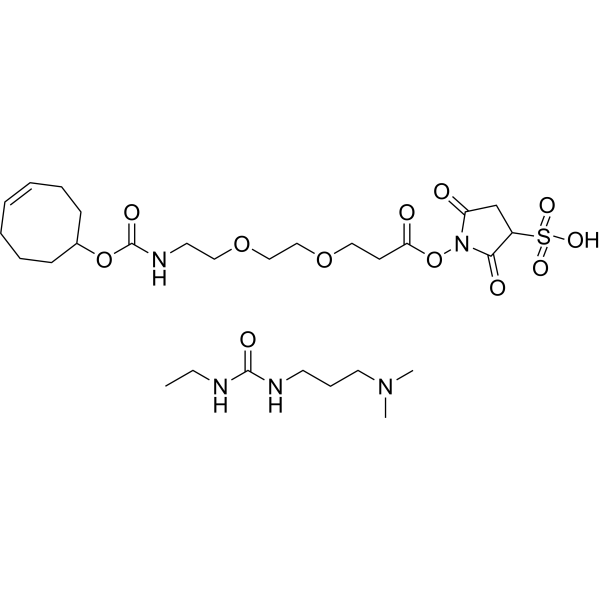
TCO-PEG2-Sulfo-NHS ester-EDC Urea is a click chemistry reagent containing an azide group. TCO-PEG2-Sulfo-NHS ester is a PEG linker containing a TCO moiety and a sulfo-NHS ester moiety. The sulfo group makes this molecule soluble in waqueous buffer. This reagent can be used to label antibodies, proteins and other primary amine-containing macromolecules with TCO moiety. Reagent grade, for research use only . TCO-PEG2-Sulfo-NHS ester-EDC Urea is a click chemistry reagent, it contains a TCO group that can undergo an inverse electron demand Diels-Alder reaction (iEDDA) with molecules containing Tetrazine groups.
loading...
    loading...
Cat. No.: HY-156323
Target:  

ADC Linkers

Research Areas:  

Cancer

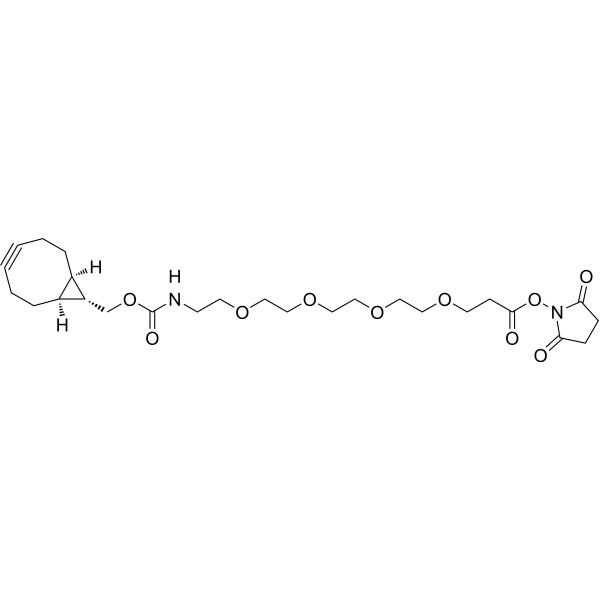
BCN-exo-PEG4-NHS is an ADC Linker containing 4 PEG units. BCN-exo-PEG4-NHS contains the lyophilic bidentate macrocyclic ligand BCN, which allows for further synthesis of macrocyclic complexes. In click chemistry, BCN reacts with molecules containing azide groups to form stable triazoles in the absence of catalysts.
loading...
    loading...
Cat. No.: HY-156324
Target:  

ADC Linkers

Research Areas:  

Cancer

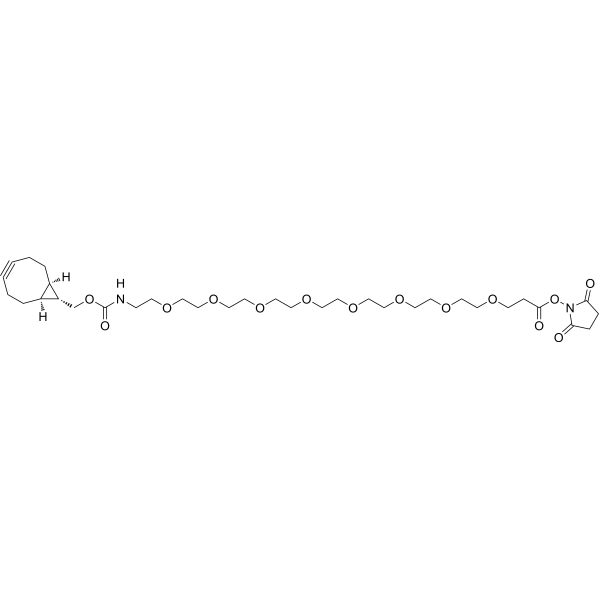
BCN-exo-PEG8-NHS is an ADC Linker containing 8 PEG units. BCN-exo-PEG8-NHS contains the lyophilic bidentate macrocyclic ligand BCN, which allows for further synthesis of macrocyclic complexes. In click chemistry, BCN reacts with molecules containing azide groups to form stable triazoles in the absence of catalysts.
loading...
    loading...
Cat. No.: HY-D3570
Target:  

Fluorescent Dye

Research Areas:  

Others

AF405 DBCO is a blue fluorescent dye derivative containing a dibenzocyclooctyne (DBCO) group. AF405 DBCO reacts rapidly with azide-labeled biomolecules at room temperature without the need for a metal catalyst, enabling copper-free click chemistry (SPAAC) for applications in live-cell imaging, flow cytometry, super-resolution microscopy, and other research fields .
loading...
    loading...
Cat. No.: HY-147858A
Purity:  99.19%
Target:  

PROTACs EGFR Apoptosis

Research Areas:  

Inflammation/Immunology Cancer

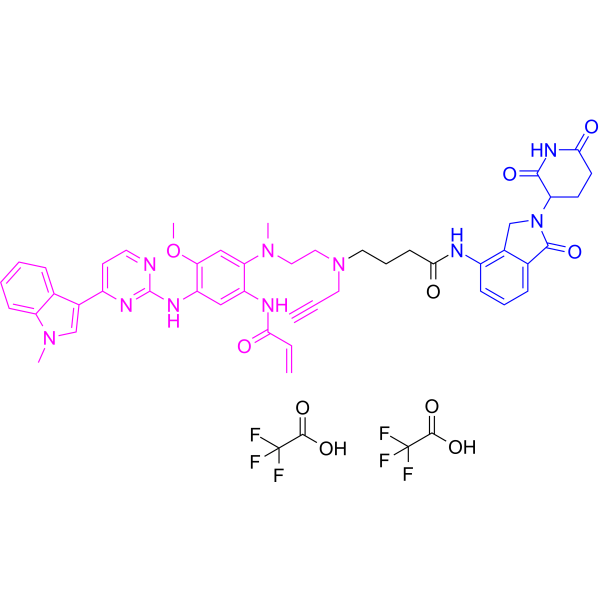
PROTAC EGFR degrader 7 (compound 13b) diTFA is a potent and selective CRBN-recruiting PROTAC EGFR L858R/T790M degrader, with a DC50 of 13.2 nM. PROTAC EGFR degrader 7 diTFA inhibits NCI–H1975 cells proliferation, with an IC50 of 46.82 nM. PROTAC EGFR degrader 7 diTFA significantly induces apoptosis and G2/M phase arrest in NCI–H1975 cell. PROTAC EGFR degrader 7 diTFA shows antitumor activity, and can be used for non-small cell lung cancer (NSCLC) research . PROTAC EGFR degrader 7 diTFA is a click chemistry reagent, it contains an Alkyne group and can undergo copper-catalyzed azide-alkyne cycloaddition (CuAAc) with molecules containing Azide groups.
loading...
    loading...
Cat. No.: HY-N2789
CAS No.: 211238-60-7
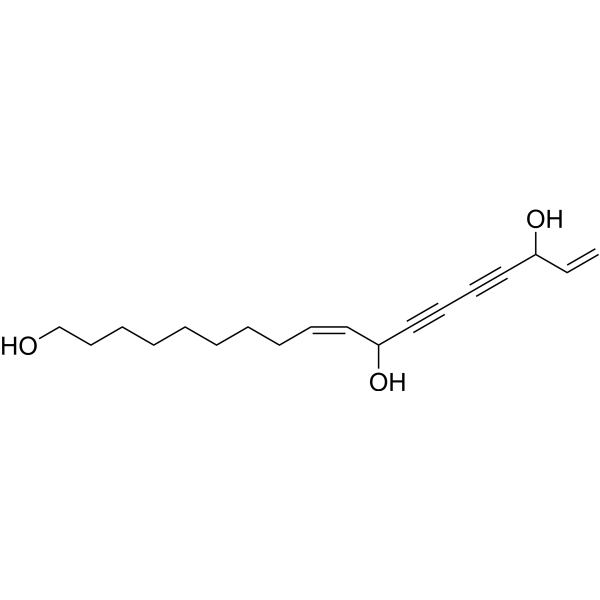
(9Z)-9,17-Octadecadiene-12,14-diyne-1,11,16-triol is a nature product that could be isolated from the ethyl acetate extract of Cassonia barteri (Araliaceae) leaves. (9Z)-9,17-Octadecadiene-12,14-diyne-1,11,16-triol has antibacterial activity against Bacillus subtilis and Pseudomonas fluorescens, antifungal activity against Cladosporium cucumerinum, moiluscicidal activity against Biomphalaria glabrata . (9Z)-9,17-Octadecadiene-12,14-diyne-1,11,16-triol is a click chemistry reagent, it contains an Alkyne group and can undergo copper-catalyzed azide-alkyne cycloaddition (CuAAc) with molecules containing Azide groups.
loading...
    loading...
Cat. No.: HY-W999557
CAS No.: 2766352-74-1
Research Areas:  

Cancer

(R,S,S)-VH032-PEG5-N3 is an E3 ligase ligand-linker conjugate comprising a VHL ligand based on VH032 and a 5-unit PEG linker. (R,S,S)-VH032-PEG5-N3 is a click chemistry reagent. It contains an azide group and can undergo copper-catalyzed azido-azynylene cycloaddition (CuAAc) with molecules containing an alkyne group. It can also undergo ring-strain-driven alkyne-azido cycloaddition (SPAAC) with molecules containing DBCO or BCN groups.
loading...
    loading...
Cat. No.: HY-174929
Synonyms: DBCO-PEG3400-NH2
DBCO-PEG3400-Amine (DBCO-PEG3400-NH2) is a polyethylene glycol derivative containing dibenzocyclooctyne. DBCO-PEG-Amine is a universal, modular "bridge molecule": it forms stable covalent linkage with target materials (e.g., MSN or polymers) via the amino group at one end, while the DBCO group at the other end enables efficient, specific, and biocompatible click chemical conjugation with any azide-bearing biological entities (e.g., bacteria, cells) in subsequent steps .
loading...
    loading...
Cat. No.: HY-174929A
Synonyms: DBCO-PEG5000-NH2
DBCO-PEG5000-Amine (DBCO-PEG5000-NH2) is a polyethylene glycol derivative containing dibenzocyclooctyne. DBCO-PEG-Amine is a universal, modular "bridge molecule": it forms stable covalent linkage with target materials (e.g., MSN or polymers) via the amino group at one end, while the DBCO group at the other end enables efficient, specific, and biocompatible click chemical conjugation with any azide-bearing biological entities (e.g., bacteria, cells) in subsequent steps .
loading...
    loading...
Cat. No.: HY-151697
CAS No.: 1797508-57-6
Target:  

ADC Linkers

Research Areas:  

Others

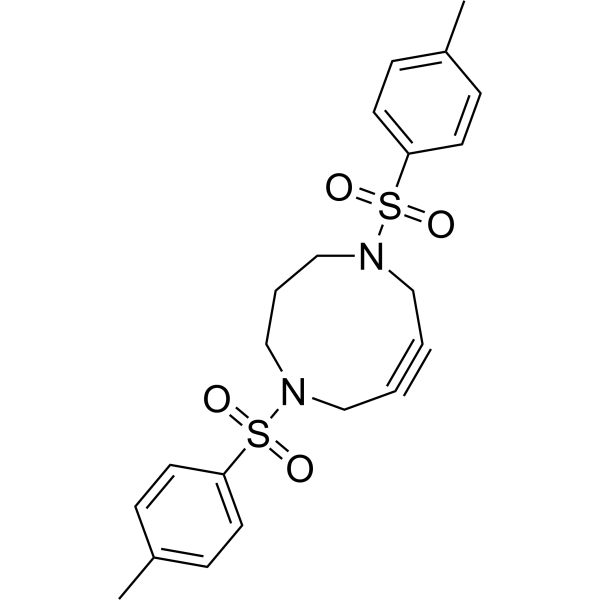
DACN(Tos2) is a a click chemistry reagent containing an cycloalkynes group. The alkyne moiety within the ring has a unique bent structure and high reactivity toward cycloaddition reactions. DACN(Tos2) through such strain-promoted azide-alkyne cycloadditions (SPAAC) using cycloalkynes. DACN(Tos2) can be used for the research of molecular conjugation .
loading...
    loading...
Cat. No.: HY-151795
CAS No.: 2331322-18-8
Target:  

ADC Linkers

Research Areas:  

Others

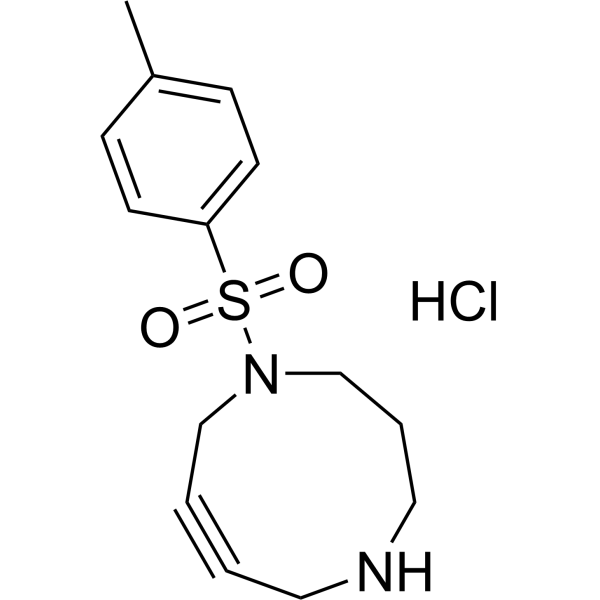
DACN(Tos) hydrochloride is a click chemistry reagent containing a cycloalkyne group. The alkyne moiety within the ring has a unique bent structure and high reactivity toward cycloaddition reactions, such strain-promoted azide-alkyne cycloadditions (SPAAC) by using cycloalkynes. DACNs possesses high thermal and chemical stability along with comparable click reactivity. DACN(Tos) hydrochloride can be used for the research of molecular conjugation .
loading...
    loading...
Cat. No.: HY-W800840
CAS No.: 1417790-98-7
Research Areas:  

Others

Alkyne Sphinganine a metabolic labeling reagent that contains a terminal alkyne moiety that allows for the subsequent tagging of protein?lipid complexes by click chemistry. The terminal alkyne group can be used in a highly specific linking reaction with azide-containing reagents, known as ‘click chemistry’, in the presence of a copper (Cu)-containing catalyst allowing for the visualization and proteomic profiling of protein?sphingolipid complexes in living cells.
loading...
    loading...
Cat. No.: HY-L258
437 compounds

In modern medicinal chemistry and chemical biology research, alkyne (-C≡C-) structures play an important role in click chemistry, bioorthogonal labeling, and the construction of functional molecules due to their unique linear geometry and high reactivity. In particular, driven by the development of copper-catalyzed azide-alkyne cycloaddition (CuAAC) and copper-free click reactions (SPAAC), terminal alkyne groups have become important “chemical handles” for building complex biomolecular systems.

The MCE Alkyne Compound Library contains 437 compounds designed for the construction of click chemistry reaction systems and the development of diverse functional molecules. In drug discovery, these structures serve as key reactive sites that can efficiently undergo click reactions with azide groups, enabling modular assembly of PROTAC molecules, construction of ADC linkers, and rapid synthesis of bioorthogonal labeling probes. In addition, alkyne groups exhibit high stability, mild reaction conditions, and excellent biocompatibility, allowing them to maintain reactivity in complex biological environments. This contributes to improved efficiency and controllability in drug development, making them indispensable chemical building blocks in modern drug design and functional molecular engineering.

Cat. No.: HY-156317
Purity:  ≥95.0%
Target:  

ADC Linkers

Research Areas:  

Cancer

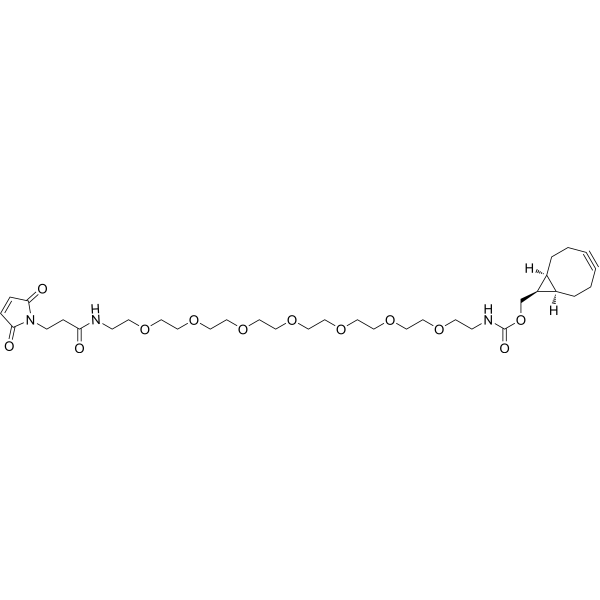
BCN-endo-PEG7-maleimide is an ADC Linker containing 7 PEG units. BCN-endo-PEG7-maleimide contains the lyophilic bidentate macrocyclic ligand endo-BCN, which can further synthesize macrocyclic complexes. In click chemistry, endo-BCN can react with molecules containing azide groups to form stable triazoles in the absence of catalysts.
loading...
    loading...
Cat. No.: HY-156319
CAS No.: 1357379-13-5
Target:  

ADC Linkers

Research Areas:  

Cancer

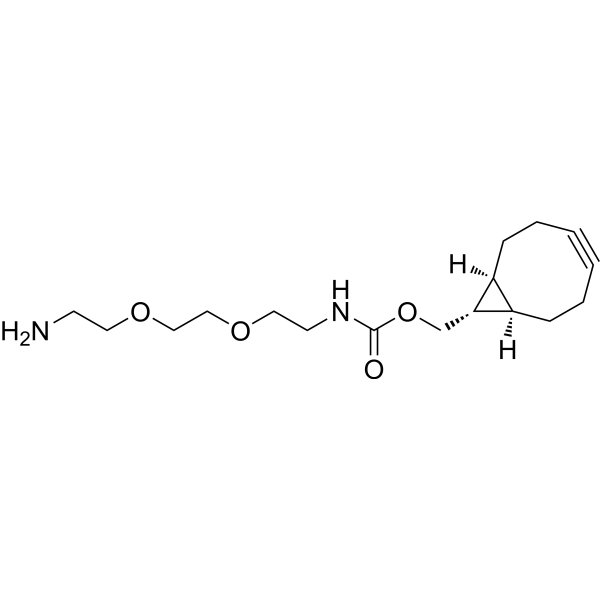
BCN-exo-PEG2-NH2 is an ADC Linker containing 2 PEG units. BCN-exo-PEG2-NH2 contains the lyophilic bidentate macrocyclic ligand BCN, which can further synthesize macrocyclic complexes. In click chemistry, BCN reacts with molecules containing azide groups to form stable triazoles in the absence of catalysts.
loading...
    loading...
Cat. No.: HY-W096079
CAS No.: 1702356-19-1
Target:  

ADC Linkers

Research Areas:  

Cancer

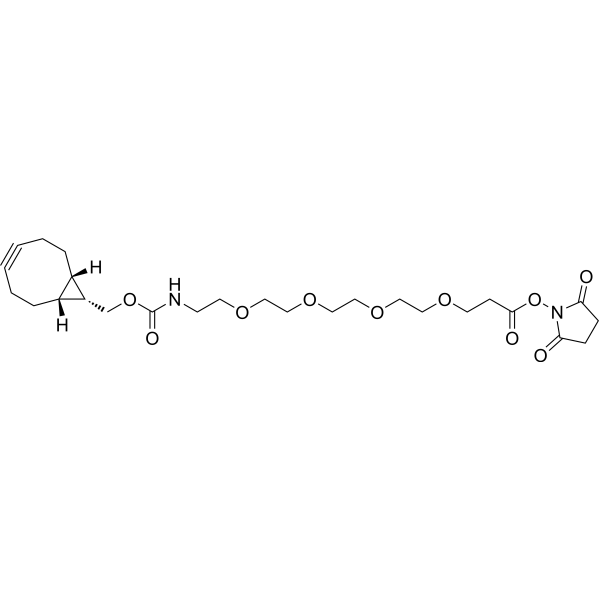
BCN-endo-PEG4-NHS is an ADC Linker containing 4 PEG units. BCN-endo-PEG4-NHS contains the lyophilic bidentate macrocyclic ligand endo-BCN, which allows for further synthesis of macrocyclic complexes. In click chemistry, endo-BCN can react with molecules containing azide groups to form stable triazoles in the absence of catalysts.
loading...
    loading...
Cat. No.: HY-126192
CAS No.: 566169-93-5
Purity:  ≥95.0%
Synonyms: PiB; 6-OH-BTA-1
Pittsburgh Compound B (PiB) is a blood-brain barrier-permeable, specific deposition PET tracer that binds to Aβ(1-40) fibrils with a Ki value of 678.4 nM. Through click chemical modification (a clickable Pittsburgh Compound B derivative is prepared by introducing a PEG3 linker and an alkynyl group at the 6-hydroxy site of Pittsburgh Compound B, followed by covalent conjugation with azide-labeled fluorescent dyes or affinity tags via copper-catalyzed azide-alkyne cycloaddition (CuAAC)), Pittsburgh Compound B and its conjugates can be used for fluorescence imaging, ultrastructural studies, and enrichment and characterization of Aβ complexes. Pittsburgh Compound B is applicable to Alzheimer's disease research .
loading...
    loading...
Cat. No.: HY-151833
CAS No.: 2639395-39-2
Target:  

ADC Linkers

Research Areas:  

Others

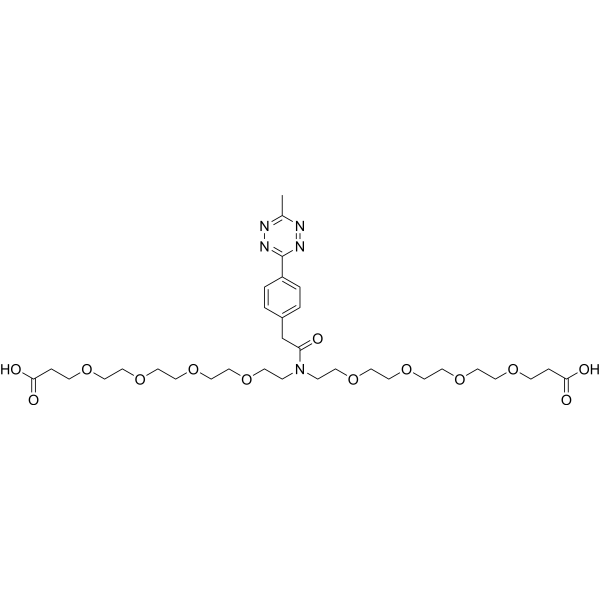
Methyltetrazine-amido-N-bis(PEG4-acid) is a click chemistry reagent containing an azide group. Methyltetrazine-amido-N-bis(PEG4-acid) is a PEG derivative that contains a methyltetrazine group and two acid groups. This reagent can react with TCO-containing compounds to form a stable covalent bond without the catalysis of Cu or elevated temperatures. The inverse-electron demand Diels-Alder cycloaddition reaction of TCO with tetrazines is the fastest bioorthogonal reaction with exceptional selectivity. The terminal carboxylic acid can react with primary amine groups in the presence of activators (e.g. EDC, or HATU) to form a stable amide bond. PEG linker increases the water solubility of the compound. Reagent grade, for research use only . Methyltetrazine-amido-N-bis(PEG4-acid) is a click chemistry reagent, it contains a Tetrazine group that can undergo an inverse electron demand Diels-Alder reaction (iEDDA) with molecules containing TCO groups.
loading...
    loading...
Cat. No.: HY-114354
CAS No.: 302795-84-2
Purity:  98.41%
Synonyms: BOD FL alkyne
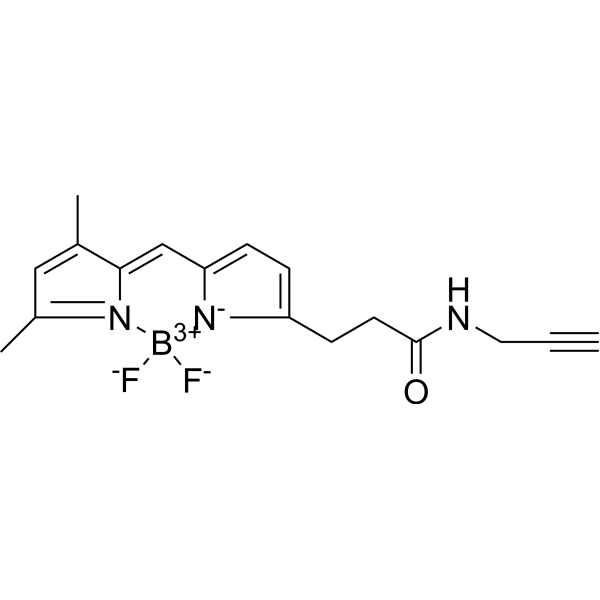
BODIPY (BOD) FL alkyne is an alkyne-containing BODIPY fluorophore derivative. BODIPY FL alkyne is a bioorthogonal labeling reagent with low toxicity and extremely low non-specific reactivity, and it is widely used in fluorescent bioimaging. BODIPY FL alkyne specifically labels azide groups on intracellular glycoconjugates mainly via strain-promoted azide-alkyne cycloaddition (SPAAC), or mediates site-specific conjugation with proteins such as IL-33, and supports positive cross-linking with other probes (e.g., DBCO-SCy5) for dual labeling. With the advantages of high specificity and low background interference, BODIPY FL alkyne can be used in the research of related diseases such as asthma, atopic dermatitis and inflammatory bowel disease .
loading...
    loading...

