2353 Results for "

cycloaddition

" in MedChemExpress (MCE) Product Catalog:
Products (2353)

2353 Results for "cycloaddition" in MCE Product Catalog:

Cat. No.: HY-105168
CAS No.: 157380-72-8
Target:  

Endothelin Receptor

Research Areas:  

Cardiovascular Disease

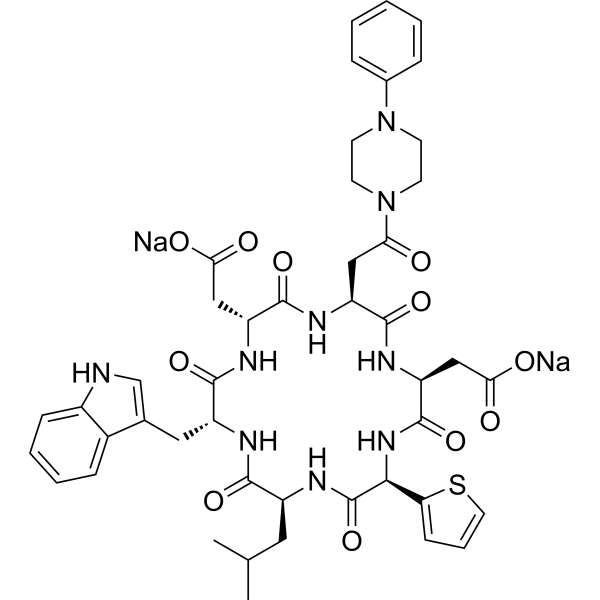
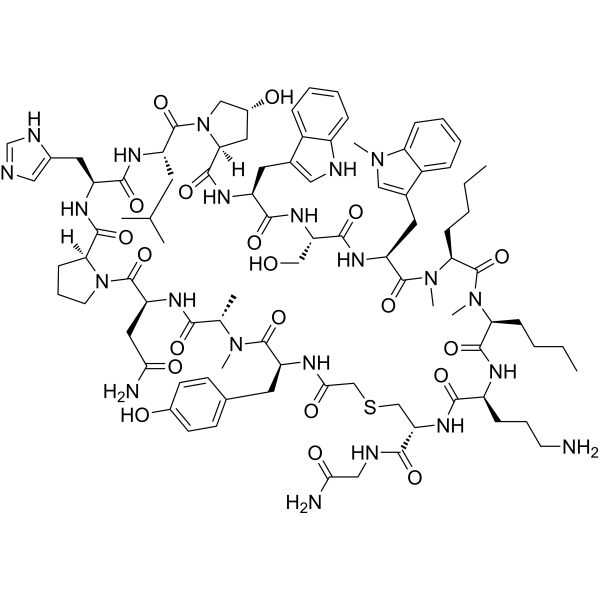
TAK 044 is an antagonist of Endothelin Receptor. TAK 044 strongly inhibits ET-induced deterioration in various animal models. TAK 044 can be used in study ET-related diseases such as acute myocardial infarction,acute renal failure, acute hepatic malfunction, and subarachnoid hemorrhage .
loading...
    loading...
Cat. No.: HY-P11488
JR11-PEG3-DOTA-PSMA-03 (Compound 2) is an RDC-related compound containing the chelating agent DOTA (HY-W053583), the JR11 peptide (SSTR2 antagonist), and the PSMA ligand. JR11-PEG3-DOTA-PSMA-03 shows SSTR2-binding affinities and PSMA-binding affinities, with IC50 s of 94.0 nM, 81.8 nM, respectively. JR11-PEG3-DOTA-PSMA-03 can be radiolabeled with [ 68Ga]. [ 68Ga] radiolabeled JR11-PEG3-DOTA-PSMA-03 can be used in diagnostic studies of neuroendocrine differentiated prostate cancer .
loading...
    loading...
Cat. No.: HY-P11485
JR11-PEG3-HBED-CC-PSMA-03 (Compound 1) is an RDC-related compound containing the chelating agent HBED-CC, the JR11 peptide (SSTR2 antagonist), and the PSMA ligand. JR11-PEG3-HBED-CC-PSMA-03 shows SSTR2-binding affinities and PSMA-binding affinities, with IC50 s of 59.2 nM, 57.0 nM, respectively. JR11-PEG3-HBED-CC-PSMA-03 can be radiolabeled with [ 68Ga]. [ 68Ga] radiolabeled JR11-PEG3-HBED-CC-PSMA-03 can be used in diagnostic studies of neuroendocrine differentiated prostate cancer .
loading...
    loading...
Cat. No.: HY-151833
CAS No.: 2639395-39-2
Target:  

ADC Linkers

Research Areas:  

Others

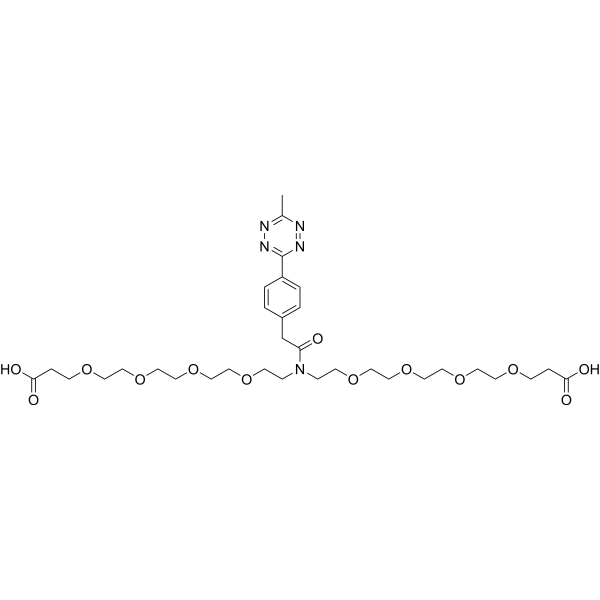
Methyltetrazine-amido-N-bis(PEG4-acid) is a click chemistry reagent containing an azide group. Methyltetrazine-amido-N-bis(PEG4-acid) is a PEG derivative that contains a methyltetrazine group and two acid groups. This reagent can react with TCO-containing compounds to form a stable covalent bond without the catalysis of Cu or elevated temperatures. The inverse-electron demand Diels-Alder cycloaddition reaction of TCO with tetrazines is the fastest bioorthogonal reaction with exceptional selectivity. The terminal carboxylic acid can react with primary amine groups in the presence of activators (e.g. EDC, or HATU) to form a stable amide bond. PEG linker increases the water solubility of the compound. Reagent grade, for research use only . Methyltetrazine-amido-N-bis(PEG4-acid) is a click chemistry reagent, it contains a Tetrazine group that can undergo an inverse electron demand Diels-Alder reaction (iEDDA) with molecules containing TCO groups.
loading...
    loading...
Cat. No.: HY-125357
CAS No.: 148619-41-4
Target:  

Inhibitory Antibodies

Research Areas:  

Metabolic Disease

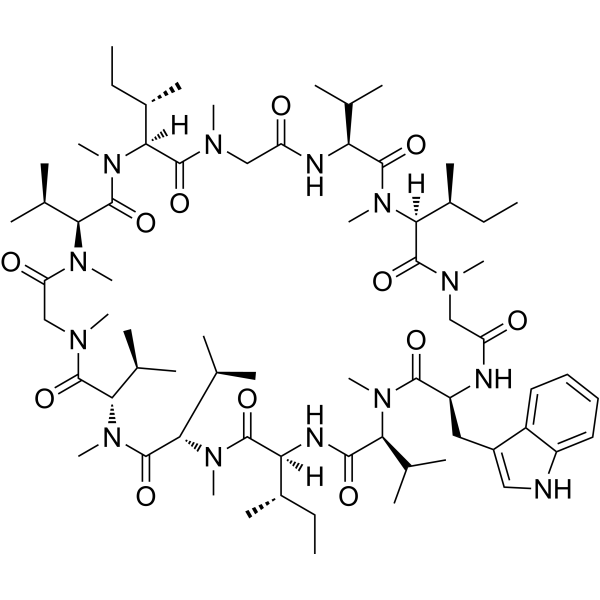
Ternatin (compound 2) is a cyclic heptapeptides that can be isolated from mushroom Coliorus versicolor. Ternatin inhibits fat-accumulation with an IC50 of 0.027 μM in 3T3-L1 adipocytes .
loading...
    loading...
Cat. No.: HY-P5957
CAS No.: 186511-50-2
Target:  

Parasite

Omphalotin A is a cyclic peptide, and shows nematicidal activity .
loading...
    loading...
Cat. No.: HY-147414
CAS No.: 1416241-23-0
Purity:  98.69%
Synonyms: PF-114
Target:  

Bcr-Abl

Research Areas:  

Cancer

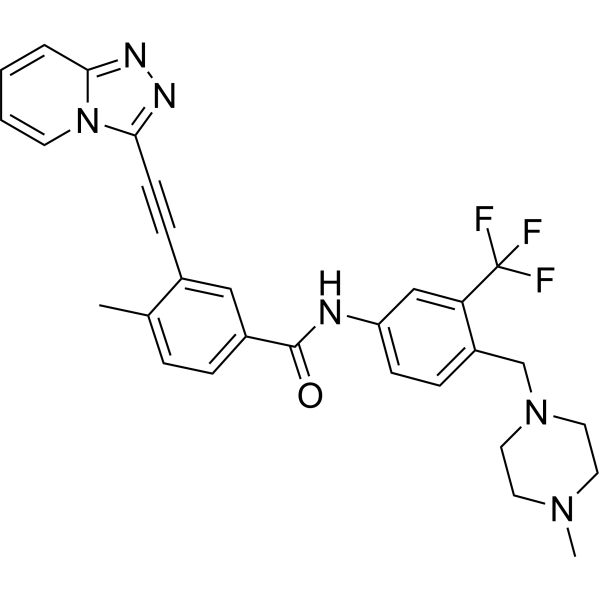
Vamotinib (PF-114) is a potent, selective and orally active tyrosine kinase inhibitor. Vamotinib inhibits the autophosphorylation of BCR/ABL and BCR/ABL-T315I. Vamotinib induces apoptosis. Vamotinib shows anti-proliferative and anti-tumor activity. Vamotinib has the potential for the research of resistant philadelphia chromosome-positive (Ph+) leukemia. Vamotinib inhibits ABL series kinases with IC50s of 0.49 nM (ABL), 0.78 nM (ABL T315I), 9.5 nM (ABL E255K), 2.0 nM (ABL F317I), 7.4 nM (ABL G250E), 1.0 nM (ABL H396P), 2.8 nM (ABL M351T), 12 nM (ABL Q252H), and 4.1 nM (ABL Y253F), respectively . Vamotinib is a click chemistry reagent, it contains an Alkyne group and can undergo copper-catalyzed azide-alkyne cycloaddition (CuAAc) with molecules containing Azide groups.
loading...
    loading...
Cat. No.: HY-P3440
CAS No.: 1886057-64-2
Research Areas:  

Cancer

WL12 is a specifically targeting programmed death ligand 1 (PD-L1) binding peptide. WL12 can be radiolabeled by different radionuclides, generating radiotracers, which can assess the tumor PD-L1 expression .
loading...
    loading...
Cat. No.: HY-N10834
CAS No.: 120166-71-4
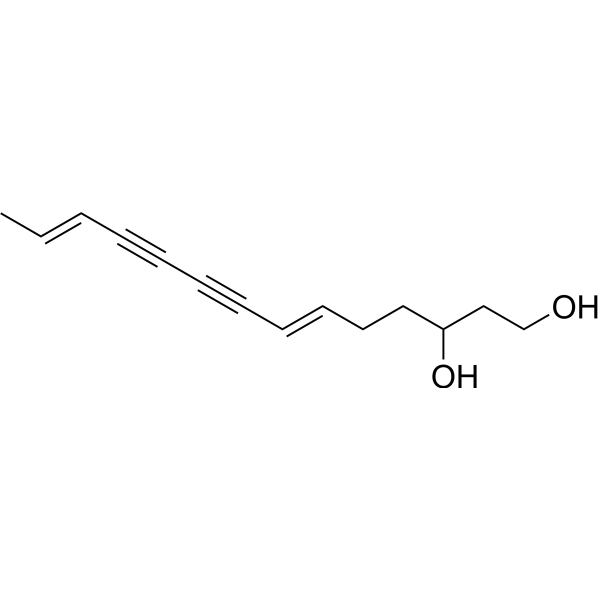
(6E,12E)-Tetradecadiene-8,10-diyne-1,3-diol is an antibacterial compound. (6E,12E)-Tetradecadiene-8,10-diyne-1,3-diol can be isolated from the roots of Atractylodes japonica. (6E,12E)-Tetradecadiene-8,10-diyne-1,3-diol has anti-methicillin-resistant Staphylococcus aureus (MRSA) activity with MIC values of 4-32 μg/mL. (6E,12E)-Tetradecadiene-8,10-diyne-1,3-diol can be used for the research of bacterial infection . (6E,12E)-Tetradecadiene-8,10-diyne-1,3-diol is a click chemistry reagent, it contains an Alkyne group and can undergo copper-catalyzed azide-alkyne cycloaddition (CuAAc) with molecules containing Azide groups.
loading...
    loading...
Cat. No.: HY-L258
437 compounds

In modern medicinal chemistry and chemical biology research, alkyne (-C≡C-) structures play an important role in click chemistry, bioorthogonal labeling, and the construction of functional molecules due to their unique linear geometry and high reactivity. In particular, driven by the development of copper-catalyzed azide-alkyne cycloaddition (CuAAC) and copper-free click reactions (SPAAC), terminal alkyne groups have become important “chemical handles” for building complex biomolecular systems.

The MCE Alkyne Compound Library contains 437 compounds designed for the construction of click chemistry reaction systems and the development of diverse functional molecules. In drug discovery, these structures serve as key reactive sites that can efficiently undergo click reactions with azide groups, enabling modular assembly of PROTAC molecules, construction of ADC linkers, and rapid synthesis of bioorthogonal labeling probes. In addition, alkyne groups exhibit high stability, mild reaction conditions, and excellent biocompatibility, allowing them to maintain reactivity in complex biological environments. This contributes to improved efficiency and controllability in drug development, making them indispensable chemical building blocks in modern drug design and functional molecular engineering.

Cat. No.: HY-P11927
Target:  

GSK-3

Research Areas:  

Cancer

BiS3 is a selective hyperbivalent macrocyclic peptide GSK3β inhibitor, with a Kd of 0.28 nM and an IC50 of 4.8 nM against GSK3β. BiS3 is applicable to studies related to GSK3β signaling and colorectal cancer .
loading...
    loading...
Cat. No.: HY-131384
CAS No.: 34262-64-1
Synonyms: 8,11,14-Icosatriynoic acid
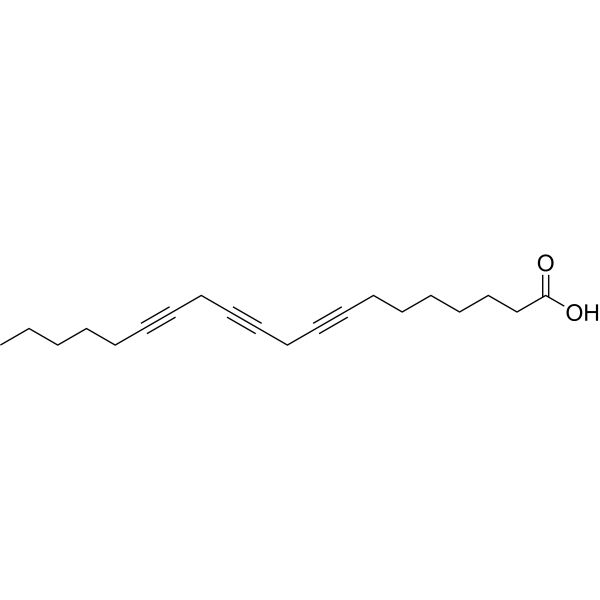
8,11,14-Eicosatriynoic Acid, as an inhibitor of prostaglandin, leukotriene biosynthesis, and arachidonic acid-induced platelet aggregation, blocks human 12-lipoxygenase (12-LO), cyclooxygenase (COX)and 5-lipoxygenase (5-LO) with IC50 values of 0.46 μM, 14 μMand 25 μM, respectively. In addition, 8,11,14-Eicosatriynoic Acid inhibits the action of slow-reacting substances of allergic reactions, with IC50 value of 10 μM. Lipoxygenase is widely found in fungi, plants and animals. 12-LO involves in many important disease states and may play a role in oxidative glutamate toxicity. COX enzymes play complex roles in human physiology and pathology involving the neuronal, immune, renal, cardiovascular, gastrointestinal and reproductive systems. COX enzymes are blocked by aspirin and a variety of other NSAIDs, which makes them clinically important. 5-LO involves in cancer pathology. It is expressed by a variety of cancer cells, including colon, lung, breast, and prostate cancers, and promotes cancer cell growth and neovascularization . 8,11,14-Eicosatriynoic acid is a click chemistry reagent, it contains an Alkyne group and can undergo copper-catalyzed azide-alkyne cycloaddition (CuAAc) with molecules containing Azide groups.
loading...
    loading...
Cat. No.: HY-P4948
CAS No.: 1926163-49-6
Research Areas:  

Others

Coumarin-phalloidin is a kind of phalloidin labeled with Coumarin (HY-N0709). Coumarin-phalloidin is a new type of actin probe that can be used for triple immunofluorescence microscopic observation of the cell skeleton .
loading...
    loading...

