



331 Results for "

catalyst

" in MedChemExpress (MCE) Product Catalog:
Products (331)

331 Results for "catalyst" in MCE Product Catalog:

Cat. No.: HY-184626
Thiol-modified magnetite nanoparticles are prepared via high-temperature pyrolysis and surface-modified with thiol functional groups. Magnetite is widely used in magnetic resonance imaging, magnetic separation, targeted drug delivery, tumor hyperthermia, cell labeling and separation, as a contrast agent, and in retinal detachment repair surgery due to its stable properties, good biocompatibility, high strength, and lack of toxicity. It is also used as a catalyst carrier, microwave absorbing material, and magnetic recording material. Xianfeng has developed numerous derivatives of magnetite, including oleic acid-modified magnetite, magnetite with different PEG ends, DMSA-modified magnetite, polylysine-modified magnetite, carboxylated dextran-modified magnetite nanoparticles, streptavidin-modified magnetite particles, thiol-modified magnetite magnetic nanoparticles, and polyethyleneimine (PEI)-modified magnetic magnetite nanoparticles, among others.
loading...
    loading...
Cat. No.: HY-E70110
CAS No.: 37288-54-3
Research Areas:  

Others

Endo-1,4-β-mannanase is an important catalyst that randomly cleaves the β-1,4-linkages in the main chain of mannan, releasing short-chain β-1,4-mannan and mannose. The catalytic activity of Endo-1,4-β-mannanase toward locust bean gum is enhanced by Mn 2+, Co 2+, Ca 2+, Ba 2+, Triton X-100, sodium azide and N-ethylmaleimide, completely inhibited by Hg 2+ and N-bromosuccinimide, and partially inhibited by EDTA and Cu 2+. Endo-1,4-β-mannanase can be used in studies related to plant hemicellulose degradation, biomass saccharification, elimination of anti-nutritional factors in feed, and manno-oligosaccharide prebiotics .
loading...
    loading...
Cat. No.: HY-W002004S1
CAS No.: 70588-04-4
Synonyms: 4-Amino-2,2,6,6-tetramethylpiperidine-1-oxyl-d17
4-Amino-TEMPO-d17 (4-Amino-2,2,6,6-tetramethylpiperidine-1-oxyl-d17) is the deuterium labeled 4-Amino-TEMPO (HY-W002004). 4-Amino-TEMPO (4-Amino-2,2,6,6-tetramethylpiperidine-1-oxyl) is a stable nitroxide radical and N-nucleophile based on TEMPO. 4-Amino-TEMPO has superoxide dismutase-mimetic activity, can protect cells from oxidative damage, and has radioprotective effects. 4-Amino-TEMPO is widely used in fields such as biomedicine, materials science, and industrial production. 4-Amino-TEMPO can be used as a spin label to detect free radicals, an oxidation catalyst in industrial production, and an antioxidant stabilizer for polymers, among others .
loading...
    loading...
Cat. No.: HY-W012572R
CAS No.: 351-50-8
D-Histidine (Standard) is the analytical standard of D-Histidine (HY-W012572). This product is intended for research and analytical applications. D-Histidine is an anti-biofilm agent that targets bacterial quorum sensing systems (such as RhlI/RhlR pathway) and has antibacterial activity. D-Histidine works by non-covalently binding to bacterial regulatory factors or copper ion complexes, selectively inhibiting bacterial biofilm formation and motility. D-Histidine downregulates quorum sensing-related gene expression, reduces the synthesis of virulence factors (such as alginate and proteases), and interferes with bacterial membrane stability, inhibiting biofilm formation, promoting the disintegration of mature biofilms, and enhancing antibiotic sensitivity. D-Histidine is also an efficient catalyst for the salt-induced peptide formation (SIPF) reaction, which promotes the condensation of amino acids to form dipeptides (such as dialanine and dilysine) by forming a complex with copper ions (Cu 2+) .
loading...
    loading...
Cat. No.: HY-L012
7,360 compounds

Metabolism is the set of life-sustaining chemical reactions in organisms. Metabolic pathways are enzyme-mediated biochemical reactions that lead to biosynthesis (anabolism) or breakdown (catabolism) of natural product small molecules within a cell or tissue. Acting as catalysts, enzymes are crucial to metabolism - they allow a reaction to proceed more rapidly - and they also allow the regulation of the rate of a metabolic reaction. Proteases are used throughout an organism for various metabolic processes. Proteases control a great variety of physiological processes that are critical for life, including the immune response, cell cycle, cell death, wound healing, food digestion, and protein and organelle recycling. Imbalances in metabolic activities have been found to be critical in a number of pathologies, such as cardiovascular diseases, inflammation, cancer, and neurodegenerative diseases.

MCE designs a unique collection of 7,360 Metabolism/Protease-related small molecules that act as a useful tool for drug discovery of metabolism-related diseases.

Cat. No.: HY-131120
CAS No.: 563-70-2
Purity:  99.38%
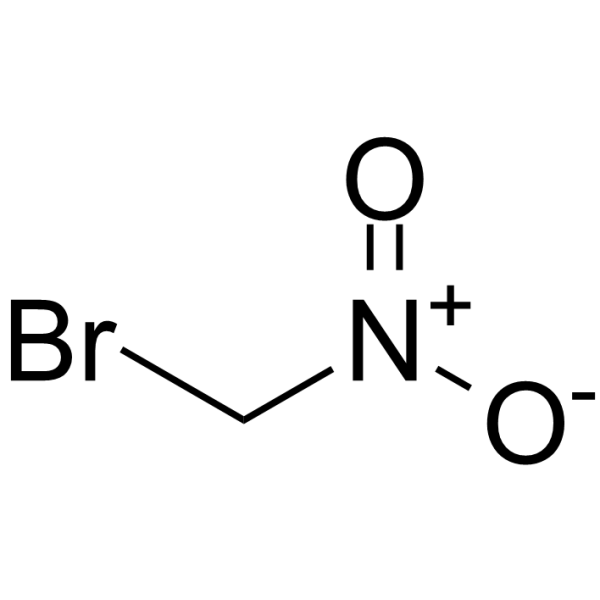
Bromonitromethane is a halogenated nitromethane disinfection byproduct. Bromonitromethane does not induce morphological changes in lung cells, alter cell growth status, change the secretion levels of matrix metalloproteinases, or enhance the anchorage-independent growth ability of lung cells. Bromonitromethane can act as a bromine donor to participate in the bis (amidine)-catalyzed enantioselective aza-Henry addition reaction of N-(trimethylsilyl) imines, which is used in the synthesis of α-bromonitroalkane donors for umpolung amide synthesis (UmAS). Bromonitromethane can be used in bronchial and cancer research .
loading...
    loading...
Cat. No.: HY-128443
CAS No.: 122-19-0
Purity:  ≥98.0%
Synonyms: BDMSAC
Research Areas:  

Others

Benzyldimethylstearylammonium chloride (BDMSAC) is a quaternary ammonium cationic surfactant and a mixed-type corrosion inhibitor. Benzyldimethylstearylammonium chloride adsorbs onto the surface of cold-rolled steel through a combined effect of physisorption and chemisorption, forming a hydrophobic protective barrier that blocks active sites and restricts the diffusion of corrosive media, while simultaneously inhibiting the anodic iron dissolution reaction and the cathodic hydrogen evolution reaction, and reducing the corrosion rate in acidic media. Benzyldimethylstearylammonium chloride is used in research related to various fields such as fungicides, wastewater treatment, and detergents .
loading...
    loading...
Cat. No.: HY-128443R
CAS No.: 122-19-0
Synonyms: BDMSAC (Standard)
Research Areas:  

Others

Benzyldimethylstearylammonium chloride (Standard) (BDMSAC (Standard)) is the analytical standard of Benzyldimethylstearylammonium chloride (HY-128443). This product is intended for research and analytical applications. Benzyldimethylstearylammonium chloride is a quaternary ammonium cationic surfactant and a mixed-type corrosion inhibitor. Benzyldimethylstearylammonium chloride adsorbs onto the surface of cold-rolled steel through a combined effect of physisorption and chemisorption, forming a hydrophobic protective barrier that blocks active sites and restricts the diffusion of corrosive media, while simultaneously inhibiting the anodic iron dissolution reaction and the cathodic hydrogen evolution reaction, and reducing the corrosion rate in acidic media. Benzyldimethylstearylammonium chloride is used in research related to various fields such as fungicides, wastewater treatment, and detergents .
loading...
    loading...
Cat. No.: HY-184620
Ferric oxide (Fe3O4) is widely used in magnetic resonance imaging (MRI), magnetic separation, targeted drug delivery, tumor hyperthermia, cell labeling and separation, and as a contrast agent and enhancement agent in retinal detachment repair surgery due to its stable material properties, good biocompatibility, high strength, and lack of toxic side effects. It is also used as a catalyst carrier, microwave absorbing material, and magnetic recording material. Xianfeng has developed numerous derivatives of ferric oxide, including oleic acid-modified ferric oxide, PEG-terminated ferric oxide, DMSA-modified ferric oxide, polylysine-modified ferric oxide, carboxylated dextran-modified ferric oxide nanoparticles, streptavidin-modified ferric oxide particles, thiol-modified ferric oxide magnetic nanoparticles, and polyethyleneimine (PEI)-modified magnetic ferric oxide nanoparticles, among others. This wide range of modifications provides numerous options for subsequent experiments.
loading...
    loading...
Cat. No.: HY-W002004S
CAS No.: 97461-87-5
Synonyms: 4-Amino-2,2,6,6-tetramethylpiperidine-1-oxyl-d17,15N
4-Amino-TEMPO-d17, 15N (4-Amino-2,2,6,6-tetramethylpiperidine-1-oxyl-d17, 15N) is the deuterium labeled 4-Amino-TEMPO-d17 (HY-W002004S1). 4-Amino-TEMPO (4-Amino-2,2,6,6-tetramethylpiperidine-1-oxyl) is a stable nitroxide radical and N-nucleophile based on TEMPO. 4-Amino-TEMPO has superoxide dismutase-mimetic activity, can protect cells from oxidative damage, and has radioprotective effects. 4-Amino-TEMPO is widely used in fields such as biomedicine, materials science, and industrial production. 4-Amino-TEMPO can be used as a spin label to detect free radicals, an oxidation catalyst in industrial production, and an antioxidant stabilizer for polymers, among others .
loading...
    loading...
Cat. No.: HY-W021016
CAS No.: 824395-67-7
Synonyms: (S,S)-Ph-BPE
Research Areas:  

Others

(+)-1,2-Bis ((2S,5S)-2,5-diphenylphospholano)ethane ((S,S)-Ph-BPE) is a chiral bisphosphine ligand and catalyst. (+)-1,2-Bis ((2S,5S)-2,5-diphenylphospholano)ethane acts as a chiral ligand in rhodium-catalyzed reductive hydroformylation of alkenyl boronic esters, enabling enantiodivergent synthesis of chiral γ-boryl alcohols. (+)-1,2-Bis ((2S,5S)-2,5-diphenylphospholano)ethane forms chiral nickel-phosphine complexes to mediate asymmetric hydrogenation of aliphatic γ- and δ-keto acids; protons promote substrate C=O bond activation and stereoselectivity control via hydrogen bonding. (+)-1,2-Bis ((2S,5S)-2,5-diphenylphospholano)ethane forms a monodentate nickel complex, which serves as the active species for asymmetric hydrogenation of aliphatic keto acids .
loading...
    loading...

