39 Results for "

fibroblast migration

" in MedChemExpress (MCE) Product Catalog:
Products (39)

39 Results for "fibroblast migration" in MCE Product Catalog:

Cat. No.: HY-174687
Target:  

mRNA

Research Areas:  

Cancer

Human FGFR4 mRNA encodes the human fibroblast growth factor receptor 4 (FGFR4) protein, a tyrosine kinase and cell surface receptor for fibroblast growth factors. FGFR4 is involved in the regulation of several pathways, including cell proliferation, cell differentiation, cell migration, lipid metabolism, bile acid biosynthesis, vitamin D metabolism, glucose uptake, and phosphate homeostasis.
loading...
    loading...
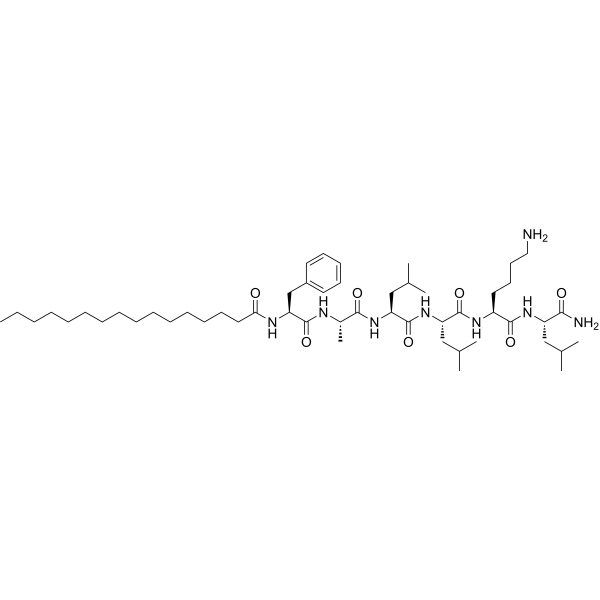
Cat. No.: HY-P5268
CAS No.: 891498-01-4
Synonyms: Palmitoyl hexapeptide-6
Target:  

Inhibitory Antibodies

Research Areas:  

Metabolic Disease

Palmitoyl hexapeptide-14(Palmitoyl hexapeptide-6)isa bioactive peptide withanti-inflammatoryeffect and has been reported used as a cosmetic ingredient .
loading...
    loading...
Cat. No.: HY-114169S
WRG-28-d5 is the deuterium labeled WRG-28(HY-114169).WRG-28 is a selective, extracellularly acting DDR2 allosteric inhibitor, with an IC50 of 230 nM. WRG-28 inhibits tumor invasion, migration and tumor-supporting effects of cancer-associated fibroblasts (CAFs). WRG-28 inhibits metastatic
loading...
    loading...
Cat. No.: HY-168957
CAS No.: 13459-13-7
RuDiOBn scanvages DPPH and ABTS free radicals (13.2% and 5.9% clearance at 100 μg/mL), exhibits low antioxidant activity. RuDiOBn inhibits the collagen glycation, reduces the formation of advanced glycation end products (AGEs) with an IC50 of 2.45 μg/mL. RuDiOBn enhances the proliferation and migration of fibroblasts, stimulates the synthesis of collagen, promoting the skin repair and regeneration. RuDiOBn also inhibits collagenase .
loading...
    loading...
Cat. No.: HY-175277
Research Areas:  

Inflammation/Immunology

PIM1-IN-8 is a PIM1/p65 pathway inhibitor. PIM1-IN-8 suppresses the expression of α-SMA and collagen I in activated fibroblasts and blocks TGF-β induced migration. PIM1-IN-8 alleviates pulmonary fibrosis in a Bleomycin (BLM) (HY-17565A)-induced pulmonary fibrosis mice model. PIM1-IN-8 can be used for the study of idiopathic pulmonary fibrosis (IPF) .
loading...
    loading...
Cat. No.: HY-B1392R
CAS No.: 81161-17-3
Esmolol hydrochloride (Standard) is the analytical standard of Esmolol hydrochloride (HY-B1392).This product is intended for research and analytical applications. Esmolol hydrochloride is an ultra-short-acting cardioselective β1-adrenergic blocker. Esmolol hydrochloride exerts its antiarrhythmic effect by activating Neurokinin 1 Receptoraldose reductase and the production of advanced glycation end products and promoting fibroblast migration. Esmolol hydrochloride can be used to study cardiac diseases such as arrhythmias and diabetic foot ulcers .
loading...
    loading...
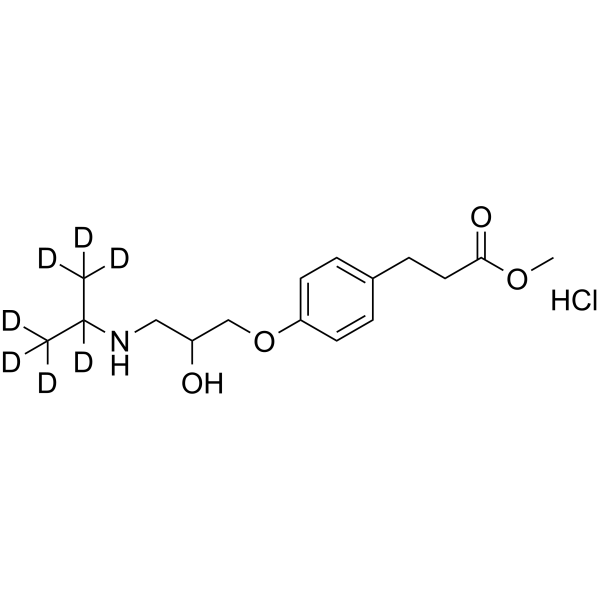
Cat. No.: HY-B1392S
CAS No.: 1346598-13-7
Esmolol-d7 hydrochloride is the deuterium labeled Esmolol hydrochloride (HY-B1392). Esmolol hydrochloride is an ultra-short-acting cardioselective β1-adrenergic blocker. Esmolol hydrochloride exerts its antiarrhythmic effect by activating Neurokinin 1 Receptoraldose reductase) and the production of advanced glycation end products and promoting fibroblast migration. Esmolol hydrochloride can be used to study cardiac diseases such as arrhythmias and diabetic foot ulcers .
loading...
    loading...
Cat. No.: HY-P11648
CAS No.: 292851-89-9
Target:  

Osteopontin

Research Areas:  

Inflammation/Immunology Cancer

SVVYGLR is an osteopontin-derived peptide. SVVYGLR can promote the differentiation of fibroblasts into myofibroblast-like cells and promote the production of type III collagen by cardiac fibroblasts. SVVYGLR can activate the adhesion, migration and tubule formation of endothelial cells in vitro. SVVYGLR promotes angiogenesis and wound healing and promotes the migration of dermal fibroblasts and keratinocytes. SVVYGLR can be used for research related to angiogenesis, dermal wounds and bone regeneration .
loading...
    loading...
Cat. No.: HY-174712
Target:  

mRNA

Research Areas:  

Cancer

Human FGF1 mRNA encodes the human Fibroblast growth factor 1 (FGF1) protein, a member of fibroblast growth factor (FGF) family. FGF1 functions as a modifier of endothelial cell migration and proliferation, as well as an angiogenic factor. It also acts as a mitogen for a variety of mesoderm- and neuroectoderm-derived cells in vitro, thus is thought to be involved in organogenesis.
loading...
    loading...
Cat. No.: HY-FLB1392
CAS No.: 81161-17-3
Esmolol hydrochloride solution is mainly composed of Esmolol hydrochloride (HY-B1392). Esmolol hydrochloride is an ultra-short-acting cardioselective β1-adrenergic blocker. Esmolol hydrochloride exerts its antiarrhythmic effect by activating Neurokinin 1 Receptor. Esmolol hydrochloride attenuates post resuscitation myocardial dysfunction. Esmolol hydrochloride improves diabetic wound healing by inhibiting aldose reductase and the production of advanced glycation end products and promoting fibroblast migration. Esmolol hydrochloride can be used to study cardiac diseases such as arrhythmias and diabetic foot ulcers .
loading...
    loading...
Cat. No.: HY-189274
CAS No.: 3128930-57-1
HIF-1α stabilizer-1 is a HIF-1α stabilizer and iron chelator. HIF-1α stabilizer-1 induces HIF-dependent transcription and upregulates VEGFA and GLUT1 expression without directly binding to PHD1-3. HIF-1α stabilizer-1 inhibits hyperglycemia-induced ROS accumulation. HIF-1α stabilizer-1 promotes cell migration. HIF-1α stabilizer-1 accelerates wound closure and improves tissue remodeling by enhancing neovascularization and collagen deposition. HIF-1α stabilizer-1 lacks antibacterial activity against P. aeruginosa. HIF-1α stabilizer-1 can be used for research on diabetic wounds .
loading...
    loading...
Cat. No.: HY-P11753A
IKVAVC acetate is a derivative peptide of IKVAV with an artificially added cysteine (Cys) at its C-terminus. IKVAVC acetate retains all the biological activities of the original IKVAV, mainly acting as a neural adhesion/differentiation signaling peptide, and is equipped with an engineered linker arm that enables covalent conjugation to molecular materials. IKVAV inhibits the migration and activation of fibroblasts, downregulates the TGF-β1 signaling pathway and endoplasmic reticulum stress, and promotes nerve repair. IKVAV regulates the phenotype of macrophages, shifting them from the pro-inflammatory M1 type to the pro-reparative M2 type .
loading...
    loading...
Cat. No.: HY-P11753
CAS No.: 1187540-64-2
IKVAVC is a derivative peptide of IKVAV with an artificially added cysteine (Cys) at its C-terminus. IKVAVC retains all the biological activities of the original IKVAV, mainly acting as a neural adhesion/differentiation signaling peptide, and is equipped with an engineered linker arm that enables covalent conjugation to molecular materials. IKVAV inhibits the migration and activation of fibroblasts, downregulates the TGF-β1 signaling pathway and endoplasmic reticulum stress, and promotes nerve repair. IKVAV regulates the phenotype of macrophages, shifting them from the pro-inflammatory M1 type to the pro-reparative M2 type .
loading...
    loading...
Cat. No.: HY-182850
CAS No.: 2965316-77-0
Target:  

CXCR

Research Areas:  

Metabolic Disease

UCUF-965 is a CXCR4 positive allosteric modulator. UCUF-965 potentiates CXCL12-induced β-arrestin recruitment and cAMP signaling, activates lymphoblast migration, induces calcium flux, and does not bind CXCR4’s orthosteric CXCL12 site. UCUF-965 reduces miR-15b and miR-29a levels, increases miR-146a levels in fibroblasts. UCUF-965 enhances angiogenesis and reduces wound healing time in diabetic mice. UCUF-965 can be used for the research of diabetic wound healing impairment .
loading...
    loading...
Cat. No.: HY-189141
Research Areas:  

Endocrinology

HIPK2-IN-2 is an orally active and selective HIPK2 inhibitor with an IC50 of 0.36 μM against HIPK2. HIPK2-IN-2 reduces HIPK2 protein expression levels. HIPK2-IN-2 inhibits the proliferation and migration of renal interstitial fibroblasts, alleviates renal tubular injury and collagen deposition, and suppresses TGF-β/Smad3-mediated profibrotic signaling pathways as well as TNF-α/NF-κB-mediated inflammatory signaling pathways in renal cells. HIPK2-IN-2 is used for the study of chronic kidney disease-associated renal fibrosis .
loading...
    loading...
Cat. No.: HY-N15490
CAS No.: 2855099-87-3
Acremonamide is a cyclic pentapeptide lactone discovered from the marine-derived Acremonium strain CNQ-049, possessing wound healing activity. Acremonamide upregulates the expression of COL1A2 and ACTC1 genes and enhances the motility of keratinocytes and fibroblasts . Acremonamide promotes wound healing in mouse skin wound models. Acremonamide can be used in research related to skin wound healing .
loading...
    loading...
Cat. No.: HY-120153
CAS No.: 1415030-17-9
APX2014 is a Ref-1/APE1 inhibitor that inhibits Ref-1-induced transcription factor-DNA binding, thereby reducing the activation level of NF-κB and the expression of downstream pro-angiogenic targets. APX2014 blocks endothelial cell proliferation, lumen formation, migration and choroidal sprouting to exert anti-angiogenic activity. APX2014 activates the ISR pathway, promotes the death of pancreatic cancer cells and cancer-associated fibroblasts, and induces apoptosis in the absence of PRDX1. APX2014 inhibits the growth of pancreatic cancer spheroids, reduces the volume/weight of xenograft tumors, and decreases Ki-67 levels by targeting PRDX1. APX2014 can be used in research related to macular degeneration, retinopathy and pancreatic ductal adenocarcinoma .
loading...
    loading...
Cat. No.: HY-184141
CAS No.: 3037217-70-9
Target:  

VEGFR

Research Areas:  

Neurological Disease

EYE1090 is an orally active VEGFR2 inhibitor with an IC50 of 3 nM. EYE1090 inhibits angiogenesis, endothelial migration, VEGFR2-induced retinal leakage, and reduces choroidal neovascularization lesion size in mice. EYE1090 can be used for the research of age-related macular degeneration, diabetic retinopathy, choroidal neovascularization .
loading...
    loading...
Cat. No.: HY-184149
Target:  

ROCK TGF-beta/Smad STAT

Research Areas:  

Inflammation/Immunology

ROCK2-IN-17 is an orally active and selective ROCK2 inhibitor with an IC50 of 8.1 nM. ROCK2-IN-17 achieves its antifibrotic effect by inhibiting the TGF-β/Smad and ROCK2/STAT3 signaling pathways. ROCK2-IN-17 can be used for pulmonary fibrosis research .
loading...
    loading...

