32 Results for "

mitochondrial replication

" in MedChemExpress (MCE) Product Catalog:
Products (32)

32 Results for "mitochondrial replication" in MCE Product Catalog:

Cat. No.: HY-173128
CAS No.: 2106826-77-9
Target:  

Apoptosis

Research Areas:  

Infection

TZOA is an antiviral agent that inhibits the replication of infectious hematopoietic necrosis virus (IHNV) in a dose-dependent manner and significantly reduces viral titers. TZOA can effectively counteract IHNV-induced apoptosis, maintain mitochondrial membrane potential and homeostasis, and restore MAVS-mediated interferon expression. TZOA has antiviral activity .
loading...
    loading...
Cat. No.: HY-108398BR
CAS No.: 17046-59-2
11(Z),14(Z),17(Z)-Eicosatrienoic acid (Standard) is the analytical standard of 11(Z),14(Z),17(Z)-Eicosatrienoic acid (HY-108398B). This product is intended for research and analytical applications. 11 (Z),14 (Z),17 (Z)-Eicosatrienoic acid is an unsaturated fatty acid that affects mitochondrial genome maintenance. 11 (Z),14 (Z),17 (Z)-Eicosatrienoic acid fully incorporates into cell membrane phospholipids and supports the initial induction of cellular respiration, but fails to sustain the continuous replication and retention of mitochondrial genomes. 11 (Z),14 (Z),17 (Z)-Eicosatrienoic acid is applicable to research related to fatty acid acyl chain structure-dependent mitochondrial genome maintenance and mitochondrial biogenesis .
loading...
    loading...
Cat. No.: HY-162456
Research Areas:  

Cancer

Anticancer agent 205 (compound 9) is a potent anticancer agent. Anticancer agent 205 binds to G4-mtDNA target and inhibits the replication, transcription, and translation of mtDNA (mitochondrial genome). Anticancer agent 205 causes mitochondrial dysfunction, increases ROS production, induces DNA damage and cellular senescence. Anticancer agent 205 induces apoptosis and cell cycle arrests at G0/G1 phase. Anticancer agent 205 has the potential for the research of colorectal cancer .
loading...
    loading...
Cat. No.: HY-B0116S
CAS No.: 1219803-67-4
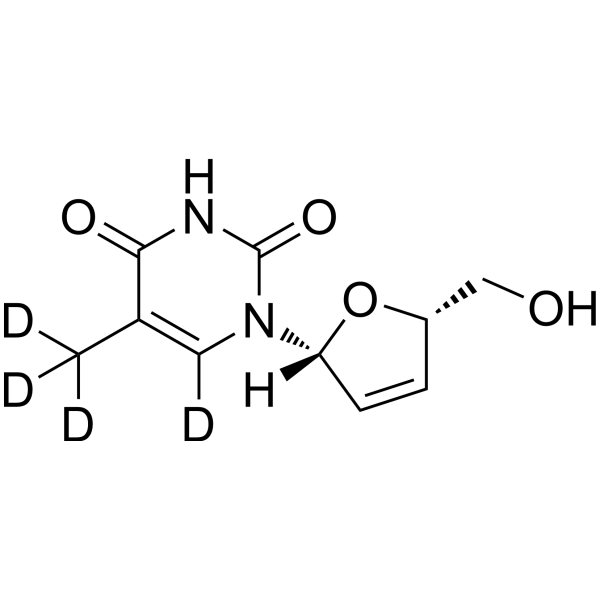
Stavudine-d4 is the deuterium labeled Stavudine. Stavudine (d4T) is an orally active nucleoside reverse transcriptase inhibitor (NRTI). Stavudine has activity against HIV-1 and HIV-2. Stavudine also inhibits the replication of mitochondrial DNA (mtDNA). Stavudine reduces NLRP3 inflammasome activation and modulates Amyloid-β autophagy. Stavudine induces apoptosis .
loading...
    loading...
Cat. No.: HY-W344074
CAS No.: 7075-11-8
Research Areas:  

Cancer

Cytarabine 5′-monophosphate is a metabolite of the nucleoside analog Cytarabine (HY-13605), catalyzed by deoxycytidine kinase. Cytarabine 5′-monophosphate is incorporated into DNA by DNA polymerase α, which reduces the rate of DNA synthesis. At a concentration of 15 mM, Cytarabine 5′-monophosphate inhibits nuclear and mitochondrial DNA replication in Saccharomyces cerevisiae (S. cerevisiae). Additionally, Cytarabine 5′-monophosphate (3.5-75.1 mg/kg) improves survival in leukemia mice (L1210 mice). Cytarabine 5′-monophosphate can be used in cancer research .
loading...
    loading...
Cat. No.: HY-N0608S
Myrislignan-13C,d2 is the 13C, d2 deuterated-labeled Myrislignan (HY-N0608). Myrislignan is a PI3K/AKT/NF-κB inhibitor that can cross the blood-brain barrier. Myrislignan exerts anticancer activity by inducing apoptosis and ferroptosis. Myrislignan inhibits the replication and invasion of Toxoplasma gondii; it induces reactive oxygen species (ROS) imbalance, autophagy, and the death of Toxoplasma gondii tachyzoites. Myrislignan inhibits mitochondrial function and ERK1/2 phosphorylation to improve ovariectomy-induced osteoporosis. Myrislignan can be used in studies related to gastric cancer, glioblastoma, osteoporosis, and toxoplasmosis .
loading...
    loading...
Cat. No.: HY-103315R
CAS No.: 68099-86-5
Synonyms: CERM 1978 (Standard); Org 5730 hydrochloride (Standard)
Bepridil hydrochloride (Standard) (CERM 1978 (Standard);Org 5730 hydrochloride (Standard)) is the analytical standard of Bepridil hydrochloride (HY-103315). This product is intended for research and analytical applications. Bepridil hydrochloride is an orally active non-selective calcium channel antagonist with multi-ion channel blocking activity. Bepridil hydrochloride modulates Calmodulin, the 20S proteasome, T-type/L-type calcium channels, cardiac sodium channels, multiple potassium channels, γ-secretase, β-secretase, and mitoKATP/sarcKATP channels. Bepridil hydrochloride acts as a hydroxyl radical scavenger, regulates mitochondrial and intracellular calcium handling, and exerts antiarrhythmic, antianginal, and cardioprotective effects. Bepridil hydrochloride alters amyloid precursor protein processing, reduces β-amyloid and thalamic calcium levels, restores seladin-1/DHCR24 expression, and improves sensorimotor recovery after cerebral ischemia. Bepridil hydrochloride also exhibits potent inhibitory effects on SARS-CoV-2 replication. Bepridil hydrochloride is used in studies related to stable angina, arrhythmias, cerebral ischemia, Alzheimer's disease, and SARS-CoV-2 infection .
loading...
    loading...
Cat. No.: HY-103315S
Synonyms: CERM 1978-d5; Org 5730-d5 hydrochloride
Bepridil-d5 hydrochloride (CERM 1978-d5; Org 5730-d5 hydrochloride) is the deuterated-labeled Bepridil hydrochloride (HY-103315). Bepridil hydrochloride (CERM 1978; Org 5730 hydrochloride) is an orally active non-selective calcium channel antagonist with multi-ion channel blocking activity. Bepridil hydrochloride modulates Calmodulin, the 20S proteasome, T-type/L-type calcium channels, cardiac sodium channels, multiple potassium channels, γ-secretase, β-secretase, and mitoKATP/sarcKATP channels. Bepridil hydrochloride acts as a hydroxyl radical scavenger, regulates mitochondrial and intracellular calcium handling, and exerts antiarrhythmic, antianginal, and cardioprotective effects. Bepridil hydrochloride alters amyloid precursor protein processing, reduces β-amyloid and thalamic calcium levels, restores seladin-1/DHCR24 expression, and improves sensorimotor recovery after cerebral ischemia. Bepridil hydrochloride also exhibits potent inhibitory effects on SARS-CoV-2 replication. Bepridil hydrochloride is used in studies related to stable angina, arrhythmias, cerebral ischemia, Alzheimer's disease, and SARS-CoV-2 infection .
loading...
    loading...
Cat. No.: HY-181599
XAN-5 is a mitochondrial DNA G-quadruplex (mtG4) ligand with a Kd of 3.8 μM. XAN-5 selectively binds and stabilizes mtG4 structures, disrupting mitochondrial gene transcription and DNA replication. XAN-5 triggers mitochondrial dysfunction, ROS overproduction, G0 phase arrest and caspase-dependent apoptosis. XAN-5 inhibits autophagy and induces immunogenic cell death. XAN-5 inhibits tumor growth in a mouse liver cancer model while enhancing tumor-infiltrating CD4 + and CD8 + T cells. XAN-5 targets two cancer resistance mechanisms simultaneously. XAN-5 can be used for the research of liver cancer .
loading...
    loading...
Cat. No.: HY-W654323
CAS No.: 2468637-62-7
Research Areas:  

Others

PNU-142586 sodiu) is the major metabolite of Linezolid (HY-10394). PNU-142586 can inhibit the activity of DNA topoisomerase 2-α (TOP2A) and DNA topoisomerase 2-β (TOP2B). PNU-142586 interferes with DNA replication and transcription by blocking the binding of DNA to TOP2 and inhibiting ATP hydrolysis, ultimately leading to antiproliferative and cytotoxic effects, including mitochondrial dysfunction. PNU-142586 can be used to study Linezolid-induced hematotoxicity and its molecular mechanism .
loading...
    loading...
Cat. No.: HY-13324R
CAS No.: 218600-53-4
Synonyms: RTA 402 (Standard); NSC 713200 (Standard); CDDO Methyl ester (Standard)
Bardoxolone methyl (Standard) is the analytical standard of Bardoxolone methyl (HY-13324). This product is intended for research and analytical applications. Bardoxolone methyl (RTA 402) is an orally active and blood-brain-barrier-penetrant activator of Nrf2 and an inhibitor of SARS-CoV-2 3CL protease. Bardoxolone methyl inhibits SARS-CoV-2 replication in Vero cells with an EC50 value of 0.29 μM. Bardoxolone methyl increases levels of pNrf2 and HO-1, inhibits inflammatory mediators like pNFκB and MCP-1. Bardoxolone methyl activates the Nrf2 pathway to enhance antioxidant and anti-inflammatory responses, inhibits viral replication, and improves mitochondrial function. Bardoxolone methyl can be used in research on chemotherapy-induced neuropathic pain (CINP), COVID-19, and chronic Kidney disease (CKd) .
loading...
    loading...
Cat. No.: HY-184249
CAS No.: 1145869-35-7
Target:  

RSV DNA/RNA Synthesis

Research Areas:  

Infection

4'-C-Azido-2'-deoxy-2'-fluorocytidine is an antiviral agent. 4'-C-Azido-2'-deoxy-2'-fluorocytidine potently inhibits RNA synthesis of crude RSV RNP complexes with an IC50 of 0.1 μM. 4'-C-Azido-2'-deoxy-2'-fluorocytidine inhibits RSV replication in a subgenomic RSV replicon system. 4'-C-Azido-2'-deoxy-2'-fluorocytidine can be used for the research of respiratory syncytial virus (RSV) infection .
loading...
    loading...

