
241 Results for "

food processing

" in MedChemExpress (MCE) Product Catalog:
Products (241)

241 Results for "food processing" in MCE Product Catalog:

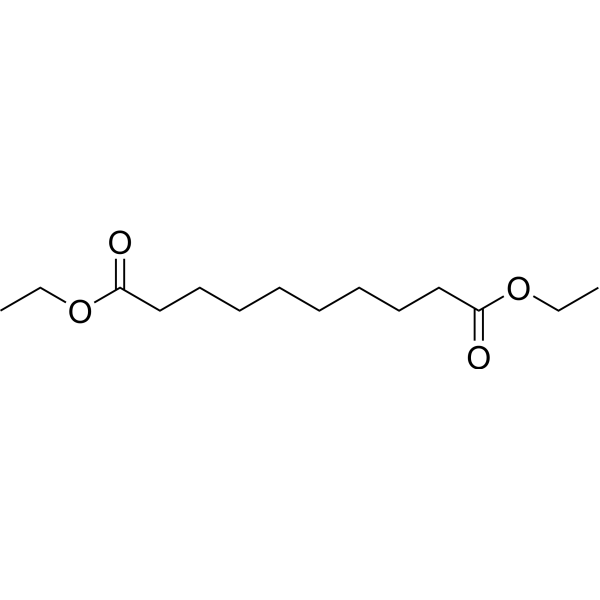
Cat. No.: HY-W009443
CAS No.: 110-40-7
Synonyms: Diethyl sebacate
Diethyl decanedioate is an organic compound commonly used as a raw material for flavors and food additives. It can be used to make fruit and mint flavors, and is widely used in some food processing and cosmetic production. In addition, this compound is also used as a reagent and intermediate in some organic synthesis reactions.
loading...
    loading...
Cat. No.: HY-W328786
CAS No.: 10396-80-2
Target:  

Drug Metabolite

Research Areas:  

Metabolic Disease

4-Hydroxy-BHT is metabolite of Butylated hydroxytoluene (HY-Y0172) and used as an indicator of exposure to Butylated hydroxytoluene. Butylated hydroxytoluene is a phenolic antioxidant used widely in processed foods and petroleum products .
loading...
    loading...
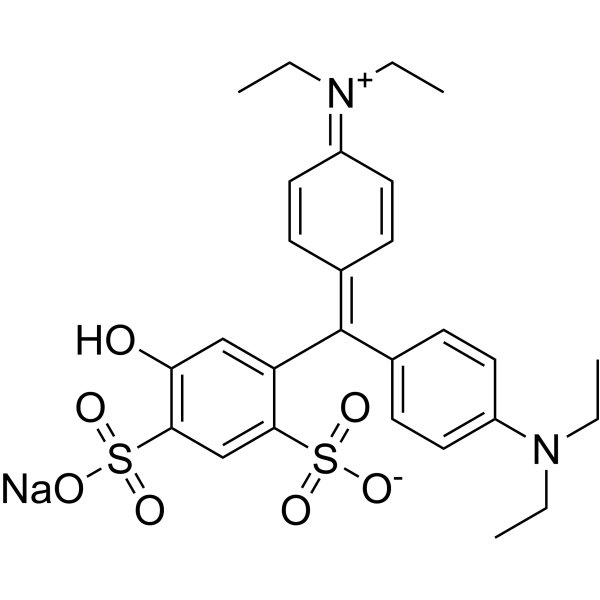
Cat. No.: HY-D0523
CAS No.: 20262-76-4
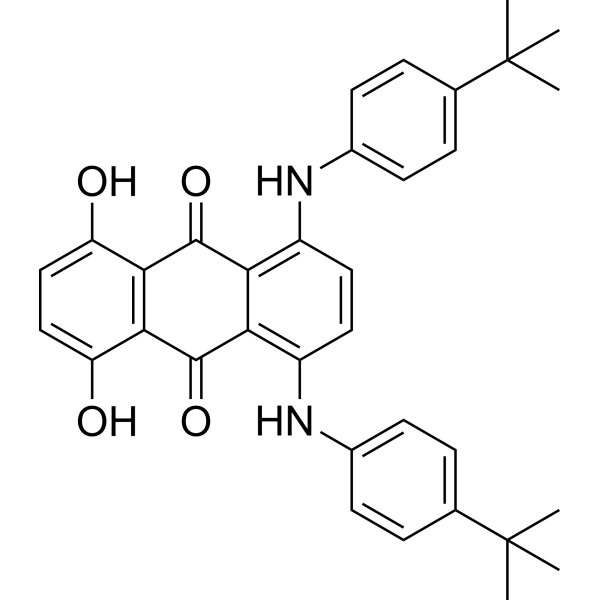
C.I. Food Blue 5:2 is a multifunctional dye. Dyes are important tools in biological experiments. They can help researchers observe and analyze cell structures, track biomolecules, evaluate cell functions, distinguish cell types, detect biomolecules, study tissue pathology and monitor microorganisms. Their applications range from basic scientific research to clinical A wide range of diagnostics. Dyes are also widely used in traditional fields such as textile dyeing, as well as in emerging fields such as functional textile processing, food pigments and dye-sensitized solar cells.
loading...
    loading...
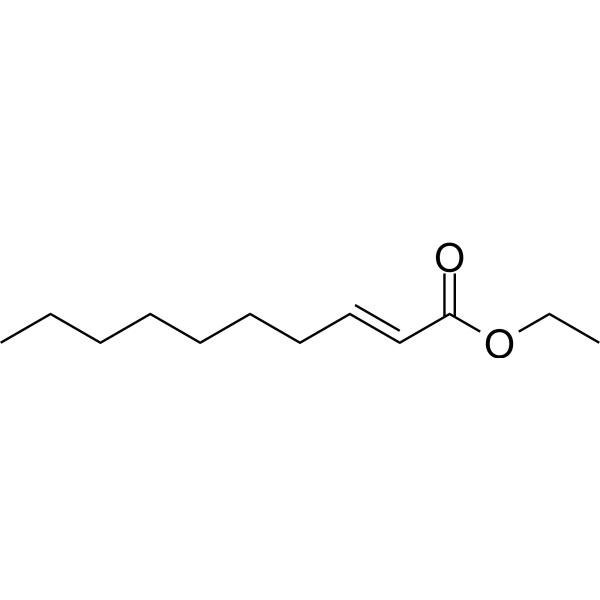
Cat. No.: HY-W127573
CAS No.: 7367-88-6
Ethyl trans-2-decenoate has a fruity and floral aroma and is commonly used as a flavoring agent in the food and beverage industry. In addition, it can be used as an intermediate in the synthesis of various organic compounds, including fragrances and pharmaceuticals. Its unique chemical properties make it an important ingredient in a variety of industrial processes, notably in the production of perfumes and air fresheners.
loading...
    loading...
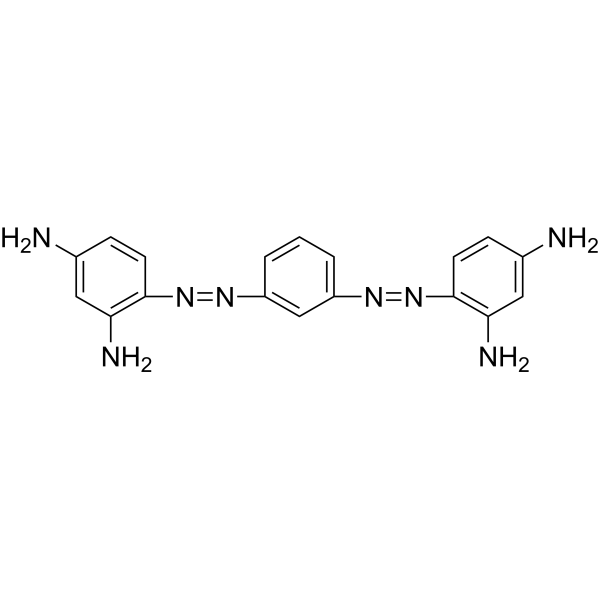
Cat. No.: HY-D0311
CAS No.: 1052-38-6
Brown Y is a multifunctional dye. Dyes are important tools in biological experiments. They can help researchers observe and analyze cell structures, track biomolecules, evaluate cell functions, distinguish cell types, detect biomolecules, study tissue pathology and monitor microorganisms. Their applications range from basic scientific research to clinical A wide range of diagnostics. Dyes are also widely used in traditional fields such as textile dyeing, as well as in emerging fields such as functional textile processing, food pigments and dye-sensitized solar cells.
loading...
    loading...
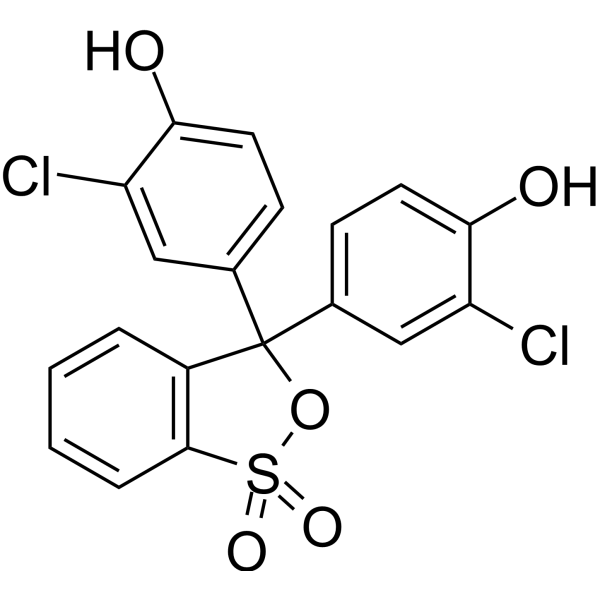
Cat. No.: HY-D0013
CAS No.: 4430-20-0
Synonyms: Dichlorophenolsulphonephthalein
Chlorophenol red (Dichlorophenolsulphonephthalein) is a multifunctional dye. Dyes are important tools in biological experiments. They can help researchers observe and analyze cell structures, track biomolecules, evaluate cell functions, distinguish cell types, detect biomolecules, study tissue pathology and monitor microorganisms. Their applications range from basic scientific research to clinical A wide range of diagnostics. Dyes are also widely used in traditional fields such as textile dyeing, as well as in emerging fields such as functional textile processing, food pigments and dye-sensitized solar cells.
loading...
    loading...
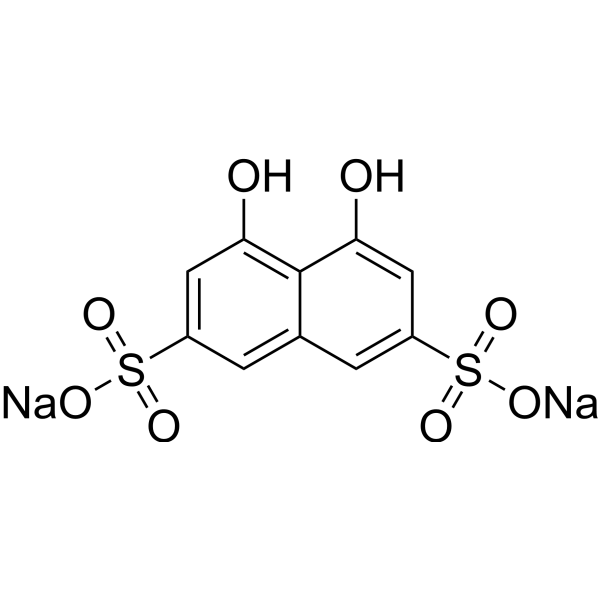
Cat. No.: HY-D0206
CAS No.: 129-96-4
Chromotropic acid disodium is a multifunctional dye. Dyes are important tools in biological experiments. They can help researchers observe and analyze cell structures, track biomolecules, evaluate cell functions, distinguish cell types, detect biomolecules, study tissue pathology and monitor microorganisms. Their applications range from basic scientific research to clinical A wide range of diagnostics. Dyes are also widely used in traditional fields such as textile dyeing, as well as in emerging fields such as functional textile processing, food pigments and dye-sensitized solar cells.
loading...
    loading...
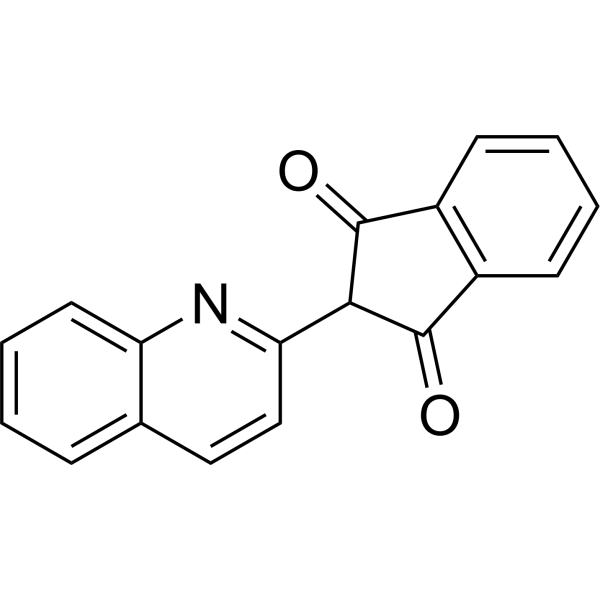
Cat. No.: HY-D0290
CAS No.: 83-08-9
Quinoline yellow 2SF is a multifunctional dye. Dyes are important tools in biological experiments. They can help researchers observe and analyze cell structures, track biomolecules, evaluate cell functions, distinguish cell types, detect biomolecules, study tissue pathology and monitor microorganisms. Their applications range from basic scientific research to clinical A wide range of diagnostics. Dyes are also widely used in traditional fields such as textile dyeing, as well as in emerging fields such as functional textile processing, food pigments and dye-sensitized solar cells.
loading...
    loading...
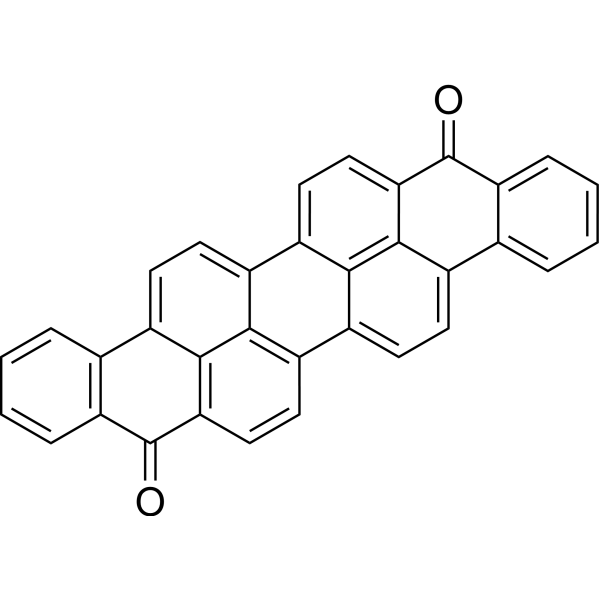
Cat. No.: HY-D0296
CAS No.: 128-64-3
Isoviolanthrone is a multifunctional dye. Dyes are important tools in biological experiments. They can help researchers observe and analyze cell structures, track biomolecules, evaluate cell functions, distinguish cell types, detect biomolecules, study tissue pathology and monitor microorganisms. Their applications range from basic scientific research to clinical A wide range of diagnostics. Dyes are also widely used in traditional fields such as textile dyeing, as well as in emerging fields such as functional textile processing, food pigments and dye-sensitized solar cells.
loading...
    loading...
Cat. No.: HY-D0377
CAS No.: 4851-50-7
Solvaperm Green G is a multifunctional dye. Dyes are important tools in biological experiments. They can help researchers observe and analyze cell structures, track biomolecules, evaluate cell functions, distinguish cell types, detect biomolecules, study tissue pathology and monitor microorganisms. Their applications range from basic scientific research to clinical A wide range of diagnostics. Dyes are also widely used in traditional fields such as textile dyeing, as well as in emerging fields such as functional textile processing, food pigments and dye-sensitized solar cells.
loading...
    loading...
Cat. No.: HY-D0399
CAS No.: 6247-34-3
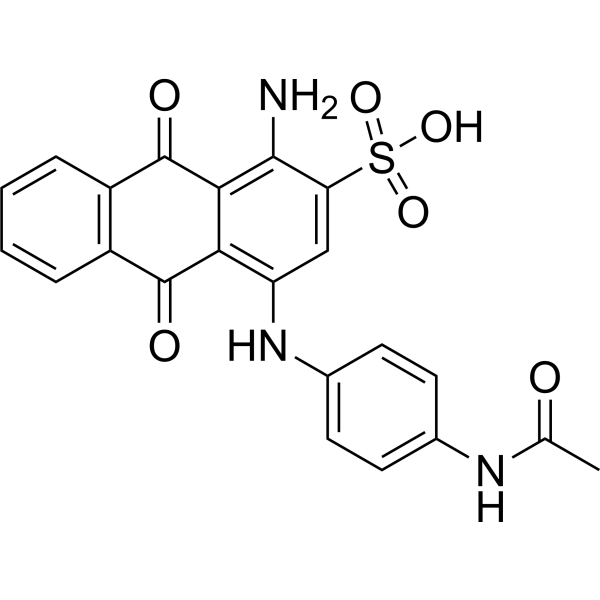
C.I. Acid blue 40 is a multifunctional dye. Dyes are important tools in biological experiments. They can help researchers observe and analyze cell structures, track biomolecules, evaluate cell functions, distinguish cell types, detect biomolecules, study tissue pathology and monitor microorganisms. Their applications range from basic scientific research to clinical A wide range of diagnostics. Dyes are also widely used in traditional fields such as textile dyeing, as well as in emerging fields such as functional textile processing, food pigments and dye-sensitized solar cells.
loading...
    loading...
Cat. No.: HY-D0463
CAS No.: 7576-65-0
Disperse yellow 54 is a multifunctional dye. Dyes are important tools in biological experiments. They can help researchers observe and analyze cell structures, track biomolecules, evaluate cell functions, distinguish cell types, detect biomolecules, study tissue pathology and monitor microorganisms. Their applications range from basic scientific research to clinical A wide range of diagnostics. Dyes are also widely used in traditional fields such as textile dyeing, as well as in emerging fields such as functional textile processing, food pigments and dye-sensitized solar cells.
loading...
    loading...
Cat. No.: HY-D0464
CAS No.: 7585-41-3
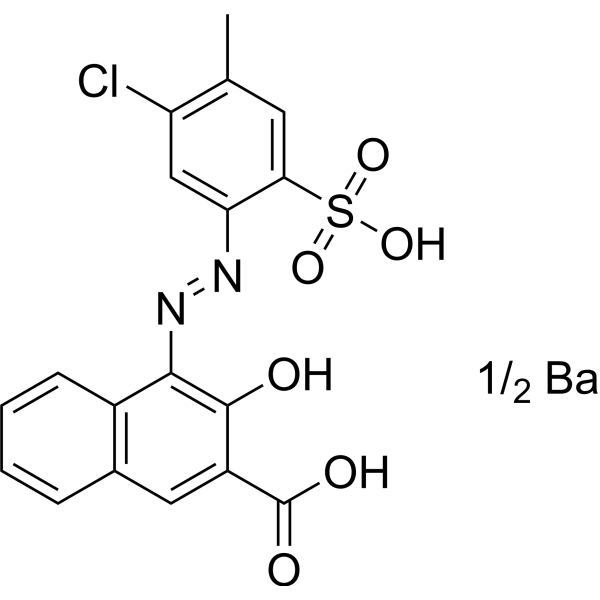
Pigment red 48:1 is a multifunctional dye. Dyes are important tools in biological experiments. They can help researchers observe and analyze cell structures, track biomolecules, evaluate cell functions, distinguish cell types, detect biomolecules, study tissue pathology and monitor microorganisms. Their applications range from basic scientific research to clinical A wide range of diagnostics. Dyes are also widely used in traditional fields such as textile dyeing, as well as in emerging fields such as functional textile processing, food pigments and dye-sensitized solar cells.
loading...
    loading...
Cat. No.: HY-D0474
CAS No.: 10241-21-1
Acid green 12 is a multifunctional dye. Dyes are important tools in biological experiments. They can help researchers observe and analyze cell structures, track biomolecules, evaluate cell functions, distinguish cell types, detect biomolecules, study tissue pathology and monitor microorganisms. Their applications range from basic scientific research to clinical A wide range of diagnostics. Dyes are also widely used in traditional fields such as textile dyeing, as well as in emerging fields such as functional textile processing, food pigments and dye-sensitized solar cells.
loading...
    loading...
Cat. No.: HY-D0572
CAS No.: 52333-30-9
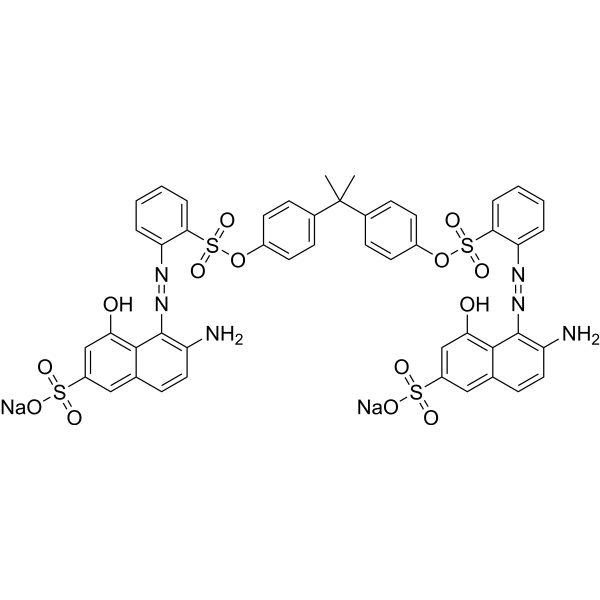
Acid red 260 is a multifunctional dye. Dyes are important tools in biological experiments. They can help researchers observe and analyze cell structures, track biomolecules, evaluate cell functions, distinguish cell types, detect biomolecules, study tissue pathology and monitor microorganisms. Their applications range from basic scientific research to clinical A wide range of diagnostics. Dyes are also widely used in traditional fields such as textile dyeing, as well as in emerging fields such as functional textile processing, food pigments and dye-sensitized solar cells.
loading...
    loading...
Cat. No.: HY-E70221
CAS No.: 9025-02-9
Target:  

Bacterial

Research Areas:  

Others

α-Acetolactate decarboxylase, from Bacillus subtilis is an enzyme responsible for acetoin production, and can be widely used in food processing .
loading...
    loading...
Cat. No.: HY-W585933
CAS No.: 16124-24-6
Synonyms: Fru-Ala
Target:  

Others

Research Areas:  

Others

Fructose-alanine, an amadori compound, is an aroma precursor that formed in the initial phase of the Maillard reaction (MR). Fructose-alanine can be isolated from tobacco, miso and white wine. Fructose-alanine significantly induces oxidative browning and correlates with Maillard product (furfuryl alcohol) with a roasted and sweet aroma. Fructose-alanine can be used for food industry and tobacco processing research .
loading...
    loading...
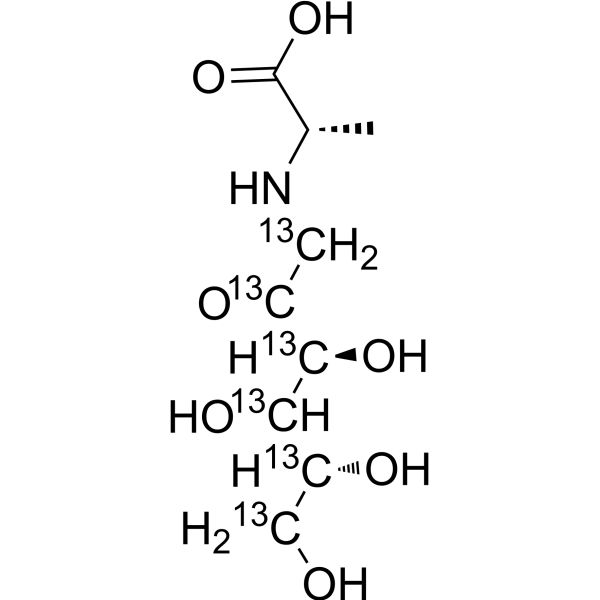
Cat. No.: HY-W585933S
CAS No.: 1083053-41-1
Synonyms: Fru-Ala-13C6
Fructose-alanine- 13C6 is 13C labeled Fructose-alanine. Fructose-alanine, an amadori compound, is an aroma precursor that formed in the initial phase of the Maillard reaction (MR). Fructose-alanine can be isolated from tobacco, miso and white wine. Fructose-alanine significantly induces oxidative browning and correlates with Maillard product (furfuryl alcohol) with a roasted and sweet aroma. Fructose-alanine can be used for food industry and tobacco processing research .
loading...
    loading...
Cat. No.: HY-W009684R
CAS No.: 106-33-2
Synonyms: Ethyl dodecanoate (Standard)
Ethyl Laurate (Standard) is the analytical standard of Ethyl Laurate. This product is intended for research and analytical applications. Ethyl Laurate is an organic compound commonly used as a flavoring and food additive. It can be used to make fruit, mint and sweet flavors, and is widely used in some food processing and cosmetic production. In addition, this compound is also used as a reagent and intermediate in some organic synthesis reactions.
loading...
    loading...
Cat. No.: HY-W009443R
CAS No.: 110-40-7
Synonyms: Diethyl sebacate (Standard)
Research Areas:  

Others

Diethyl decanedioate (Standard) is the analytical standard of Diethyl decanedioate. This product is intended for research and analytical applications. Diethyl decanedioate is an organic compound commonly used as a raw material for flavors and food additives. It can be used to make fruit and mint flavors, and is widely used in some food processing and cosmetic production. In addition, this compound is also used as a reagent and intermediate in some organic synthesis reactions.
loading...
    loading...

