697 Results for "

Matrix

" in MedChemExpress (MCE) Product Catalog:
Products (697)

697 Results for "Matrix" in MCE Product Catalog:

  • Targets Recommended:
Cat. No.: HY-N6013R
CAS No.: 8015-61-0
Aloin (mixture of A&B) (Standard) is the analytical standard of Aloin (mixture of A&B) (HY-N6013). This product is intended for research and analytical applications. Aloin (mixture of A&B) is an orally active anthraquinone derivative isolated from Aloe vera. Aloin (mixture of A&B) mitigates airway impairment and exerts neuroprotective, anti-inflammatory, antioxidant, antibacterial, antifungal, antiviral and antitumor effects. Aloin (mixture of A&B) inhibits Clostridium histolyticum collagenase, granulocyte matrix metalloproteinases and human 20S proteasome. Aloin (mixture of A&B) upregulates the Nrf2/HO-1 pathway, suppresses the TGF-β/Smad2/3 pathway. Aloin (mixture of A&B) reduces IL-4/IL-5/IL-13 levels, and reverses oxidative stress markers (MDA, SOD, GSH). Aloin (mixture of A&B) can be used for research on chronic ulcers, burns, wounds, inflammatory and degenerative disorders, asthma and neuroblastoma .
loading...
    loading...
Cat. No.: HY-N7435R
CAS No.: 54814-64-1
Synonyms: (±)-Massoia lactone (Standard)
Massoia lactone (Standard) ((±)-Massoia lactone (Standard)) is the analytical standard of Massoia lactone (HY-N7435). This product is intended for research and analytical applications. Massoia lactone ((±)-Massoia lactone) is a natural lactone-based biosurfactant with antifungal (fungal), antibiofilm, and cytotoxic activities. Massoia lactone inhibits fungal hyphal growth and spore germination, and induces fungal cell necrosis by forming membrane pores, reducing ergosterol, elevating ROS, and causing leakage of intracellular components. Massoia lactone inhibits the viability and proliferation of tumor cells. Massoia lactone degrades the extracellular polymeric substances of polymicrobial biofilms, penetrates the biofilm matrix, inhibits the growth of planktonic oral bacteria (bacterial), and reduces surface tension through its amphiphilic properties. Massoia lactone is a low-toxicity, biodegradable food additive with a coconut cream aroma, which can be used for flavor improvement and also serves as a quality control marker for Cs-4 mycelium. Massoia lactone can be used for research on Fusarium head blight, malignant tumors, and oral polymicrobial biofilm-associated dental diseases .
loading...
    loading...
Cat. No.: HY-P2632C
Research Areas:  

Neurological Disease

RAD16-I, free acid TFA is a derivative of RADA16 (HY-P2632), with no Ac and NH2 modifications at both ends, and it has the same function as RADA16. RAD16-I, free acid TFA is a non-directed self-assembling peptide hydrogel. Under physiological conditions, RAD16-I, free acid TFA spontaneously forms a three-dimensional nanofiber network that mimics the extracellular matrix, and possesses excellent properties such as high water content, biocompatibility and degradability. RAD16-I, free acid TFA serves as an ideal scaffold for three-dimensional cell culture. RAD16-I, free acid TFA not only maintains cell viability and induces self-organization, but also supports cell adhesion, proliferation, differentiation and insulin secretion, effectively stabilizes islet clusters and promotes directed differentiation of the cardiac lineage. RAD16-I, free acid TFA can construct a cell-friendly nano-microenvironment for research related to diseases such as myocardial infarction and diabetes .
loading...
    loading...
Cat. No.: HY-P83496A
Synonyms: SMARCA2; BAF190B; BRM; SNF2A; SNF2L2; Probable global transcription activator SNF2L2; ATP-dependent helicase SMARCA2; BRG1-associated factor 190B; BAF190B; Protein brahma homolog; hBRM; SNF2-alpha; SWI/SNF-related Matrix-associated actin-dependent regulator of chromatin subfamily A member 2

Host:  

Rabbit

Application:  

WB, IHC-P, ICC/IF, FC

Reactivity:  

Human, Mouse

loading...
    loading...
Cat. No.: HY-E0156
compounds

MCE 8-Channel Handheld Screw Cap Decapper is a necessary tool for handling thousands of screw cap tubes. It can cap and open various types of screw cap tubes, making it convenient and fast to operate. This improves experimental efficiency and meets different needs.

Cat. No.: HY-114557R
CAS No.: 1041-01-6
Synonyms: 3,5-Diiodo-L-thyronine (Standard)
NSC 90469 (Standard) is the analytical standard of NSC 90469. This product is intended for research and analytical applications. NSC 90469 (3,5-Diiodo-L-thyronine) is an orally active thyroid hormone derivative. NSC 90469 inhibits JNK phosphorylation and NF-κB acetylation, blocks SIRT1 protein expression, induces elevated PGC-1α levels, and stimulates COX activity. NSC 90469 enhances UCP1-mediated thermogenesis, increases hepatic Dio1 activity, inhibits TSH levels and hypothalamic-pituitary-thyroid axis function, enhances lipid metabolism, and regulates energy metabolism via the mitochondrial pathway. NSC 90469 prevents blood glucose reduction, reduces urinary albumin excretion, inhibits renal matrix expansion, decreases TGF-β1 expression, and reduces renal fibronectin and type Ⅳ collagen deposition. NSC 90469 also increases energy expenditure and prevents diet-induced overweight. NSC 90469 can be used in studies related to diabetic nephropathy, hypothyroidism, non-alcoholic fatty liver disease, and diet-induced obesity .
loading...
    loading...
Cat. No.: HY-18719H
CAS No.: 1032008-71-1
Endoxifen Z-isomer methanesulfonate is an orally active selective PKCβ1 inhibitor with an IC50 of 360 nM against human PKCβ1. It also acts as an estrogen receptor modulator and antiestrogen. Endoxifen Z-isomer methanesulfonate binds to and blocks ERα, ERβ and PKCβ1, inhibits estrogen and PI3K/AKT/mTORC1 signaling pathways, suppresses the expression of genes associated with cell cycle, cell proliferation and extracellular matrix remodeling, and induces apoptosis, reactive oxygen species (ROS) production and hypoxic features. Endoxifen Z-isomer methanesulfonate inhibits tumor growth in breast tumor and glioblastoma models, reduces bone turnover and blood lipid levels, and does not require metabolism via CYP2D6. It can be used in research related to ER + breast cancer, invasive breast cancer, glioblastoma multiforme, type I bipolar disorder, desmoid tumor, gynecological malignancies, melanoma and hormone receptor-positive solid tumors .
loading...
    loading...
Cat. No.: HY-P85933
Synonyms: 95 kDa melanocyte specific secreted glycoprotein; 95 kDa melanocyte-specific secreted glycoprotein; D12S53E; gp100; M-beta; ME20; ME20 M/ME20 S; ME20-M; ME20-S; ME20M; ME20M/ME20S; ME20S; Melanocyte lineage specific antigen GP100; Melanocyte protein mel 17; Melanocyte protein Pmel 17; Melanocyte protein Pmel 17 precursor; Melanocytes lineage-specific antigen GP100; Melanoma associated ME20 antigen; Melanoma gp100; Melanoma-associated ME20 antigen; Melanosomal Matrix protein 17; Melanosomal Matrix protein17; P1; p100; p26; PMEL 17; PMEL; PMEL_HUMAN; PMEL17; Premelanosome protein; Secreted melanoma-associated ME20 antigen; SI; SIL; SILV; Silver; Mouse homolog; like; Silver homolog; Silver locus protein homolog; Silver, Mouse, homolog of

Host:  

Mouse

Application:  

IHC-P, WB, ICC/IF, ELISA

Reactivity:  

Human, Mouse

loading...
    loading...
Cat. No.: HY-P86057
Synonyms: 95 kDa melanocyte specific secreted glycoprotein; 95 kDa melanocyte-specific secreted glycoprotein; D12S53E; gp100; M-beta; ME20; ME20 M/ME20 S; ME20-M; ME20-S; ME20M; ME20M/ME20S; ME20S; Melanocyte lineage specific antigen GP100; Melanocyte protein mel 17; Melanocyte protein Pmel 17; Melanocyte protein Pmel 17 precursor; Melanocytes lineage-specific antigen GP100; Melanoma associated ME20 antigen; Melanoma gp100; Melanoma-associated ME20 antigen; Melanosomal Matrix protein 17; Melanosomal Matrix protein17; P1; p100; p26; PMEL 17; PMEL; PMEL_HUMAN; PMEL17; Premelanosome protein; Secreted melanoma-associated ME20 antigen; SI; SIL; SILV; Silver; mouse homolog; like; Silver homolog; Silver locus protein homolog; HMB45;

Host:  

Mouse

Application:  

IHC-P, ELISA

Reactivity:  

Human, Mouse

loading...
    loading...
Cat. No.: HY-108659
CAS No.: 202982-98-7
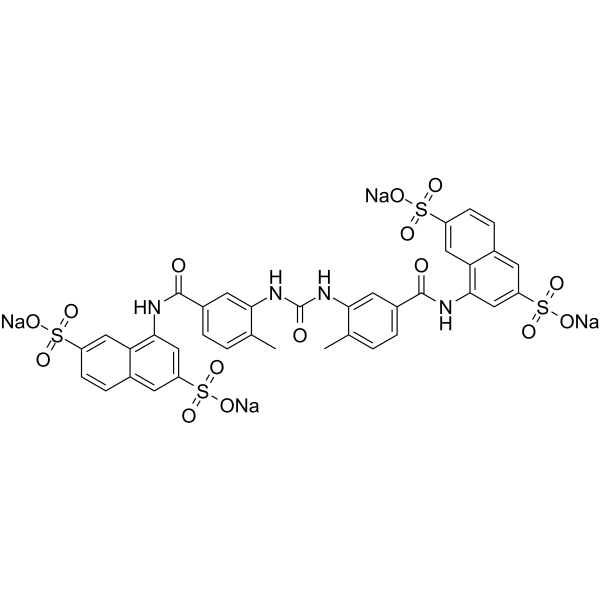
NF340 is a P2Y11 receptor inhibitor with a pIC50 of 7.3-7.7 against human P2Y11 receptor, and it exhibits high selectivity over other P2Y family receptors. NF340 binds to the ATP-binding amino acid residues of the P2Y11 receptor to inhibit its activity, block nociceptive activity, and reduce spinal dorsal horn P2Y11 receptor upregulation induced by spinal nerve injury. NF340 attenuates the NFκB signaling pathway activated by IL-1β by decreasing IκBα phosphorylation, nuclear p65 accumulation, and NFκB promoter activity. NF340 inhibits IL-1β-induced pro-inflammatory cytokine expression, reduces intracellular ROS and 4-HNE levels, and suppresses IL-1β-induced matrix metalloproteinase expression in primary fibroblast-like synoviocytes. NF340 inhibits ATP-induced elevation of intracellular Ca 2+ concentration and cell migration in human hepatocellular carcinoma cells. NF340 can be used in the research of neuropathic pain, myocardial ischemia/reperfusion injury, inflammatory pain, rheumatoid arthritis, and hepatocellular carcinoma .
loading...
    loading...
Cat. No.: HY-18719S
CAS No.: 1584173-54-5
Endoxifen-d5 (Z-isomer) is the deuterated-labeled Endoxifen (Z-isomer methanesulfonate) (HY-18719H). Endoxifen-d5 Z-isomer is an orally active selective PKCβ1 inhibitor with an IC50 of 360 nM against human PKCβ1. It also acts as an estrogen receptor modulator and antiestrogen. Endoxifen-d5 Z-isomer binds to and blocks ERα, ERβ and PKCβ1, inhibits estrogen and PI3K/AKT/mTORC1 signaling pathways, suppresses the expression of genes associated with cell cycle, cell proliferation and extracellular matrix remodeling, and induces apoptosis, reactive oxygen species (ROS) production and hypoxic features. Endoxifen-d5 Z-isomer inhibits tumor growth in breast tumor and glioblastoma models, reduces bone turnover and blood lipid levels, and does not require metabolism via CYP2D6. It can be used in research related to ER + breast cancer, invasive breast cancer, glioblastoma multiforme, type I bipolar disorder, desmoid tumor, gynecological malignancies, melanoma and hormone receptor-positive solid tumors
loading...
    loading...
Cat. No.: HY-B0633D
CAS No.: 9067-32-7
Hyaluronic acid sodium (MW 200-1560) is a biopolymer composed of repeating disaccharide units, with a molecular weight of 200-1560. Hyaluronic acid sodium is a major component of the extracellular matrix (ECM). It is synthesized on the plasma membrane. Hyaluronic acid sodium exerts its effects by binding to receptors CD44 and RHAMM. Hyaluronic acid sodium activates PI3K-Akt signaling. Hyaluronic acid sodium also enhances cell invasion and angiogenesis by promoting or stimulating the binding of proteolytic MMP-9 to the cell surface. Elevated hyaluronic acid levels are associated with tumor cell growth, adhesion, migration, invasion, and angiogenesis in digestive system cancers. Hyaluronic acid sodium is involved in tissue remodeling and rapid cell proliferation in several physiological processes, including embryonic morphogenesis and wound healing. Hyaluronic acid sodium can be used as a regulator of cancer-associated lymphangiogenesis. Hyaluronic acid sodium can be used as a drug delivery carrier for sodium butyrate, enhancing its anti-proliferative activity against breast cancer cell lines. Hyaluronic acid sodium can lubricate the corneal endothelium. Hyaluronic acid sodium can improve tissue hydration and enhance the resistance of cells to mechanical damage. Hyaluronic acid sodium has been conjugated with antibodies to ensure that the active compound continues to exert its effects at the site of inflammation. Hyaluronic acid sodium can be used in research in the fields of osteoarthritis, ophthalmology, cosmetic dermatology, oncology, and liver diseases .
loading...
    loading...
Cat. No.: HY-B0633E
CAS No.: 9004-61-9
Synonyms: Hyaluronan, low endotoxin; Hyaluronate, low endotoxin
Hyaluronic acid, low endotoxin (Hyaluronan, low endotoxin) is a biopolymer composed of repeating disaccharide units containing low levels of endotoxin. Hyaluronic acid is a major component of the extracellular matrix (ECM). It is synthesized on the plasma membrane. Hyaluronic acid exerts its effects by binding to receptors CD44 and RHAMM. Hyaluronic acid activates PI3K-Akt signaling. Hyaluronic acid also enhances cell invasion and angiogenesis by promoting or stimulating the binding of proteolytic MMP-9 to the cell surface. Elevated hyaluronic acid levels are associated with tumor cell growth, adhesion, migration, invasion, and angiogenesis in digestive system cancers. Hyaluronic acid is involved in tissue remodeling and rapid cell proliferation in several physiological processes, including embryonic morphogenesis and wound healing. Hyaluronic acid can be used as a regulator of cancer-associated lymphangiogenesis. Hyaluronic acid can be used as a drug delivery carrier for sodium butyrate, enhancing its anti-proliferative activity against breast cancer cell lines. Hyaluronic acid can lubricate the corneal endothelium. Hyaluronic acid can improve tissue hydration and enhance the resistance of cells to mechanical damage. Hyaluronic acid has been conjugated with antibodies to ensure that the active compound continues to exert its effects at the site of inflammation. Hyaluronic acid can be used in research in the fields of osteoarthritis, ophthalmology, cosmetic dermatology, oncology, and liver diseases .
loading...
    loading...
Cat. No.: HY-P76016
Purity:  ≥ 95%, as determined by reducing SDS-PAGE.
Synonyms: RUVBL1; RuvB (E Coli Homolog)-Like 1; RuvB Like AAA ATPase 1; Nuclear Matrix Protein 238; NMP238; RuvB-Like AAA ATPase; TIP49a; RuvB-Like 1; INO80H; TAP54-Alpha; TIP49; Pontin 52; INO80 Complex Subunit H; NMP 238; Pontin52; Pontin; ECP54; ECP-54; RVB1; TA
Species:  
Human
Source:  
Sf9 insect cells
loading...
    loading...
Cat. No.: HY-181430
CAS No.: 798546-78-8
Target:  

TGF-beta/Smad

PXS 25 is a cation-independent mannose 6-phosphate receptor (CI-M6PR) inhibitor that inhibits CI-M6PR-mediated activation of latent TGF-β1. PXS 25 inhibits conversion of high glucose-induced latent TGF-β1 to active TGF-β1 in proximal tubule cells under normoxic conditions. PXS 25 suppresses high glucose-induced fibronectin, collagen IV production, and phosphorylated Smad 2 in proximal tubule cells under normoxic conditions. PXS 25 has antifibrotic properties in skin fibroblasts. PXS 25 can be used for the research of diabetic nephropathy .
loading...
    loading...
Cat. No.: HY-184501
CAS No.: 486440-74-8
Research Areas:  

Cancer

UE01 is an orally active, selective small-molecule modulator targeting both ULK1/ERK1/2. UE01 activates hULK1 with an EC50 of 695.30 nM and a KD of 114.3 nM for ULK1; it inhibits hERK1 with an IC50 of 179.90 nM and a KD of 114 nM for ERK1; it shows weak binding to ERK2 with a KD of 2.8 mM. UE01 induces the conformational transition of ULK1 from an inactive to an active state, enhances the phosphorylation of ULK1 Ser317 and mAtg13 Ser355, and reduces the phosphorylation of ULK1 Ser757. UE01 competitively occupies the ATP-binding pocket of ERK1, inhibits ERK1 kinase activity, and reduces the activity of the ERK1/2 signaling pathway. UE01 induces complete autophagy flux and apoptosis, upregulates Atg5, Atg7, LC3-II/LC3-I, Bax, cytochrome C (Cyt c), Cleaved-Caspase 3, Cleaved-PARP1 and E-cadherin, downregulates p62, Bcl-2, MMP-2 and MMP-9, reduces the phosphorylation of Exo70 Ser250, and promotes the proteasome-dependent degradation of Cav-1, thereby inhibiting EMT-related phenotypes and extracellular matrix degradation. UE01 can be used in studies related to triple-negative breast cancer .
loading...
    loading...
Cat. No.: HY-P85957
Synonyms: BAF47; BRG1-associated factor 47; hSNF5; INI1; Integrase interactor 1 protein; Malignant rhabdoid tumor suppressor; RDT; RTPS1; Sfh1p; SMARCB1; SNF5 homolog; SNF5_HUMAN; SNF5L1; Snr1; Sucrose nonfermenting yeast homolog like 1; SWI/SNF complex component SNF5; SWI/SNF-related Matrix-associated actin-dependent regulator of chromatin subfamily B member 1; SWI10; Transcription factor TYE4; Transcription regulatory protein SNF5; TYE4

Host:  

Mouse

Application:  

IHC-P, WB, ICC/IF, ELISA

Reactivity:  

Human, Mouse

loading...
    loading...

