
205 Results for "

OPTimization

" in MedChemExpress (MCE) Product Catalog:
Products (205)

205 Results for "OPTimization" in MCE Product Catalog:

Cat. No.: HY-W814315
CAS No.: 1256577-71-5
Synonyms: CH5424802 analog; RO5424802 analog; RG7853 analog
Research Areas:  

Cancer

Alectinib analog (CH5424802 analog) is a selective ALK inhibitor with activity in blocking resistance gating mutations. The synthetic optimization of alectinib analog allows it to be combined with specific peptides to improve the ability to target cancer cells. Alectinib analog exhibits low micromolar IC50 values in antiproliferation and shows good cytotoxic effects. The inhibitory activity of alectinib analog is closely related to its stability and release of active ingredients. Alectinib analog demonstrated the ability to inhibit vascular septal length or width in an in vivo zebrafish model .
loading...
    loading...
Cat. No.: HY-L904
1,394 compounds

The MCE 1K Drug Fragment Library consists of 1,394 drug fragments. These drug fragments are derived from 2,946 FDA-approved drug molecules, and fragments from one drug can appear in other drugs, so these fragments are somewhat correlated with good PK/PD properties. Fragment-based screening can reserve enough chemical space for subsequent structural optimization. This compound library is an essential tool for drug screening based on FBDD (Fragment-Based Drug Discovery).

Cat. No.: HY-K2034

MCE OptiLNP Antibody-ctLNP pDNA Transfection Reagent (Jurkat Cells) utilizes antibody-conjugated cell-targeted lipid nanoparticle (Cell-targeted Lipid Nanoparticle, ctLNP) technology and is specifically optimized for human primary T cells. It enables efficient and targeted RNA delivery, improving transfection efficiency in difficult-to-transfect primary T cells. The kit is ideally suited for applications including CAR-T and TCR-T cell engineering, cancer immunology research, immune cell engineering, and in vitro T cell functional studies.

loading...
    loading...
Cat. No.: HY-124446
CAS No.: 523-88-6
Research Areas:  

Metabolic Disease

Dibromsalicil (Compound 31) is a carboxylesterase (CES) inhibitor with activity of 72.7 nM against hiCE (human intestinal carboxylesterase) and 53.5 nM against rCE (rabbit liver carboxylesterase). Dibromsalicil has almost no activity against hCE1 (human liver carboxylesterase) and cholinesterase .
loading...
    loading...
Cat. No.: HY-121787
CAS No.: 136340-88-0
Synonyms: OLC20
Target:  

Olfactory Receptor

Research Areas:  

Others

OX1a (OLC20) is an Orco antagonist with non-competitive activity that inhibits the activation of oxygen odor receptors (ORs). OX1a is able to reduce the activation of ORs by competitively inhibiting the effects of Orco agonists. OX1a also shows non-competitive inhibition of odor molecules, which may affect the olfactory-mediated behavior of insects. Through structural optimization, OX1a analogs have shown higher antagonistic potency, indicating that this type of compound may have application potential in a wide range of insect species .
loading...
    loading...
Cat. No.: HY-124388
CAS No.: 1396397-03-7
Research Areas:  

Inflammation/Immunology

PDE4-IN-20 is a selective submicromolar phosphodiesterase-4 (PDE4) inhibitor with anti-TNF-α properties. PDE4-IN-20 exhibits significant biological activity in vitro and in vivo. The mechanism of action of PDE4-IN-20 is supported by molecular modeling studies, which reveal its binding mode with PDE4. PDE4-IN-20 was optimized in further conformational analysis and showed pharmacological characteristics similar to those of known PDE4 inhibitors .
loading...
    loading...
Cat. No.: HY-124987
CAS No.: 2225834-49-9
Target:  

Endogenous Metabolite

Research Areas:  

Inflammation/Immunology

MRS4458 is a P2Y14 receptor antagonist with anti-inflammatory activity. MRS4458 mediates inflammatory activity by activating the motility of neutrophils. The design of MRS4458 is based on the interaction with the P2Y14 receptor and optimized by molecular dynamic simulation. MRS4458 performs well in terms of shape and complementarity with the receptor. The prediction that the 5-phenyl group of MRS4458 is substituted with thiophene is generally consistent with empirical results. The biological activity of MRS4458 was verified by fluorescence assay, showing its potent antagonistic effect .
loading...
    loading...
Cat. No.: HY-178359
CAS No.: 2228278-95-1
Target:  

Drug Derivative

Research Areas:  

Others

JAX-77 is a potent root architecture modulator. JAX-77 maintains primary root length while substantially increasing lateral root numbers, thereby optimizing the plant’s overall root system. JAX-77 is the key intermediate metabolite formed from the hydrolysis of JAX-44 (HY-178358) and can be converted to Indole-3-butyric acid (IBA) (HY-N0186). JAX-77 can be used for auxin biology and root development research .
loading...
    loading...
Cat. No.: HY-181709
Synonyms: TG062
TPM003 (TG062) is a triple agonist of GLP-1R, GIPR and GCGR, with EC50 values of 33.9, 12.5 and 92.9 pM, respectively. TPM003 suppresses appetite, regulates blood glucose, enhances insulin sensitivity, reduces gastrointestinal intolerance, promotes hepatic lipid mobilization and increases energy expenditure. TPM003 induces weight loss, improves metabolic parameters, reverses hepatic steatosis and optimizes liver function markers. TPM003 is applicable for research on obesity and non-alcoholic steatohepatitis .
loading...
    loading...
Cat. No.: HY-182486
CAS No.: 1212675-57-4
Research Areas:  

Cancer

LEM-06 is an NSD2 inhibitor with a human IC50 of 890 μM and 0.8 mM. LEM-06 binds to the histone-tail binding groove of NSD2-SET, inhibiting NSD2-mediated H3K36 histone methyltransferase activity and H3K36 mono-methylation. LEM-06 serves as a hit molecule for further optimization or derivation to explore NSD2 biology. LEM-06 can be used for the research of multiple myeloma .
loading...
    loading...
Cat. No.: HY-K3120

MCE Serum/Plasma Exosome Isolation and Purification Kit (Magnetic Beads) utilizes a magnetic bead-based method for the isolation and purification of exosomes. The underlying principle is based on the charge-dependent interaction between exosomes and functional polymers on the surface of the magnetic beads under an optimized buffer system, enabling selective adsorption of exosomes. Subsequent adjustment of the ionic strength and pH of the buffer promotes the gentle dissociation of exosomes from the magnetic beads, thereby enabling efficient exosome isolation and purification while maintaining high vesicle integrity and low impurity carryover.

loading...
    loading...
Cat. No.: HY-137910
CAS No.: 335104-84-2
Purity:  98.84%
Research Areas:  

Infection

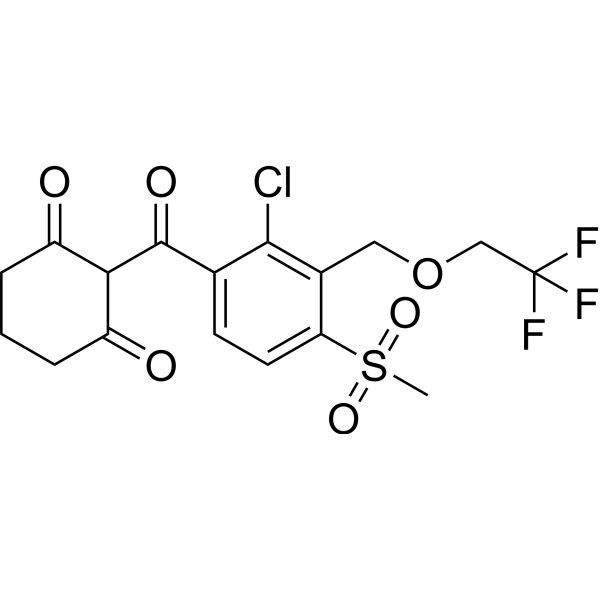
Tembotrione is a herbicide belonging to the HPPD (dioxygenase) inhibitor class with crop selectivity. Tembotrione effectively controls a variety of weeds including broadleaf and gramineous species by disrupting carotenoid synthesis, which leads to chlorophyll degradation and leaf whitening. Mixing Tembotrione with isoxaflutole or adding surfactants optimizes its efficacy and reduces phytotoxicity, with no residual impact on subsequent cruciferous crops, thus helping to increase maize grain yield. The activity of Tembotrione decreases under drought conditions, and under specific conditions (such as double-dose treatment), it may cause reversible yellowing and even yield reduction in crops such as poppy .
loading...
    loading...
Cat. No.: HY-158119A
CAS No.: 3036415-37-6
Synonyms: Felivotide mopaxetan
Target:  

PSMA

Research Areas:  

Cancer

PSMA-trillium (Felivotide mopaxetan) is a PSMA-targeted molecule that contains a highly specific PSMA-binding motif, an albumin-binding domain optimized for tumor uptake and retention, and a Macropa chelator conjugated to the α-emitter 225Ac. PSMA-trillium binds to albumin to prolong plasma retention time and binds to PSMA via its specific motif. 225Ac-PSMA-Trillium exhibits dose-dependent inhibition of LNCaP tumor growth in mice. PSMA-trillium can be used in research related to prostate cancer and metastatic castration-resistant prostate cancer .
loading...
    loading...
Cat. No.: HY-163436
CAS No.: 1338190-14-9
Research Areas:  

Metabolic Disease

F44-A13 is an orally active and highly selective farnesoid X receptor (FXR) antagonist with an IC50 value of 1.1 μM. F44-A13 can optimize cholesterol metabolism and reduce its activity by inducing CYP7A1 expression. F44-A13 reduces levels of cholesterol, triglycerides, and low-density lipoprotein cholesterol (LDL-C) in mouse models. F44-A13 can be used in the study of metabolic diseases associated with lipid disorders .
loading...
    loading...
Cat. No.: HY-165604
CAS No.: 2639634-82-3
Target:  

Liposome

Research Areas:  

Others

C14-490 is an ionizable cationic lipid used for the formulation of lipid nanoparticles (LNPs) for mRNA delivery. C14-490 LNPs can be surface-functionalized with CD45 antibodies to enable targeted delivery to hematopoietic stem cells (HSCs), mediate efficient mRNA delivery and CRISPR-Cas9 gene editing in fetal HSCs in utero, with potent and durable genome modulation in HSCs and their progeny. C14-490 is a key component of the Systematically optimized Targeted Editing Machinery (STEM) LNPs for in vivo HSC gene editing applications .
loading...
    loading...
Cat. No.: HY-174485
Target:  

mRNA

Research Areas:  

Inflammation/Immunology

OVA mRNA (N1-Me-Pseudo UTP) is an mRNA encoding chicken ovalbumin. The substitution with N1-Me-Pseudo UTP (m1Ψ) improves protein expression and reduces innate immune response. OVA mRNA binds to the STING-activating polymer PD18 and is encapsulated in optimized lipid nanoparticles to construct an mRNA vaccine platform (PD18 LNP). This platform not only enhances the lymphatic delivery efficiency and protein expression of mRNA, but also potently adjuvates immune responses via activating the STING pathway .
loading...
    loading...
Cat. No.: HY-P10365
Research Areas:  

Others

Vmm-p15 is a peptide agonist optimized for the adhesion G protein-coupled receptor GPR64 (also known as ADGRG2 or HE6). The affinity of VPM-p15 with GPR64 is significantly higher than that of the original p15 peptide. The cAMP level induced by VMM-P15 increased significantly, activated GPR64, and triggered downstream Gs, Gq, and G12/13 signaling. VPM-p15 can be used to study the activation mechanism of adherent GPCR family members .
loading...
    loading...
Cat. No.: HY-P99304
CAS No.: 1448327-63-6
Synonyms: Anti-Human ERBB3 Recombinant Antibody

Target:  

EGFR PI3K Akt p38 MAPK

Research Areas:  

Cancer

Lumretuzumab (Anti-Human ERBB3 Recombinant Antibody) is a humanized anti-HER3 (ERBB3) monoclonal antibody. Lumretuzumab effectively inhibits the activity of key oncogenic signaling pathways such as PI3K/AKT and MAPK. Lumretuzumab has been optimized through glycosyl engineering to enhance antibody-dependent cell-mediated cytotoxicity (ADCC). Lumretuzumab can be used to study HER3-positive, HER2-low-expressing solid tumors, especially breast cancer .
loading...
    loading...
Cat. No.: HY-L932V0
2,000,000 compounds

Macrocyclic compounds (≥12-atom cyclic small molecules/peptides) have unique physicochemical properties. They form preorganized conformations with high binding affinity/selectivity, target traditional small-molecule-inaccessible proteins, and bridge small-molecule drugs and biological agents. As key protein phosphorylation enzymes, kinases are linked to tumors, COPD, etc., and are critical therapeutic targets. Traditional small-molecule kinase inhibitors lack selectivity, causing off-target toxicity, low bioavailability, and acquired resistance. Macrocycles’ semi-rigid structure restricts conformations, boosts binding selectivity, optimizes pharmacokinetics, and makes macrocyclization a core kinase inhibitor optimization strategy.

Thousands of bioactive macrocycles were curated from ChEMBL. Via Transformer, macrocyclization was converted into a chemical language translation task, enabling end-to-end macrocycle generation from linear precursors with simplified inputs. Macformer achieves efficient, automated linear molecule macrocyclization via deep learning; generated macrocycles have diversity, novelty, biocompatibility, and cover broader chemical space.

MCE collected thousands of marketed/clinical kinase inhibitors, using their fragments for macrocyclization to generate derivatives. After evaluating synthetic accessibility and physicochemical properties, a million-scale virtual macrocyclic library was built for kinase-related virtual and AI-driven screening.

Cat. No.: HY-L932V
2,000,000 compounds

Macrocyclic compounds (≥12-atom cyclic small molecules/peptides) have unique physicochemical properties. They form preorganized conformations with high binding affinity/selectivity, target traditional small-molecule-inaccessible proteins, and bridge small-molecule drugs and biological agents. As key protein phosphorylation enzymes, kinases are linked to tumors, COPD, etc., and are critical therapeutic targets. Traditional small-molecule kinase inhibitors lack selectivity, causing off-target toxicity, low bioavailability, and acquired resistance. Macrocycles’ semi-rigid structure restricts conformations, boosts binding selectivity, optimizes pharmacokinetics, and makes macrocyclization a core kinase inhibitor optimization strategy.

Thousands of bioactive macrocycles were curated from ChEMBL. Via Transformer, macrocyclization was converted into a chemical language translation task, enabling end-to-end macrocycle generation from linear precursors with simplified inputs. Macformer achieves efficient, automated linear molecule macrocyclization via deep learning; generated macrocycles have diversity, novelty, biocompatibility, and cover broader chemical space.

MCE collected thousands of marketed/clinical kinase inhibitors, using their fragments for macrocyclization to generate derivatives. After evaluating synthetic accessibility and physicochemical properties, a million-scale virtual macrocyclic library was built for kinase-related virtual and AI-driven screening.

