
171 Results for "

side effects

" in MedChemExpress (MCE) Product Catalog:
Products (171)

171 Results for "side effects" in MCE Product Catalog:

Cat. No.: HY-173397
CAS No.: 3081681-34-4
Research Areas:  

Metabolic Disease

β-Glucuronidase-IN-3 (Compound 49) is a covalent allosteric β-glucuronidase inhibitor. β-Glucuronidase-IN-3 has potent inhibitory activity against Escherichia coli β-glucuronidase (EcGUS) (IC50: 12.9 nM). β-Glucuronidase-IN-3 exerts its inhibitory effect by reversibly covalently modifying the cysteine residues (Cys28, Cys443, and Cys197) of EcGUS. β-Glucuronidase-IN-3 can be used in the study of intestinal microbiota-related diseases, especially to alleviate the toxic side effects of Irinotecan (HY-16562) and nonsteroidal anti-inflammatory drugs (NSAIDs) .
loading...
    loading...
Cat. No.: HY-17509R
CAS No.: 169590-41-4
Synonyms: SC 046 (Standard); SC 46 (Standard); SC 59046 (Standard)
Deracoxib (SC 046; SC 59046) (Standard) is the analytical standard of Deracoxib (HY-17509). This product is intended for research and analytical applications. Deracoxib, an orally active COX-2 inhibitor, is a veterinary nonsteroidal anti-inflammatory agent used exclusively in dogs. Deracoxib inhibits the COX-2 enzyme to reduce the production of prostaglandins, effectively controlling pain and inflammation after canine soft tissue surgery. Deracoxib reduces the inhibition of COX-1 and lowers the risk of gastrointestinal side effects. Deracoxib induces tumor cell cycle arrest and apoptosis, and shows anti-tumor activity in canine osteosarcoma, breast tumors and bladder transitional cell carcinomas
loading...
    loading...
Cat. No.: HY-175486
Target:  

Opioid Receptor

Research Areas:  

Neurological Disease

KOR agonist 6 is a KOR agonist (Ki = 0.25 pM). KOR agonist 6 shows agonistic activity at MOR and DOR in CHO cells and inhibits Forskolin (HY-15371)-stimulated cAMP accumulation. KOR agonist 6 stimulates KOR-mediated [ 35S]GTPγS binding and inhibits cAMP accumulation in KOR-expressing HEK293 cells with potent agonistic activity, while showing lower β-arrestin recruitment potency. KOR agonist 6 demonstrates anti-nociceptive efficacy in mice. KOR agonist 6 can be used for the study of analgesics with reduced central nervous system (CNS) side effects .
loading...
    loading...
Cat. No.: HY-184312
CAS No.: 1031072-40-8
PPAR agonist 8 is an orally active pan-PPAR agonist, with KD values of 0.576 μM, 2.06 μM and 1.45 μM for PPARα, PPARγ and PPARδ, respectively. PPAR agonist 8 upregulates the expression of ATP-binding cassette transporter A1 (ABCA1) and promotes cholesterol efflux. PPAR agonist 8 reduces plasma cholesterol levels, decreases cholesterol accumulation in the liver and cholesterol deposition in pancreatic islets, regulates glucose and lipid metabolism, and causes no side effects of weight gain and obesity. PPAR agonist 8 can be used in the research of type 2 diabetes, hepatic steatosis and pancreatic islet dysfunction .
loading...
    loading...
Cat. No.: HY-DY1120
Research Areas:  

Cancer

ZY-2 (solution) is a fluorescent probe targeting pyruvate kinase M2 (PKM2) with an excitation wavelength of 419 nm. ZY-2 (solution) significantly activates purified PKM2 protein. ZY-2 (solution) exhibits enhanced fluorescence emission in low-polarity or high-viscosity environments. ZY-2 (solution) enables highly sensitive and selective fluorescence imaging of PKM2 in live PKM2-positive cancer cells, with no significant side effects on cell viability within its effective concentration range. ZY-2 (solution) can be used for cervical cancer research .
Solvent and concentration: DMSO: 10 mM
loading...
    loading...
Cat. No.: HY-116578S
CAS No.: 1215315-86-8
Synonyms: EXP999-d6; RP9965-d6
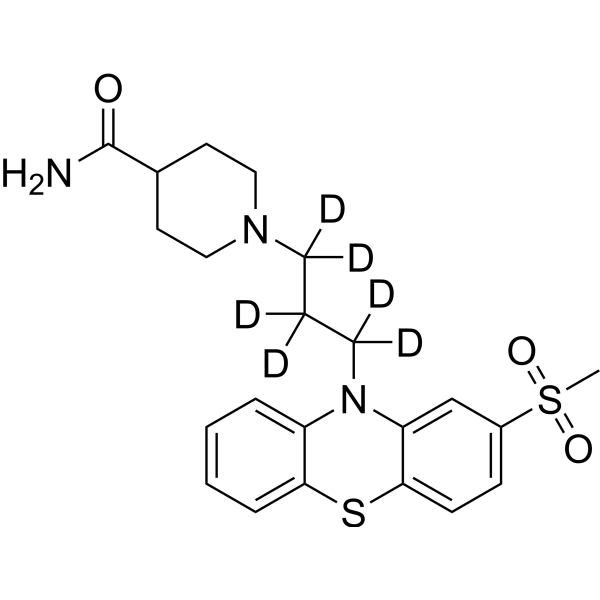
Metopimazine-d6 (EXP999-d6; RP9965-d6) is the deuterium labeled Metopimazine (HY-116578). Metopimazine (EXP999; RP9965) is a phenothiazine, orally available, selective dopamine D2 receptor antagonist that does not penetrate the blood-brain barrier. Metopimazine blocks dopamine D2 receptors in the chemoreceptor trigger zone and the periphery, thereby inhibiting nausea and vomiting. Metopimazine is indicated for chemotherapy-induced nausea and vomiting, and has low central side effects due to its poor brain penetration. The use of metopimazine in acute gastroenteritis may have potential risks .
loading...
    loading...
Cat. No.: HY-17509S
CAS No.: 2012598-48-8
Synonyms: SC 046-d3; SC 46-d3; SC 59046-d3
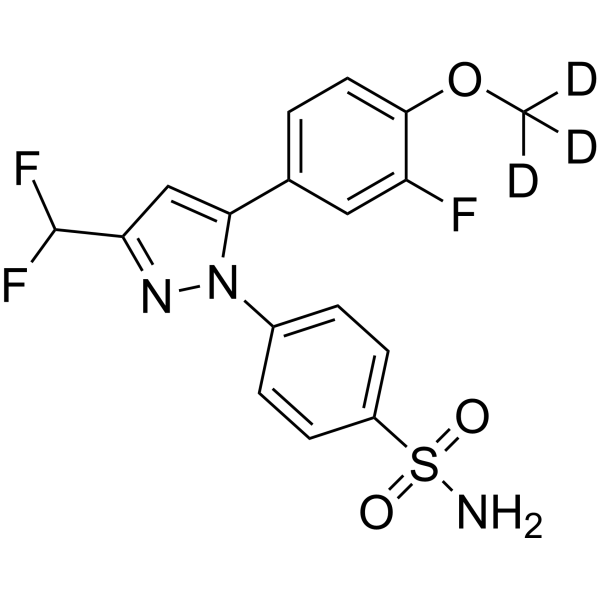
Deracoxib-d3 (SC 046-d3; SC 59046-d3) is the deuterium labeled Deracoxib (HY-17509). Deracoxib, an orally active COX-2 inhibitor, is a veterinary nonsteroidal anti-inflammatory agent used exclusively in dogs. Deracoxib inhibits the COX-2 enzyme to reduce the production of prostaglandins, effectively controlling pain and inflammation after canine soft tissue surgery. Deracoxib reduces the inhibition of COX-1 and lowers the risk of gastrointestinal side effects. Deracoxib induces tumor cell cycle arrest and apoptosis, and shows anti-tumor activity in canine osteosarcoma, breast tumors and bladder transitional cell carcinomas.
loading...
    loading...
Cat. No.: HY-P11275
TC4 is a highly balanced single-molecule quadruple agonist that can respectively activate GIPR, GLP-1R, GcgR, and Y2R with IC50 values of 0.95, 31, 81, and 1100 nM respectively. TC4 exhibits extremely strong signal bias on GLP-1R and has very low recruitment efficacy for β-inhibitor protein 2 (βArr2) and this strong cAMP preference is believed to maximize metabolic benefits (such as weight loss and hypoglycemia) while possibly minimizing side effects mediated by β-inhibitor protein recruitment (such as receptor desensitization). TC4 can be used for research on obesity and diabetes .
loading...
    loading...
Cat. No.: HY-W703540
CAS No.: 1794780-24-7
Synonyms: SC 046-d4; SC 46-d4; SC 59046-d4
Deracoxib-d4 (SC 046-d4; SC 59046--d4) is deuterium labeled Deracoxib (HY-17509). Deracoxib, an orally active COX-2 inhibitor, is a veterinary nonsteroidal anti-inflammatory agent used exclusively in dogs. Deracoxib inhibits the COX-2 enzyme to reduce the production of prostaglandins, effectively controlling pain and inflammation after canine soft tissue surgery. Deracoxib reduces the inhibition of COX-1 and lowers the risk of gastrointestinal side effects. Deracoxib induces tumor cell cycle arrest and apoptosis, and shows anti-tumor activity in canine osteosarcoma, breast tumors and bladder transitional cell carcinomas.
loading...
    loading...
Cat. No.: HY-118156
CAS No.: 155238-60-1
Target:  

Others

Research Areas:  

Others

L-699333 is a 5-lipoxygenase (5-LO) inhibitor belonging to the thieno[2,3,4-cd]indole class. This compound has a 2-ethoxybutyric acid side chain and is a potent inhibitor of the biosynthesis of 5-HPETE and LTB4 produced from human 5-LO, with ICm values of 22 nM, 7 nM, and 3.8 pM for human neutrophils and whole blood, respectively. L-699333 has shown anti-inflammatory and antiasthmatic effects in a variety of animal models, including rat pleurisy models, antigen-induced wheezing models, and awake macaque and sheep asthma models. Its inhibition of 5-LO is highly selective, with higher ICm values or stronger competitive inhibition in FLAP binding assays compared to inhibition of human 15-LO, porcine 12-LO, and ram epididymal cyclooxygenase. The racemic enantiomer 14g of L-699333 is the most potent enantiomer to date, with inhibitory effects similar to those of the known MK-0591, which has been shown in clinical trials to inhibit the biochemical effects of LTB4 biosynthesis in vitro and LTE4 excretion in urine.
loading...
    loading...
Cat. No.: HY-182759
MN33-47 is a multi-target anti-tumor compound with broad-spectrum anti-proliferative activity. MN33-47 relieves the inhibition of the mitochondrial apoptosis pathway by downregulating the anti-apoptotic protein Bcl-2, while activating caspase-3 and inhibiting Topoisomerase I activity, thereby promoting its degradation through the ubiquitin-proteasome and autophagy-lysosome pathways. MN33-47 can also induce DNA cross-linking and G2/M cell cycle arrest, inhibit cancer cell migration and activate the mitochondrial apoptosis pathway, thus exerting potent anti-tumor effects. MN33-47 can improve the water solubility of SN-38 (HY-13704), and exhibits dose-dependent tumor growth inhibition effects in CT26 tumor-bearing mouse models without obvious toxic and side effects. MN33-47 can be used in related studies on colorectal adenocarcinoma, cervical adenocarcinoma, hepatocellular carcinoma, alveolar basal epithelial adenocarcinoma, gastric cancer and colon cancer .
loading...
    loading...
Cat. No.: HY-119262
CAS No.: 258526-74-8
Target:  

Adrenergic Receptor

ABT-866 is an α1A-adrenoceptor agonist and an antagonist at the α1B- and α1D-adrenoceptor subtypes. ABT-866 has an EC50 of 0.60 μM for the α1A in the rabbit urethra. ABT-866 has a pA2 value of 5.4 for the α1B in the rat spleen. ABT-866 has a pA2 value of 6.2 for the α1D in the rat aorta. ABT-866 exhibits good urethral selectivity and lower cardiovascular side effects in stress urinary incontinence models. ABT-866 can be used for the research of diseases such as stress urinary incontinence .
loading...
    loading...
Cat. No.: HY-154487
CAS No.: 25637-84-7
Research Areas:  

Neurological Disease

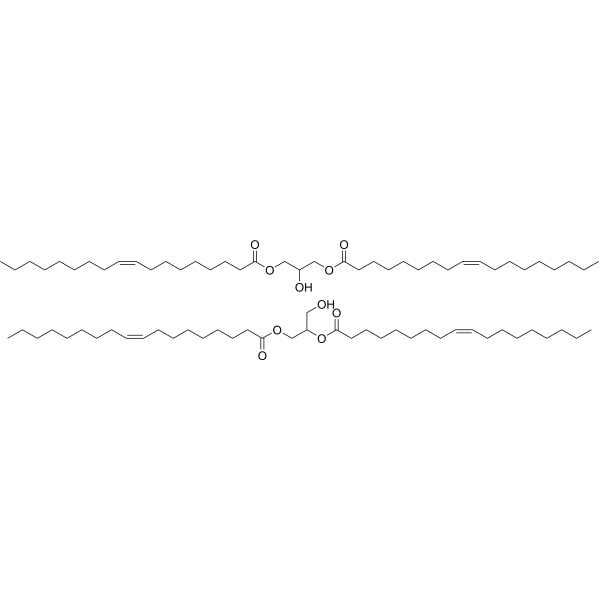
Glycerol dioleate is a lipid capable of forming Lyotropic Liquid Crystal (LLC). When formulated with phosphatidylcholine and exposed to aqueous media, glycerol dioleate constructs an inverted hexagonal (HII) phase structure with sustained-release properties. The in-situ forming gel prepared by optimizing glycerol dioleate with phosphatidylcholine and N-methyl-2-pyrrolidone enables stable release of Risperidone (HY-11018) for up to 60 days in vitro and in vivo. Glycerol dioleate causes minimal side effects in rabbits, making it an ideal carrier component for the development of antischizophrenia agents .Note: Lyotropic liquid crystals (Lyotropic Liquid Crystal, LLC) are ordered fluid phases self-assembled by amphipathic molecules (e.g., lipids, surfactants) in solvents (usually water) at specific concentrations .
loading...
    loading...
Cat. No.: HY-P11847
CAS No.: 3124030-35-6
Research Areas:  

Cardiovascular Disease

AT1R-agonist-1 is an angiotensin II type 1 receptor (AT1R) agonist with a Ki value of 1.4 nM. AT1R-agonist-1 exhibits low Gαq activity, retains β-arrestin recruitment function, and accesses the deep allosteric pocket inside AT1R via its flexible side chain. AT1R-agonist-1 possesses positive inotropic effects (enhancing cardiac contractile function) and causes almost no increase in blood pressure. AT1R-agonist-1 can be used for research on conditions such as refractory cardiogenic shock .
loading...
    loading...
Cat. No.: HY-L061
5,513 compounds

Most of the drugs that are available in the marketplace are administered via the oral route, which is a convenient and cost effective route of administration. Thus, oral bioavailability is one of the key considerations in drug design and development. A high oral bioavailability reduces the amount of an administered drug necessary to achieve a desired pharmacological effect and therefore could reduce the risk of side-effects and toxicity. A poor oral bioavailability can result in low efficacy and higher inter-individual variability and therefore can lead to unpredictable response to a drug. Low oral bioavailability in clinical trials is a major reason for drug candidates failing to reach the market.

MCE offers a unique collection of 5,513 compounds with confirmed high oral bioavailability. MCE Orally Active Compound Library is a useful tool for discovering new drugs with oral bioavailability.

Cat. No.: HY-L056
784 compounds

Terpenoids, also known as isoprenoids, are the most numerous and structurally diverse natural products found in many plants. Terpenoids are divided into monoterpenes, sesquiterpenes, diterpenes, sesterpenes, and triterpenes depending on its carbon units. Several studies, in vitro, preclinical, and clinical have confirmed that this class of compounds displays a wide array of very important pharmacological properties in the fight against cancer, malaria, inflammation, and a variety of infectious diseases. Naturally occurring terpenoids provide new opportunities to discover new drugs with minimum side effects.

MCE designs a unique collection of 784 terpenoid compounds that all come from natural products. MCE Terpenoids Library is a useful tool for drug discovery that can be used for high throughput screening (HTS) and high content screening (HCS).

Cat. No.: HY-117087
CAS No.: 1071544-43-8
Target:  

Phosphatase PANoptosis

Research Areas:  

Cancer

K103 is an inhibitor discovered from the screen that is an analog of the serotonin antagonist benzazocine. K103 exhibited inhibition of SHIP homologues, labelling it a pan-SHIP1/2 inhibitor, but the molecule had no effect on another 5' inositol phosphatase, OCRL. In line with the "two PIPs hypothesis", the molecule exhibited significant anti-tumour effects against a variety of cell lines, particularly breast cancer cells. Additional studies with K103 revealed that inhibition of SHIP1/2 in multiple myeloma cells resulted in G2/M cell cycle arrest followed by extensive apoptosis via activation of the caspase cascade. K103 fits the commonly used small molecule agent property profile, but while this work was being conducted, it was discovered that K103 caused psychoactive effects in mice, which limited the utility of the molecule in vivo. Therefore, certain synthetic studies were conducted on this tryptamine to identify the features that needed to be present in the molecule to maintain pan-SHIP1/2 inhibition in order to design an inhibitor with favourable pharmacodynamic properties and an improved side effect profile.
loading...
    loading...
Cat. No.: HY-N15721
CAS No.: 1630745-39-9
Synonyms: Trp-CA
Tryptophan-cholic acid (Trp-CA) is a microbial amino acid-conjugated bile acid that acts as an endogenous ligand and agonist (EC50=9.6 μM) for the orphan G protein-coupled receptor (GPCR) MRGPRE (Mas-related G protein-coupled receptor family member E). Tryptophan-cholic acid is orally effective but has poor oral absorption and does not cross the blood-brain barrier. Tryptophan-cholic acid promotes the secretion of glucagon-like peptide GLP-1, thereby improving glucose tolerance in diabetic mice. Tryptophan-cholic acid improves glucose tolerance, promotes insulin secretion, and alleviates high-fat diet-induced hepatic steatosis without causing pruritus side effects. Tryptophan-cholic acid is primarily used in research on type 2 diabetes (T2D) .
loading...
    loading...
Cat. No.: HY-P1723A
Synonyms: Neuropeptide Q TFA
Spexin (Neuropeptide Q) TFA is a selective agonist of galanin receptors GAL2 and GAL3, and is a conserved peptide that functions as a neurotransmitter/neuromodulator and endocrine factor. Spexin TFA can function through both central and peripheral actions. Spexin TFA upregulates Beclin 1 to inhibit ferroptosis induced by excessive autophagy, reduces the uptake of long-chain fatty acids by adipocytes, and regulates energy metabolism by increasing lipid oxidation (e.g., reducing the respiratory exchange ratio in rodents). Spexin TFA improves cardiac function in the Doxorubicin hydrochloride (HY-15142)-induced cardiotoxicity model, protects mitochondrial membrane potential, and reduces iron accumulation and lipid peroxidation. Spexin TFA can be used to study obesity and its related metabolic disorders, cardiovascular diseases (e.g., cardioprotection), and side effects of tumor chemotherapy .
loading...
    loading...
Cat. No.: HY-184620
Ferric oxide (Fe3O4) is widely used in magnetic resonance imaging (MRI), magnetic separation, targeted drug delivery, tumor hyperthermia, cell labeling and separation, and as a contrast agent and enhancement agent in retinal detachment repair surgery due to its stable material properties, good biocompatibility, high strength, and lack of toxic side effects. It is also used as a catalyst carrier, microwave absorbing material, and magnetic recording material. Xianfeng has developed numerous derivatives of ferric oxide, including oleic acid-modified ferric oxide, PEG-terminated ferric oxide, DMSA-modified ferric oxide, polylysine-modified ferric oxide, carboxylated dextran-modified ferric oxide nanoparticles, streptavidin-modified ferric oxide particles, thiol-modified ferric oxide magnetic nanoparticles, and polyethyleneimine (PEI)-modified magnetic ferric oxide nanoparticles, among others. This wide range of modifications provides numerous options for subsequent experiments.
loading...
    loading...

