26 Results for "

β-gal

" in MedChemExpress (MCE) Product Catalog:
Products (26)

26 Results for "β-gal" in MCE Product Catalog:

1
1 Cited Publications
Cat. No.: HY-158742
CAS No.: 2171036-89-6
Purity:  99.30%
Synonyms: GL13; SBB-A-B
Target:  

Tyrosinase

Research Areas:  

Others

SBB-Analogue (GL13) Biotin (GL13; SBB-A-B) consists of a Sudan Black B (SBB) (HY-D0213) derivative conjugated with biotin. SBB-Analogue (GL13) Biotin potently detects senescent cells and eliminates the drawback of false-positive staining caused by serum starvation and cell fusion in SA-β-gal assays. SBB-Analogue (GL13) Biotin can be used in flow cytometry, immunofluorescence analysis, and other applications .
loading...
    loading...
Cat. No.: HY-W127769
CAS No.: 138182-21-5
Synonyms: Salmon-gal
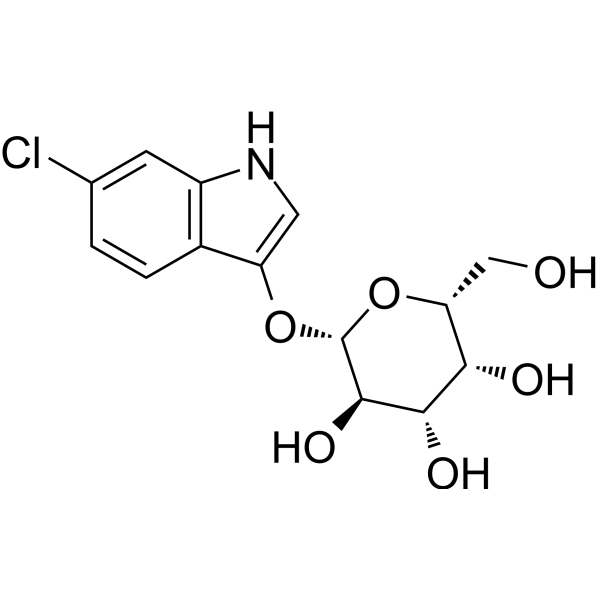
Rose-β-D-Gal is a chromogenic substrate, is also a β-galactosidase substrate. Rose-β-D-Gal creates a pink/magenta color after the reaction and has been used for detection of β-gal activity .
loading...
    loading...
Cat. No.: HY-151890
NIR-βgal-2 is a β-galactosidase-activated near-infrared fluorescent probe with superior sensitivity. NIR-βgal-2 can be used for visualizing β-galactosidase in breast cancer .
loading...
    loading...
Cat. No.: HY-E70053
CAS No.: 37257-33-3
Synonyms: alpha 1,3GT
Target:  

Endogenous Metabolite

Research Areas:  

Metabolic Disease

alpha-1,3-Galactosyltransferase (GTB) (alpha 1,3GT) catalyzes the synthesis of the xenoantigen or α-galactose (α-Gal) epitope. alpha-1,3-Galactosyltransferase (GTB) transfers galactose from UDP-Gal to type 1 or type 2, αFuc1→2βGal-R (H)-terminating acceptors .
loading...
    loading...
Cat. No.: HY-177945
CAS No.: 3055593-63-7
Synonyms: gal-MS99
Research Areas:  

Cancer

MS99-β-Gal (Gal-MS99) is a galactose-modified NPM-ALK PROTAC degrader. MS99-β-Gal is only hydrolyzed by SA-β-gal and esterase in senescent cancer cells, releasing MS99, which specifically degrades the NPM-ALK fusion protein. MS99-β-Gal shows an IC50 of 454.8 nM for aging Karpas 299 cells, significantly lower than that of normal Karpas 299 cells (IC50 = 2.162 μM). MS99-β-Gal can be used for the research of cancer .
loading...
    loading...
Cat. No.: HY-E70299
Synonyms: ST3gal5
Target:  

TGF-beta/Smad

Research Areas:  

Cancer

ST3 β-Gal α-2,3-Sialyltransferase 5 (ST3GAL5) is a glycosphingolipid (GSL) biosynthetic enzyme that can inhibit TGF-β-induced epithelial-mesenchymal transition (EMT), invasion, and metastasis both in vivo and in vitro. ST3 β-Gal α-2,3-Sialyltransferase 5 can be used in cancer research .
loading...
    loading...
Cat. No.: HY-E70298
Synonyms: ST3gal1
Target:  

Endogenous Metabolite

Research Areas:  

Cancer

ST3 β-Gal α-2,3-Sialyltransferase 1 (ST3GAL1) is a sialyltransferase whose overexpression in ovarian cancer cell lines enhances cell growth, migration, and invasion capabilities, as well as increases tumorigenicity and resistance to paclitaxel in vivo. ST3 β-Gal α-2,3-Sialyltransferase 1 catalyzes the transfer of sialic acid from cytidine monophosphate-sialic acid to galactose-containing substrates and can be utilized in studies of cancer progression and chemotherapy resistance .
loading...
    loading...
Cat. No.: HY-E70146
Synonyms: EC:2.4.3.4; ST3gal2
ST3 beta-Gal alpha-2,3-Sialyltransferase 2 (EC:2.4.3.4, ST3GAL2) catalyzes the transfer of sialic acid from CMP-sialic acid to galactose-containing substrates .
loading...
    loading...
Cat. No.: HY-165424
CAS No.: 3036456-18-2
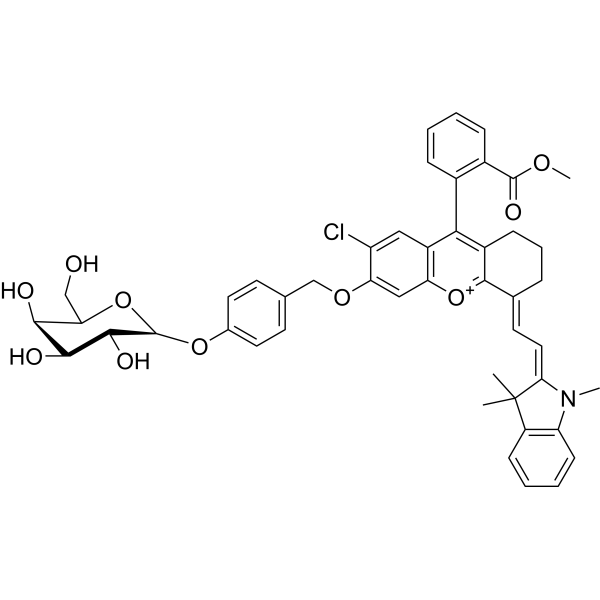
NIR-BG2 is a fluorescent indicator targeting senescence-associated β-galactosidase (SA-β-Gal). NIR-BG2 contains a hemicyanine fluorophore caged by SA-β-Gal; cleavage of its β-galactosyl group by SA-β-Gal generates an electrophilic quinone methide, which can form covalent bonds with adjacent proteins to achieve long-term signal retention. NIR-BG2 activates a near-infrared fluorescent signal upon recognition of SA-β-Gal. NIR-BG2 can be used for non-invasive in vivo imaging of cellular senescence in mouse xenograft models. The excitation/emission wavelengths are 675/708 nm .
loading...
    loading...
Cat. No.: HY-N9134
CAS No.: 4569-98-6
Synonyms: Isoprunetin
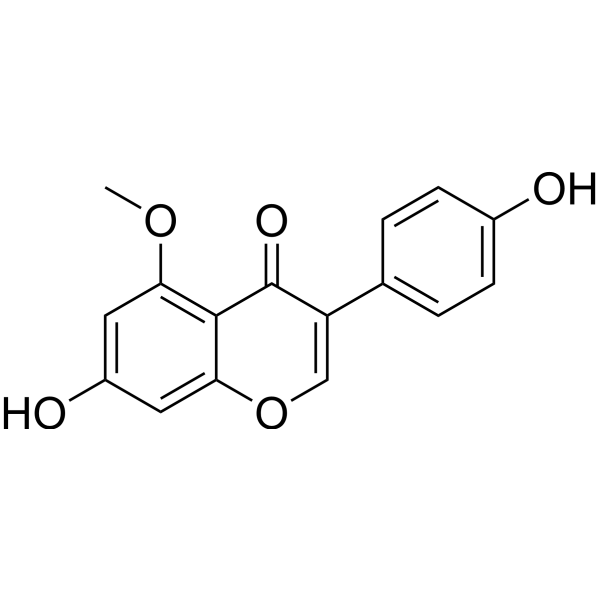
5-O-Methylgenistein (Isoprunetin) is an isoflavone that can be isolated from M. amurensis wood. 5-O-Methylgenistein inhibits β-gal activityy induced by 17β-Estradiol (HY-B0141) in yeast .
loading...
    loading...
Cat. No.: HY-E70147
Synonyms: EC:2.4.99.; ST3gal6; Type 2 lactosamine α-2,3-sialyltransferase
ST3 beta-Gal alpha-2,3-Sialyltransferase 6 (EC:2.4.99., ST3GAL6; SIAT10, Type 2 lactosamine alpha-2,3-sialyltransferase) transfer sialic acid from the activated cytidine 5'-monophospho-N-acetylneuraminic acid to terminal positions on sialylated glycolipids (gangliosides) or to the N- or O-linked sugar chains of glycoproteins. ST3 beta-Gal alpha-2,3-Sialyltransferase 6 play an important role in cancer .
loading...
    loading...
Cat. No.: HY-158331
CAS No.: 3055593-64-8
Research Areas:  

Cancer

Gal-ARV-771, PROTAC prodrug, is a gal modified ARV-771 (HY-100972). Gal-ARV-771 can be activated in SA-β-Gal-expressed cancer senescent cells to release ARV-771. Gal-ARV-771 induces selective degradation of BRD4 protein by the ubiquitin-proteasome pathway in senescent cells. Gal-ARV-771 promotes apoptosis of senescent cancer cells .
loading...
    loading...
Cat. No.: HY-130570
CAS No.: 357192-77-9
Target:  

Bacterial

Research Areas:  

Infection Inflammation/Immunology

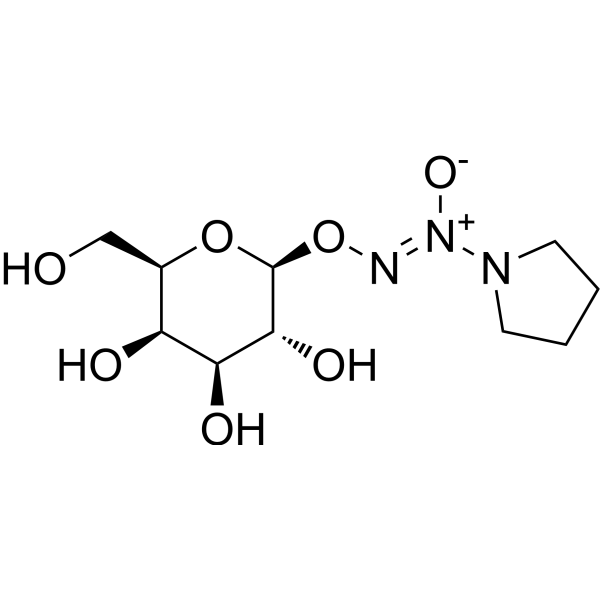
Beta-gal-nonoate is a β-galactosidase dependent nitric oxide (NO) donor that releases NO once activated by β-galactosidase. β-Gal-NONOate has bactericidal activity and can be used as a bactericide .
loading...
    loading...
Cat. No.: HY-D2379
CAS No.: 1629965-68-9
Target:  

Fluorescent Dye

Research Areas:  

Others

HMRG is a fluorescent dye, which serves as the fluorescent active product generated by enzyme-activated fluorescent probes targeting proteases and glycosidases. Its detection mechanism relies on the intramolecular spirocyclization equilibrium: HMRG itself exists in an open non-spirocyclic structure under physiological pH, which maintains a conjugated π system and produces strong fluorescence; whereas its probe precursors (such as Leu-HMRG, Ac-GlyPro-HMRG and βGal-HMRG) exist in a closed spirocyclic form and show no fluorescence due to the disruption of the π-conjugated system; when the target enzyme cleaves the substrate fragment linked to the probe precursor, the closed spirocyclic structure converts to the open structure of HMRG, restoring the conjugated system and generating a strong fluorescent signal. Its detection wavelength is Ex/Em = 501/524 nm .
loading...
    loading...
Cat. No.: HY-D2990
KSA01 is a two-dimensional fluorescent probe. KSA01 can detect SA-β-gal activity and sense lysosomal pH. KSA01 can accurately distinguish cellular aging from other pathological states with high expression of β-gal .
loading...
    loading...
Cat. No.: HY-132239
CAS No.: 93863-88-8
Synonyms: 5-Bromo-6-chloro-3-indolyl-beta-D-galactoside
Research Areas:  

Others

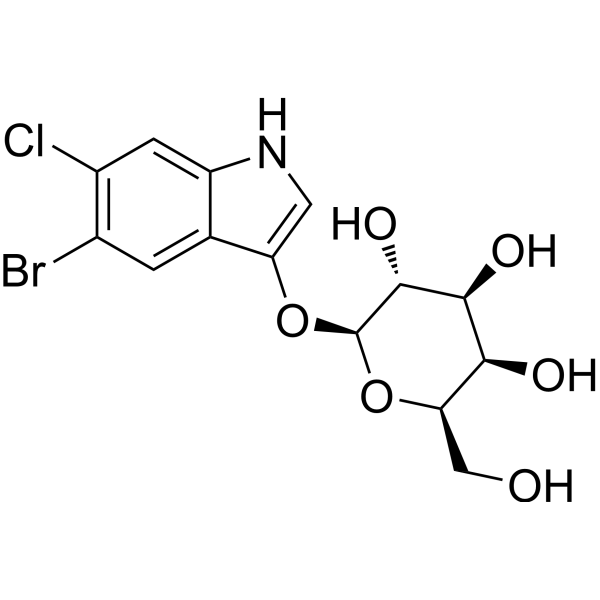
5-Bromo-6-chloro-3-indolyl β-D-Galactopyranoside (contains ca. 10% Ethyl Acetate) (5-Bromo-6-chloro-3-indolyl-beta-D-galactoside) is a chromogenic substrate of β-galactosidase (β-gal) .
loading...
    loading...
Cat. No.: HY-124445
CAS No.: 318967-58-7
Target:  

NF-κB

Research Areas:  

Inflammation/Immunology

APC0576 is an inhibitor for the activation of NF-κB signaling pathway, and inhibits the activation of NF-κB depedent gene (IC50 is 1.0 μM for β-gal). APC0576 inhibits IL-1-induced chemokines release, and can be used in research about pathological endothelial cell activation releted diseases .
loading...
    loading...
Cat. No.: HY-D2992
KSA02 is a two-dimensional intelligent fluorescent probe. KSA02 not only detects the activity of the aging-related β-galactosidase (SA-β-gal), but also can simultaneously sense the pH value changes of the lysosomal microenvironment where SA-β-gal is located. KSA02 can distinguish between aging and cancer, track the aging process, and evaluate the efficacy of anti-aging agents. KSA02 can be used for the study of aging biology .
loading...
    loading...
Cat. No.: HY-D3186
CAS No.: 2163840-29-5
HMRef-βGal is a fluorescent probe and a substrate responsive to β-galactosidase (β-galactosidase) (Ex/Em=498 nm/505-600 nm). After being cleaved by β-galactosidase, HMRef-βGal triggers significant fluorescence enhancement via intramolecular spirocyclic function regulation. HMRef-βGal generates bright fluorescence in cancer cells with elevated β-galactosidase activity, enabling visualization of tiny peritoneal metastases in mouse models. HMRef-βGal exhibits low in vitro cytotoxicity and low acute in vivo toxicity in mice. HMRef-βGal can be used for preclinical fluorescence-guided diagnosis and cytoreductive surgery of peritoneal metastases, including compatibility with real-time naked-eye detection and endoscopic imaging, as well as for studies related to peritoneal metastases of ovarian cancer .
loading...
    loading...
Cat. No.: HY-D2379A
CAS No.: 7449-51-6
Target:  

Fluorescent Dye

Research Areas:  

Others

closed-HMRG is an HMRG (HY-D2379) with a closed spiro-ring structure. HMRG is a fluorescent dye, which serves as the fluorescent active product generated by enzyme-activated fluorescent probes targeting proteases and glycosidases. Its detection mechanism relies on the intramolecular spirocyclization equilibrium: HMRG itself exists in an open non-spirocyclic structure under physiological pH, which maintains a conjugated π system and produces strong fluorescence; whereas its probe precursors (such as Leu-HMRG, Ac-GlyPro-HMRG and βGal-HMRG) exist in a closed spirocyclic form and show no fluorescence due to the disruption of the π-conjugated system; when the target enzyme cleaves the substrate fragment linked to the probe precursor, the closed spirocyclic structure converts to the open structure of HMRG, restoring the conjugated system and generating a strong fluorescent signal. Its detection wavelength is Ex/Em = 501/524 nm .
loading...
    loading...

