11 Results for "

70S ribosome

" in MedChemExpress (MCE) Product Catalog:
Products (11)

11 Results for "70S ribosome" in MCE Product Catalog:

4
4 Cited Publications
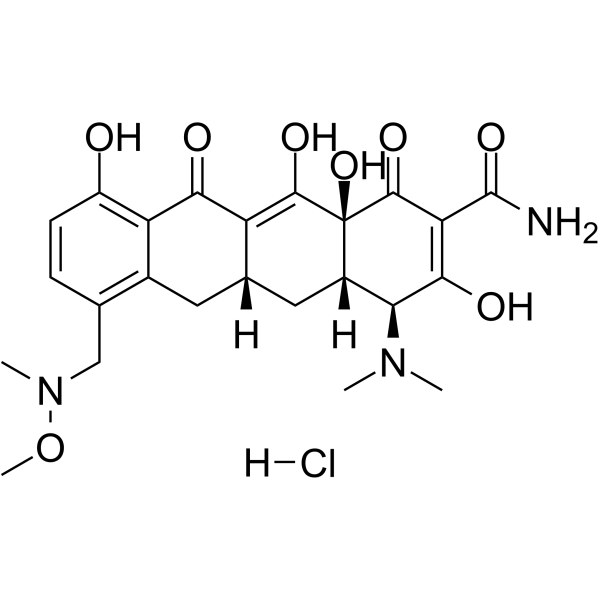
Cat. No.: HY-13858A
CAS No.: 1035979-44-2
Purity:  98.01%
Synonyms: P-005672 hydrochloride
Research Areas:  

Infection

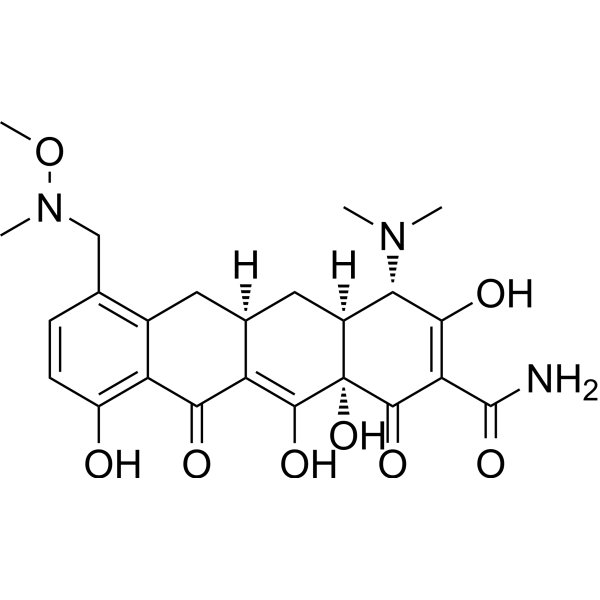
Sarecycline hydrochloride is an orally active narrow-spectrum tetracycline derivative antibiotic. Sarecycline hydrochloride has anti-inflammatory activity. Sarecycline hydrochloride inhibits the activity of Gram-positive bacteria and several types of keratobacterium acnes. Sarecycline hydrochloride interferes with tRNA accommodation and tethers mRNA to the 70S ribosome. Sarecycline hydrochloride can be used to study moderate to severe acne .
loading...
    loading...
1
1 Cited Publications
Cat. No.: HY-K1051

MCE Hygromycin B, Sterile (50 mg/mL) is a filtered and sterilized antibiotic solution that can be used directly in cell culture.Hygromycin B is an aminoglycosidic antibiotic purified from Streptomyces hygroscopicus. It acts by binding to the 70S subunit of the bacterial ribosome and inhibiting protein synthesis, leading to the death of bacteria, fungi and mammalian cells.

loading...
    loading...
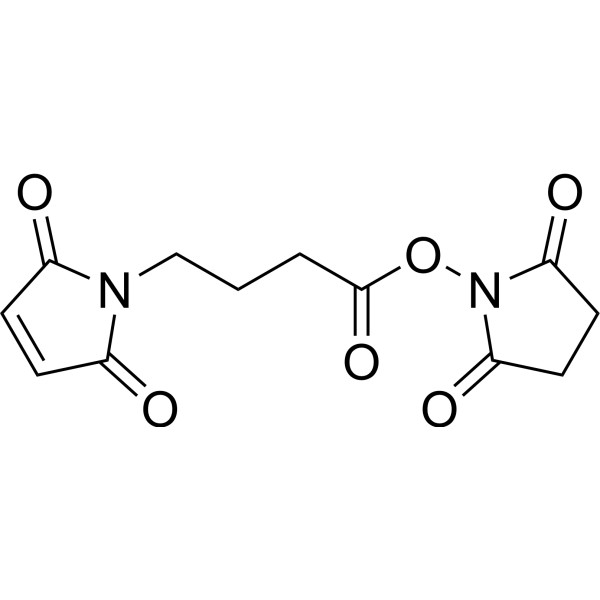
Cat. No.: HY-W041994
CAS No.: 80307-12-6
GMBS is a heterobifunctional crosslinker targeting primary amines and sulfhydryl groups. GMBS can be used for chemical crosslinking of proteins and crosslinking mass spectrometry (CXMS) to study protein folding and map interfaces between interacting proteins .
loading...
    loading...
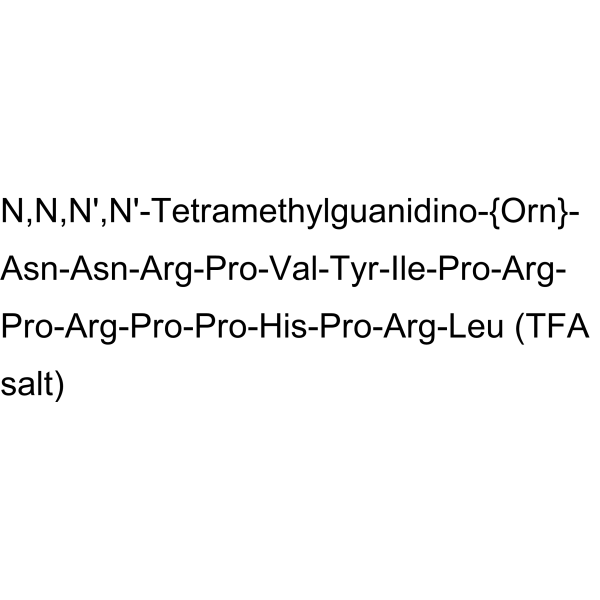
Cat. No.: HY-P5723A
Target:  

Bacterial

Research Areas:  

Infection

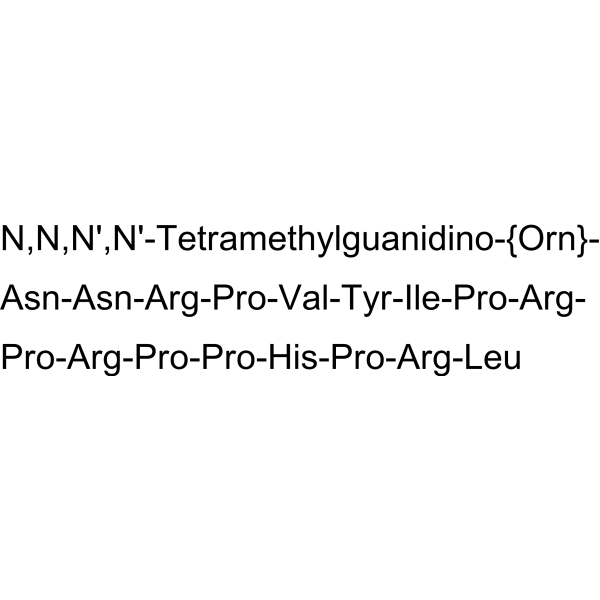
Api137 TFA is an antimicrobial peptide that interferes with bacterial growth by inhibiting translation. Api137 TFA inhibits protein synthesis by trapping of release factors on the 70S ribosome following hydrolysis of the nascent polypeptide chain .
loading...
    loading...
Cat. No.: HY-P5723
CAS No.: 1428789-03-0
Target:  

Bacterial

Research Areas:  

Infection

Api137 is an antimicrobial peptide that interferes with bacterial growth by inhibiting translation. Api137 inhibits protein synthesis by trapping of release factors on the 70S ribosome following hydrolysis of the nascent polypeptide chain .
loading...
    loading...
Cat. No.: HY-125416
CAS No.: 3808-42-2
Streptothricin F is a bactericidal antibiotic. Streptothricin F interacts with the 30S subunit of 70S ribosome. Streptothricin F shows rapid, bactericidal activity against highly drug-resistant, carbapenem-resistant Enterobacterales (CRE) (MIC50 and MIC90: 2 and 4 μM, respectively) and Acinetobacter baumannii .
loading...
    loading...
Cat. No.: HY-16770
CAS No.: 1035654-66-0
Synonyms: P-005672
Research Areas:  

Infection

Sarecycline is an orally effective narrow-spectrum tetracycline derivative antibiotic. Sarecycline has anti-inflammatory activity. Sarecycline inhibits the activity of Gram-positive bacteria and several types of keratobacterium acnes. Sarecycline interferes with tRNA accommodation and tethers mRNA to the 70S ribosome. Sarecycline can be used to study moderate to severe acne .
loading...
    loading...
Cat. No.: HY-13858AR
CAS No.: 1035979-44-2
Synonyms: P-005672 hydrochloride (Standard)
Sarecycline (hydrochloride) (Standard) is the analytical standard of Sarecycline (hydrochloride). This product is intended for research and analytical applications. Sarecycline hydrochloride is an orally active narrow-spectrum tetracycline derivative antibiotic. Sarecycline hydrochloride has anti-inflammatory activity. Sarecycline hydrochloride inhibits the activity of Gram-positive bacteria and several types of keratobacterium acnes. Sarecycline hydrochloride interferes with tRNA accommodation and tethers mRNA to the 70S ribosome. Sarecycline hydrochloride can be used to study moderate to severe acne .
loading...
    loading...
Cat. No.: HY-172285
CAS No.: 871514-32-8
Cy3 hydrazide is a fluorescent probe for carbonylated proteins. Cy3 hydrazide covalently links to aldehyde or ketone residues on carbonylated proteins, reacts with protein carbonyl groups to form stable hydrazones, and enables fluorescent detection (Ex/Em = 555/570 nm) .
loading...
    loading...
Cat. No.: HY-180767
Research Areas:  

Infection Cancer

Azithromycin-amide-C3-amide-quinoxaline (Compound 5f) is an Azithromycin (HY-17506) derivative and antibacterial agent. Azithromycin-amide-C3-amide-quinoxaline inhibits topoisoisomerase I with an IC50 of 120.7 μM. Azithromycin-amide-C3-amide-quinoxaline interacts with 70S E. coli ribosome with a Kd of 0.8 nM. Azithromycin-amide-C3-amide-quinoxaline inhibits bacterial translation with an IC50 of 0.7 μM. Azithromycin-amide-C3-amide-quinoxaline shows antibacterial potency against S. pneumonia ATCC 49619, S. aureus ATCC 29213, E. faecalis ATCC 29212 with MICs of 0.06 μg/mL, 2 μg/mL, 0.5 μg/mL, respectively. Azithromycin-amide-C3-amide-quinoxaline exhibits anticancer activity against prostate cancer, colon cancer .
loading...
    loading...
Cat. No.: HY-172285A
Cy3 hydrazide bromide is a fluorescent probe for carbonylated proteins. Cy3 hydrazide bromide covalently links to aldehyde or ketone residues on carbonylated proteins, reacts with protein carbonyl groups to form stable hydrazones, and enables fluorescent detection (Ex/Em = 555/570 nm) .
loading...
    loading...
  • 1

