9 Results for "

80S ribosome

" in MedChemExpress (MCE) Product Catalog:
Products (9)

9 Results for "80S ribosome" in MCE Product Catalog:

162
162 Publications Verification
Cat. No.: HY-18982
CAS No.: 22862-76-6
Synonyms: Flagecidin; Wuningmeisu C
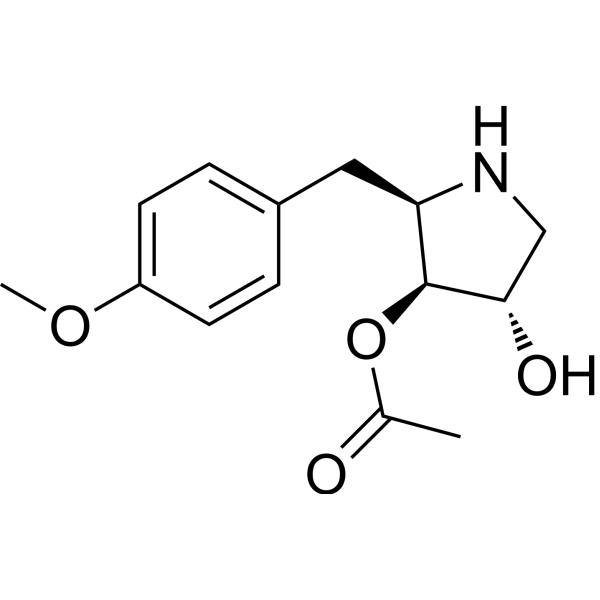
Anisomycin is a potent protein synthesis inhibitor which interferes with protein and DNA synthesis by inhibiting peptidyl transferase or the 80S ribosome system . Anisomycin is a JNK activator, which increases phospho-JNK . Anisomycin is a bacterial antibiotic .
loading...
    loading...
9
9 Cited Publications
Cat. No.: HY-K1056

MCE G418 Selective Antibiotic, Sterile (50 mg/mL) is an aminoglycoside antibiotic produced by Micromonospora rhodorangea. It acts by binding to the 80S subunit of the bacterial ribosome, thus inhibiting protein synthesis in both prokaryotic and eukaryotic cells.

loading...
    loading...
7
7 Cited Publications
Cat. No.: HY-120088
CAS No.: 1632250-49-7
Target:  

PCSK9

Research Areas:  

Cardiovascular Disease

PF-06446846 is an orally active proprotein convertase subtilisin/kexin type 9 (PCSK9) inhibitor. PF-06446846 directly and selectively inhibits translation of PCSK9 by stalling the 80S ribosome in the proximity of codon region .
loading...
    loading...
2
2 Cited Publications
Cat. No.: HY-N4118
CAS No.: 483-17-0
Synonyms: (-)-Cephaeline; NSC 32944 free base
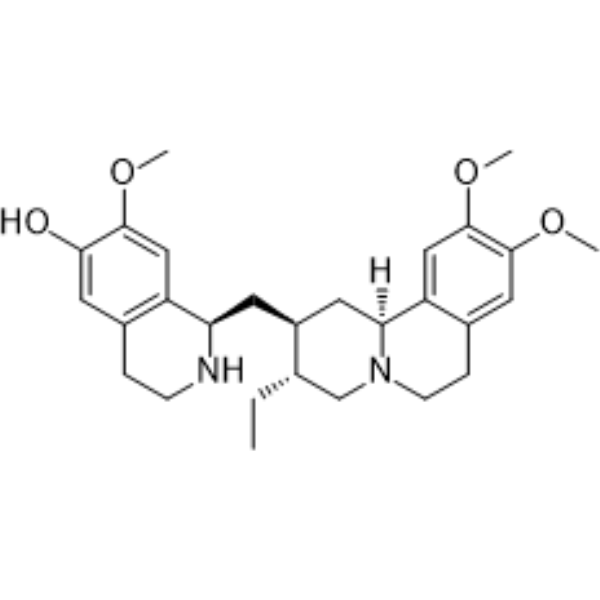
Cephaeline ((-)-Cephaeline; NSC 32944) is a ferroptosis inducer, with broad-spectrum anticancer and antiviral activities. Cephaeline induces ferroptosis (Ferroptosis) by upregulating p53, inhibiting NRF2, activating ULK3, downregulating the expressions of SLC7A11 and GPX4 in a p53-dependent manner, reducing GSH and mitochondrial membrane potential, and increasing lipid peroxidation and iron accumulation. Cephaeline inhibits cancer cell proliferation, migration and tumor growth. Cephaeline inhibits Ebola virus (EBOV) VLP entry and infection, with IC50 values of 3.27 μM and 22.18 μM respectively; it also inhibits Zika virus (ZIKV) NS5 RdRp activity (IC50 = 976 nM), and binds to severe acute respiratory syndrome coronavirus 2 (SARS-CoV-2) RdRp and N protein, with Kd values of 8.9 μM and 53.8 μM respectively. Cephaeline can be used in studies related to breast cancer, lung cancer, COVID-19, EBOV and ZIKV infections .
loading...
    loading...
Cat. No.: HY-101354
CAS No.: 2133832-83-2
Purity:  98.76%
Synonyms: PF-00932239
Target:  

PCSK9 Ras MEK ERK NF-κB LDLR

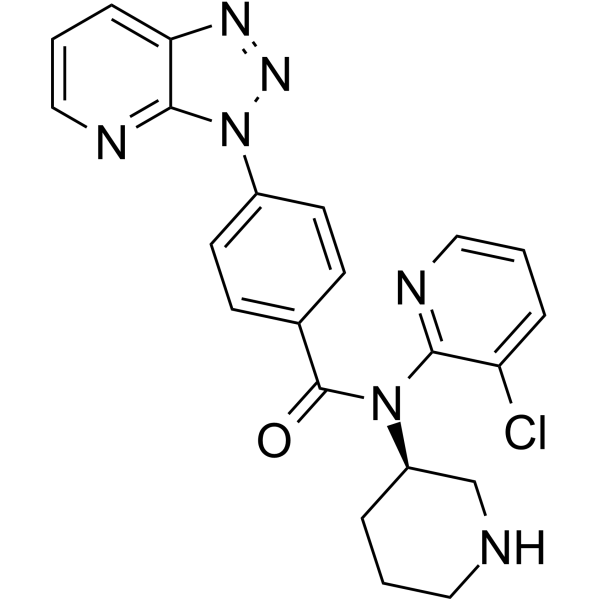
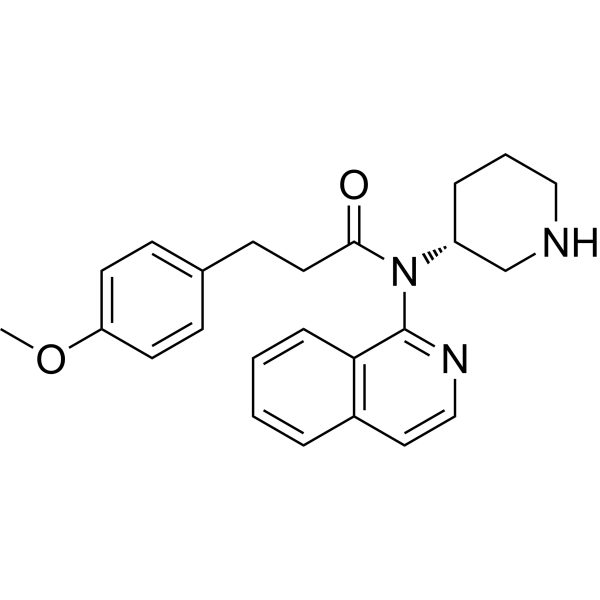
R-IMPP (PF-00932239) is a PCSK9 translation inhibitor and a selective 80S ribosome binder. R-IMPP inhibits the KRAS/MEK/ERK signaling cascade. R-IMPP reduces LPS-induced nuclear translocation of NFkB P65. R-IMPP increases LDL-R levels in cells, promotes LDL-C uptake, and does not alter the secretion of transferrin or albumin. R-IMPP inhibits the growth of colorectal cancer (CRC) cells, organoids and xenografts carrying APC/KRAS mutations, as well as the number and burden of spontaneous mouse tumors. R-IMPP can be used in research related to colorectal cancer with APC/KRAS mutations, hepatic ischemia-reperfusion injury and hypercholesterolemia .
loading...
    loading...
Cat. No.: HY-18982R
CAS No.: 22862-76-6
Synonyms: Flagecidin (Standard); Wuningmeisu C (Standard)
Anisomycin (Standard) is the analytical standard of Anisomycin. This product is intended for research and analytical applications. Anisomycin is a potent protein synthesis inhibitor which interferes with protein and DNA synthesis by inhibiting peptidyl transferase or the 80S ribosome system[1]. Anisomycin is a JNK activator, which increases phospho-JNK[2][3]. Anisomycin is a bacterial antibiotic[4].
loading...
    loading...
Cat. No.: HY-N2076
CAS No.: 3738-70-3
Synonyms: (-)-Cephaeline hydrochloride; NSC 32944 monohydrochloride
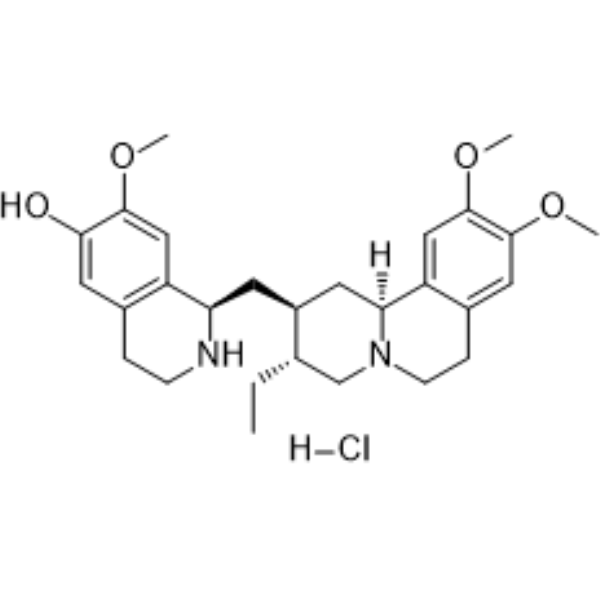
Cephaeline hydrochloride ((-)-Cephaeline (hydrochloride); NSC 32944 (monohydrochloride)) is a ferroptosis inducer, with broad-spectrum anticancer and antiviral activities. Cephaeline hydrochloride induces Ferroptosis by upregulating p53, inhibiting NRF2, activating ULK3, downregulating the expressions of SLC7A11 and GPX4 in a p53-dependent manner, reducing GSH and mitochondrial membrane potential, and increasing lipid peroxidation and iron accumulation. Cephaeline hydrochloride inhibits cancer cell proliferation, migration and tumor growth. Cephaeline hydrochloride inhibits Ebola virus (EBOV) VLP entry and infection, with IC50 values of 3.27 μM and 22.18 μM respectively; it also inhibits Zika virus (ZIKV) NS5 RdRp activity (IC50 = 976 nM), and binds to severe acute respiratory syndrome coronavirus 2 (SARS-CoV-2) RdRp and N protein, with Kd values of 8.9 μM and 53.8 μM respectively. Cephaeline hydrochloride can be used in studies related to breast cancer, lung cancer, COVID-19, EBOV and ZIKV infections .
loading...
    loading...
Cat. No.: HY-101354A
CAS No.: 2173005-10-0
Synonyms: PF-00932239 hydrochloride
R-IMPP hydrochloride (PF-00932239 hydrochloride) is a PCSK9 translation inhibitor and a selective 80S ribosome binder. R-IMPP hydrochloride inhibits the KRAS/MEK/ERK signaling cascade. R-IMPP hydrochloride reduces LPS-induced nuclear translocation of NFkB P65. R-IMPP hydrochloride increases LDL-R levels in cells, promotes LDL-C uptake, and does not alter the secretion of transferrin or albumin. R-IMPP hydrochloride inhibits the growth of colorectal cancer (CRC) cells, organoids and xenografts carrying APC/KRAS mutations, as well as the number and burden of spontaneous mouse tumors. R-IMPP hydrochloride can be used in research related to colorectal cancer with APC/KRAS mutations, hepatic ischemia-reperfusion injury and hypercholesterolemia .
loading...
    loading...
Cat. No.: HY-N4118A
CAS No.: 6014-81-9
Synonyms: (-)-Cephaeline dihydrobromide; NSC 32944 dihydrobromide
Cephaeline dihydrobromide ((-)-Cephaeline dihydrobromide; NSC 32944 dihydrobromide) is a ferroptosis inducer, with broad-spectrum anticancer and antiviral activities. Cephaeline dihydrobromide induces ferroptosis (Ferroptosis) by upregulating p53, inhibiting NRF2, activating ULK3, downregulating the expressions of SLC7A11 and GPX4 in a p53-dependent manner, reducing GSH and mitochondrial membrane potential, and increasing lipid peroxidation and iron accumulation. Cephaeline dihydrobromide inhibits cancer cell proliferation, migration and tumor growth. Cephaeline dihydrobromide inhibits Ebola virus (EBOV) VLP entry and infection, with IC50 values of 3.27 μM and 22.18 μM respectively; it also inhibits Zika virus (ZIKV) NS5 RdRp activity (IC50 = 976 nM), and binds to severe acute respiratory syndrome coronavirus 2 (SARS-CoV-2) RdRp and N protein, with Kd values of 8.9 μM and 53.8 μM respectively. Cephaeline dihydrobromide can be used in studies related to breast cancer, lung cancer, COVID-19, EBOV and ZIKV infections .
loading...
    loading...

