1. Search Result
Search Result
Results for "

A:cholesterol

" in MedChemExpress (MCE) Product Catalog:

29

Inhibitors & Agonists

6

Peptides

2

Natural
Products

2

Antibodies

Cat. No. Product Name Target Research Areas Chemical Structure
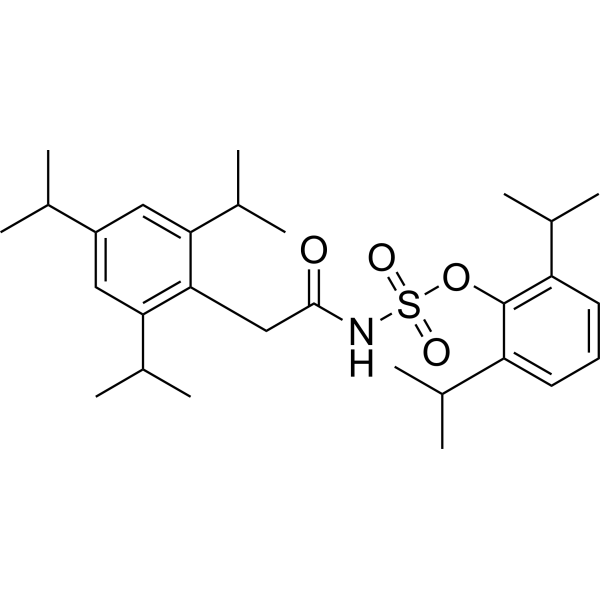
  • HY-13215
    Avasimibe
    Maximum Cited Publications
    17 Publications Verification

    CI-1011; PD-148515

    Acyltransferase Cancer
    Avasimibe (CI-1011; PD-148515) is an orally active acyl coenzyme A-cholesterol acyltransferase (ACAT; also called SOAT)) inhibitor with IC50s of 24 and 9.2 µM for ACAT1 and ACAT2, respectively . Avasimibe can be used for the research of prostate cancer .
    Avasimibe
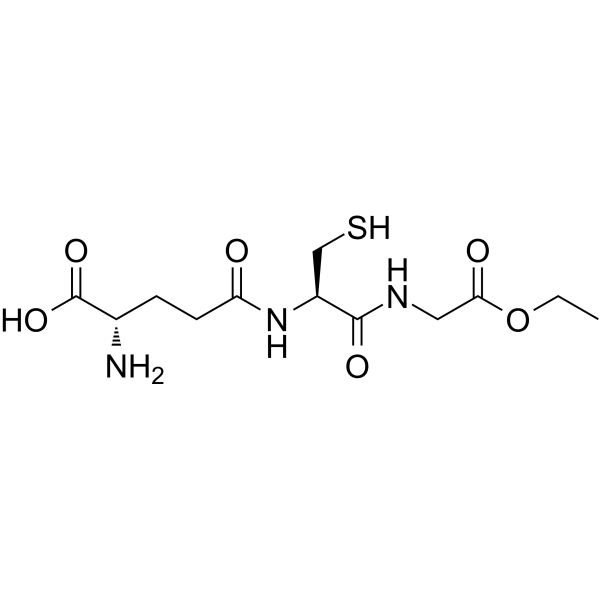
  • HY-134124

    Reactive Oxygen Species (ROS) Metabolic Disease
    Glutathione ethyl ester is a cell-permeable GSH donor and provides an efficient supply of GSH to the oocyte. Glutathione ethyl ester shows positive effect on the in vitro production of embryos by enhancement of the antioxidative defense .
    Glutathione ethyl ester
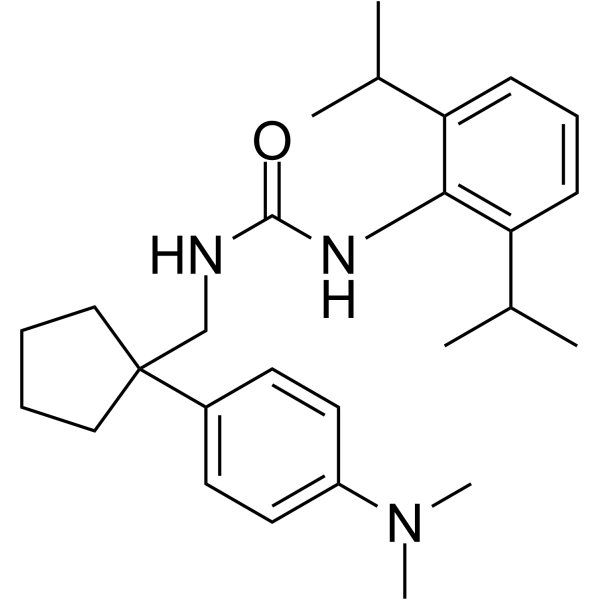
  • HY-100399
    Nevanimibe
    3 Publications Verification

    PD-132301; ATR-101

    Acyltransferase Apoptosis Cancer
    Nevanimibe (PD-132301) is an orally active and selective acyl-coenzyme A:cholesterol O-acyltransferase 1 (ACAT1) inhibitor with an EC50 of 9 nM. Nevanimibe inhibits ACAT2 with an EC50 of 368 nM. Nevanimibe induces cell apoptosis and has the potential for adrenocortical cancer .
    Nevanimibe
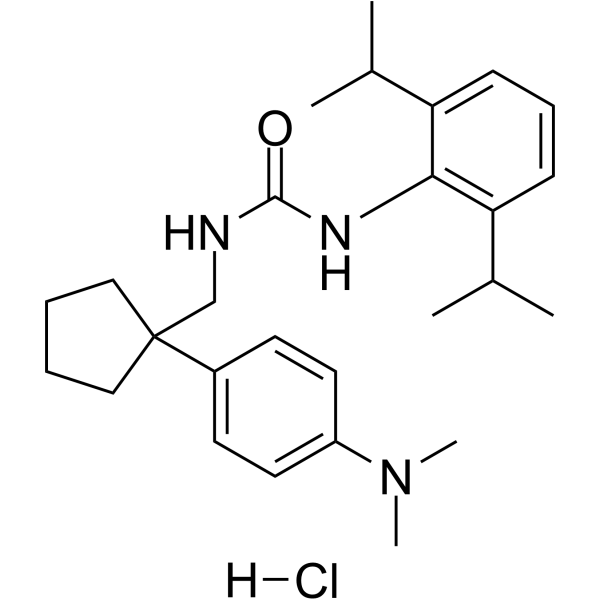
  • HY-100399A
    Nevanimibe hydrochloride
    3 Publications Verification

    PD-132301 hydrochloride; ATR101 hydrochloride

    Acyltransferase Apoptosis Cancer
    Nevanimibe hydrochloride (PD-132301 hydrochloride) is an orally active and selective acyl-coenzyme A:cholesterol O-acyltransferase 1 (ACAT1) inhibitor with an EC50 of 9 nM. Nevanimibe hydrochloride inhibits ACAT2 with an EC50 of 368 nM. Nevanimibe hydrochloride induces cell apoptosis and has the potential for adrenocortical cancer .
    Nevanimibe hydrochloride
  • HY-117832
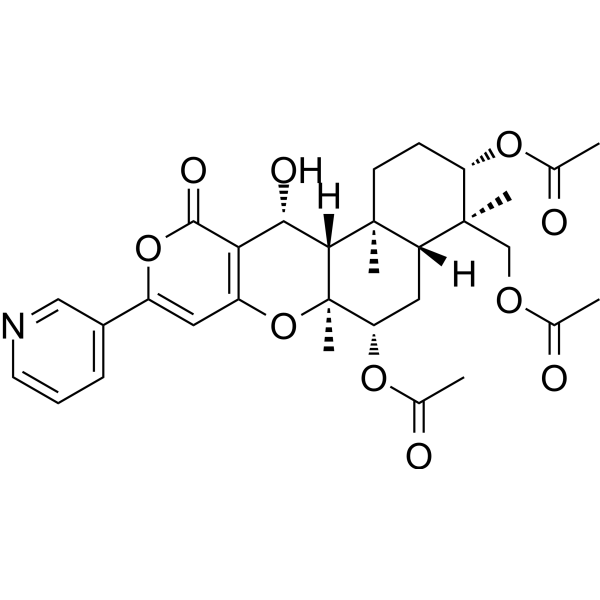
    Pyripyropene A
    1 Publications Verification

    Acyltransferase Infection Cardiovascular Disease Inflammation/Immunology
    Pyripyropene A is an orally active, potent and selective sterol O-acyltransferase 2 (SOAT2)/acyl-coenzyme A:cholesterol acyltransferase 2 (ACAT2) inhibitor, with an IC50 of 0.07 µM. Pyripyropene A attenuates hypercholesterolemia and atherosclerosis in vivo .
    Pyripyropene A
  • HY-107572

    CI 976

    Acyltransferase Metabolic Disease
    PD 128042 (CI 976) is a potent, orally active, and selective inhibitor of ACAT (acyl coenzyme A:cholesterol acyltransferase) with an IC50s of 73 nM. PD 128042 is also a potent LPAT (lysophospholipid acyltransferase) inhibitor. PD 128042 inhibits Golgi-associated LPAT activity (IC50=15 μM). PD 128042 inhibits multiple membrane trafficking steps, including ones found in the endocytic and secretory pathway .
    PD 128042
  • HY-16437

    Acyltransferase Cardiovascular Disease
    RP-64477 is a potent inhibitor of the cholesterol esterifying enzyme Acyl-coenzyme A:cholesterol O-acyltransferase (ACAT).
    RP-64477
  • HY-N10788

    Acyltransferase Inflammation/Immunology
    Pomonic acid is an acyl-coenzyme A: cholesterol acyltransferase (ACAT) inhibitor. Pomonic acid reduces the esterification of free cholesterol to cholesteryl esters and the accumulation of intracellular cholesteryl esters. Pomonic acid can be used in the research of atherosclerosis .
    Pomonic acid
  • HY-P2424

    CCK-J

    Calcium Channel Others
    Cholecystokinin-J (CCK-J), a cholecystokinin, stimulates Ca 2+ release .
    Cholecystokinin-J
  • HY-100399AR

    PD-132301 hydrochloride (Standard); ATR101 hydrochloride (Standard)

    Reference Standards Acyltransferase Apoptosis Cancer
    Nevanimibe hydrochloride (Standard) is the analytical standard of Nevanimibe hydrochloride. This product is intended for research and analytical applications. Nevanimibe hydrochloride (PD-132301 hydrochloride) is an orally active and selective acyl-coenzyme A:cholesterol O-acyltransferase 1 (ACAT1) inhibitor with an EC50 of 9 nM. Nevanimibe hydrochloride inhibits ACAT2 with an EC50 of 368 nM. Nevanimibe hydrochloride induces cell apoptosis and has the potential for adrenocortical cancer .
    Nevanimibe hydrochloride (Standard)
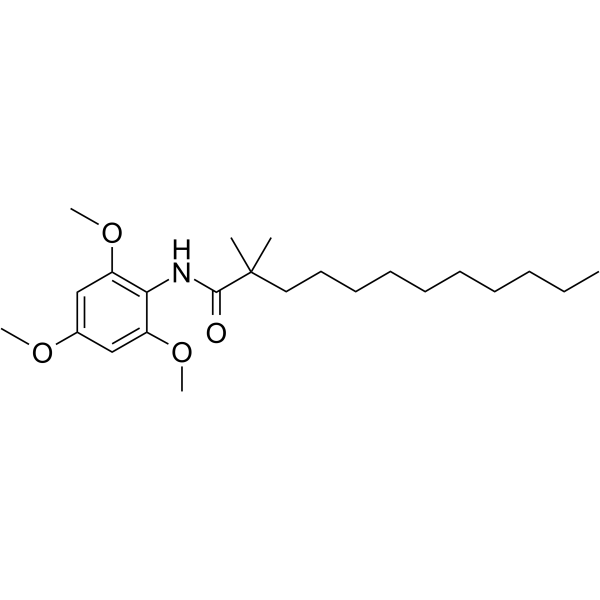
  • HY-139024

    Acyltransferase Inflammation/Immunology
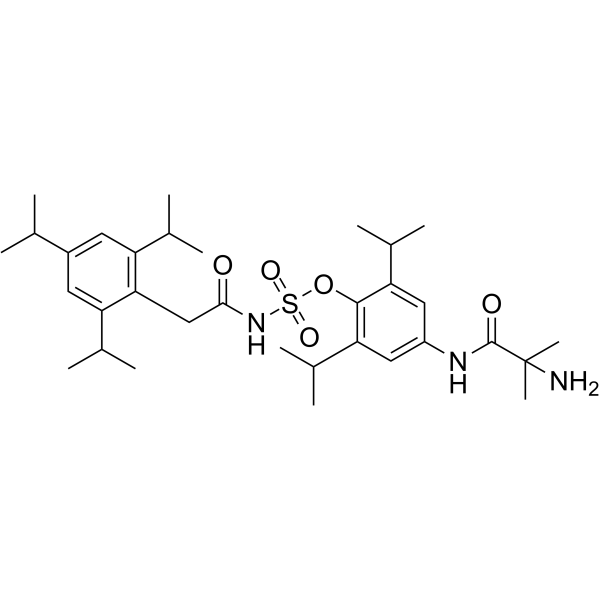
    ACAT-IN-7 is an acyl-Coenzyme A:cholesterol acyltransferase (ACAT) inhibitor. ACAT-IN-7 inhibits NF-κB mediated transcription .
    ACAT-IN-7
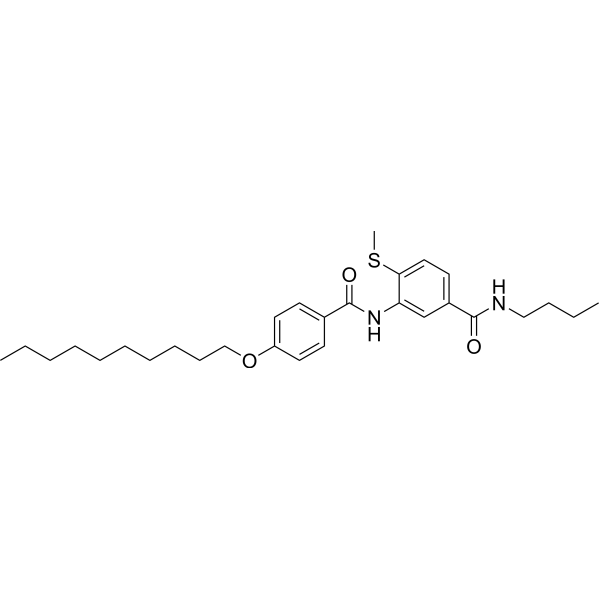
  • HY-139020

    Acyltransferase Inflammation/Immunology
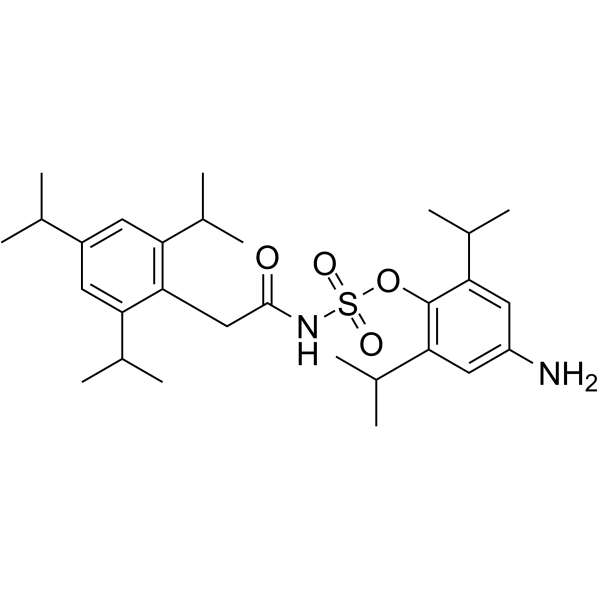
    ACAT-IN-3 is an acyl-Coenzyme A:cholesterol acyltransferase (ACAT) inhibitor. ACAT-IN-3 inhibits NF-κB mediated transcription .
    ACAT-IN-3
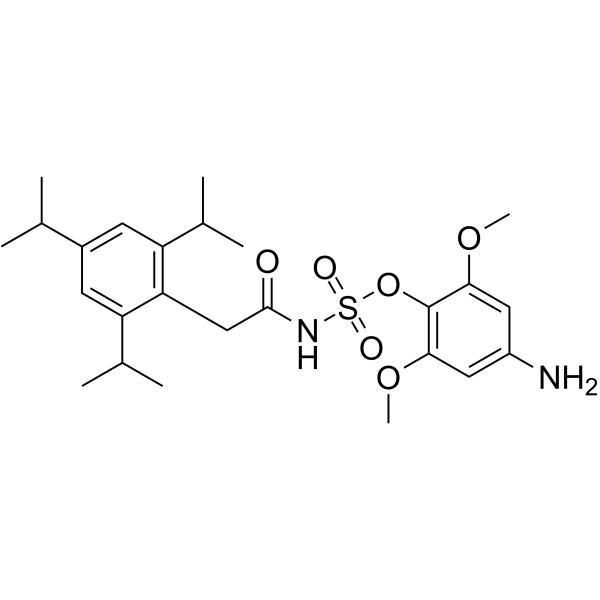
  • HY-139025

    Acyltransferase Inflammation/Immunology
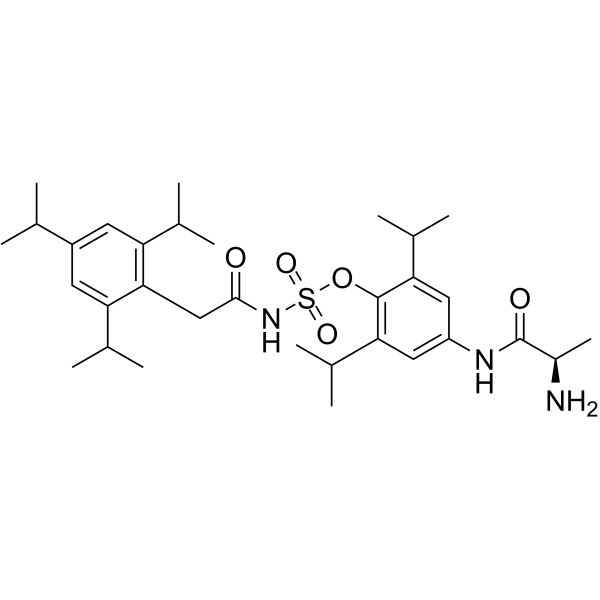
    ACAT-IN-8 (example 206) is an acyl-Coenzyme A:cholesterol acyltransferase (ACAT) inhibitor. ACAT-IN-8 inhibits NF-κB mediated transcription .
    ACAT-IN-8
  • HY-139021A

    Acyltransferase Inflammation/Immunology
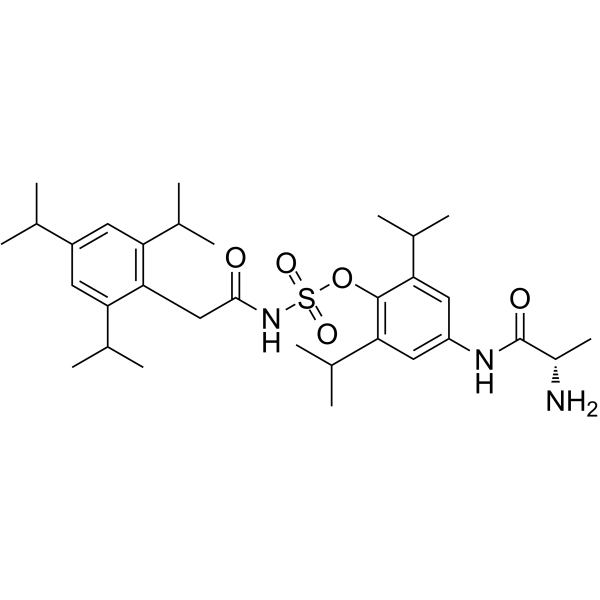
    ACAT-IN-4 hydrochloride (Example 208) is an acyl-Coenzyme A:cholesterol acyltransferase (ACAT) inhibitor. ACAT-IN-4 hydrochloride inhibits NF-κB mediated transcription .
    ACAT-IN-4 hydrochloride
  • HY-139021

    Acyltransferase Inflammation/Immunology
    ACAT-IN-4 (Example 208) is an acyl-Coenzyme A:cholesterol acyltransferase (ACAT) inhibitor. ACAT-IN-4 inhibits NF-κB mediated transcription .
    ACAT-IN-4
  • HY-139022

    Acyltransferase Inflammation/Immunology
    ACAT-IN-5 (example 19) is an acyl-Coenzyme A:cholesterol acyltransferase (ACAT) inhibitor. ACAT-IN-5 inhibits NF-κB mediated transcription .
    ACAT-IN-5
  • HY-117466

    Acyltransferase Metabolic Disease
    FR186054 is an oral active acyl-Coenzyme A:cholesterol acyltransferase (ACAT) inhibitor with the IC50 of 99 nM. FR186054 shows hypocholesterolemic effect and can be used for study of hypercholesterolemia and atherosclerosis .
    FR186054
  • HY-139019

    Acyltransferase Inflammation/Immunology
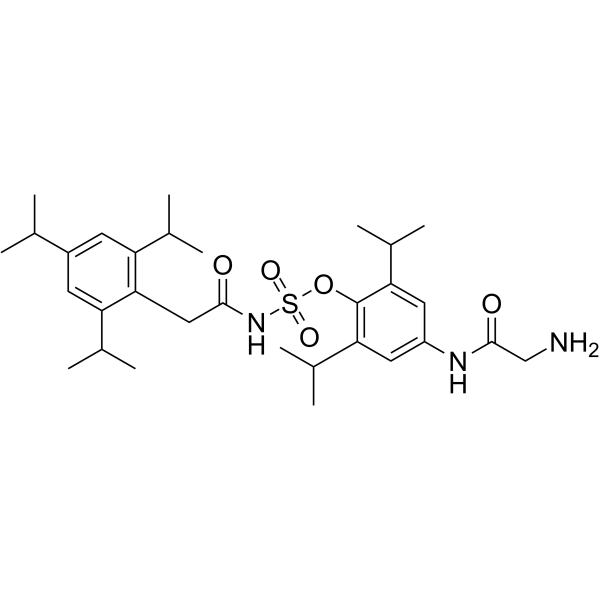
    ACAT-IN-2 is an acyl-Coenzyme A:cholesterol acyltransferase (ACAT) inhibitor extracted from patent EP1236468A1, example 187. ACAT-IN-2 inhibits NF-κB mediated transcription .
    ACAT-IN-2
  • HY-139026

    Acyltransferase Inflammation/Immunology
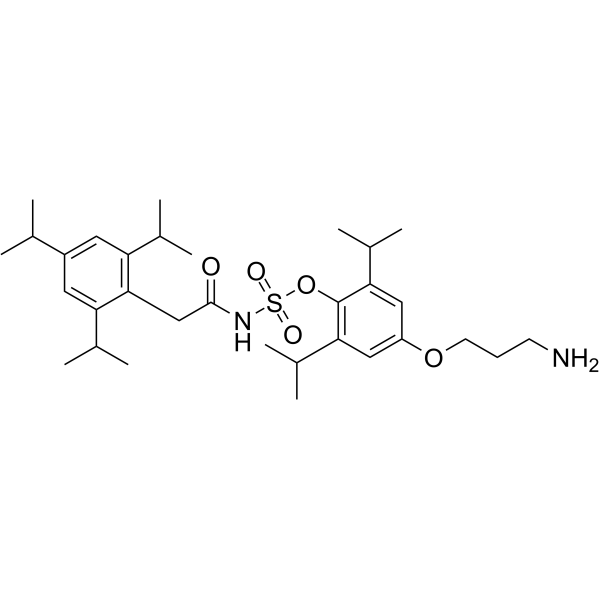
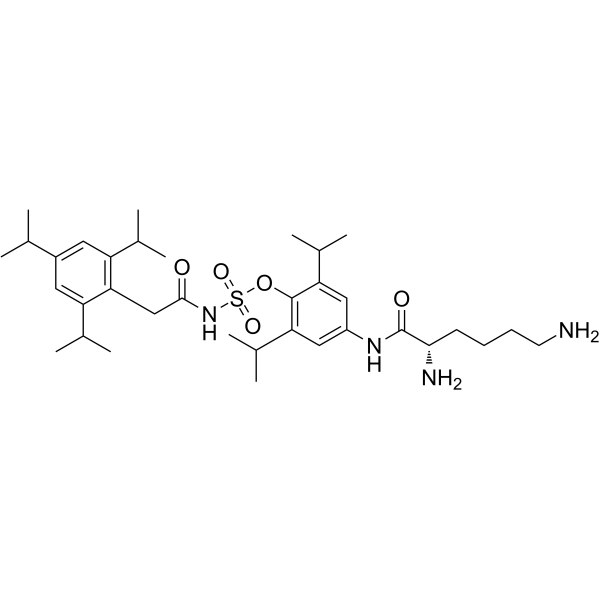
    ACAT-IN-9 is an acyl-Coenzyme A:cholesterol acyltransferase (ACAT) inhibitor extracted from patent EP1236468A1, example 207. ACAT-IN-9 inhibits NF-κB mediated transcription .
    ACAT-IN-9
  • HY-139027

    Acyltransferase Inflammation/Immunology
    ACAT-IN-10 is an acyl-Coenzyme A:cholesterol acyltransferase (ACAT) inhibitor extracted from patent EP1236468A1, example 197. ACAT-IN-10 weakly inhibits NF-κB mediated transcription .
    ACAT-IN-10
  • HY-139027A

    Acyltransferase Inflammation/Immunology
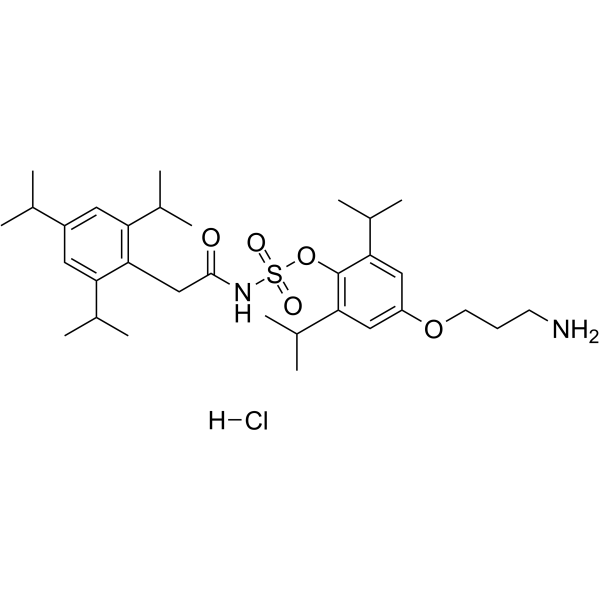
    ACAT-IN-10 dihydrochloride is an acyl-Coenzyme A:cholesterol acyltransferase (ACAT) inhibitor extracted from patent EP1236468A1, example 197. ACAT-IN-10 dihydrochloride weakly inhibits NF-κB mediated transcription .
    ACAT-IN-10 dihydrochloride
  • HY-139023

    Acyltransferase Inflammation/Immunology
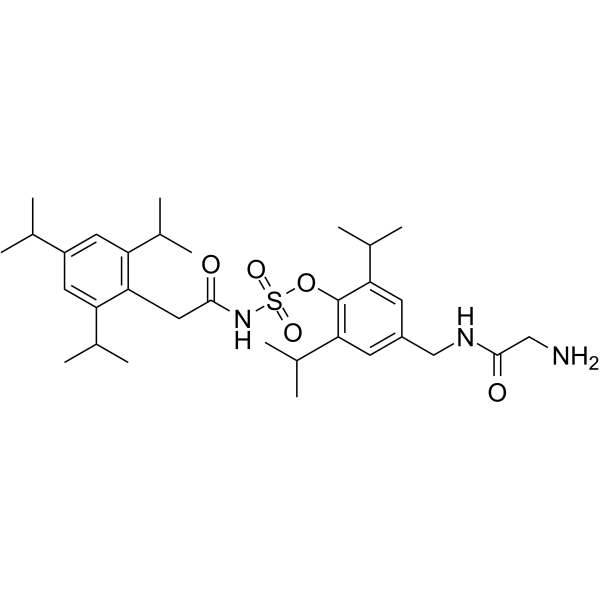
    ACAT-IN-6 is an acyl-Coenzyme A:cholesterol acyltransferase (ACAT) inhibitor extracted from patent EP1236468A1, example 200. ACAT-IN-6 potently inhibits NF-κB mediated transcription .
    ACAT-IN-6
  • HY-P10906

    Biochemical Assay Reagents Others
    Talovirtide is a peptide containing L-valyl .
    Talovirtide
  • HY-P11455

    Liposome Others
    Lipopeptide CPE4 is a PEG-modified peptide E4 [(EIAALEK) 4]. Lipopeptide CPE4 is capable of coiled-coil formation when attached to liposomes. Lipopeptide CPE4 triggers membrane fusion between liposomes and living cells with concomitant efficient cytosolic delivery of a variety of compounds such as fluorescent dyes Propidium Iodide (PI) (HY-D0815) and TO-PRO-3 iodide (HY-117070), and Doxorubicin (DOX) (HY-15142A). Lipopeptide CPE4 can be used for drug delivery research .
    Lipopeptide CPE4
  • HY-P10872

    SARS-CoV Infection
    P315V3 is an pan inhibitor for coronavirus, that inhibits SARS-CoV-2 prototypePT, Delta, BA.1 and BA.4 strain with IC50s of 10.9, 8.9, 8.6, and 2.7 nM. P315V3 exhibits cytotoxicity in Vero cell with CC50 of 4.3 μM. P315V3 exhibits anti-infectious efficacy in mouse models .
    P315V3
  • HY-114619

    Oleic acid anilide; OAA

    Acyltransferase Others
    Oleyl anilide (Oleic acid anilide) is a toxic agent found in some stocks of toxic oil, which is associated with toxic oil syndrome (TOS). Oleyl anilide is an inhibitor of acyl-coenzyme A:cholesterol acyltransferase (ACAT) (IC50: 26 µM) .
    Oleyl anilide
  • HY-13215R

    CI-1011 (Standard); PD-148515 (Standard)

    Acyltransferase Reference Standards Cancer
    Avasimibe (Standard) is the analytical standard of Avasimibe. This product is intended for research and analytical applications. Avasimibe (CI-1011; PD-148515) is an orally active acyl coenzyme A-cholesterol acyltransferase (ACAT; also called SOAT)) inhibitor with IC50s of 24 and 9.2 µM for ACAT1 and ACAT2, respectively . Avasimibe can be used for the research of prostate cancer .
    Avasimibe (Standard)
  • HY-107572R

    CI 976 (Standard)

    Acyltransferase Reference Standards Metabolic Disease
    PD 128042 (Standard) is the analytical standard of PD 128042. This product is intended for research and analytical applications. PD 128042 (CI 976) is a potent, orally active, and selective inhibitor of ACAT (acyl coenzyme A:cholesterol acyltransferase) with an IC50s of 73 nM. PD 128042 is also a potent LPAT (lysophospholipid acyltransferase) inhibitor. PD 128042 inhibits Golgi-associated LPAT activity (IC50=15 μM). PD 128042 inhibits multiple membrane trafficking steps, including ones found in the endocytic and secretory pathway .
    PD 128042 (Standard)
  • HY-P11766

    GALA-cholesterol

    Biochemical Assay Reagents Cancer
    GALA-chol is a cholesterol-conjugated pH-responsive fusion peptide that can serve as a delivery adjuvant. GALA-chol enhances the endocytosis of siRNA RET/PTC1-SQ nanoparticles, inhibits cell viability, and undergoes pH-responsive charge conversion in the acidic lysosomal environment, thereby promoting lysosomal escape of small extracellular vesicle (sEV) cargo. GALA-chol anchors to the sEV membrane and maintains the structural integrity and intrinsic homing activity of sEVs. GALA-chol can be used in studies related to adjuvant delivery .
    GALA-chol

Inquiry Online

Your information is safe with us. * Required Fields.

Salutation


Country or Region *

Applicant Name *


Organization Name *

Department *


Email Address *


Product Name *

Cat. No.


Requested quantity *

Phone Number *


Remarks

Inquiry Online

Inquiry Information

Product Name:
Cat. No.:
Quantity:
MCE Japan Authorized Agent:

