
1. Search Result
Search Result
Results for "

AMP/ATP

" in MedChemExpress (MCE) Product Catalog:

32

Inhibitors & Agonists

2

Biochemical Assay Reagents

2

Inhibitory Antibodies

3

Natural
Products

3

Recombinant Proteins

1

Isotope-Labeled Compounds

Cat. No. Product Name Target Research Areas Chemical Structure
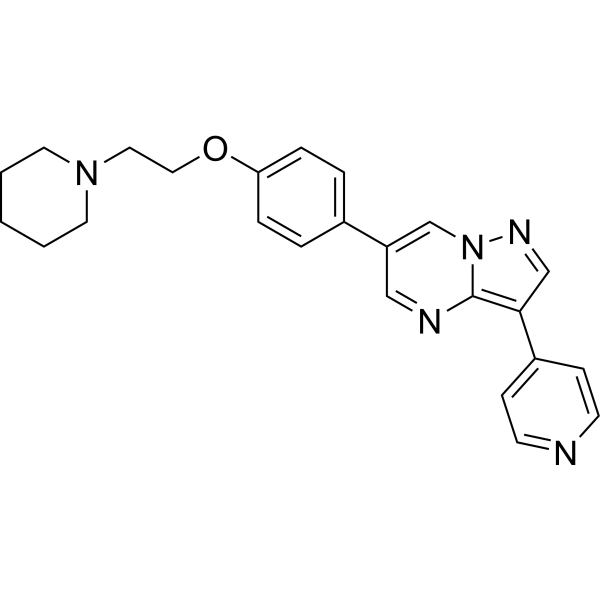
  • HY-13418A
    Dorsomorphin
    Maximum Cited Publications
    754 Publications Verification

    Compound C; BML-275

    Organoid AMPK TGF-β Receptor Autophagy Cancer
    Dorsomorphin (Compound C) is a selective and ATP-competitive AMPK inhibitor (Ki=109 nM in the absence of AMP). Dorsomorphin (BML-275) selectively inhibits BMP type I receptors ALK2, ALK3, and ALK6. Dorsomorphin can reverse autophagy activation and anti-inflammatory effect of Urolithin A (HY-100599) .
    Dorsomorphin
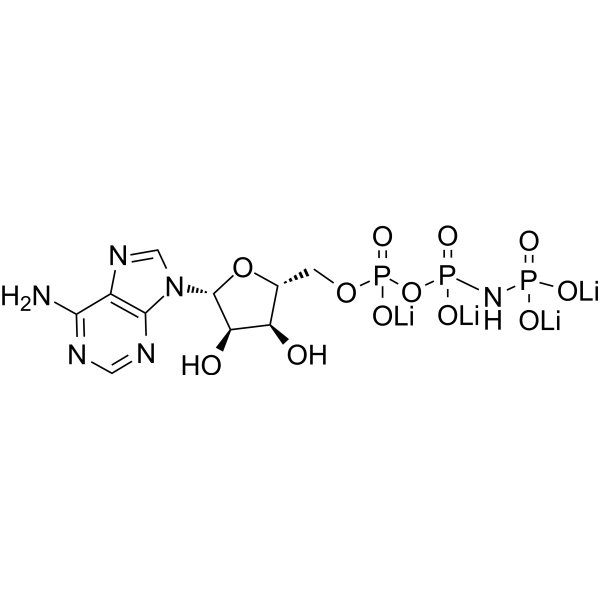
  • HY-128933
    AMP-PNP tetralithium
    3 Publications Verification

    Adenylyl-imidodiphosphate tetralithium

    Potassium Channel Metabolic Disease
    AMP-PNP (Adenylyl-imidodiphosphate) tetralithium is a non-hydrolyzable ATP analog. AMP-PNP tetralithium binds to ATP binding sites competely but is not hydrolyzed by enzymes, providing stable experimental conditions for studying ATP-dependent processes. AMP-PNP tetralithium can also be used to study enzyme activity, kinase regulation, DNA/RNA metabolism, ion channel function, and protein complex assembly .
    AMP-PNP tetralithium
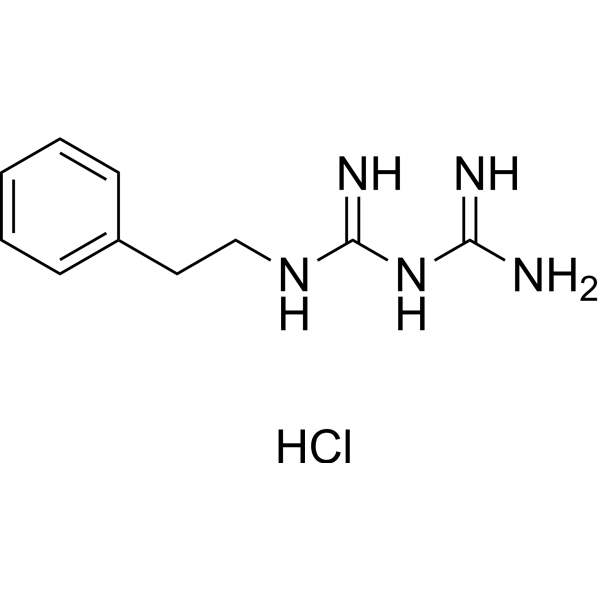
  • HY-16397A
    Phenformin hydrochloride
    5+ Cited Publications

    Phenethylbiguanide hydrochloride

    Apoptosis mTOR Autophagy Mitochondrial Metabolism AMPK Neurological Disease Metabolic Disease Cancer
    Phenformin (Phenethylbiguanide) hydrochloride is an orally active biguanide hypoglycemic agent. Phenformin hydrochloride inhibits mitochondrial respiratory chain complex I, leading to an increased AMP/ATP ratio, activation of AMPK, and subsequent inhibition of the mTOR pathway, thereby suppressing cell proliferation, inducing apoptosis and autophagy. Phenformin hydrochloride inhibits cancer stem cells (CSCs) and possesses potent antitumor potential .
    Phenformin hydrochloride
  • HY-130777A
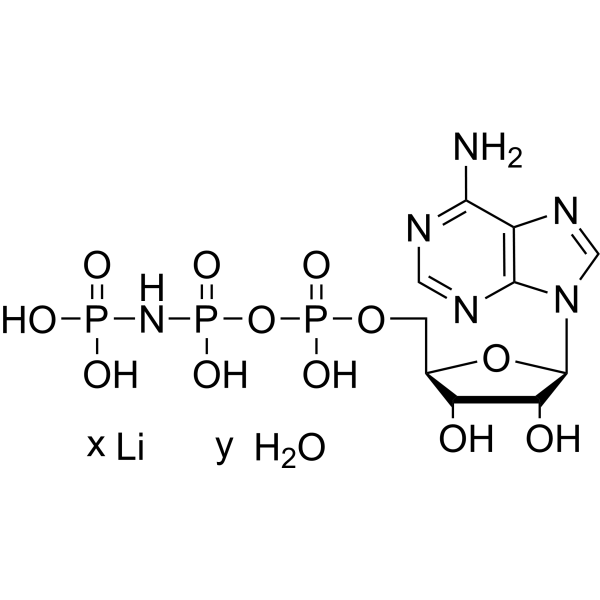
    AMP-PNP lithium hydrate
    3 Publications Verification

    Adenylyl imidodiphosphate lithium hydrate

    Drug Derivative Metabolic Disease
    AMP-PNP (Adenylyl imidodiphosphate) lithium hydrate is a non-hydrolyzable ATP analog. AMP-PNP lithium hydrate binds to ATP binding sites competely but is not hydrolyzed by enzymes, providing stable experimental conditions for studying ATP-dependent processes. AMP-PNP lithium hydrate can also be used to study enzyme activity, kinase regulation, DNA/RNA metabolism, ion channel function, and protein complex assembly .
    AMP-PNP lithium hydrate
  • HY-106723A
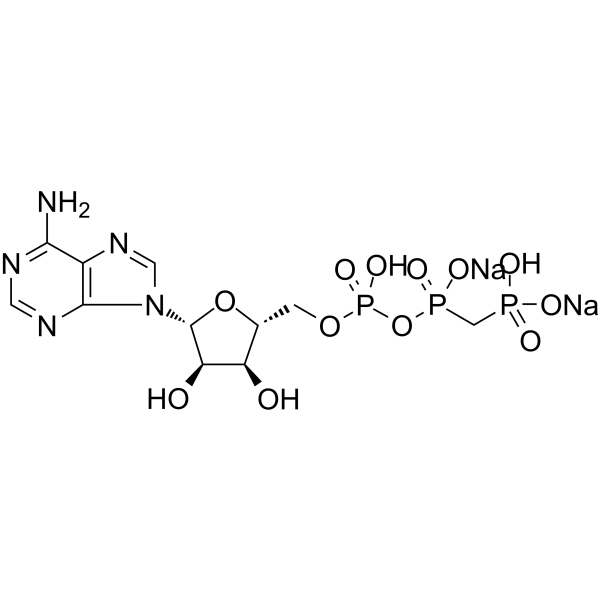
    AMP-PCP disodium
    2 Publications Verification

    HSP Cancer
    AMP-PCP disodium is an ATP analogue and can bind to Hsp90 N-terminal domain with a Kd value of 3.8 μM. AMP-PCP disodium binding favors the formation of the active homodimer of Hsp90 .
    AMP-PCP disodium
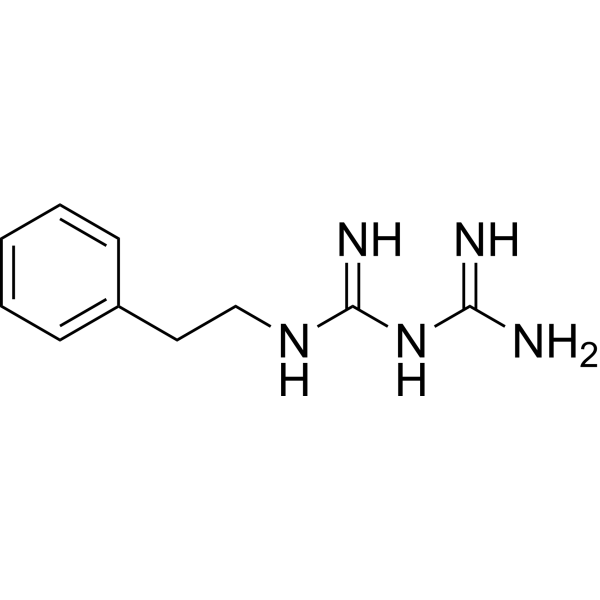
  • HY-16397
    Phenformin
    5+ Cited Publications

    Phenethylbiguanide

    Mitochondrial Metabolism AMPK Apoptosis Autophagy mTOR Neurological Disease Metabolic Disease Cancer
    Phenformin (Phenethylbiguanide) is an orally active biguanide hypoglycemic agent. Phenformin inhibits mitochondrial respiratory chain complex I, leading to an increased AMP/ATP ratio, activation of AMPK, and subsequent inhibition of the mTOR pathway, thereby suppressing cell proliferation, inducing apoptosis and autophagy. Phenformin inhibits cancer stem cells (CSCs) and possesses potent antitumor potential .
    Phenformin
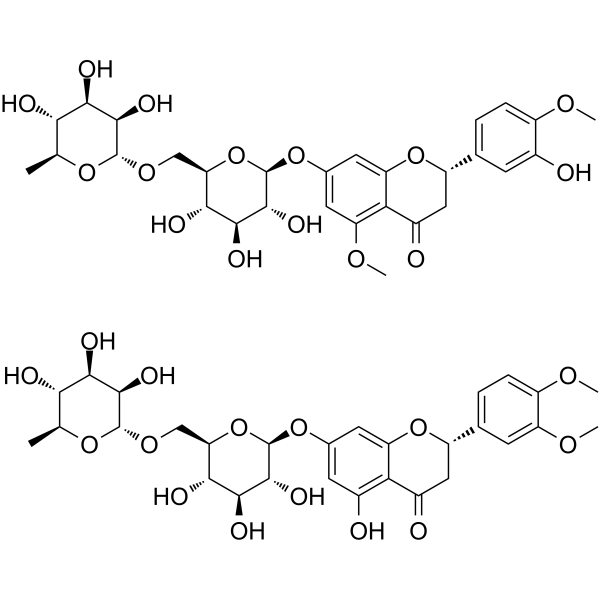
  • HY-N0165

    HIV Reverse Transcriptase Cardiovascular Disease Infection Inflammation/Immunology
    Methyl-Hesperidin is a glycoside compound. Methyl-Hesperidin has hypotensive, coronary dilating, smooth muscle relaxing, capillary stabilizing, choleretic, and anti-ulcer activities. Methyl-Hesperidin act as a competitive substrate to inhibit HIV-1 reverse transcriptase activity. Methyl-Hesperidin potentiates coronary dilating actions of adenine nucleotides and 3'-AMP, enhances depressant action on isolated atria, and prolongs adenosine- and ATP-induced heart block in guinea pigs .
    Methyl-Hesperidin
  • HY-115732
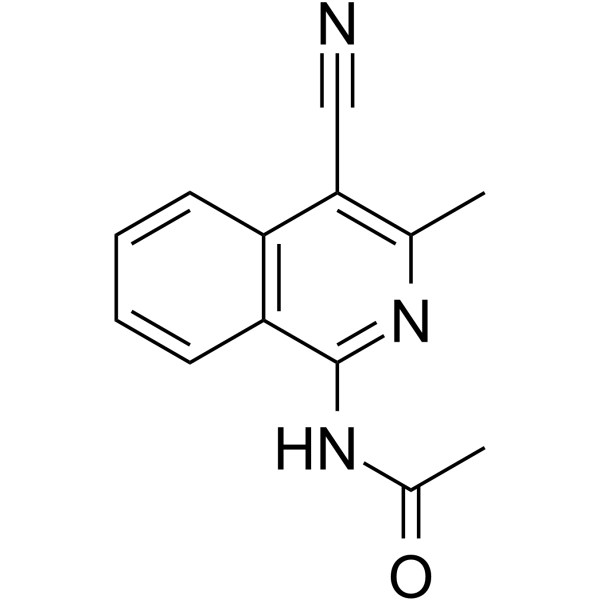
    PKA-IN-1
    1 Publications Verification

    PKA Inflammation/Immunology
    PKA-IN-1 is a potent and selective cyclic AMP-dependent protein kinase (PKA) catalytic subunit (cAK) inhibitor with an IC50 of 0.03 μM. PKA-IN-1 inhibits cAK in a fashion that is competitive with respect to ATP as substrate .
    PKA-IN-1
  • HY-178329

    Endogenous Metabolite Metabolic Disease
    ProAX is an AXP prodrug which enhances intracellular ATP levels without inducing cytotoxicity. ProAX can be metabolized by intracellular enzymes such as esterases and phosphoamidases, resulting in the conversion to AMP, ADP, and ATP. ProAX has potential applications in the research of bioenergetic-molecule therapeutics .
    ProAX
  • HY-173447

    NTPDase CD73 Cancer
    8-BuS-AMP is a NTPDase1 inhibitor and a CD73/CD39 inhibitor, with an IC50 of 35 μM and a Ki value of 0.292 μM against human NTPDase1; its Ki values against human CD73 and CD39 are 1.19 μM and 0.847 μM, respectively. 8-BuS-AMP binds to the substrate-binding pockets of NTPDase1 and CD73 to effectively block the conversion of ATP and AMP to adenosine, thereby enhancing the activation and proliferation of human peripheral T lymphocytes. 8-BuS-AMP possesses excellent enzymatic hydrolysis resistance and metabolic stability, resists hydrolysis by multiple NTPDase subtypes, and shows no activity against P2Y1 and P2Y12 receptors. 8-BuS-AMP can be used in purinergic signaling pathway and cancer-related studies .
    8-BuS-AMP
  • HY-B1298

    Adrenergic Receptor Neurological Disease Endocrinology
    Methoxamine hydrochloride is a selective alpha1-adrenergic receptor agonist. Methoxamine hydrochloride causes vasoconstriction and increased peripheral vascular resistance . Methoxamine hydrochloride significantly increased the overflow of ATP, ADP and AMP, but not adenosine, by a prazosin-sensitive mechanism in the rabbit pulmonary artery .
    Methoxamine hydrochloride
  • HY-P990068

    SRF617

    NTPDase Inflammation/Immunology Cancer
    Perenostobart (SRF617) is a human IgG4 antibody with inhibitory activity against CD39 ATPase. Perenostobart inhibits CD39-mediated hydrolysis of extracellular ATP to AMP, with IC50 values of 1.9 nM (HEK293 OE cells), 0.7 nM (MOLP-8 cells), and 1.2 nM (RBC-lysed whole blood). Perenostobart enhances CD4 + T-cell proliferation, promotes dendritic cell maturation, and boosts inflammasome activation in macrophages in the presence of ATP. Perenostobart demonstrates significant single-agent anti-tumor efficacy in MOLP-8 and H520 xenograft models. Perenostobart can be used for the study of cancer .
    Perenostobart
  • HY-P2827

    ACS

    Acetyl-CoA synthetase Cancer
    Acetyl-CoA synthetase (ACS) is a key enzyme that catalyzes the conversion of acetate to acetyl-CoA (Ac-CoA). Acetyl-CoA synthetase catalyzes the formation of thioester bonds between coenzyme A and carboxylic acids, while simultaneously hydrolyzing ATP into AMP and pyrophosphate .
    Acetyl-CoA synthetase
  • HY-134266
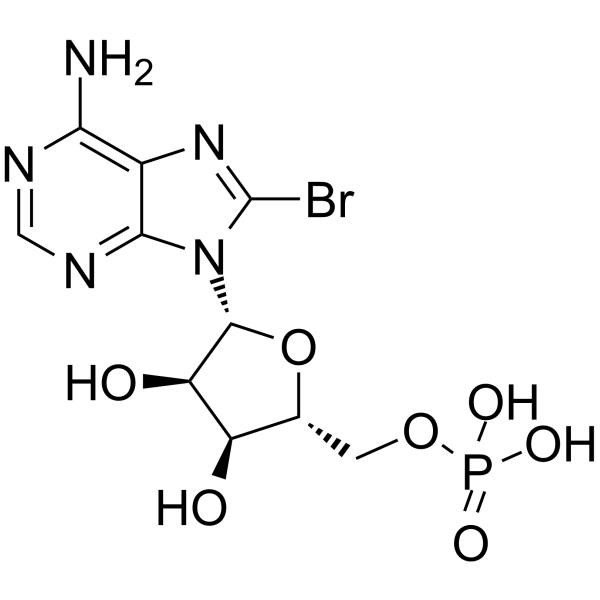
    8-Bromo-AMP
    1 Publications Verification

    8-Bromoadenosine 5'-monophosphate; 8-Bromoadenylic acid

    Endogenous Metabolite Cardiovascular Disease
    8-Bromo-AMP (8-Bromoadenosine 5'-monophosphate) is a membrane permeable cAMP analogue. 8-Bromo-AMP can improve the ability of the heart to recover from ischemia and reperfusion by increasing the levels of ATP, ADP, and total adenine nucleotides .
    8-Bromo-AMP
  • HY-178239

    Drug Metabolite AMPK Reactive Oxygen Species (ROS) Inflammation/Immunology
    DX-8951 Hydroxy-acid is a prodrug of phosphoramide. ProAX can effectively increase intracellular ATP levels. DX-8951 Hydroxy-acid activates the AMPK signaling pathway by increasing the AMP/ATP ratio. DX-8951 Hydroxy-acid can enhance mitochondrial function and antioxidant capacity while reducing reactive oxygen species (ROS) levels. DX-8951 Hydroxy-acid has shown significant anti-aging and longevity effects in both human fibroblast and nematode models .
    DX-8951 Hydroxy-acid
  • HY-106723

    HSP Cancer
    AMP-PCP is an ATP analogue and can bind to Hsp90 N-terminal domain with a Kd value of 3.8 μM. AMP-PCP binding favors the formation of the active homodimer of Hsp90 .
    AMP-PCP
  • HY-B1298A

    Adrenergic Receptor Cardiovascular Disease
    Methoxamine is a selective alpha1-adrenergic receptor agonist. Methoxamine causes vasoconstriction and increased peripheral vascular resistance . Methoxamine hydrochloride significantly increased the overflow of ATP, ADP and AMP, but not adenosine, by a prazosin-sensitive mechanism in the rabbit pulmonary artery .
    Methoxamine
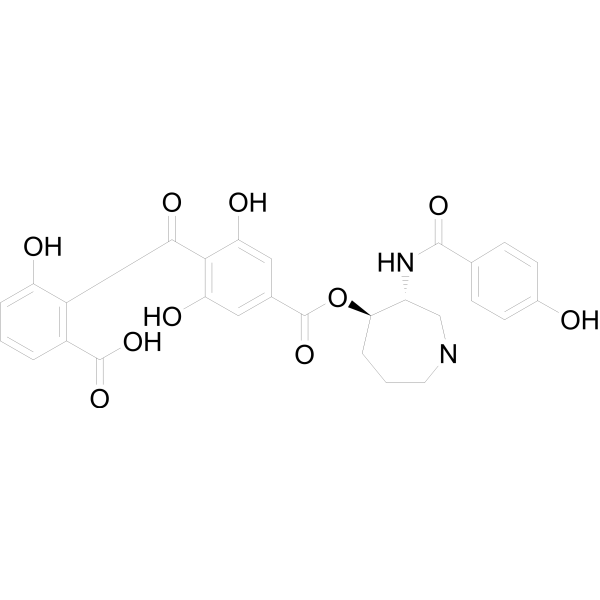
  • HY-121197

    Ophiocordin; Azepinostatin

    MARCKS PKA PKC Others
    Balanol (Ophiocordin; Azepinostatin) is a potent and ATP competitive PKC/PKA inhibitor against human PKC isozymes α, β-I, β-II, γ, δ, ε, η (IC50s=4-9 nM) and ζ (IC50=150 nM). Balanol also blocks the phosphorylation of cyclic AMP response element-binding protein (CREB) and myristoylated alanine-rich C kinase substrate (MARCKS). Balanol can be isolated from the fungus Verticillium balanoides .
    Balanol
  • HY-E70648

    AMPK Cancer
    AMPK is an αβγ heterotrimeric serinethreonine kinase activated by decreasing concentrations of adenosine triphosphate (ATP) and increasing AMP concentrations. AMPK alpha 1 Recombinant Human Active Protein Kinase is obtained by co-expressing AMPKα1 proteins .
    AMPK alpha 1 Recombinant Human Active Protein Kinase
  • HY-178239A

    Drug Metabolite AMPK Reactive Oxygen Species (ROS) Inflammation/Immunology
    DX-8951 Hydroxy-acid sodium is a prodrug of phosphoramide. DX-8951 Hydroxy-acid sodium can effectively increase intracellular ATP levels. DX-8951 Hydroxy-acid sodium activates the AMPK signaling pathway by increasing the AMP/ATP ratio. DX-8951 Hydroxy-acid sodium can enhance mitochondrial function and antioxidant capacity while reducing reactive oxygen species (ROS) levels. DX-8951 Hydroxy-acid sodium has shown significant anti-aging and longevity effects in both human fibroblast and nematode models .
    DX-8951 Hydroxy-acid sodium
  • HY-59273

    Biochemical Assay Reagents ATP Synthase Metabolic Disease
    5-Nitroindole is a mutagenic nitroarene and universal base analog. 5-Nitroindole significantly reduces the cellular adenylate energy charge by decreasing ATP levels and increasing AMP levels. 5-Nitroindole inhibits lipid peroxidation .
    5-Nitroindole
  • HY-E70793

    AMPK Cancer
    AMPK is an αβγ heterotrimeric serinethreonine kinase activated by decreasing concentrations of adenosine triphosphate (ATP) and increasing AMP concentrations. Biotin-AMPKα1β1γ1 Recombinant Human Active Protein Kinase is obtained by co-expressing AMPKα1, AMPKβ1, and AMPKγ1 proteins and is biotinylated .
    Biotin-AMPKα1β1γ1 Recombinant Human Active Protein Kinase
  • HY-E70796

    AMPK Cancer
    AMPK is an αβγ heterotrimeric serinethreonine kinase activated by decreasing concentrations of adenosine triphosphate (ATP) and increasing AMP concentrations. Biotin-AMPKα2β1γ1 Recombinant Human Active Protein Kinase is obtained by co-expressing AMPKα2, AMPKβ1, and AMPKγ1 proteins and is biotinylated .
    Biotin-AMPKα2β1γ1 Recombinant Human Active Protein Kinase
  • HY-E70795

    AMPK Cancer
    AMPK is an αβγ heterotrimeric serinethreonine kinase activated by decreasing concentrations of adenosine triphosphate (ATP) and increasing AMP concentrations. Biotin-AMPKα1β2γ1 Recombinant Human Active Protein Kinase is obtained by co-expressing AMPKα1, AMPKβ2, and AMPKγ1 proteins and is biotinylated .
    Biotin-AMPKα1β2γ1 Recombinant Human Active Protein Kinase
  • HY-16397AS

    Phenethylbiguanide-d5 hydrochloride

    Isotope-Labeled Compounds Apoptosis mTOR Autophagy Mitochondrial Metabolism AMPK Neurological Disease Metabolic Disease Cancer
    Phenformin-d5 (Phenethylbiguanide-d5) hydrochloride is the deuterium labeled Phenformin hydrochloride. Phenformin hydrochloride is an orally active biguanide hypoglycemic agent. Phenformin hydrochloride inhibits mitochondrial respiratory chain complex I, leading to an increased AMP/ATP ratio, activation of AMPK, and subsequent inhibition of the mTOR pathway, thereby suppressing cell proliferation, inducing apoptosis and autophagy. Phenformin hydrochloride inhibits cancer stem cells (CSCs) and possesses potent antitumor potential.
    Phenformin-d5 hydrochloride
  • HY-E70787

    AMPK Cancer
    AMPK is an αβγ heterotrimeric serinethreonine kinase activated by decreasing concentrations of adenosine triphosphate (ATP) and increasing AMP concentrations. AMPK α1β1γ1 Recombinant Human Active Protein Kinase is an ortholog of AMPK. AMPK α1β1γ1 Recombinant Human Active Protein Kinase is obtained by co-expressing AMPKα1, AMPKβ1, and AMPKγ1 proteins .
    AMPK α1β1γ1 Recombinant Human Active Protein Kinase
  • HY-16397R

    Phenethylbiguanide (Standard)

    Reference Standards Apoptosis mTOR Autophagy Mitochondrial Metabolism AMPK Neurological Disease Metabolic Disease Cancer
    Phenformin (Phenethylbiguanide) (Standard) is the analytical standard of Phenformin (HY-16397). This product is intended for research and analytical applications. Phenformin (Phenethylbiguanide) is an orally active biguanide hypoglycemic agent. Phenformin inhibits mitochondrial respiratory chain complex I, leading to an increased AMP/ATP ratio, activation of AMPK, and subsequent inhibition of the mTOR pathway, thereby suppressing cell proliferation, inducing apoptosis and autophagy. Phenformin inhibits cancer stem cells (CSCs) and possesses potent antitumor potential.
    Phenformin (Standard)
  • HY-16397AR

    Phenethylbiguanide hydrochloride (Standard)

    Reference Standards Apoptosis mTOR Autophagy Mitochondrial Metabolism AMPK Neurological Disease Metabolic Disease Cancer
    Phenformin (Phenethylbiguanide) hydrochloride (Standard) is the analytical standard of Phenformin hydrochloride (HY-16397). This product is intended for research and analytical applications. Phenformin hydrochloride (Phenethylbiguanide) is an orally active biguanide hypoglycemic agent. Phenformin hydrochloride inhibits mitochondrial respiratory chain complex I, leading to an increased AMP/ATP ratio, activation of AMPK, and subsequent inhibition of the mTOR pathway, thereby suppressing cell proliferation, inducing apoptosis and autophagy. Phenformin hydrochloride inhibits cancer stem cells (CSCs) and possesses potent antitumor potential.
    Phenformin hydrochloride (Standard)
  • HY-P992446

    NTPDase Cancer
    PUR001 is a monoclonal antibody targeting NTPDase 1 (CD39). PUR001 blocks the hydrolysis of extracellular ATP and ADP into AMP by inhibiting CD39, reduces the production of immunosuppressive adenosine, and increases extracellular ATP concentration to activate anti-tumor immune responses. PUR001 can be used in studies related to solid tumors .
    PUR001
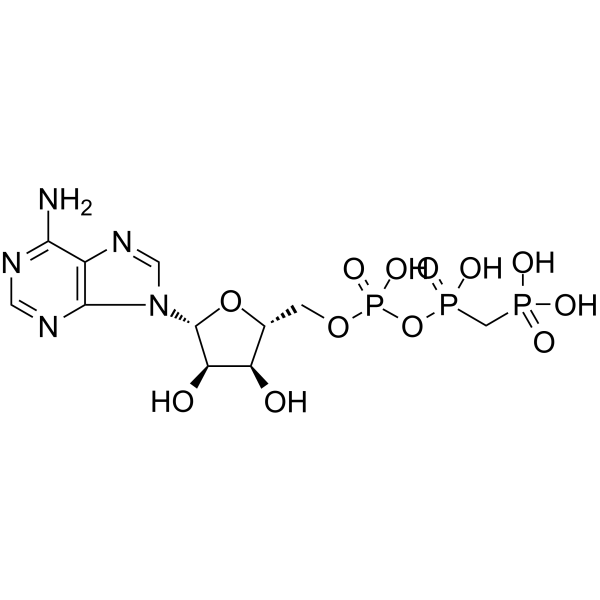
  • HY-183249

    Acetyl-CoA synthetase Fungal Infection
    Ac-CoA Synthase-IN-2 is an Ac-CoA Synthase (ACS) inhibitor and antifungal agent. Ac-CoA Synthase-IN-2 binds in the ATP/acetyl-AMP pocket of fungal and human ACS enzymes to exert competitive inhibition with ATP, and inhibits Cryptococcus neoformans CnKbc1-mediated acetoacetate-to-aceto-acetyl CoA conversion. Ac-CoA Synthase-IN-2 can be used for the research of fungal infections .
    Ac-CoA Synthase-IN-2
  • HY-N0165R

    Reference Standards HIV Reverse Transcriptase Cardiovascular Disease Infection Inflammation/Immunology
    Methyl-Hesperidin (Standard) is the analytical standard of Methyl-Hesperidin (HY-N0165). This product is intended for research and analytical applications. Methyl-Hesperidin is a glycoside compound. Methyl-Hesperidin has hypotensive, coronary dilating, smooth muscle relaxing, capillary stabilizing, choleretic, and anti-ulcer activities. Methyl-Hesperidin act as a competitive substrate to inhibit HIV-1 reverse transcriptase activity. Methyl-Hesperidin potentiates coronary dilating actions of adenine nucleotides and 3'-AMP, enhances depressant action on isolated atria, and prolongs adenosine- and ATP-induced heart block in guinea pigs .
    Methyl-Hesperidin (Standard)
  • HY-E70794

    AMPK Cancer
    AMPK is an αβγ heterotrimeric serinethreonine kinase activated by decreasing concentrations of adenosine triphosphate (ATP) and increasing AMP concentrations. Biotin-AMPKα1β1γ2 Recombinant Human Active Protein Kinase is obtained by co-expressing AMPKα1, AMPKβ1, and AMPKγ2 proteins and is biotinylated .
    Biotin-AMPKα1β1γ2 Recombinant Human Active Protein Kinase

Inquiry Online

Your information is safe with us. * Required Fields.

Salutation


Country or Region *

Applicant Name *


Organization Name *

Department *


Email Address *


Product Name *

Cat. No.


Requested quantity *

Phone Number *


Remarks

Inquiry Online

Inquiry Information

Product Name:
Cat. No.:
Quantity:
MCE Japan Authorized Agent:

